Schools

The Chinese takeover of Britain’s public schools

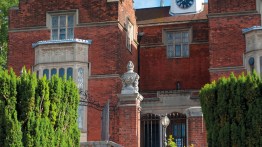
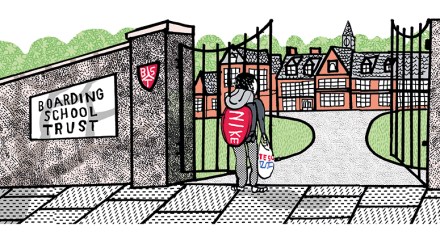
Roedean is now known as ‘Beijing High’. Cheltenham Ladies’ College is ‘Hong Kong College’. In the country’s most elite boarding schools, pupils say that they are one of just a handful of English children. Others note that Chinese has become the dominant language in hallways and dormitories. Many English parents can no longer afford a boarding school education for their children. And the pressure of recently introduced VAT on fees, as well as above-inflation rises year on year, means the number able to cough up will dwindle further. By contrast, China and Hong Kong’s growing economy and cultural obsession with education provides a surfeit of parents with the cash needed

The joyless reading app being forced on my son

It was only recently that I fully appreciated how the books I read as a child formed me. A pregnant friend asked me about my parenting philosophy and I realised it amounted to ensuring my son would survive a tour of Willy Wonka’s chocolate factory. I never had the money of Veruca Salt’s daddy to indulge his every desire, but I came down hard on chewing gum, gorging on chocolate and, above all, staring at a screen.  Despite my son’s complaints that I was acting like a father from Victorian times, it seemed to have worked, and, as the Oompa–Loompas predicted, not being glued to a screen encouraged him to

Pubs, schools and water in crisis: my economic forecast for 2026

Forecasting is a mug’s game, as the Bank of England governor Mervyn King once said. But I’ll sketch a few trends for 2026 nevertheless, starting on a positive note in the stock market before moving on to some of the many choices on an à la carte menu of gloom. The FTSE 100 index will have ended 2025 almost 20 per cent higher than it started – slightly better than the US S&P 500 index – and the consensus of fund managers is that (having closed for Christmas at 9,870) it will carry on upwards, perhaps even towards 11,000. Why? In short because many UK blue-chips in traditional sectors such

So what if Nigel Farage was the school bully?

There may well be, somewhere in this nation of ours, a long-established succession of sensitive, emotionally aware 14-year-olds who can appreciate and denounce the impact of bullying. But, honestly, none of them went to my school.  It doesn’t sound like there were many of this cadre at Dulwich College half a century ago either. At least, not if we believe the recent Guardian ‘scoop’ which claims, thanks to the testimony of Nigel Farage’s fellow pupils (much of which was made public years ago), that the Reform leader was a racist, hate-fuelled youth who taunted anyone of a different faith or ethnicity. It all sounds pretty familiar to me, though my

The catastrophic dumbing down of German education

German teachers are a privileged species. Most of us enjoy the status of a Beamter, a tenured civil servant. We can be dismissed only after a serious criminal conviction, we are exempt from social insurance contributions, and even our mortgage rates are lower. Such comfort discourages dissent. Yet, after more than 25 years as a pampered Beamter, I find myself overwhelmed, not by the teaching load or the students, but by the accelerating erosion of academic standards. Having taught English, history and Latin at four different Gymnasien, the equivalent of a grammar school, I have learned that challenging students is frowned upon by both bureaucrats and politicians. Nearly all my

The parents gaming special educational needs

As a foster carer and adopter, I’ve spent more mornings than I care to count coaxing my 13-year-old daughter into her uniform and then into the car. She has fetal alcohol spectrum disorder, the UK’s most underdiagnosed neuro-developmental condition, which leaves her with a brain wired for impulsivity, memory lapses and emotional storms that no local school can contain. Each day, I drive her across several counties to the only specialist placement that can meet her needs. Four hours a day, every week day. While I’m grinding through the traffic, taxpayers are footing bills that could fund whole classrooms. Councils and schools spent a record £2.26 billion on special educational

Bring back elitism

Elitism has had a bad press in recent years. The concept has, alas, been tainted by its association with the numerous elites who have corrupted it by allowing self-interest and prejudice to become self-perpetuating. It’s been sullied by its association with old school ties and masonic-style handshakes – by closed networks which work to exclude those who happen to fall outside the pre-determined in-group. So no wonder we don’t like it any more. Who would? But its gravest sin of all has been its role in pulling up the drawbridge to protect privilege in general, through a kind of unspoken fish-knife test. If you don’t know what it’s for, you

Back-to-school photos have become a vulgar wealth flex

How was National Standing on Doorsteps Week for you? For most, it’s a case of grabbing a picture two or even three days after la rentrée, when you remember that you’ve missed the annual obligation to record the progress of what Mumsnetters call the ‘DCs’ (darling children). Assemble them by the front door, roar at the one who’s kicking off to SMILE and look at ME, lament that you failed to get your sons’ hair cut before they went back as overnight they’ve come to resemble Hamburg-era Beatles, press the button and then bundle them into the car. Later, you ping the picture around the family WhatsApp group and stick

Spectator Schools: autumn 2025

In this week’s Spectator Schools supplement, Ysenda Maxtone Graham interviews Sir Nicholas Coleridge as he completes his first year as Provost of Eton. He speaks to her about the changing face of the school, Labour’s ‘pernicious’ tax on learning and the possibility of admitting girls (‘Never say never’).  In The Spectator’s Oxbridge files, we reveal a league table showing how well state schools – grammars, sixth-form colleges and others – compete with independent schools when it comes to Oxford and Cambridge offers.  Elsewhere in the supplement, Lara Prendergast turns her eyes to the heavens at Marlborough’s observatory, Lara Brown investigates how boarding schools are dealing with the smartphone menace and Harry

Star pupils: aiming high with Marlborough’s astronomy students

As I trudge up to Marlborough’s observatory, near the top of the playing fields, I’m transported back to my time as a pupil here. I studied astronomy for GCSE, which meant spending many evenings at the observatory, gazing at the night sky. The Blackett Observatory, which houses a superb Cooke 10in refractor telescope, celebrates its 90th anniversary this month. I’ve been invited back by my tutor Jonathan Genton, former head of science and teacher of the GCSE astronomy course, and Gavin James, director of the observatory, who oversees the astronomy programme. ‘Everybody should study astronomy,’ says James. ‘It’s the original science.’ Some pupils would even stay the night in the

The false economy of cutting the Combined Cadet Force

What could be more fun for a 14-year-old boy than messing about in the woods with a gun? My school’s Combined Cadet Force offered precisely that, marching us through the Brecon Beacons and organising mock skirmishes with SA80 rifles (albeit using blanks). When we weren’t trying to shoot each other, we were fighting over OS maps and compasses, trying to find which bit of woodland we were supposed to be sleeping in. One group found a dead body on the side of a Welsh mountain. Another spent an evening drinking vodka and smoking cigarettes with a strange man in a caravan. At some point in the small hours, he got

Sir Nicholas Coleridge: ‘Girls at Eton? Never say never’

T he historic graffiti at Eton College, chiselled into its stone walls, wooden panelling and ancient oak desks, serves as a reminder to any Etonian that he’s merely the latest in a long line of boys stretching back to 1440 who have passed through the school and occasionally bent the rules. Two names chiselled together into a wall of the Cloisters are ‘H. COLERIDGE’ and ‘E. COLERIDGE’. ‘Not me!’ says Sir Nicholas Coleridge, Eton’s 43rd Provost, when I visit him on the last day of the summer term, ‘or any of my sons. They’re dated 1817, luckily, so we can’t be blamed.’ ‘The imposition of VAT has been a very

Should boarding schools be phone-free?

No development has shaken up the cloistered and carefully controlled world of English boarding school life quite as much as the invention of the smartphone. Traditionally, schoolboys might write home once a week. Perhaps they might be able to smuggle in a dirty magazine or other contraband, but for the most part boarders on school grounds were safely tucked away. Today, thanks to smartphones, children are sent to school with access to pornography, internet chatrooms and easy contact with their parents. What horrors might a group of 13-year-olds get up to in a dorm if left unattended with internet access? Should boarding school children be permitted to phone home each

The independent schools crisis is only just beginning

Ever since the sudden and cruel imposition of VAT on independent school fees at the start of the year, much of the media focus has been on the number of school closures. The first to go have been prep schools and schools in rural areas far from London and the south-east. Trust me, this is really only the beginning. Savvy parents have always known a reduction in those shiny buildings won’t matter that much in the end Only a very small number of independent schools will be completely immune from the current financial pressures and – in the next couple of years – that will start to become increasingly obvious.

The joy of school cricket

Few presidents can claim such an immediate success. At the end of June, I became president of my school’s alumni association and then, just five days later, the First XI won their first match at the annual Royal Grammar Schools’ Cricket Festival since 2017. A coincidence? Well, obviously. But I’d like to think that Colchester’s youth drew confidence from me having a net at the school field on Old Colcestrians’ Day and getting hit on the bonce by the first ball I faced from the sixty something head of Year 12. If this is how poorly the alumni play, they will have thought, we can’t be all that bad. I

Vivat the Latin motto

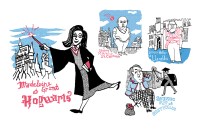
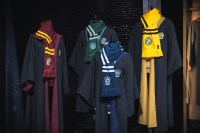
In the strange, arcane world of school mottoes, it’s fitting that the most famous one of all belongs to a fictional school. Draco dormiens nunquam titillandus – ‘Never tickle a sleeping dragon’ – is the motto of the Hogwarts School of Witchcraft and Wizardry. J.K. Rowling brilliantly realised that children aren’t put off by boarding schools and the ancient rituals that go with them. They’re gripped by these peculiar places, their roots twisting back through the mists of time. And no school custom is as ancient or beguiling as the Latin motto. My motto, at Westminster School, was Dat deus incrementum – ‘God gives the increase’. It is a motto

How boarding schools reinvented themselves

Early in his time at Eton College, 13-year-old William Waldegrave, the school’s future provost, was struggling to sleep. He told his dame, and she in turn told the housemaster, John ‘A.J.’ Marsden. The former commando in charge of the boys told Waldegrave that if it happened again, he should knock on his door. A few nights later, the boy did as he was told. Marsden had a solution – they would go for a run, to Bray, seven miles from Eton. Waldegrave slept better that night. Tales of public schools past are legion – some better than fiction, and plenty that have inspired it. Others are less appealing, more appalling.

Long live eccentric school traditions

On every Shrove Tuesday since at least 1753, boys at Westminster School have gathered in the hall for a mad scramble over a pancake. The Pancake Greaze (pictured) is a cherished tradition that sees one pupil crowned the winner for grabbing the biggest portion, which the cook tosses into the centre of the hall from a height of 15ft, as the rest of the school cheers on. The champion is awarded a golden coin by the Dean of Westminster, accompanied by the headmaster and sometimes royal visitors. The more unsavoury part of the tradition – nominally beating the cook with Latin primers if he fails to get the pancake over

School portraits: snapshots of four notable schools

Lancing College, West Sussex Lancing is a public boarding school for children aged 13 to 18 in West Sussex. Set within the South Downs National Park, it offers an open-air theatre, a state-of-the-art music school, an equestrian centre and even the tallest school chapel in the world. As impressive as its facilities, though, are its alumni: Evelyn Waugh, Sir David Hare and Lord (Stephen) Green to name but a few. Nowadays, many students at the college – where fees start from £12,602 – come from its sister preparatory schools in Hove and Worthing. Also arriving this month is a new headteacher, Dr Scott Crawford, who will replace Dominic Oliver after