Schools

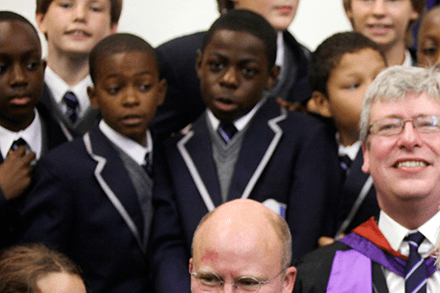
I’ve found the perfect school for Harry and Meghan

From our UK edition

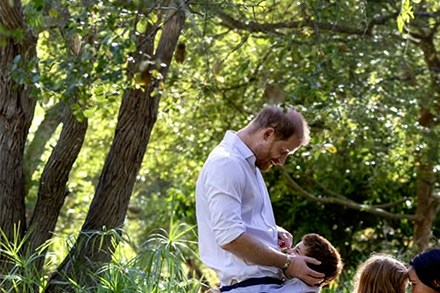
As the author of How to Lose Friends and Alienate People, I have to acknowledge that I still have some way to go to match the radioactive negativity Harry and Meghan generate with their every move. The Sussexes’ accumulated expertise in committing increasingly nauseating acts of hypocritical entitlement with every week that passes should qualify them both for a Regius Chair in Blithe Privilege at the University of Self-Regard. The latest episode in their narcissistic odyssey – The Sillyad – has been their agonising over where to send their children, Prince Archie and Princess Lilibet, to school. Harry and Meghan’s decision to educate them in England is, in its way, admirable.
Bring back school pets!

From our UK edition

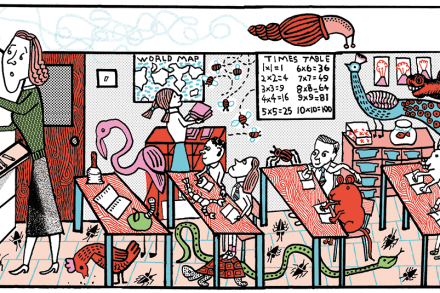
A school pet saved my sister’s life. At our Sussex prep school, pupils took turns to take Hobnob, the classroom hamster, home for a week to look after him. When it was our go, my sister and I would fight over who got to feed him. One evening, at Hobnob’s dinner time, the two of us raced full pelt across the house to be the first to get to his cage. She tripped and whacked her head very hard on the stone kitchen floor. My mother took her to hospital for a scan, just in case. There was no sign of concussion, but the scan revealed something unexpected – hydrocephalus, water on the brain, which is fatal if left untreated. My sister had the operation later that year. Hobnob, then, was responsible for a great good, albeit indirectly. But do many schools have a Hobnob equivalent today?

The sixth forms getting multi-million-pound glow-ups

From our UK edition

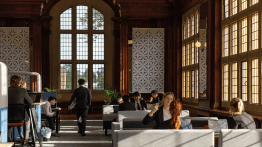
About halfway through my first term at Durham University, I made a breakthrough: I had taught myself to like coffee. And with it came the flirting, lecture decoding and friendship debriefing that could be done over a skinny latte in Caffè Nero on Silver Street. That was nearly 20 years ago. Nowadays, sixth-formers have a head start on café culture. At Canford School in Dorset, pupils slide out of A-level English and on to a bar stool in the newly opened ‘The Hub’, armed with a flat white (real-deal barista coffee, made by pupils). At Brighton College there’s ‘The Club’ – dark-green floor-to-ceiling bookshelves, Habitat-esque light fittings – and ‘Scott’s Café’ with artisan coffee.

How Ofsted lost its way

From our UK edition

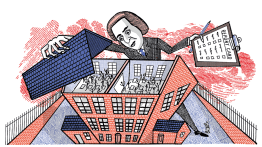
If I told you that Ofsted had lost its soul, you might be surprised that it ever had one. You might also wonder why it matters. As someone teaching when Ofsted was introduced, and who has been subject to seven inspections under seven different frameworks, five of them as a headteacher of a comprehensive, I’ve discovered that it does matter. Over the years, I fought the good fight on each occasion, and in the process, I learnt to respect my opponent. Not this time, however. This time, two days of fraught psychological drama came to an end of frustration and lament. School inspectors are powerful but, in my experience, mostly well-motivated. At its best, Ofsted has been about setting standards, not accepting excuses.

School bulletin: The latest news from across the country

From our UK edition

And ever the twain shall meet Liaisons between Harrovians and Downe House girls at socials – on and off campus – have long been commonplace but the match is now official. From this month, the two single-sex boarding schools will form a structural partnership whereby they will retain their distinct identities and traditions but there will be a new programme of joint academic, co-curricular and social activities. ‘This partnership is also an investment in our staff and in educational excellence,’ says Emma McKendrick, Downe House’s headmistress of nearly 30 years. ‘For all who work at our schools there will be opportunities to share knowledge, technology and resources.

What we lose when private schools close

From our UK edition

Just after Christmas, I was standing in our woodshed, filling a barrow with logs, when my wife appeared at the door and told me our school was closing. A local tragedy. Nothing seismic in the scheme of things. It was a very small school, just 150 students – a special place, as all good schools are – except there was something unique about it, too. For 850 years it had educated the choristers who sing in Exeter Cathedral. Now the school was closing, and as my wife read out the letter on her phone, I had the feeling that something magical had been lost. Exeter Cathedral School (ECS) sat next to the cathedral, a partnership going back to the Normans. Together they survived the Black Death, the dissolution of the monasteries, the Civil War and two world wars.

Spare parents from overbearing school apps

From our UK edition

I was educated in the 1990s, first at a country prep school and then at Eton, and have a clear memory of how my schools communicated with my parents. Basically, they didn’t. They received a letter before the start of each term and some written reports at the end and that was it. If Eton sent your parents a letter in the middle of term it almost certainly meant you had suffered a mortal injury or been expelled. What Eton did do was publish a small pale-green pocket almanac called Fixtures which listed every sporting match in the calendar but also contained essential information such as the courtesy titles of any sons of dukes at the school and the colours of the 4th XV.

What’s your favourite school in fiction?

From our UK edition

Ian Rankin It has to be Marcia Blaine School for Girls as depicted in my favourite novel, Muriel Spark’s The Prime of Miss Jean Brodie. It was closely based on the Edinburgh school that Spark herself attended. She was ‘the class dreamer’ and would later refashion the school, its pupils and teachers to create a perfect short novel about friendship, growing up, dangerous charisma and betrayal. Stephen Fry          There’ll always be a soft spot for Greyfriars School in my heart. The common room where the Fat Owl of the Remove, Billy Bunter, ‘frowsts’ and thinks of cake. Growing up, another favourite was the title school in The Fifth Form at St Dominic’s by the now sadly forgotten Talbot Baines Reed.

Long live school houses

From our UK edition

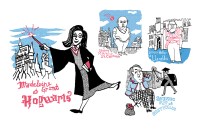
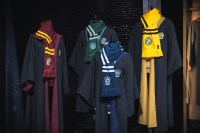
Worse ideas have been had at 30,000ft. On a flight more than 30 years ago, an aspiring young author had a thought and wrote four words on the first piece of paper that came to hand: Gryffindor, Hufflepuff, Ravenclaw and Slytherin. J.K. Rowling had just drafted the house system for Hogwarts School of Witchcraft and Wizardry on an aeroplane sick bag. Each house, named after the founders of the school, had its own character and the children would be placed there by the Sorting Hat in a millinery Myers-Briggs test. Gryffindors were brave, Hufflepuffs were loyal duffers, Ravenclaws were hard--working and clever, and Slytherins were devious snakes. Or, as the Hogwarts staff room may consider them: gods, plods, spods and sods.

An open letter to fee-paying parents

From our UK edition

Dear fee-paying parents (if I may), Forgive me for addressing you as one large, homogenous group. It sounds terribly pompous, doesn’t it – in the style of one of those endless missives St Paul kept sending to the Corinthians. Frankly, I think he should have put a sock in it after penning number one, giving us the best wedding reading there is and leaving it at that. But I’m getting distracted. Much like the Corinthians, you might well be thinking, ‘Just sod off – you don’t know us’, and you’d be right. Though what I do know, as a former prep-school mother myself, is there are at least as many types of fee-paying parents as there have been education secretaries in the past ten years (also ten, in case you’ve lost count).

School portraits: Snapshots of four notable schools

From our UK edition

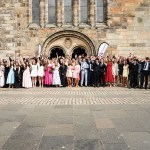
St Leonards, Scotland St Leonards is a coeducational day and boarding school for pupils aged four to 18 in the heart of St Andrews. It is Scotland’s only school to offer the full International Baccalaureate continuum, taking pupils from the primary years programme through to the diploma. The results are impressive. This year, 88 per cent of higher-level grades were awarded at 7-5, equivalent to A*-B at A-level, while pupils achieved an average diploma score of 35 points – roughly equivalent to three As. Headmaster Simon Brian says pupils leave not only with strong results but ‘the skills and attributes needed to genuinely flourish at university and in life beyond’. Fees start at £7,466 per term for day pupils and £14,933 for boarders.

How Glenalmond made me

From our UK edition

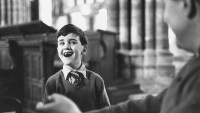
Early in 1968, when I was just 13, my father came home one evening with a letter in his hand and an uncomfortable look on his face. ‘You’ve won a big scholarship…’ Long pause. ‘…to Glenalmond.’ ‘But you promised I was going to St Edward’s,’ I protested. St Edward’s was the principal school in the scholarship scheme in which I was indeed a big winner. We had been to see its red-brick campus in Oxford and I was braced for my first boarding experience there. But Glenalmond? Where was it anyway? We had to find it in a road atlas, 300 miles away in rural Perthshire.

Inside Arizona’s battle for school choice

Arizona families won big this week. The teachers union and Save Our Schools fell short (again) in their latest attempt to roll back the universal Empowerment Scholarship Account program that helps more than 100,000 students there. The groups needed 255,949 valid signatures to place their Protect Education Act on the November ballot. They submitted 421,451, but after legal challenges and county reviews, so many proved invalid that the initiative appears to have fallen well short of the minimum number. School-choice opponents will continue to organize and spend Nearly 70,000 signatures were disqualified. The Arizona Free Enterprise Club noted that the initiative is projected to be more than 10,000 signatures short.

It’s madness to sit exams on screens

From our UK edition

There is, says Colin Hughes, who is the head of the exam board AQA, no downside to switching pupils from written exams into a gleaming modern utopia of computerised tests. Students, he says, are baffled by the fact that exams don’t take place on screens. He also seems to think the poor dears won’t be able to type if they don’t take exams on computers, as if they weren’t competent enough to learn how to use a keyboard without them. What’s more, boring old exam papers, it seems, have been causing delays in providing results for schools: doing them on a screen would solve that problem instantly, and, shazaam, Johnny and Jemima can get their C minuses in Raffia Work almost instantly. Sometimes I do wonder why certain people are so bedazzled by technology.

Three cheers for Britain’s most unabashedly elitist school

As we ponder the ups and downs of our sporting record this summer, it might be worth noting our unquestioned prowess when it comes to the demands of classically based dancing. The Royal Ballet is consistently more than a match for any comparable company in the world, and its chief feeder, the Royal Ballet School, currently celebrating its centenary, is similarly and solidly rated as one of the two or three best of its kind anywhere. Both these institutions are deeply beholden to tradition, and the RBS might well be the most unabashedly elitist educational establishment in the country. It receives globally more than 2,500 applications a year. All these will lead to an audition, the number finally whittled down to 30-odd offers of a full-time place.

Letters: The British Empire was a force for good

From our UK edition

Unjust William Sir: It is a bad idea for schools to be recommending their pupils listen to William Dalrymple’s podcast Empire (‘Striking back’, 4 July), without also suggesting they listen to, for example, Niall Ferguson on the same subject. Dalrymple does not prize the British Empire, but many of us who have studied it in detail admire the many benefits it conferred on its subjects. Balance is essential in educating children and from Dalrymple they will get an unduly pejorative view. Hearing his analysis, one might wonder how such an inefficient and corrupt entity succeeded in governing about a third of the world for a long period. There were two main failures.

The truth about how the British Empire is taught in schools

From our UK edition

William Dalrymple says that children ‘don’t learn’ about the British Empire at school. It is an ‘elephant in the room’, he claimed on the Green party leader Zack Polanski’s Bold Politics podcast last week. This isn’t true. I learnt about the Empire at school. Studying A-level history a decade ago, we spent a year covering the Raj. The Indian Mutiny, 1857. The Amritsar Massacre, 1919. On viciously cold mornings, my teacher, Ms Pearmain, would open the windows and say that boys’ brains were slowed by comfort. It kept her lessons in my head. It would have taken Dalrymple a few seconds to do some research and realise his error. In schools which follow the national curriculum, lessons about the British Empire are prescribed by the government.

Farewell to the school I founded

From our UK edition

My son Charlie sat his final A-level paper last week and the significance of this has only just sunk in. It’s not simply that he has finished his schooling; he’s the last of my children to do so. No more PTA meetings, no more parents’ evenings, no more school runs. My kids are all grown up. I’ve fulfilled my biological duty, raising four of them to adulthood, and can now disappear over the horizon into the sunset – or, rather, the Sunset Care Home. This is particularly poignant as I helped set up the school my children went to. Between 2009 and 2011, I led a small group of parents and volunteers who founded the first free school to sign a funding agreement with Michael Gove, then the education secretary.

Which racecourses have seen the most deaths?

From our UK edition

Hero worship Peter Magyar, the new PM of Hungary, has the unique distinction among world leaders of bearing the name of the country he leads. Why do we call the country Hungary when the natives call it the ‘land of the Magyars’? – ‘Hungary’ is literally, the land of the Huns. However, Middle English didn’t distinguish between them and the Magyars, a tribe which, in the 9th century, invaded and settled in what had been known as Pannonia. The Magyars themselves spoke a Uralic language related to Finnish, in which ‘Magyar’ is believed to mean ‘hero man’. Any relationship to the acronym ‘MAGA’ is purely coincidental. School starters The Scottish Green party wants to raise the age at which children start school to seven. How does this vary around the world?