
Ian Rankin
It has to be Marcia Blaine School for Girls as depicted in my favourite novel, Muriel Spark’s The Prime of Miss Jean Brodie. It was closely based on the Edinburgh school that Spark herself attended. She was ‘the class dreamer’ and would later refashion the school, its pupils and teachers to create a perfect short novel about friendship, growing up, dangerous charisma and betrayal.
Stephen Fry
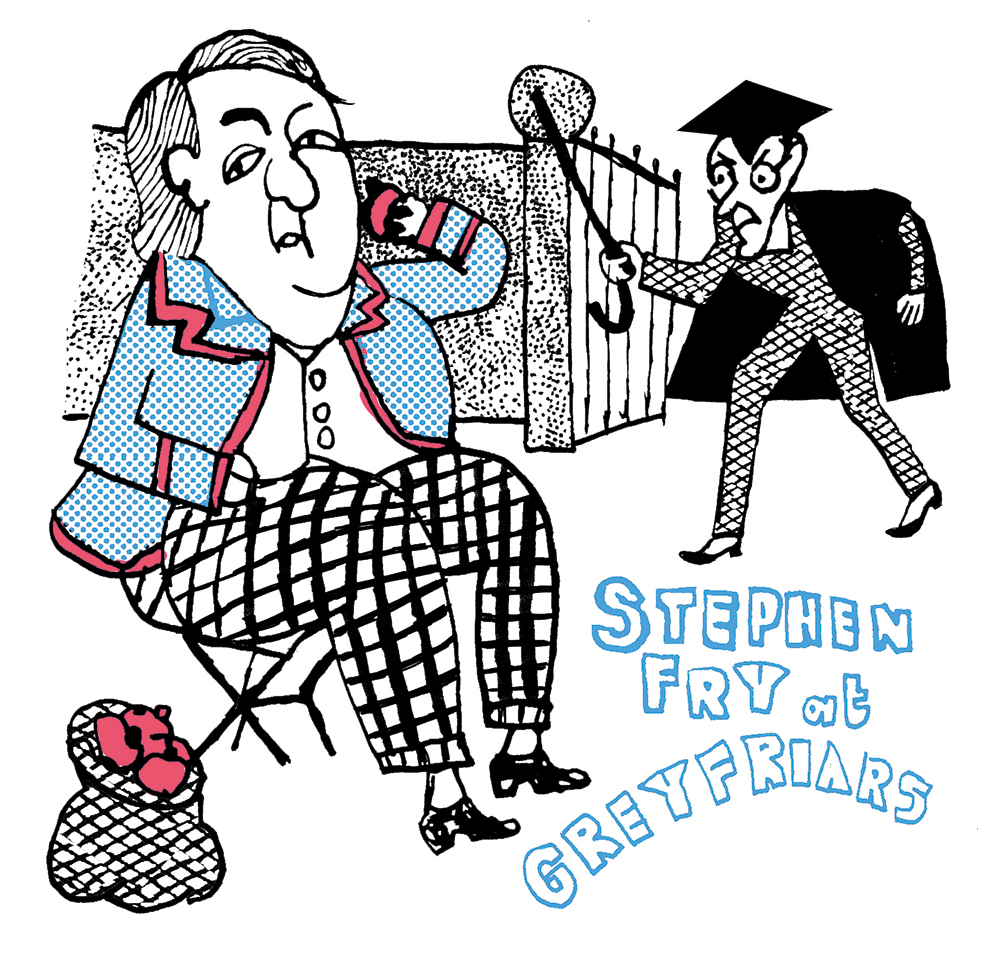
There’ll always be a soft spot for Greyfriars School in my heart. The common room where the Fat Owl of the Remove, Billy Bunter, ‘frowsts’ and thinks of cake. Growing up, another favourite was the title school in The Fifth Form at St Dominic’s by the now sadly forgotten Talbot Baines Reed. But in second place I’ll put the unnamed college in Kipling’s Stalky & Co., which needs to be read by every politician and populist who mistakenly believes that wrapping yourself in the flag is patriotic. A politician has come to speak at the College:
After many, many words, he reached for the cloth-wrapped stick and thrust one hand in his bosom… He shook it before them – a large calico Union Jack, staring in all three colours, and waited for the thunder of applause that should crown his effort. They looked in silence. They had certainly seen the thing before… but the College never displayed it; it was no part of the scheme of their lives; the Head had never alluded to it; their fathers had not declared it unto them. It was a matter shut up, sacred and apart. What, in the name of everything caddish, was he driving at, who waved that horror before their eyes? Happy thought! Perhaps he was drunk.
But first for me comes Sedleigh School, where P.G. Wodehouse’s Mike meets the imperishable Psmith, a literary moment on a par with Watson’s first encounter with Holmes. They have each been removed from the previous schools that they had loved: Mike had been taken out of Wrykyn while Psmith had been superannuated from Eton. They both regarded Sedleigh as a dump. But their friendship, Mike’s brilliance at cricket and Psmith’s eccentric gifts for putting things right, transform the school. It started Wodehouse out on his path of peerless greatness. A great soldier – was it Viscount Bramhall? – said: ‘I would rather have created Psmith than conquered the Heights of Abraham and saved Canada for the British.’ Sedleigh School was the making of Psmith and the making of Wodehouse.
Philip Hensher
Miss Lesbia Firebrace is the headmistress of a rather vague girls’ school. When she hits pay dirt by recruiting Clemence Shelley – Lesbia is ‘the sister of my father’s first wife’ – as a new pupil, the manners of schoolgirls are laid bare. ‘What are those things?’ a fellow pupil asks as Clemence’s trunk is unpacked. ‘Underclothes?’ ‘What do you think they would be?’ ‘Little window-curtains.’
It all goes rapidly downhill, with Clemence making up ballgowns (‘I believe the muslin is her party dress’) and cheating in exams. Taken away in disgrace, Clemence will have to be brought up by a governess, slapdash Miss Petticott and a debauched butler called Aldom with inadequately maintained social boundaries. The only loser, to the length of one pupil’s fees, is Lesbia. Ivy Compton-Burnett’s Two Worlds and Their Ways must be the most outrageous school story ever written.
Harry Mount
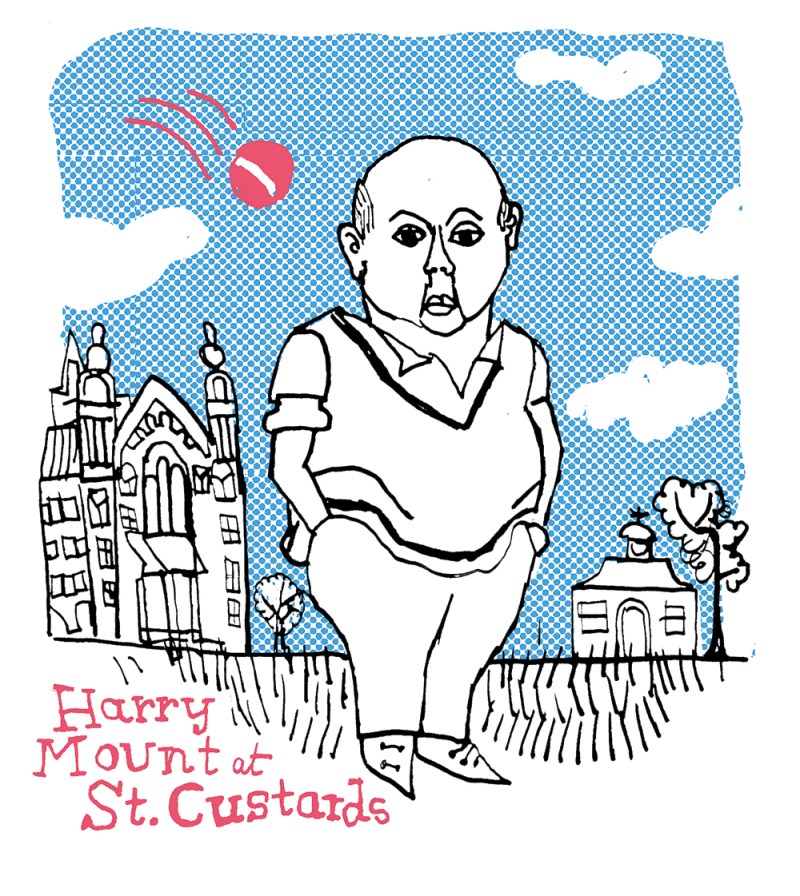
Oh to have been at St Custard’s, alma mater of Nigel Molesworth, my hero when I was 14 – and my hero today, 40 years on. In Geoffrey Willans’s Down With Skool!, Molesworth is gloriously rude about St Custard’s – ‘built by a madman in 1836 and he made a few improvements before he was put in the bin’. Ronald Searle’s sublime drawing reveals a unique, onion-domed, keyhole-windowed Gothic pile. I loved Molesworth’s anarchic, whip-smart cynicism about St Custard’s, but clearly he loved his prep school, as I did mine – North Bridge House, Regent’s Park. And, like North Bridge, St Custard’s was actually a very good school. Gerunds, gerundives, ‘The Burial of Sir John Moore after Corunna’, A Christmas Carol… Molesworth had a brilliant education – but he was so funny, confident and clever that he could mock dear St Custard’s with comic genius.
Bijan Omrani
Not a fictional school, but my favourite portrayal of a school in literature is that of Winchester College at the end of A.G. Macdonell’s England, Their England. The author, recovering from the trenches after the first world war, has been on a pilgrimage around the country to better understand the idea of England and its identity. The last scene is him sitting in the fields at Winchester, where, after a confusing conversation with a Wykehamist, in which he is befuddled by the strange school language (the ‘Notions’), he falls into a slumber and has an extraordinary vision of warrior poets marching over St Catherine’s Hill near the school. This was his deepest mystical insight into the character of England itself. Having worked there several years ago for just a term as a cover teacher, I understand the romance of the vision he had in that most historical of places: ‘The English school, whose motto puts kindliness above flourishment or learning, lay among its water-meads, and all around was the creator, the inheritor, the ancestor, and the descendant of it all, the green and kindly land of England.’

William Boyd
My favourite fictional school is the prep-school Llanabba Castle, featured in Evelyn Waugh’s first novel, Decline and Fall. Situated in darkest Wales and presided over by the lugubrious Dr Fagan, Llanabba Castle also includes among its useless and decrepit staff the virile sexual predator Captain Grimes. Llanabba Castle is a potent, wonderfully cynical antidote to the jolly, rose-tinted and wholly unrealistic genre of most boarding-school novels.
Anthony Horowitz
Crunchem Hall in Roald Dahl’s Matilda has always been a favourite of mine. I never had telekinetic powers like Matilda, but I did share her love of reading and, for that matter, a brutal headteacher, albeit one who never lifted me off my feet by my hair and threw me over a wall. He was rather worse. But Dahl finds joy and kindness in the private school system and I’m glad there is rather more of it around now than there was then.
Matthew Parris
Infancy has generated a rich literature, while from their twenties onwards fictional characters leap to life. But a dark shadow falls over the period in between. Are Just William and Goodbye, Mr Chips really the best we can do? Extraordinary how our great writers choose not to dwell, unless disparagingly, on this profoundly formative chapter in a human life. Dickens gives us Dotheboys Hall while Eliot reflects bitterly on the shallowness of girls’ education. Orwell, in Animal Farm, allows the mastery of reading and writing only to the pigs. One hopes today’s educators are offering future writers something more positive to remember.
Simon Heffer
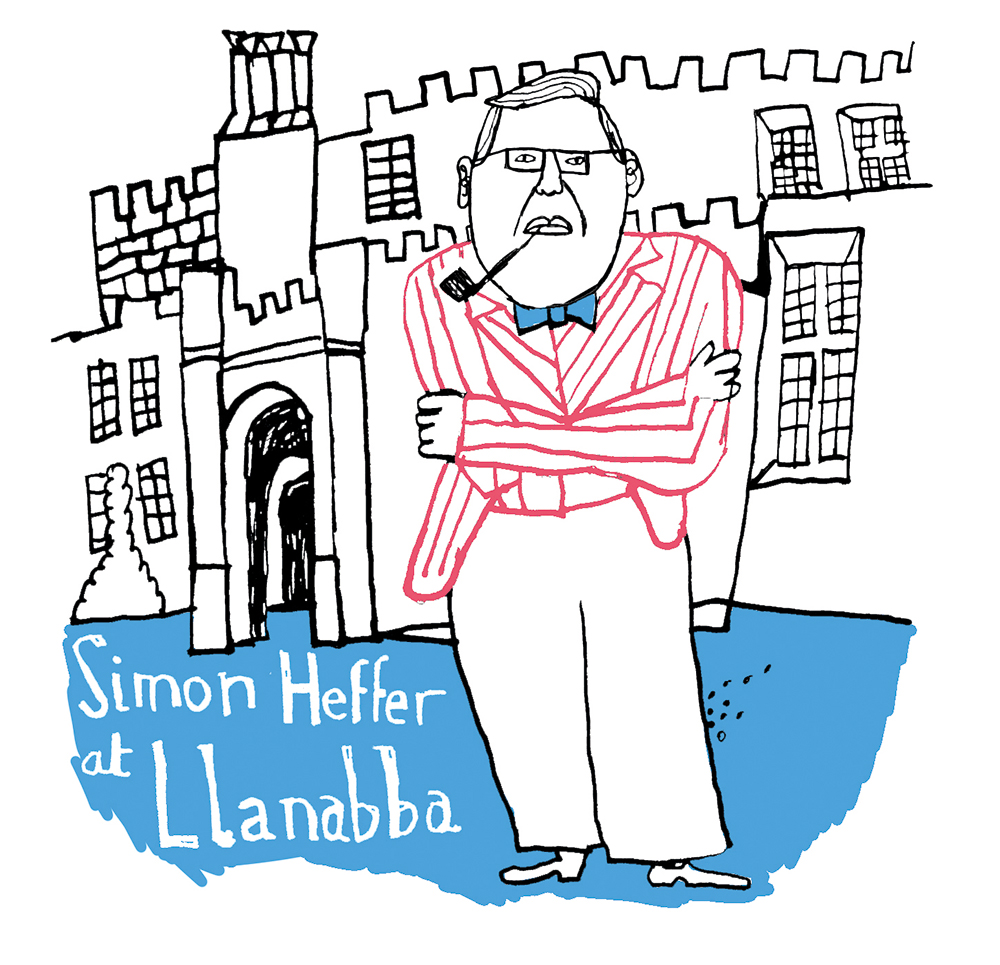
Since almost every school in literature is either charmlessly absurd or like a prisoner-of-war camp, the choice is easy: Llanabba, the deranged prep school in Evelyn Waugh’s Decline and Fall, where the author makes no attempt to do anything other than ridicule it. Of course, Llanabba – with its pederastic, unqualified and self-parodic masters, its bitter and resentful support staff and ghastly parents – is only so funny because one suspects it is much what the average prep school of 1928 was like. (Orwell’s Such, Such Were the Joys, covering a period a little more than a decade earlier, would seem to confirm this.) Today such an establishment would have been closed down without any help from the unlamented Bridget Phillipson, which makes it all the safer for us to laugh at it.
Quentin Letts
In Billy Wilder’s 1954 film Sabrina, the young heroine (Audrey Hepburn) is sent to Paris where she attends the Cordon Bleu cookery school. It is run by a comical martinet, The Professor (Marcel Hillaire), whose egg-breaking technique I have never mastered. Sabrina’s soufflé is a flop. An elderly baron (Marcel Dalio) beside Sabrina twigs that she is in love. How can he tell? A woman happily in love burns her soufflé, says the baron. A woman unhappily in love? ‘She forget to turn on ze oven.’ The kind old boy tells Sabrina to stop looking like a horse – i.e. not to wear her hair in a ponytail. Cue an Audrey smile that dazzled the world.
Rory Sutherland
It is ages since I last read them, but P.G. Wodehouse’s early school stories are superb. Tales of St Austin’s is one collection. I suspect once Wodehouse acquired an American readership, he could no longer really write about English school life, in the same way that he had to stop writing about cricket and start writing about golf instead. However it is in Right Ho, Jeeves when Bertie Wooster encourages Gussie Fink-Nottle to fortify himself with gin before the latter’s speech at a school prize-giving. The school is of course the Market Snodsbury Grammar School.
Ysenda Maxtone Graham
Angela Brazil created a different fictional school for each of her 59 novels. My favourite is The Woodlands, an institution for 49 girls in Wales, with views of Snowdonia and a mountain stream running through the garden, in which the girls bathe every morning of the summer term: ‘They enjoyed themselves like water nymphs.’ It’s the setting for For the Sake of the School (1915), which recounts what happens when Ulyth Stanton’s pen friend from New Zealand joins the school but turns out to be an uncouth ‘rough diamond’ with a ‘hinnying laugh’.
One of the school’s two headmistresses, the ‘tall and athletic’ Miss Teddington, ‘represented the more scholastic, modern element’. So the girls do have to do a bit of maths, but they also have ‘ambulance lessons’ from the more motherly Miss Bowes, and they ‘idolise nature and the picturesque’. The school has a ‘Camp-fire League’, an early version of Girl Scouts, with three ranks: Wood-gatherers, Fire-makers and Torch-bearers. After solemn meetings around the campfire, they heat up cocoa made from mountain water.
Take me to the autumn term: ‘The days were rapidly closing in now, and the time between tea and preparation, which only a few weeks ago was devoted to the last game of tennis or a run by the stream, was perforce spent by the schoolroom fire.’
Craig Brown
There’s nothing like reading about your own school. Rupert Everett, then known as Everett 11, the younger of the Ever Wet brothers, was at my Catholic prep-school, Farleigh House, in, appropriately, Farleigh Wallop, when I was there. I am cheating slightly because this is not fiction,but he captures it perfectly in his first volume of memoirs, Red Carpets and Other Banana Skins: the sobs, the tick-board ritual, which involved boys lining up outside the loos each morning to tell the terrifying Matron Walters whether they had ‘been’ or not, the bizarre selection of teachers and the religion. ‘It was Catholicism at its very best, a converted dining room, donated family silver, an Irish priest in red satin; wide-eyed boys with the names of the counties their families owned; and, strangely enough, God.’ He makes it come alive, even for those who were never there.
Philip Womack
My favourite fictional school is Ged’s, in A Wizard of Earthsea, on the island of Roke. It teaches magic – and it’s real, elemental magic, not like the miminy-piminy stuff they learn in Hogwarts.
Gareth Roberts
Burgrove Preparatory School, Wilminster, is my favourite fictional school. The comic humiliations undergone there by the pompous but lovable schoolmaster A.J. Wentworth BA are recorded in diary form by H.F. Ellis in a collection published in 1949. This might be the funniest book everybody’s forgotten – there isn’t even an audiobook. The episode in the boot room, the throwing of a disputed object at Hopgood II, the ‘my canary has circles under its eyes’ incident… I didn’t believe in people laughing out loud at books until I read this. The memory is making me hoot again as I write.
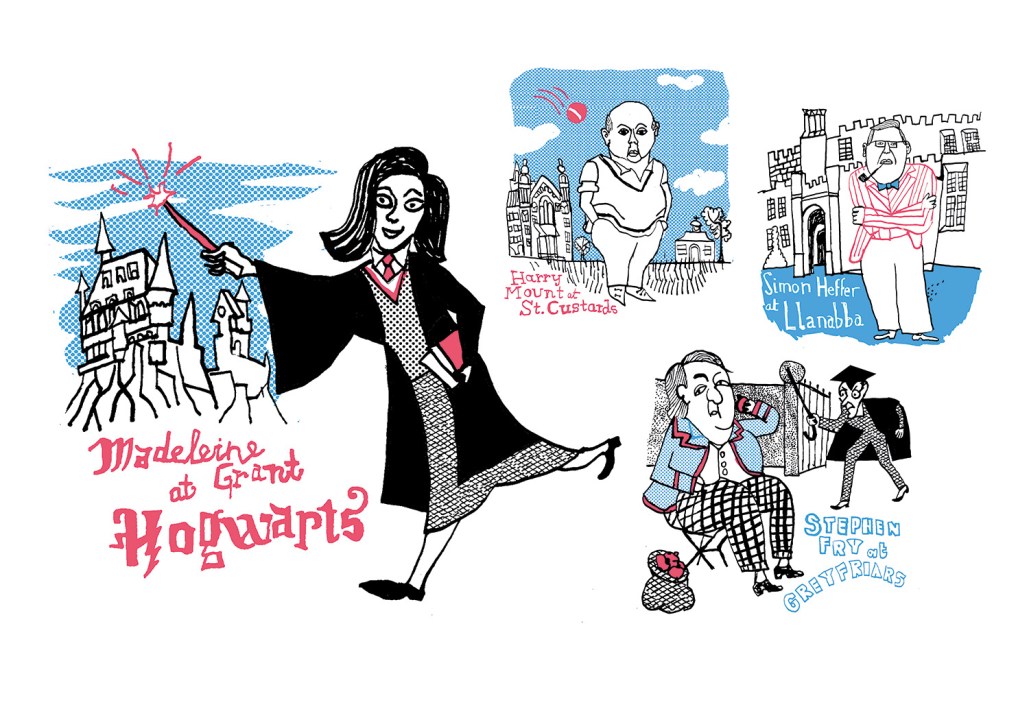
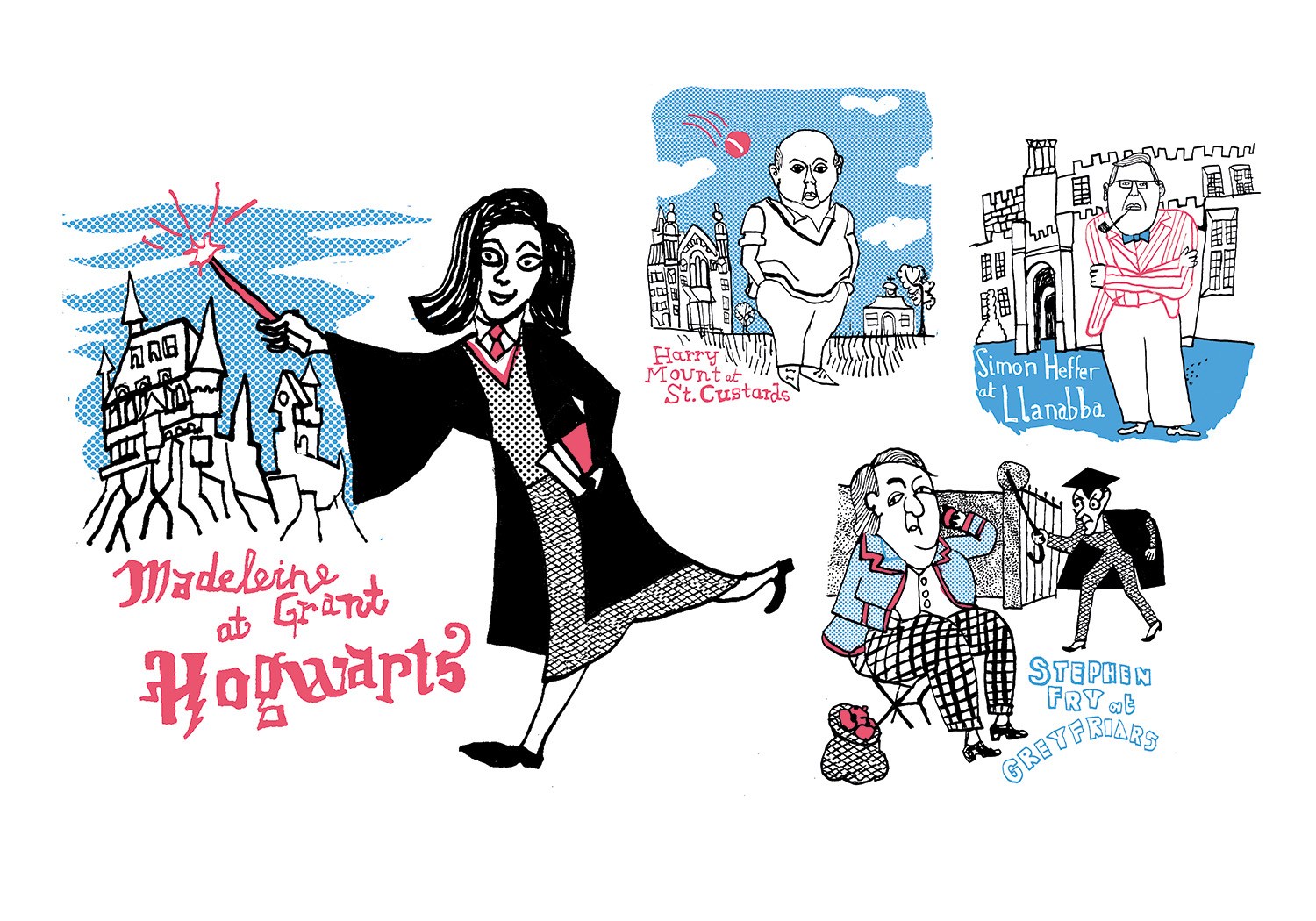
Madeline Grant
British boarding schools have a reputation for what we might euphemistically call ‘robustness’. Christopher Hitchens once related a story of two officers in a Japanese prisoner-of-war camp. As they tried to go to sleep after a day of torture and hard labour, one man found himself disturbed by the night terrors of the other. ‘Please stop, not again,’ he groaned. Thinking this the result of their captors’ savagery, the first officer remonstrated: ‘Don’t let the men see they’ve got to you.’ His companion replied, rather stoically: ‘Oh no, it was nothing to do with the Japanese. I just dreamt I was back at Tonbridge.’
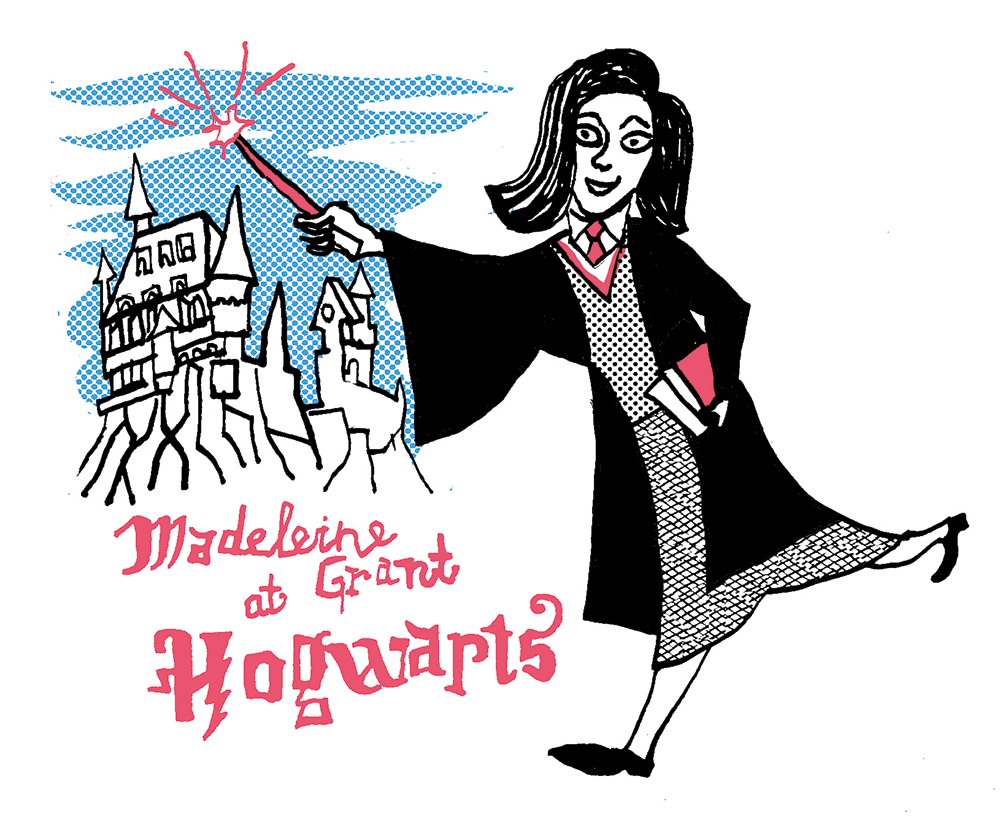
It is a testament to J.K. Rowling’s imagination and gift for world-building that many forget that Harry’s adventures at Hogwarts are a magical but essentially deeply traditional boarding school series, in the mould of Tom Brown’s School Days. Rowling is evidently intoxicated by classic English school tropes; tuck and dormitories, travelling by steam train, the nerdy best friend and haughty rival. Life at Hogwarts takes a particularly dark turn during the headship of Dolores Umbridge – a terrifying bureaucrat who combines sadism with saccharine hyper-femininity, and revels in corporal punishment – but even under the more benevolent Dumbledore, the school is exceptionally ‘gung-ho’. Punishments are severe, with house points deducted publicly for maximum humiliation. Pupils serve detention in the Forbidden Forest, an area crawling with lethal magical creatures. When, at 14, Harry qualifies for the Triwizard Tournament alongside 17- and 18-year-olds who have reached the age of wizarding majority, there is no question of his youth excluding him from the life-threatening challenges that await. Hogwarts is a place where health and safety goes to die and resilience is expected as a matter of course. This explains the books’ escapism. In a world of safetyism and helicopter parenting, what could be more thrilling than Malory Towers with broomsticks?
Bruce Anderson
School stories loom large in boys’ reading. I remember relishing Stalky & Co, though I would not have wanted to be at that school. The Americans contributed Tom Sawyer. Later on, there was Portrait of the Artist, and the hellfire sermon which terrified Catholic friends during their adolescence.
William Brown can still raise a chuckle. One day, William announces he is going to be King. An outlaw asked him what he would do when he became King. ‘I’ll rule’ came the reply. Might that remind us of a recent prime minister?
Contemporary school stories lead inevitably to J.K. Rowling. I have only read one, on a plane from LA, wanting something light before I was ready to sleep. I must confess it was a page-turner. Lady Rowling ought to be sent to the House of Lords, for services to children’s reading. She could call herself Baroness Wokebane. But I do not suppose this would find favour with our current masters. So much the worse for them.
Susan Hill
My elder daughter was desperate to go to boarding school because she wanted to go to Malory Towers, Enid Blyton’s fictitious school in Cornwall, which is said to have been modelled on Benenden, where Princess Anne boarded. Alas, though Jessica mostly enjoyed Cheltenham Ladies’ College, it wasn’t the same. To start with, nobody rode their own horse to school, galloping up accompanied by several brothers. But the camaraderie, the bonding, feuds and vocabulary were the same. Malory Towers wasn’t a bad model.




Comments