
About halfway through my first term at Durham University, I made a breakthrough: I had taught myself to like coffee. And with it came the flirting, lecture decoding and friendship debriefing that could be done over a skinny latte in Caffè Nero on Silver Street.
That was nearly 20 years ago. Nowadays, sixth-formers have a head start on café culture. At Canford School in Dorset, pupils slide out of A-level English and on to a bar stool in the newly opened ‘The Hub’, armed with a flat white (real-deal barista coffee, made by pupils).
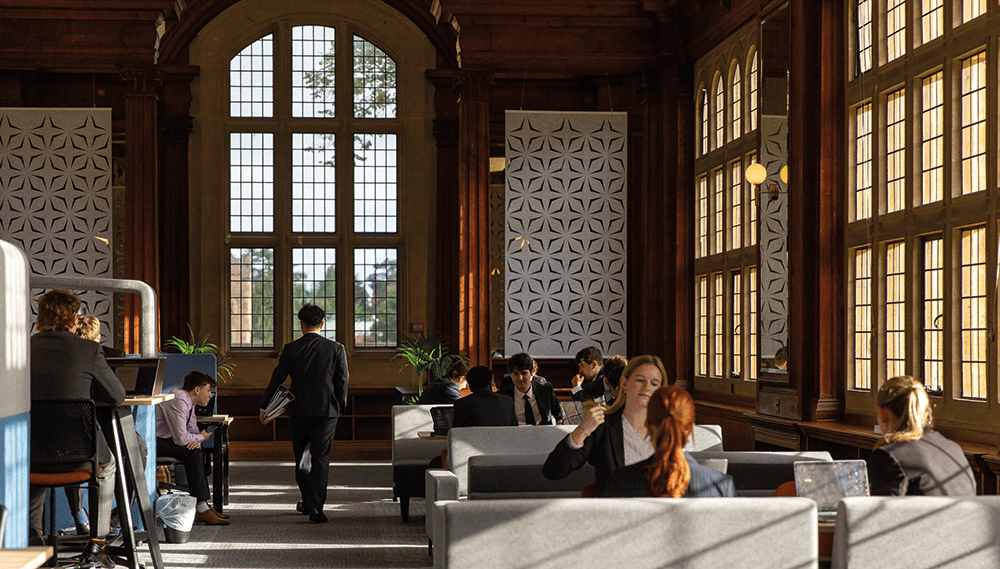
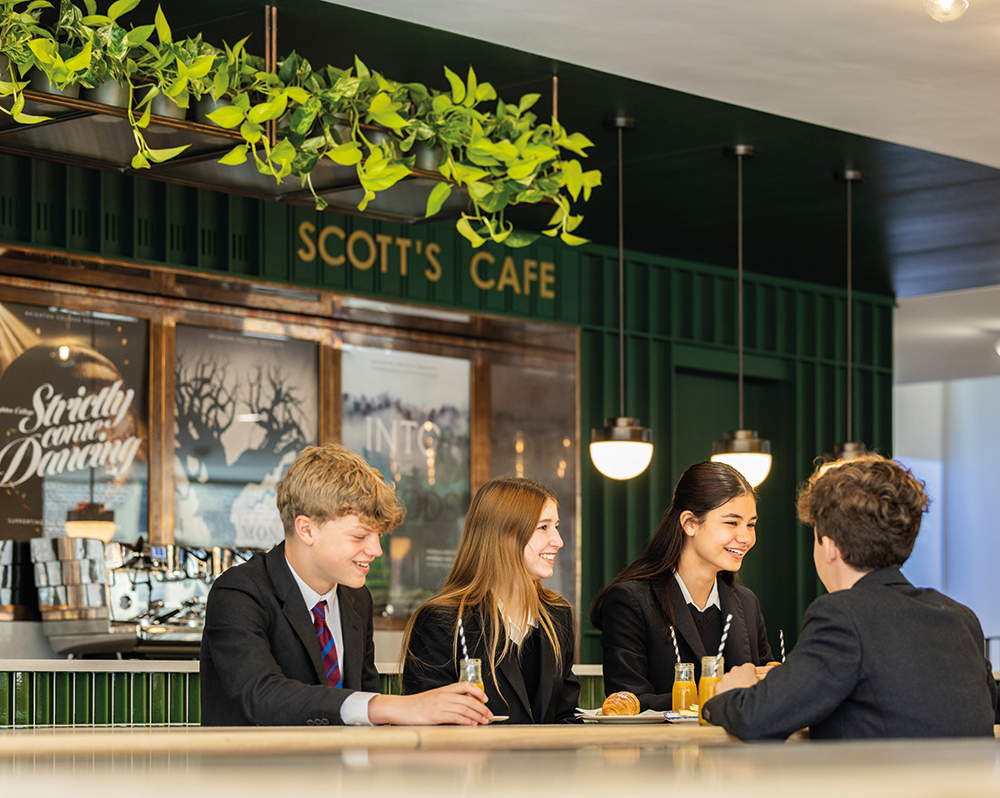
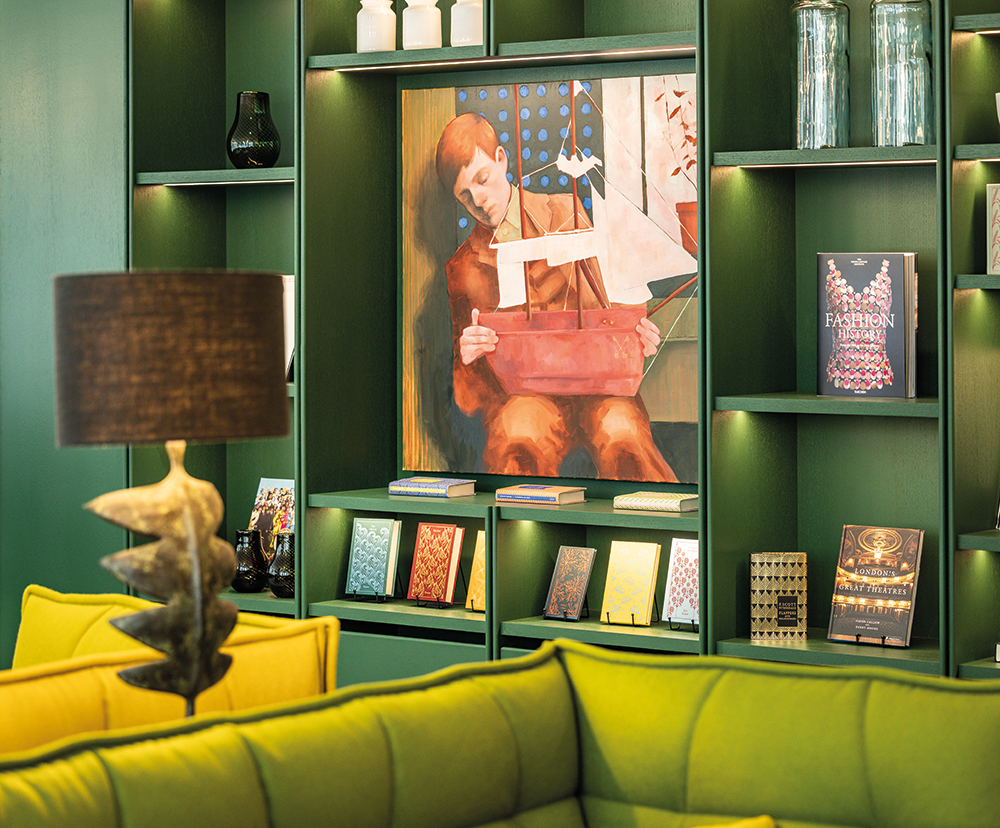
At Brighton College there’s ‘The Club’ – dark-green floor-to-ceiling bookshelves, Habitat-esque light fittings – and ‘Scott’s Café’ with artisan coffee. Then there’s the shiny university-style set-up at Wellington College, while at Malvern College sixth-formers descend on the re-vamped Memorial Library, where the wooden panelling and soaring fireplaces sit alongside pared-back work zones.
Gone are the days when they were filled with tattered old sofas and TVs showing Home & Away
Sixth-form centres have become big players in the school facilities arms race. RIP the vending machines, the TVs exclusively used for lunchtime Home & Away and the tattered old sofas. If you can overlook the teenage angst, the scene is now more like a city-centre co-working space than a school common room.
The glow-up, says Will Orr-Ewing, founder of Keystone Tutors, is about retention. ‘Families have a larger number of options when their child is 16 than they do when they’re 11, and many will be tempted by two years of free education in a good local state sixth-form. Another common pattern is that a child might have been at the same school since 11 or even four, now that so many schools are all-through, and so the school feels it has to offer a distinctive experience to keep them.’ It’s also, he says, about catching the discerning teenage eye: sixth-formers have more agency when it comes to choosing a school than 11-year-olds.
Top schools have the money to do these upgrades to sixth-form centres and they are trying to make the experience as impressive as possible, says Henry Faber, co-founder of mentoring operation Oppidan Education, which has an arm helping families choose the right school. It’s also a winning strategy for luring the growing number of European families who find parting with their child at 16 more palatable than at 13.
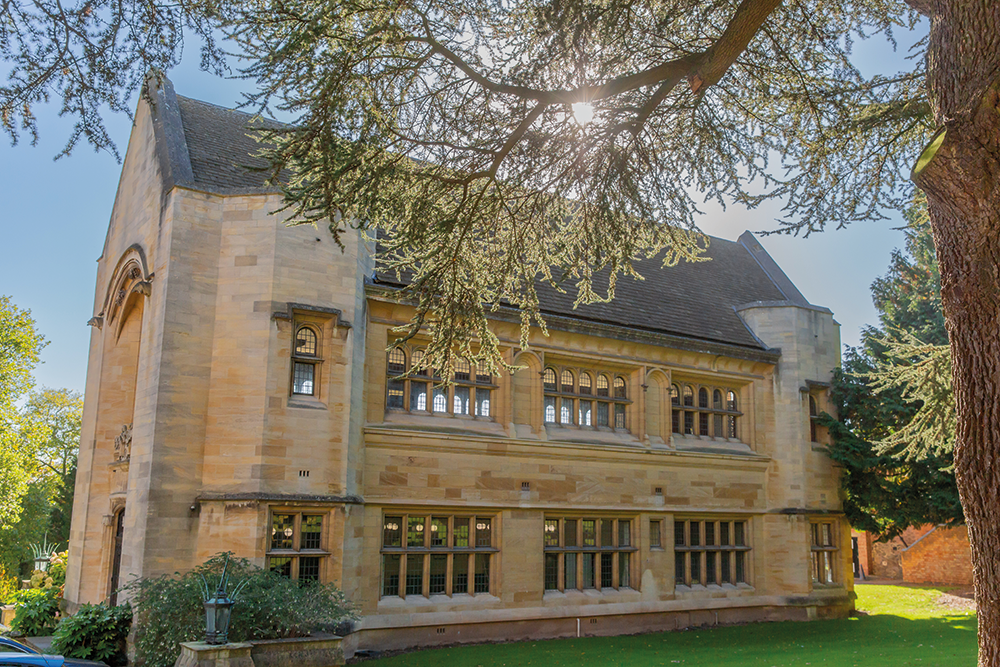
When Wellington opened its new sixth-form centre in 2024, Fleur Moore-Bridger, the head of the sixth form, hoped it would create a stepping stone between school and university, a training ground to perfect that elusive art of working independently.
The space was meticulously planned: a collaborative floor with group tables, sofas and moveable partition bookcases, a silent floor with lots of individual desks, and a quiet collaboration floor with a combination of the two.
The walls are lined with photos of universities across the globe, alongside QR codes that take you to each university’s website. Then there’s the array of pot plants and the calming green and rust colours designed to bring ‘the outside woodland in’. Plus, a menu of overnight oats, sushi and coffee served in ceramic cups (no takeaways here – this is a place to set up camp and work).
The great softening of boarding schools can only be commended, but that doesn’t stop Charles Bonas, founder of Bonas MacFarlane Education, which provides tutoring and independent school advice, from becoming misty-eyed about Harrow’s spartan decoration during his time there in the 1980s.
Housemasters’ budgets were predictably tight, and boys were expected to provide all their furnishings: rugs, side tables, posters for the unpainted walls. There was trade to be done at the pupil-run ‘house sales’ and he once tried (unsuccessfully) to corner the desk market.
‘We were all mini junk furniture dealers – we loved it,’ he says. He remembers trips to the library to select ‘relatively old books’ to be burnt in the grate in his room, and the Doctor Zhivago-esque scene he returned to one January thanks to a broken window. (The same house is now renovated to the standard of a Swiss two-star hotel, he’s quick to add.)
When we speak, Bonas has returned from visiting a school which has just finished a dedicated gym for basketball and another with a multi-million-pound debating chamber – and he’s sceptical about over-emphasising flashy facilities.
‘School is all about communication – and buildings are not great conversationalists,’ he says. ‘The Romans were here for nearly 400 years and we know they took education very seriously, but I have not seen a single artefact or building from their education system. That’s because you don’t need it.’
Instead, he says, teaching one-to-one, and in small groups – plus freeing teachers from endless emails – should be the priority in sixth form.
The other ace card is an injection of autonomy for teenagers (Thomas Arnold, Rugby’s 19th-century headmaster, was the architect of this: the power for enforcing rules was in the hands of the prefects). The best set-ups are where students are given the chance to independently organise whatever takes their fancy, whether for the entrepreneurship or the economics society, says Faber.
At Malvern there’s the hum of ‘Super-curriculum’ society meetings (pupil-led and designed to scratch the itch of any intellectual curiosity); at St Swithun’s, girls take a financial wellbeing course; and at Wellington there are the careers speed-networking events.
Orr-Ewing laments that exams still impose too much of a straitjacket on what can happen beyond the classroom. ‘But given these constraints, I think the best schools – Eton the paradigmatic example – give their sixth-formers really impressive amounts of freedom and responsibility: producing the school magazine, directing their own plays, inviting speakers to the school, picking them up from the station and having dinner with them.’
Back in the swankiest sixth-form centres, where the coffee machines purr, the real luxury is that fleeting window of possibility that you’re suspended in as a 16-year-old – the excitement and trepidation of plotting the next move that will determine which insipid chain of coffee shop you’ll wash up in during your freshers’ term.






Comments