
Just after Christmas, I was standing in our woodshed, filling a barrow with logs, when my wife appeared at the door and told me our school was closing. A local tragedy. Nothing seismic in the scheme of things. It was a very small school, just 150 students – a special place, as all good schools are – except there was something unique about it, too. For 850 years it had educated the choristers who sing in Exeter Cathedral. Now the school was closing, and as my wife read out the letter on her phone, I had the feeling that something magical had been lost.
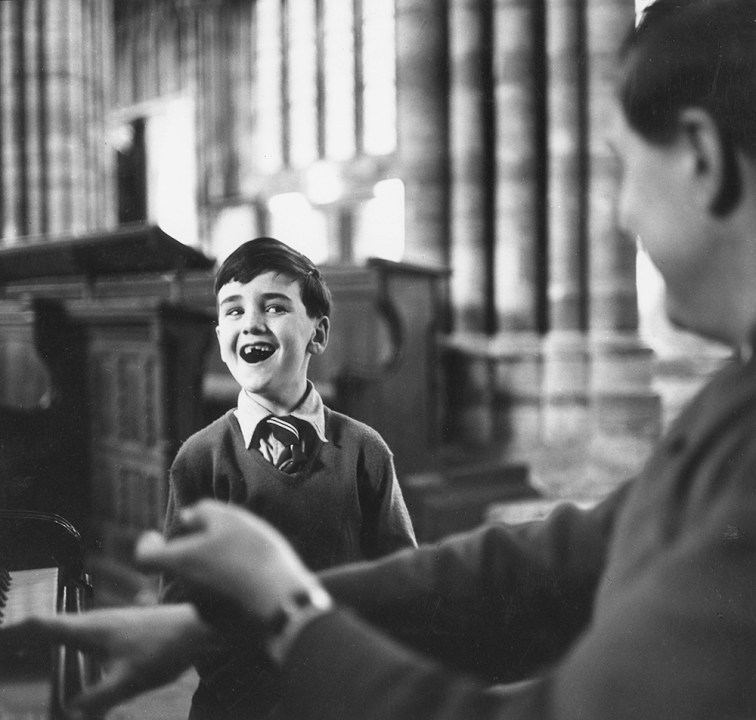
Exeter Cathedral School (ECS) sat next to the cathedral, a partnership going back to the Normans. Together they survived the Black Death, the dissolution of the monasteries, the Civil War and two world wars. In the 1960s the school expanded so that students who did not sing in the cathedral choir could join the orchestras, bands and ensembles that at ECS grew up spontaneously, like mushrooms. The school’s pupils – led in single file by teachers, sitting on walls, singing like angels or stuffing their faces with cake – were as much a part of the centre of Exeter as the peregrine falcons that nest on the cathedral roof. Chris Martin of Coldplay is an alumnus, as are men and women of every other sort of profession – carpenters, doctors, teachers, entrepreneurs – all sharing this wonderful thing: a childhood surrounded by music. The school felt permanent because it was old and shabby, wise in its own ways. Now it’s gone.
Back in January, parents were invited into the cathedral for a meeting with the board of governors, who sat on a stage and told us that the school would close at the end of the academic year. The chair of the board explained that everything that could have been done had been. There were many factors contributing to the failure, VAT being the final straw. The crisis had been kept from us until this moment for fear of a stampede that would lead to an uncontrolled closure. The chair made no apology for this. It was just so.

I think he was surprised by our reaction. Before the general meeting, parents of choristers had been invited to a separate meeting and told that the choir was being removed from ECS and placed with another school. Those who had attended were furious. Now we were all furious. Why had we not been trusted? How had the cathedral afforded the restoration of the chapter building? How many seats did it have on the school board? Was there not a very obvious conflict of interest? Would the chair agree to provide access to accounts and minutes? Hmmm, said the chair.
In the weeks following the meeting, we tried to organise a rescue attempt. It felt extraordinary that no real effort had been made to reach out to alumni. There was not even a list of alumni. There had been no recruitment campaign, no crowdfunding appeal. Other schools had saved themselves by declaring an emergency. ECS had stayed quiet, kept itself small, looked for a local partner, some larger school to save it, but no partner emerged. It seemed to us that it had barely whimpered. One parent, a former soldier in the SAS, told us that if we really wanted to save it, we would have to fight – with the cathedral, with the dean – and for a short time there was a feeling that a holy war was the answer, but it was already too late. We didn’t go to war. We allowed ourselves to be tidied away, just as it seemed the school had been tidied away, the casualty of indecision and inertia and something too big and vague to understand. A friend told me she felt she was screaming under water.
Only a small minority of people can afford to send their children to private schools or want to if they can. Private education is a luxury, and VAT was introduced in the knowledge that some schools would close. Even the chair of the board of governors, whose job it was to protect the school’s interests, was keen to explain that what was happening was unremarkable. Other choir schools were closing too. What was so different about ours?
I know what was special. The happiness of our children. The way they all felt at home. The music and art. The academic results, earned without strangulation. The teachers. The fellowship we were so often reminded of when the headmaster addressed us at school events. All the parents gathered in the cathedral knew what they were losing, but it was not enough to make any difference. When the numbers no longer worked, the cathedral became startlingly practical. It looked elsewhere for its choir. It refused to continue to support chorister scholarships. It refused even the cost of lunch to children who came in on Sundays and twice at Christmas. It placed a claim for rent in arrears and dilapidations that dwarfed any other claim and helped force the school that had walked beside it for 850 years into liquidation.
What I learned through the loss of our school is that people often understand what they are losing only as they are losing it, and that to deny them the right to hold that knowledge properly is what causes the damage. Not the loss itself. The Church should not need to be reminded of this, because it exists to bear witness.
A few weeks ago, back inside the cathedral, we attended prize-giving, and our son, the last head boy in Exeter Cathedral School’s long history, stood up after the last head girl and gave a short speech. He told everybody that when he first arrived at the school, the cathedral was the biggest building he had ever seen, and that he had never met so many musical and artistic people in the same place, even though a lot of them had not been musical or artistic when they arrived. He acknowledged that they would all now be going to different schools, but that he, personally, was looking forward to a new adventure. Good luck everybody, he said. And that was that.




Comments