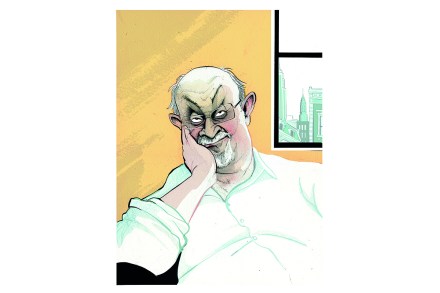
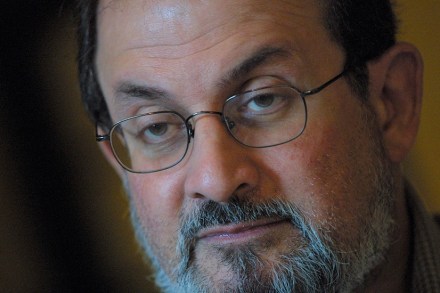
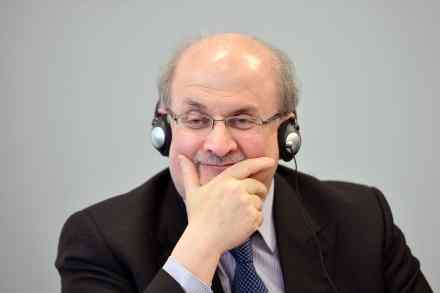
Salman rushdie

Was Cat Stevens the inspiration for Carly Simon’s ‘You’re So Vain’?

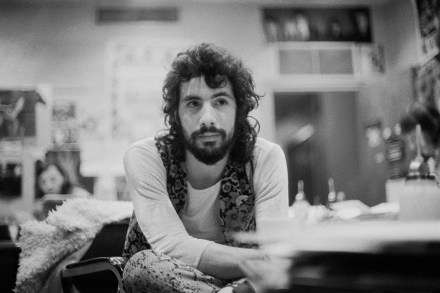
Essentially this is a book of two halves –before and after Cat’s conversion to Islam in 1977 – and the first half is immeasurably the more engaging. He was born Steven Georgiou in 1948, the youngest of three children, to a Greek-Cypriot father and a Swedish mother, with a much older brother and sister. His parents ran a café, Moulin Rouge, on Shaftesbury Avenue, in the heart of London’s West End, and the family lived above it. He went to a Catholic primary school near Drury Lane and then, having failed the 11 plus exam, to a secondary modern in the City. But he left school at 16 with only one O-level, in art. It was enough to get him into Hammersmith Art School, but he was already more interested in writing songs.
Hasn’t Salman Rushdie suffered enough?

From our US edition

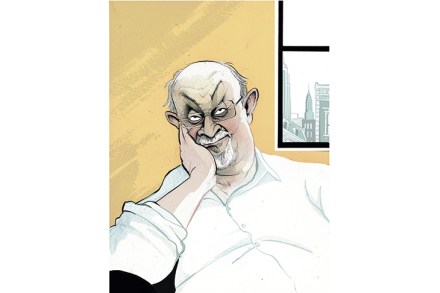
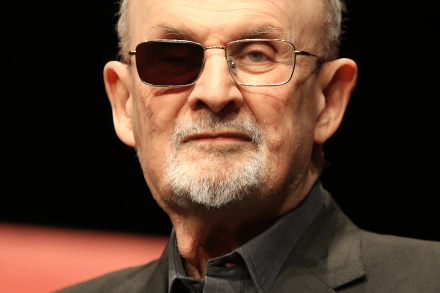
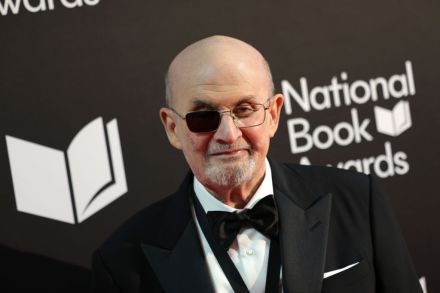
I used to run into Salman Rushdie at London literary parties a couple of decades ago, before he became a US citizen in 2016 and largely made his life there afterwards. He was always charming and likable company, during the brief conversations that we had, and the worst that I would say of him is that he was all too aware of his own fame and reputation. Certainly, I was not the only one in a long line of admirers and acolytes wishing for a couple of moments with the great man, and Rushdie certainly paid rather more attention to the attractive women or girls than he did to the rather gauche young men who had read Midnight’s Children or The Satanic Verses.

The courage of Salman Rushdie

From our US edition

I know that our readers have led varied and colorful lives, but I would suggest that few, if indeed any, of you have spent decades cowering under the daily terror of a fatwah imposed upon you by a totalitarian state because of a literary novel that you once wrote. I would also suggest that, when Salman Rushdie — for he had that dubious privilege — emerged from a lengthy, frightening and tedious period of hiding, he chose to immerse himself in the social life of both London and the United States to show that he was not afraid, and that the threats and grimacing of extremists did not mean that he was not entitled to lead his own version of his best life. He was right to do so.

salman rushdie

Rushdie on how the best magical realism transcends fantasy

Ask the man in the street to quote a line from one of Salman Rushdie’s novels, and he might struggle. Ask him whether he’s heard the phrase, ‘Naughty but nice’, specifically in the context of cream cakes, and you will probably make his day. It was Salman Rushdie who came up with that slogan in his early career as an adman. Remember the ‘irresistibubble’ tag for Aero chocolate bars? He was responsible for that, too. ‘I feel at bottom that I’m still that boy from Bombay and everything else has been piled on top of that’ If there’s any embarrassment on Rushdie’s part (and why should there be?) that some of his best-known words are from the sides of buses, it was undetectable as he sat down with John Wilson on This Cultural Life last week.

Salman Rushdie’s memoir is a devastating and powerful account of near-death

From our US edition

In late summer 2022, at the Chautauqua Institute in upstate New York, the celebrated novelist Sir Salman Rushdie was stabbed many times as he was about to give a lecture, the subject of which, ironically, was keeping authors safe. The attack sent shockwaves throughout the literary establishment, and the world. It seemed as if civilization itself was under threat, as if our fundamental freedoms to create, associate and speak as we wish were defunct, reduced to the point of a knife. His new memoir, Knife, examines the attack and its implications for him, and for such freedoms generally.

Rushdie

Remembering the postmodern Paul Auster

From our US edition

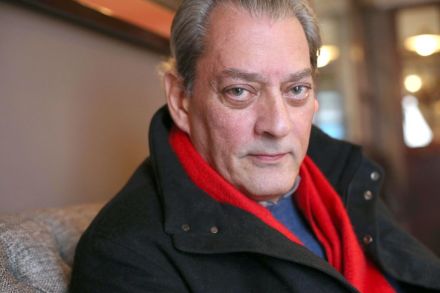
In Salman Rushdie’s new memoir Knife, there is a powerful and moving moment — amid the many other powerful and moving moments — in which Rushdie visits his ailing friend Paul Auster at the latter’s house in Brooklyn and describes his sorrow at seeing him so reduced by illness. It may have been that the extent of the cancer that killed Auster had not been made public knowledge, although a statement was released about his condition, until Rushdie’s description of his encounter — and some might accuse him of indiscretion or indelicacy. Yet the news of Auster’s death, anticipated though it undoubtedly was, has meant that such questions recede almost immediately — and instead a consideration of his legacy as a writer, rather than an invalid, can begin.

paul auster

Hanif Kureishi – portrait of the artist as a young man

If any novelist, playwright or screenwriter of the past 40 years could be called ‘a writer of consequence’, to use the literary agent Andrew Wylie’s term, it would be Hanif Kureishi. While not shifting units on the scale of his near contemporaries Ian McEwan, Martin Amis and Salman Rushdie, Kureishi’s cultural influence – through his explorations of race, class and sexuality in novels such as The Buddha of Suburbia and films like My Beautiful Laundrette – is inestimable. In this first major biography, Ruvani Ranasinha tracks Kureishi’s progress from his birth in Bromley in 1954 to a Pakistani father and English mother, through his glittering, always provocative career, to the recent accident which rendered him unable to walk or use his hands.

Books to look forward to in 2024

From our US edition

Ah, welcome back. In our previous look at some of the major books of the year, I highlighted titles that went on to be acclaimed bestsellers and the most talked-about volumes of the past twelve months, as well — inevitably — as a few that failed to live up to the high expectations that we’d placed upon them. It is interesting that, just as Prince Harry’s Spare was indeed the most discussed book of last year, another hotly tipped memoir is undoubtedly the major release of 2024.

substack

Stacking up

From our US edition

"It feels almost like there is money in writing again.” So the historian and New York Times bestselling author Dan Jones tells me. Is he referring to increased book sales, or lucrative adaptation deals? Not this time. Instead, he’s discussing Substack, which launched in 2017. It has now become the platform of choice for writers to develop their careers on their own terms, without having to give substantial percentages away to agents, publishers and lawyers. For years, authors have felt that they have been little more than galley slaves, flogging themselves and their wares for the profit of multinational corporations. Now, finally, they have been given an opportunity to take back control of their own careers and destinies. The format is a simple one.

Hilary Mantel, Zadie Smith and Salman Rushdie are cut down to size

It is very possible that Peter Kemp is the best-read man in Britain. Certainly, as the Sunday Times’s chief literary critic for goodness knows how many years, he has read and opined upon more works of new fiction than most. His is either a dream job or an absolute nightmare, depending on how you feel about the state of the novel. A Sisphyean task? A Herculean labour? Or just a colossal waste of time? All those keen debuts, all that second-rate dross, all those egos demanding attention: Kemp has bravely buckled up, knuckled down and dutifully banged out 800-plus words, week in, week out, for longer than most of us have been able to tell the difference between a roman-fleuve and a roman-à-clef.

Free expression after the Rushdie attack

From our US edition

In an interview with Stern magazine at the end of July, Sir Salman Rushdie was asked about the current circumstances of his life. Given that this is a question that he has faced since 1989, Rushdie might have been expected to respond with boredom, even irritation — as, understandably, he has done in other public conversations, when the subject of the fatwa that he has been under for nearly three and a half decades has been raised by an inquisitive or prurient journalist — but he responded with reasonably good cheer. Describing his everyday existence as “very normal,” he even ventured a light-hearted remark, saying, “A fatwa is a serious thing. Luckily we didn’t have the internet back then. The Iranians had to send the fatwa to the mosques by fax.

Rushdie

The Greatest Living American Writer on Salman Rushdie

From our US edition

In the late 1990s, author Neal Pollack developed an alter-ego character, "The Greatest Living American Writer," for the McSweeneys website, to satirize a generation of pretentious authors, particularly Norman Mailer and Gore Vidal, as well as macho literary journalists. That character formed the basis of Pollack's first book, the cult classic The Neal Pollack Anthology of American Literature. The GLAW has since appeared in numerous other publications,  left- and right-wing and completely apolitical, surfacing and de-surfacing as the times demand. Now he's back in The Spectator World, until we get tired of him.  I have been the Greatest Living American Writer across eight decades of world literature and have seen many shocking acts of violence.

greatest living american writer salman rushdie

Salman Rushdie was never safe

The stabbing of Salman Rushdie sends a renewed message to the world: take Islamism – the transformation of the Islamic faith into a radical utopian ideology inspired by medieval goals – seriously. Ayatollah Ruhollah Khomeini, the most consequential Islamist of the past century, personally issued the edict (often called a fatwa) condemning Rushdie to death in 1989. Khomeini, responding to the title of Rushdie’s magical-realist novel The Satanic Verses, decided it blasphemed Islam and he deserved death. Initially alarmed by this edict, Rushdie spent over 11 years in hiding protected by the British police, furtively moving from one safe house to another under a pseudonym, his life totally disrupted.

The New York Times’ strange silence on Rushdie

The New York Times has never been shy about sharing its opinion – especially when it comes to bashing Britain. In recent years, Mr S has greatly enjoyed reading the London dispatches from America's least reliable news source, in which Brexit Britain is re-imagined as an autocratic archipelago where plague-riddled, rain-drenched, swamp-dwelling subjects devour legs of mutton and fascistic propaganda. But now, Steerpike has rare cause to bemoan the 'Gray Lady's' absence. For the NYT, whose staff proudly consider it to be the world's leading liberal newspaper, has been strangely quiet on an area of intense local concern. The stabbing of Sir Salman Rushdie shocked the world last Friday, with expression of condemnation and solidarity being issued across the world.

Salman Rushdie and the incitement of violence

When I met Salman Rushdie in New York a couple of years ago, he told me that the days in which he feared physical attack were long behind him. ‘It only affects my life when I talk to journalists,’ he said, a little pertly. ‘It is 20 years since I required any form of protection. I go everywhere I want.’ That was true, and not true. It was obvious to me – and, Sir Salman being no fool, will have been even more obvious to him – that thirtysomething years after the philistine clerisy of Iran sentenced him to death, there was nothing to prevent a lone nutter making an attempt on his life. And it looks like that is exactly what has now happened. The reason he denied something so obvious is that he didn’t want it to define him.

France’s support of Rushdie puts Britain to shame

If any further evidence was needed of the moral cowardice of the British political class it has been provided in the wake of the appalling attack on Salman Rushdie at the Chautauqua Institution. There were of course messages condemning the atrocity in New York, although notably it took Sir Keir Starmer and Sir Ed Davey the best part of 24 hours to find the time to react. One might have expected the leaders of two of the three main political parties in Britain to consider such a sinister assault on Western values worthy of immediate comment. From Mark Drakeford, the first Minister of Wales, and Nicola Sturgeon there has been only silence, although Scotland’s leader did tweet a photo of herself with Basil Brush on Saturday afternoon.

Salman Rushdie overcame his fear

After Ayatollah Khomeini ordered Muslims to kill him for publishing The Satanic Verses in 1989, Julian Barnes gave Salman Rushdie a shrewd piece of advice. However many attempts were made on his life and the lives of his translators and publishers, however many times Special Branch moved him from safe house to safe house, he must not allow the ‘Rushdie affair’ to turn him into an obsessive. When I interviewed him ten years ago he had learned to live without fear. No shaven-headed bodyguards accompanied him as he walked into a Notting Hill restaurant. His eyes did not scour the room for signs of danger. If the other diners knew who he was, they were too well-versed in the manners of the English upper-middle class to stare at a celebrity.

The attack on Salman Rushdie is an ominous warning

From our US edition

The news coming from New York State that the author Salman Rushdie has been stabbed onstage is both frightening and grim. It is frightening because, without full details of how seriously injured Rushdie has been, it is tempting to fear the worst. Media reports initially suggested that Rushdie was well enough to walk off stage, but the news that he has been transported by air ambulance to a hospital after being stabbed in the neck suggests his injuries are severe. It is grim because any violence being done to a public figure is abhorrent, but in the case of Rushdie, it is almost inevitable that this particular incident has been occasioned by one of the most notorious cause celébrès that has ever been seen in the publishing world, namely the publication of The Satanic Verses in 1988.

The Mozarts of ad music

It’s Christmas 2020 and Kevin the Carrot is on a mission. Snow swirls, ice glistens and roast turkeys and cold cuts wait on the table, bathed in cosy firelight. The visual symbols of Christmas are all present and correct in the big Aldi seasonal advert, but what pulls them together is the music. A hint of John Williams on a solo horn, a burst of swashbuckling rhythm; symphonic strings as our vegetable hero makes it home. It’s all there, sumptuously scored and precisely gauged to make you feel that in 30 seconds, you’ve experienced an epic. And then, of course, to go out and buy parsnips. ‘I was lucky, because the mood had already been chosen,’ says Guy Farley, the composer who wrote that score.

The fatwa artists

From our US edition

On June 3, the New York Times published a very bad op-ed. By itself, this is not breaking news. The Times opinion page has long been a kind of stagnant water cooler for conventional center-left opinion, a hospice care ward for America’s remaining pleats-panted, open-collar Blairites. Sure, they’ll occasionally publish something interesting — an essay by the deputy leader of the Taliban, for example, or an admission by David Brooks that he once tried the ganja. But generally the Gray Lady’s opiners tend to be tucked in bed by nine, dreaming of the things globalization might accomplish the next day.This piece was not that. It was, first of all, written by a Republican, Sen.

fatwa twitter