Russia

Let us help plucky Moldova

Now that the post-Cold War era has ended it is hard to find small, inspirational states who seek to cement a new-found independence and yearn for what the West has to offer. Georgia looked like such a state until Russian aggression and Tblisi's behaviour put an end to the country's westward journey. Ukraine is too big, and too bolshy to count. Belarus is happy in Moscow's embrace.  But one country still fits the bill - Moldova. Sandwiched between Ukraine and Romania, Europe’s absolute poorest country is undergoing a new political spring after the recent elections. A new, Western-minded, youthful coalition government has replaced the old-style communists.

The rebirth of history

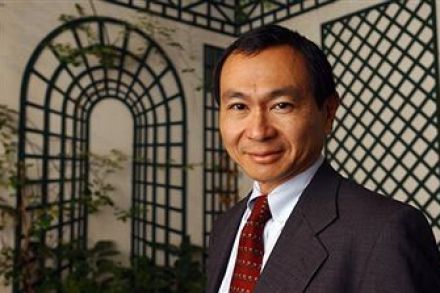
We have Francis Fukuyama writing a cover piece for us this week, revisiting his 'End of History' thesis. When he first published it, in 1989, he anticipated what was to become a consensus shared by many, including myself: that autocracy was on the way out. Communism had failed, and was being supplanted by the free society (aka the free market). Capitalism was creating wealth and liberty, and from Minsk to Gdansk people wanted it. Eastern Europe was managing a transition brilliantly. Fukuyama¹s thesis seemed to sum up an incredible spirit of optimism. Perhaps this optimism turned to hubris. After 9/11 Tony Blair and George Bush wanted to accelerate history, and bring democracy to countries which just needed to get rid of their dictatorships.

Yanukovych wins Ukrainian election – but that may not be all bad

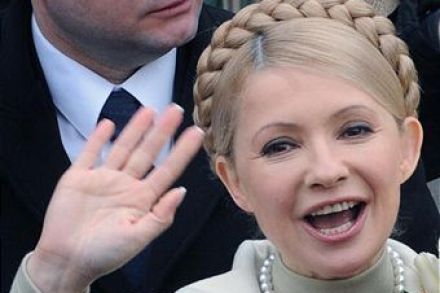
With just over 2% of votes still to be counted, Ukraine’s pantomime villain, Viktor Yanukovych, is coasting for victory in the country’s presidential election. Yulia Tymoshenko, the current prime minister and one of the leaders of the pro-Western ‘Orange Revolution' in 2004 has yet to accept her loss, but with the EU praising the “impressive display of democratic elections” it will be hard for her to do anything but concede. So is this game, set and match for Vladimir Putin, who has done everything in his power to snuff out the ‘Orange Revolution'? “Revolutions devour their own children”, the saying goes, and this has certainly been true of the 2004 events that swept Yulia Tymoshenko and Viktor Yushchenko to power.

Unhappy in her own way

It is a cruel fact, but unhappy marriages, unless they are your own, are always comic. Hence the popularity of Boccaccio’s Decameron. Hence the universal applicability of the Victorian joke about the Carlyle marriage: that it showed the kindness of God — making two people unhappy instead of four. The marriage of Tolstoy and Sofia Behrs, neither of whom had an ounce of humour in their bodies, certainly partakes of this grand old slapstick tradition. Sofia’s diary entry for 26 August 1882 runs: It was 20 years ago, when I was young and happy, that I started writing the story of my love for Lyovochka in these diaries: there is virtually nothing but love in them in fact. Twenty years later, here I am sitting up all night on my own reading and mourning its loss.

The end of special relationships

Today, two of my colleagues, former senior MoD official Nick Witney and US analyst Jeremy Shapiro, issued a hard-hitting report about transatlantic relationships. Their message is simple. Europe has the US president it wished for, but Barack Obama lacks the strong transatlantic partner he desired. With EU leaders heading to Washington for their transatlantic summit on 3 November, Shapiro and Witney caution European governments: an unsentimental President Obama has already lost patience with a Europe lacking coherence and purpose. In a post-American world, the United States knows it needs effective partners. And if Europe cannot step up, the US will look for other privileged partners to do business with. Unfortunately, many Europeans are in denial about how the world is changing.

Russia pockets Obama’s concession and moves on

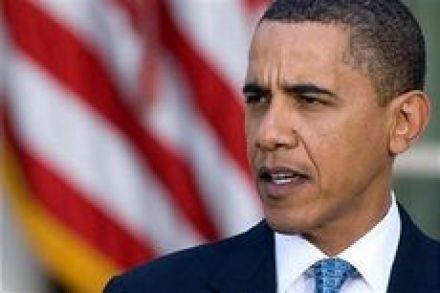
The strategic logic behind President Obama’s decision to alter US plans for a missile defence shield based in Eastern Europe was that this would persuade the Russians, who didn’t like the shield, to agree to the US’s push for tougher sanctions on Iran. But it appears that Moscow isn’t going to play ball.   The Russian Foreign Minister Sergei Lavrov declared after a meeting with Hillary Clinton yesterday that, “Threats, sanctions and threats of pressure in the current situation, we are convinced, would be counterproductive.” So, all that Obama’s concession has done is anger the Czechs and the Poles who weren’t told about the move until the last minute. Iran is an issue that hasn’t gone away.

Gordon Brown gets something right!

Gordon Brown is expected to offer to decommission one of Britain’s four Trident submarines as part of nuclear non-proliferation discussions at the UN today. The Times has the details: ‘Mr Brown will signal tomorrow that he is ready to negotiate at a meeting of the UN Security Council on nuclear non-proliferation. It follows President Obama’s decision to ditch the US missile defence shield in Eastern Europe. That move, and Russia’s delighted response, has bolstered hopes that a new non-proliferation treaty could be agreed next spring. Officials travelling with the Prime Minister to New York insisted that there was no question of surrendering Britain’s independent nuclear deterrent.

The Limits of A Munichean Worldview

Well that didn't take long. No sooner had I decried the notion that President Barack Obama's decision to move (but not cancel) the US's proposed missile defence shield from eastern europe than, sure enough, up more folk arrive to suggest that OMG! It's Munich All Over Again! This time it's Rich Lowry, editor of National Review, who, in a fit of blinding orginality, argues: With just one announcement, the Obama administration undercut two loyal allies, rewarded Russian bullying, and diminished our ability to counter an emerging Iranian threat. If there were awards for self-defeating weakness, this move would deserve a Neville for Appeasement in a Perpetually Threatened Region. Enough with this Munichean Worldview, please!

Petraeus’ lonely fight

At last night’s Policy Exchange lecture, General David Petraeus said he had known the former CDS, Lord Guthrie of Craigiebank, since “he was simply Sir Charles.” I met Petraeus for the first time when he was simply a colonel, serving with NATO forces in Bosnia-Herzegovina. Even then he was thought of as a rising star. His leadership in Iraq, first in Mosul and then in Baghdad has only cemented his reputation. Now, however, the scholar-warrior faces his probably greatest task – helping to defeat Taliban insurgents on both sides of the Durand Line. An effort, he said upon assuming command of CENTCOM in 2008, which might turn out to be “the longest campaign of the long war.

In Praise of Neville Chamberlain

18th March 1940: British prime minister, Neville Chamberlain (1869-1940) walking across the Horse Guard's Parade, Buckingham Palace on his seventy-first birthday. Photo: Davies/Topical Press Agency/Getty Images. Neville Chamberlain, it is fair to say, does not receive a good press these days. The War Party - on both sides of the Atlantic - sees Munich popping up every six months or so and, for reasons that escape one, presumes that it is always better to fight a war as soon as possible. All of subsequent human history is seen through the lens of Munich. This is a baffling virus but one that is, I fear, ineradicable.

Mr Obama, tear down these missile sites

Today Barack Obama publicly tore down the missile installations that George W Bush put up in the Czech Republic and Poland. The system was ostensibly meant to counter threats from Iran, but given the swift creation of missile sites in Poland and the Czech Republic in the wake of Russian’s invasion of Georgia, Moscow’s elite never bought into this rationale – and perhaps rightly so. The strength of Russian feeling has always been clear. The latest Russian National Security Strategy states that the “ability to maintain global and regional stability is being significantly aggravated by the elements of the global missile defence system of the US”.

The great Russian takeaway

That the rise of a powerful coterie of Russian billionaires overlapped with Britain’s transformation into an offshore tax-haven is unlikely to escape the notice of both countries’ future historians. Indeed it is entirely plausible that had successive British governments in the 1990s been less amenable to foreign wealth, this book would have been entitled Genevagrad rather than Londongrad. Mark Hollingsworth and Stewart Lansley raise interesting questions about how the rocketing price of property, contemporary art and even private school fees of early Noughties Britain, fuelled by a steady supply of roubles, contributed to the bubble preceding the bust.

A Georgian Folly

I must say I was surprised by Fraser's praise for Mikheil Saakashvili on Friday and his support for the stance taken by David Cameron and Liam Fox on matters Russian and Georgian. Surprised, because I'd thought Cameron's dash to Tbilisi last year one of the more reckless moments of his leadership that demonstrated that, like John McCain, his judgement in foreign affairs was too often too open to accusations of rashness.  Apart from anything else, as Carl Thomson ably demonstrates, Saakashvili is a poor poster boy for liberalism, even by the standards of the Caucasus. If Georgia is, in Fraser's description, "a light of democratic freedom" it's a light that shines pretty feebly.

Why Georgia matters

When David Cameron flew to Georgia last year, it was perhaps the clearest and most welcome statement of foreign policy made by the party since he became leader. Liam Fox’s piece on conservativehome today pays tribute to this, and gives us a welcome reminder of the stakes. The Russian threat is growing: there are 10,000 troops there and settlements will soon start. The best the West can do is show solidarity, and there is no clearer sign than going there. As Cameron did. Like Israel in the Middle East, Georgia is a light of democratic freedom in an area with plenty of unlit candles. There is something totemic about its independence, something the Conservatives can express clear and unequivocal support for.

Obama’s bear-hug

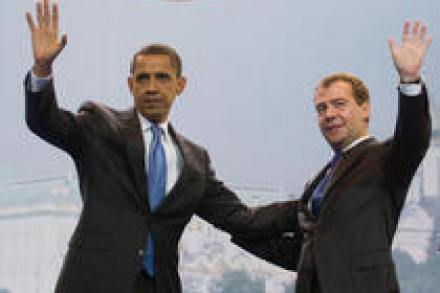
Presidents Obama, and Medvedev (and Prime Minister Putin) seem to be having a good summit. Nuclear talks look like they have gone well, there has been mention of expanding NATO's transit for its Afghan mission through Russia, and the mood - crucial at any summit - has been reasonably good. Nobody stared into any one else's soul, but the leaders nonetheless agreed, as Bush and Putin did a few years ago, that the US and Russia can do business. But is a rapprochement between the US and Russia really possible? Dmitri Trenin, of Carnegie Russia, says the West and Russia share many threats. But he also says that anti-Westernism is an "obsession" on the part of Russia's elite.

Valery Gergiev: Pawn of Putin?

There was an interesting, if occasionally frustrating, profile of Valery Gergiev in last week's New York Times magazine. Frustrating because the article was headlined "The Loyalist" (the cover line was "An Overture to Russian Nationalism") that seemed to want to condemn Gergiev for being a) proud of being Russian and b) far too close to the Kremlin. The former charge seems perverse unless, that is, any expression of Russian patriotism is inherently threatening and the latter seems, in some ways, almost inescapable if the Mariinsky Theatre (formerly the Kirov) wants to be able to do business and thrive in Russia.

Red Star Over Russia

Winston Churchill’s cousin, the sculptor Clare Sheridan, gazes up at her bust of Trotsky, made during a trip to Moscow in 1920. Her subjects were leading Bolsheviks including Felix Dzerzhinsky, the founder of the KGB, Lenin and Trotsky. While she worked, she asked Lenin, via a translator, if Churchill was the most hated man in Russia. ‘He is our greatest enemy because all the forces of capitalism are behind him,’ he replied. Sheridan’s mother wrote to her on her return: ‘I forgive you, darling, as I would even if you had committed a murder,’ but Churchill never spoke to his cousin again. Sheridan left England for New York, where her busts were exhibited.

A strong line required

Putin and the Rise of Russia, by Michael Stuermer For many years, Professor Michael Stuermer has been one of the West’s most respected authorities both on Russia and on Germany. As at home in English as in his native German, he has pursued not only an academic career, but has brought lustre to the usually grubby trade of journalism as chief correspondent for Die Welt. Few can be as well qualified to write about contemporary Russia, to analyse the extraordinary phenomenon of Putin or to add a late addendum on Putin’s successor, Dmitri Medvedev. The resulting book is authoritative, readable and concise.

Bush Saves Saakashvili…

Well, sort of. According to this report from Charles Bremner in the Times: With Russian tanks only 30 miles from Tbilisi on August 12, Mr Sarkozy told Mr Putin that the world would not accept the overthrow of Georgia, Mr Levitte [Sarko's chief diplomatic advisor] said. "I am going to hang Saakashvili by the balls," Mr Putin replied. Mr Sarkozy responded: "Hang him?" "Why not? The Americans hanged Saddam Hussein," said Mr Putin. Mr Sarkozy replied, using the familiar "tu": "Yes but do you want to end up like (President) Bush?" Mr Putin was briefly lost for words, then said: "Ah, you have scored a point there." ...President Mikhail Saakashvili, who was in Paris to meet Mr Sarkozy today, laughed nervously when a French radio station read him the exchange.