Russia

Portrait of the week: Inflation’s 40-year high, Tory MP’s rape arrest and monkeypox in Britain

From our UK edition

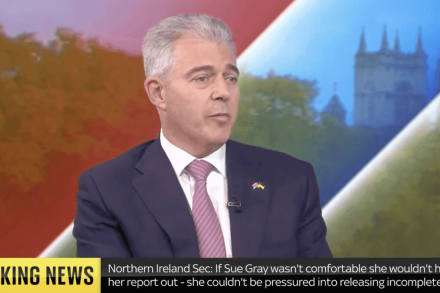
Home The annual rate of inflation, impelled by energy costs, rose to 9 per cent, its highest since 1982. Unemployment fell to 1.2 million, 3.7 per cent, its lowest since 1974 and below the number of vacancies of 1.3 million. Britain said it wanted to do something about the Northern Ireland Protocol, but the EU said it couldn’t. The Democratic Unionist party said it would not take part in the power-sharing executive of Northern Ireland unless Britain did. Liz Truss, the Foreign Secretary, told the Commons that a new law would adjust Northern Ireland’s trading status. Maros Sefcovic, vice-president of the European Commission, said the EU would ‘respond with all measures at its disposal’.

Cold Turkey: why is Erdogan resisting Nato’s expansion?

From our UK edition

Driving a hard bargain is the Turkish President Recep Tayyip Erdogan’s chief survival skill – one that has kept him in power for nearly as long as his Russian counterpart Vladimir Putin. And the basic principles of bargaining are twofold: never give something away for nothing, and make your threats to walk away convincing. No surprise, then, that Erdogan’s buzz-killing announcement last week that Turkey would oppose Swedish and Finnish membership of Nato was made in characteristically blunt terms. Speaking of a planned visit of Nordic diplomats to Ankara, Erdogan asked: ‘Are they coming to convince us? Excuse me, but they should not tire themselves.

Italy’s hostility to Nato is building

From our UK edition

Ravenna, Italy The war in Ukraine has caused an unholy convergence of the left and right in Italy. While there is nothing formal so far about this alliance of enemies, it nevertheless threatens to destroy the unity of Nato. The most high-profile participant is -Matteo Salvini, leader of the Lega – the party with the second-highest number of MPs in Italy’s parliament – which is invariably defined as ‘far right’. Salvini, who has been one of Vladimir Putin’s strongest supporters outside Russia, condemned the invasion of Ukraine and has now come out as a pacifist. He opposes Finland and Sweden joining Nato, or sending more arms to Ukraine, on the grounds that both would make peace less likely.

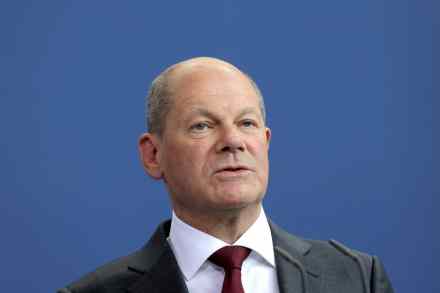
Sanction Gerhard Schröder

From our UK edition

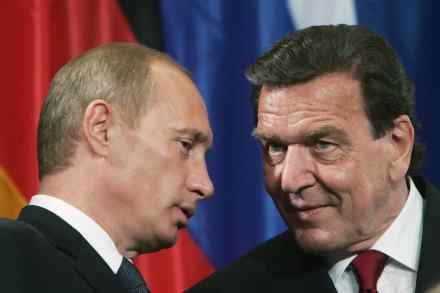
From the start of the war in Ukraine, the democratic world has shown striking unity in the economic boycott of Russia. But sanctions are always a blunt instrument: aimed at the regime, they end up harming the whole population. Ordinary Russians, too, are victims of Vladimir Putin’s corruption and misrule. Far better to target the Kremlin and those close to it. The system of targeted sanctions on named individuals is one way of doing this. Action has now been taken against 1,086 people, with assets suspended and travel bans imposed. To go after the rich and powerful is always a test for democracies, especially if such people are generous in their donations to political parties or have close political connections.

Russia and the death of the Golden Arches theory

From our UK edition

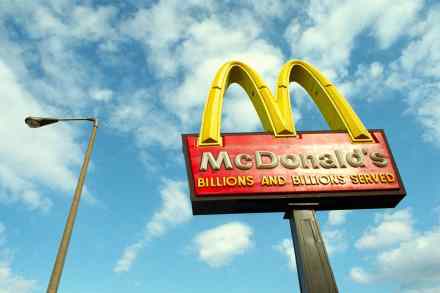
Ah, well, it was a lovely idea, born of the age of liberal-democratic triumphalism that was the 1990s: the ‘Golden Arches theory’, which held that no two countries that had McDonald’s franchises had ever been – or would ever go – to war. Remarkably, it wasn’t the product of McDonald’s PR department but the work of New York Times columnist Thomas Friedman. He argued that the arrival of McDonald’s signified a society that had become so consumerist that enough people had enough invested in economic stability to ever risk a war. Armed conflict ain’t good for the hamburger trade The final nail in the coffin of the Golden Arches theory has come with the news that McDonald’s is to abandon Russia permanently.

Stop calling Putin! Macron appears to be scolded by the Estonian PM

From our UK edition

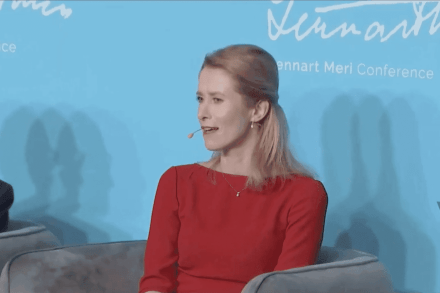
For a man who likes to present himself as a Jupiter-like statesman, gliding across the world stage, Emmanuel Macron’s efforts at diplomacy have fallen remarkably flat in recent months. While Britain spent the weeks before the Russian invasion of Ukraine shifting weapons to Kyiv – to demonstrable effect now – Macron instead responded to the troop build-up by going on a doomed diplomatic mission to Moscow. Unsurprisingly, his face to face with Putin, across an absurdly long table in the Kremlin, did not work out. Undeterred, Macron has spent the weeks following the invasion keeping up a close relationship with Putin, and has spoken a number of times to the bloated authoritarian on the phone.

Does Putin have blood cancer?

From our UK edition

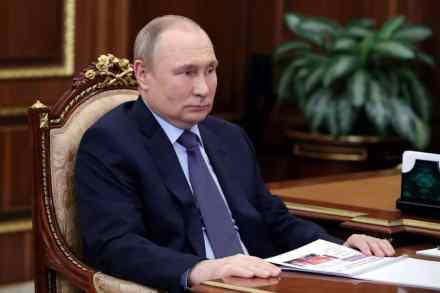
Suddenly, we are all diagnosticians. Clips of a puffy Putin slurring his words, his hands twitching or clutching a table for grim death, have led to all kinds of speculation about his health. It does seem probable that he is suffering from some ailments, to be sure. However, we need to be careful we do not get carried away with the speculation. Putin is notoriously private and his health is considered well off-limits. For a man who built much of his personal brand on his judo-fighting, ice hockey-playing, bare-chested horseback-riding persona, illness and ageing are obviously sensitive topics. Nonetheless, it has long been known that he suffers from recurring back problems, and appears to have undergone surgery more than once.

Why are Putin’s propagandists so bad at their jobs?

During the Cold War, the Soviets would place defectors from the West under house arrest as soon as they arrived in Russia. The assumption was that, as soon as they realized what a dump the USSR was, they would try to sneak back home. And they were probably right. Still, it’s a credit to the Soviet propaganda machine that they showed up in the first place. Back then, Russia did a great job of marketing itself. They paid top dollar to seduce high-ranking scientists and intelligence officials, while young radicals lined up to do the Kremlin’s bidding. Their disinformation was second to none. And today? Well, put it this way. Last week, Russian foreign minister Sergei Lavrov said that Ukraine’s Jewish president, Volodymyr Zelenskyy, is a Nazi.

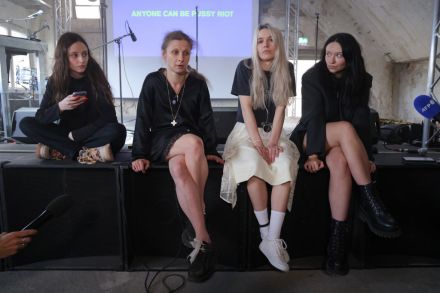
Pussy Riot’s daring escape from Russia

It is a story of ingenuity, cunning and farce that would have done credit to Mr. Toad, escaping his prison bondage by dressing as a washerwoman. Lucy Shtein, one of the members of the Russian protest art collective Pussy Riot, recently revealed how she managed to flee the country while dressed in the bright green attire of a food delivery company. Along with her constant familiar Mr. Rat — a pet rodent who, as is often the way of these things, has become a social media breakout star — Shtein managed to leave her flat in central Moscow, where she had been under house arrest for more than a year.

Ukraine vote shows Republicans still don’t get it

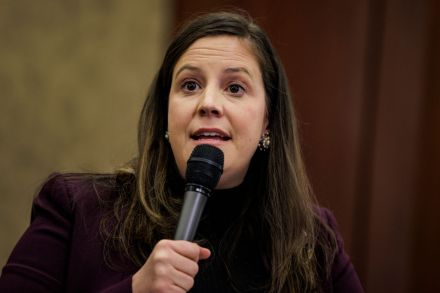
"I am 'Ultra MAGA'," House Republican Conference Chair Elise Stefanik defiantly told a reporter Wednesday, "and I'm proud of it." Republicans should be embracing the badass nickname Biden bestowed upon them, just like Trump should accept being crowned the "great MAGA king." The only problem is that Stefanik is not "Ultra MAGA." Far from it. Just one day before Stefanik declared herself part of the cool kids' lunch table, she voted with 149 other tone-deaf Republicans to send an additional $40 billion in aid to Ukraine. Congress had already approved $13.6 billion in emergency spending after the Russian invasion back in March.

Why Russian literature shouldn’t be cancelled

From our UK edition

Vladimir Putin makes no secret of his love for Russian culture, and Russian literature in particular – a body of work whose achievements, Dostoyevsky once claimed, justifies the existence of the entire Russian people. But if that same oeuvre now inspires a man instigating unprovoked war, doesn’t that raise urgent questions about its contemporary validity? For some, these concerns are best expressed via cancellation. In Wales, the Cardiff Philharmonic recently pulled the plug on performances of Tchaikovsky’s 1812 Overture, Marche Slave and Second Symphony, the ‘Little Russian’ (an old and patronising name for Ukraine).

The real reason for Putin’s intelligence shake-up

From our UK edition

It has been reported this week that Vladimir Putin is shifting responsibility for covert operations in Ukraine to a different intelligence agency. The Fifth Service of the Federal Security Service (FSB) has now reportedly been usurped by ‘military intelligence’ – still widely known by its old acronym of GRU, but actually called the GU, the main directorate of the general staff. Lt Gen. Vladimir Alekseev, first deputy head of the GU, is now expected to take over Russia’s intelligence capabilities in Ukraine. To some this is evidence of inter-agency conflict and the decline of the FSB inside the Kremlin’s walls. But it is more likely that Putin is simply digging in for a long war.

Why the new Anglo-Swedish pact matters

From our UK edition

Boris Johnson has travelled to Stockholm to sign a mutual defence pact with Sweden to tide the country over until it enters Nato. He'll then travel to Finland to agree similar terms. This is quite significant for a few reasons. To the Prime Minister, the 'global Britain' post-Brexit strategy means signing global new trade and defence relationships: with European and global partners. In other words, showing that Brexit Britain has not turned in on itself but is keen to make new and global alliances - stepping up as an ally at times when even America is reluctant. This is one of those times. In theory, the European Union has a mutual defence clause (Article 42.

Putin’s Victory Day speech shows he’s not backing down

“Victory Day” is one of the most solemn events on the Russian calendar. Every year on May 9, the country gets together to celebrate the defeat of Nazi Germany in what Russians call “the Great Patriotic War,” in which as many as 26 million Soviet troops and civilians perished. It’s a time for reflection, for an appreciation of history, and, yes, for pomp and circumstance, with Russian troops decorated in dazzling uniforms marching in unison throughout Moscow's Red Square. This year’s Victory Day celebrations, however, had much of the world on edge. In next-door Ukraine, Russian forces were taking a beating, with smaller but nimbler and more determined Ukrainian units continuing to mount stiff resistance against a Russian military offensive in the Donbas.

Putin’s cult of war

From our UK edition

This idolisation of the Soviet military is Russia’s modern tragedy. Not least because it is crucial to Putin’s way of controlling the country. Russians are prodded to believe in a golden thread linking the achievements of an unsullied Red Army with what their soldiers are perpetrating in Ukraine today. This is why it was entirely to be expected that at today’s Victory Day parade Putin again couched his so-called ‘special military operation’ in terms of a fight against ‘Nazis’. It’s also why the Russian foreign minister, Sergei Lavrov, has compared Ukraine’s Jewish president to Hitler.

Read: Vladimir Putin’s victory day speech in full

From our UK edition

The following is The Spectator’s translation of Putin’s speech for victory day 2022. Most respected citizens of Russia, dear veterans, comrade soldiers and sailors, sergeants and petty officers, midshipmen and ensigns, comrade officers, generals and admirals: I wish you all a happy great victory day! The defense of our homeland – when its fate hung in the balance – has always been sacred. With such feelings of genuine patriotism, Minin and Pozharsky’s People’s Militia rose up for the motherland, advanced to attack on the field of Borodin, fought the enemy on the outskirts of Moscow and Leningrad, Kyiv and Minsk, Stalingrad and Kursk, Sebastopol and Kharkov.

Is Putin preparing for total war on 9 May?

From our UK edition

Ahead of Russia’s annual Victory Day celebration on 9 May – which marks the date the Soviet Union defeated Nazi Germany – the world is once again playing a will he, won’t he game with Vladimir Putin. It is inconceivable that Putin will be able to declare any kind of victory in the Donbas on 9 May as he originally intended. The question now is whether he will use the anniversary to declare all-out war on Ukraine instead and fully mobilise Russian society. It is a terrifying decision for Putin to face. The conquering army he sent into Ukraine has been shown to be deeply flawed, too small to conquer large amounts of territory, and inadequately led.

No, BP’s profit hasn’t boosted Starmer’s windfall-tax call

From our UK edition

BP’s ‘underlying’ first-quarter profit of $6.2 billion, compared with $2.6 billion in the first quarter of 2021, was a direct reflection of the surge in global energy prices. Coming 48 hours before polling day, it also looked like a gift-wrapped on-time delivery for Sir Keir Starmer and his claim that a windfall tax on ‘excess’ profits of North Sea oil and gas extractors would knock £600 off the energy bills of ‘those who need it most’. Perhaps anticipating the BP announcement, Rishi Sunak last week seemed to trim his opposition to a windfall tax, telling Mumsnet ‘of course that’s something I would look at’ if energy companies fail to invest in the right sort of projects.

The sin of neutrality

From our UK edition

Yet again, millions of civilians across the Horn of Africa are starving. The world blames the crisis on drought and climate change, which nowadays is the way we excuse these countries for environmental mismanagement. But as ever, war is really the single greatest reason why people are killed year after year in this region. And while western countries pour billions of dollars of food aid into Ethiopia, Somalia and South Sudan, the weapons flooding those states originate mainly from Russia, China, Belarus – and Ukraine. In response to an article I recently wrote in The Spectator about why I think so few African governments condemn Russia’s invasion of Ukraine, I have had the usual deluge of ad hominem attacks so familiar to anybody who dares to criticise African governments.

Where will the war in Ukraine go next?

Almost every night in Russia, it seems, a government building bursts into an unexplained fire. Fuel depots, office buildings, infrastructure hubs — and once a bridge. No doubt people have their theories. Insinuation abounds. "Karma is a cruel thing," one Ukrainian official has said on Telegram. But in the main, both the Russian government and Ukraine maintain an eloquent silence. The metaphor is apt. The fires are an unexpected consequence of Russia’s war in Ukraine, an eventuality, no doubt, that no one in the Kremlin inner circle anticipated, or planned for. And yet they burn merrily nonetheless.