Russia

Ukraine’s Jehovah’s Witnesses are refusing to go to war

Prison guards led Vitalii Kryschenko to an inhospitable, cramped cell. Inside, the prisoners were curious. They watched with great interest as Kryuschenko found his allotted place. A small, gentle man with a nervous expression, he wasn’t a typical criminal but a Jehovah’s Witness. Kryschenko was jailed by Ukrainian authorities for refusing to go to war; taking up arms is forbidden by his religion. He was now going to share his days with the very worst of Ukrainian society. This would include thieves, those guilty of assault or worse.  "I was living with murderers, people jailed for life," he said. "It was terrifying. On my first night, I asked myself how I would survive in these conditions. All the same, I continued my daily prayers and read the Bible.

ukraine
europe

Should Europe mediate Russia-Ukraine talks?

The worst job in the world is to try negotiating with President Vladimir Putin to end the war in Ukraine to everyone’s satisfaction. Yet European leaders want to do just that. Frustrated by the failure of the Trump administration to negotiate anything of value with Putin, Europe is scurrying around looking for the ideal candidate to confront the Russian leader across the table and bash out a peace deal. It’s a fantasy world, of course. If Putin obstructed Trump, his old sparring partner, and never remotely got close to a deal with the Americans, why would he consider sitting down with some European leader, or ex-leader, to bring the four-year war to an end?

Is the West deserting Ukraine at precisely the wrong moment?

Moscow is coming under direct drone attack, the Russian economy is creaking, patriotic bloggers are ever more apocalyptic in their predictions of military disaster and evidence is piling up that Russia’s elites are becoming seriously disillusioned with the war and Vladimir Putin himself. Is this the moment for Britain to desert Ukraine by easing sanctions and refusing to commit more money to Kyiv’s military? Last week, the British government issued licences for the import of gasoline products from Russia refined in a third country. No. 10 also approved  licences for British companies to continue to service tankers carrying Russian liquefied natural gas (LNG).

Why drones will carry out the next 9/11

From our US edition

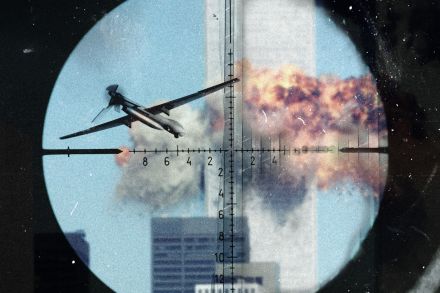
Few know more about drone warfare than Brett Velicovich. During the Iraq war, the former Delta Force intelligence analyst lived in a “black box” in the Iraqi desert using Reaper and Predator drones to pinpoint and track high-value terrorists – before sending in Tier 1 special forces teams, or a Hellfire missile, to end their lives. Most notable among the scalps he claimed were ISIS founder Abu Omar al-Baghdadi and the leader of Al Qaeda in Iraq Abu Ayyub al-Masri. “I feel like there's going to be another 9/11, but this time without the martyrs because you don't need humans anymore to cause sensational damage” Velicovich’s days in the "black box” were some of the last that America could control the skies with drones.

The tide has turned in Ukraine

From our US edition

The long war in Ukraine has morphed into a new and decisive phase, one that could lead to Ukraine’s upset victory over its much larger, more aggressive neighbor. The global consequences of Russia’s loss – and Vladimir Putin’s humiliation – would be enormous. What is this new phase? Is there really evidence the tide has turned in Ukraine’s favor? To sort out the answers and understand what’s new about the war’s current phase, we need to do a brief tour of the three phases that preceded it. The first phase began well over a decade ago, in February 2014, when Barack Obama was president. Ukraine fatefully signaled it wanted much stronger ties with Europe and the United States, not Russia, at the very moment US deterrence was weak.

Zelensky

How Putin got the Hollywood treatment

Sometimes life disappoints you in interesting ways. I hated Giuliano da Empoli's 2022 book The Wizard of the Kremlin, a fictional political thriller about the dawn of Putinism, with a shuddering passion. I had, therefore, been looking forward to despising the film version when it arrived in cinemas last month, too.  Yet it turns out that TWotK, directed and co-written by French filmmaker Olivier Assayas, is an impressive film: visually stunning, well cast, a straight story well told. Paul Dano (the greasy-faced young preacher from There Will Be Blood) plays Vadim Baranov, the fictional ‘Wizard’ of the title, a whizkid theatre and TV executive tasked with creating and curating a successor to the ailing Boris Yeltsin.

The Kremlin’s secret plans for post-war Russia

From our US edition

A top-level Kremlin policy document discussing post-war political planning and how to neutralize potential ultranationalist discontent has been leaked to the Russian investigative site Dossier Center. Entitled "Images of Victory," the paper gives a rare insight into the inner workings of Russia’s political machine. Crucially, it shows that while the Kremlin remains officially indifferent to peace talks, behind the scenes apparatchiks are working hard on selling an inevitable stalemate to the Russian people by dressing it up as a species of victory. The document was leaked before President Trump's announcement today of a three-day ceasefire between Russia and Ukraine.

Putin

Russians no longer believe Putin’s war propaganda

A year ago, Russia marked the May 9 Victory Day celebration with a spectacular display of fireworks that lit up the Moscow sky. This year the fireworks have again been spectacular – but this time they have been caused by long-range Ukrainian attack drones slamming into refineries, pumping stations and factories deep inside Russia. In the Black Sea port of Tuapse, fireballs of burning gasoline 15 stories high erupted over the local oil refinery, while rivers of burning fuel ran down the city’s streets. Firefighters took three days to extinguish the inferno, which created a plume of smoke so high it was filmed by skiers from the slopes of the Caucasus mountains more than 60 miles away.

russia putin russians

Russians no longer believe Putin’s war propaganda

A year ago, Russia marked the 9 May Victory Day celebration with a spectacular display of fireworks that lit up the Moscow sky. This year the fireworks have again been spectacular – but this time they have been caused by long-range Ukrainian attack drones slamming into refineries, pumping stations and factories deep inside Russia. In the Black Sea port of Tuapse, fireballs of burning gasoline 15 storeys high erupted over the local oil refinery, while rivers of burning fuel ran down the city’s streets. Firefighters took three days to extinguish the inferno, which created a plume of smoke so high it was filmed by skiers from the slopes of the Caucasus mountains more than 60 miles away.

Russia is running out of workers

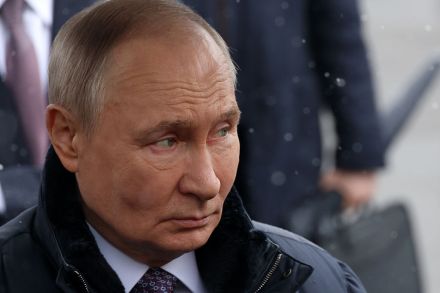
Vladimir Putin likes good statistics. At a government meeting on April 15, even as he acknowledged that growth was slowing, he pointed proudly to Russia's unemployment rate: 2.1 percent, a record low. Proof, he suggested, that the economy remains fundamentally sound despite everything the West has thrown at it. The Russian President would do better to worry. A record low unemployment rate is not, in normal circumstances, cause for alarm. In Russia's case it signals something closer to a slow-motion emergency. For the first time in its post-Soviet history, Russia has run out of workers.

workers
coup

No, Russia is not on the verge of a coup

However much Western leaders inveigh against Russian disinformation (which, yes, is a real issue), we should never pretend this is not a two-way street. The sudden spate of news stories reporting that a conveniently anonymous "European intelligence agency" claims that the Kremlin fears a coup looks suspiciously more like a psy-op meant to generate paranoia in the Russian elite than a serious assessment. The claim is that Putin’s personal security has been dramatically stepped up, not simply to protect him from increasingly frequent and far-ranging Ukrainian drone strikes but, in particular, because since the beginning of March, the Kremlin and Vladimir Putin himself have been concerned about the risk of a plot or coup attempt targeting the Russian President.

ukraine robotic assault

WATCH: the world’s first robotic assault on an enemy position

From our US edition

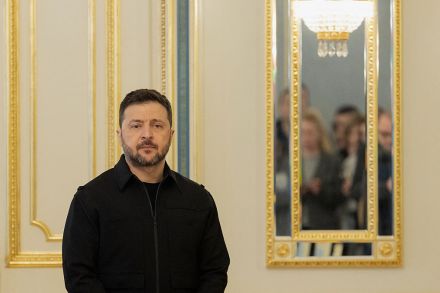
The world’s first fully robotic assault on an enemy position was, of course, captured on video by a drone hovering above.President Volodymyr Zelensky recently revealed that the pioneering mission by the Ukrainian army had taken place last year in Kharkiv Oblast. He added that in the last three months Ukraine has conducted 22,000 missions using robotic vehicles. Robots, he stressed, are replacing soldiers on the frontline with Russia. Video of the assault has been passed to The Spectator by the 3rd Assault Brigade, the unit behind the mission. It shows that a Russian fortified dugout was first attacked by a suicide drone that exploded inside and then a Targan – “cockroach” in Ukrainian – remote control vehicle parked outside and detonated its mine. https://twitter.

The fate of the British teenager who posed as a Russian oligarch’s son

This story is little more than a brutal anecdote, which Patrick Radden Keefe has chosen to tell at excessive length. It has the kind of fact-checked gravity that indicates a star American journalist bent on perpetrating an entire book. (“Built in 1923 and originally known as the Empire Stadium, Wembley was the most iconic sporting ground in Britain.”) But it occurred to me more than once as I read it that it has the hallmarks of a particularly black London comedy by Charles Dickens or Ben Jonson or Joe Orton. A violent knave, his activities previously limited to cheating the police, murdering his equally appalling criminal rivals, doing underhand deals and ripping off the rich, acquires an associate.

zac brettler russian london

The new battle over American airspace

From our US edition

Last month, a mysterious drone swarm led to a lockdown at Barksdale Air Force Base in Louisiana. Nothing was damaged and none of the 40 B-52 bombers or their cruise missiles were hit. At least not this time. But modern war no longer starts with an open attack. Instead we see hybrid actions: cyberattacks, information and psychological operations, GPS disruptions, damage to undersea communication cables and, increasingly, drone incursions into military sites and critical infrastructure. There is rarely a formal declaration. Russia’s invasion of Ukraine, the largest war in Europe since the Second World War, was labelled a “special military operation.

A Ukrainian win is more important than ever

On 3 April we mark 1,500 days since Russia invaded Ukraine; on 11 June, the conflict will have lasted longer than the first world war. At that point in 1918, the German army was in complete collapse amid the success of the final Allied offensive, as the Kaiser’s disillusioned troops were forced back through the battlefields of the Somme. By contrast, the Ukrainian conflict remains locked in a bitter and bloody war of attrition. The Ukrainians have displayed an inspiring level of resilience; indeed, in recent months they have made small territorial gains. But the outbreak of war in the Middle East has, for the moment, strengthened Vladimir Putin’s hand.

The Trumpian appeal of a Trojan horse

Given the tonnage of missiles launched at Iran, it seems remarkable how relatively few Iranians have been killed. But the Americans have no interest in wasting multi-million-dollar ordnance on pain-in-the-ass innocent bystanders. However, Donald Trump is now considering a land invasion. That would have been unwise, as the ancients knew. Understanding all about the problems of land assaults against defended cities, the ancients often preferred to lay siege. That could be a long and wearisome business and did not necessarily guarantee success. Troy was besieged for ten years, but it took the trick of the wooden horse to take it. So when the Persian king Darius (c.

With no coherent strategy, Britain seems perpetually adrift in the world

The British state seems perpetually befuddled. Every international crisis catches it in its sudden glare like so many headlights trained on a nervous rabbit hopping hopelessly around a motorway. One moment Russia is invading Ukraine, then Hamas attacks Israel, Israel flattens Gaza, America knocks out Venezuela, then attacks Iran, while all the time China leers over Taiwan. Each new event leaves us spinning. Whose side are we on? What do we want? How do we get it? We use grand words to navigate our way in the confusion: ‘the special relationship’; ‘the national interest’; ‘the rules-based order’. But if these once signified some grand story we could all relate to they now feel empty and confusing.

Why Ukraine’s Russian oil strikes are backfiring

Every drone Ukraine fires at a Russian oil terminal is meant to defund Moscow's war in Ukraine. Right now, each one may be doing the opposite. Ukraine's strikes on Russian oil export infrastructure are intended to starve Moscow of the budget revenues that fund its war machine. The logic is straightforward: disrupt exports, reduce revenues, constrain the war effort. Kyiv has been explicit about this: Ukrainian officials consistently frame attacks on oil terminals as direct hits on Russia's war chest, treating every barrel that cannot be shipped as a ruble that cannot be spent on missiles or mobilization. Reuters puts the scale of that disruption in stark terms – at least 40 percent of Russia's crude export capacity, roughly 2 million barrels per day, is currently offline.

ukraine oil drone

The Iran war is just what Putin’s depleted coffers need

Of all the parties watching the chaos in the Middle East unfold, one should be rubbing its hands together with particular satisfaction. Russia has not fired a shot in this conflict, lost no allies it cannot afford to lose and has so far gained rather a lot, with more to come. A cynic might call it the perfect war for Vladimir Putin. Moscow's public reaction has been characteristically theatrical. The Foreign Ministry denounced American and Israeli actions as a "reckless step" and a "dangerous adventure." Things have gone no further. There has been no announcement of political or military support for Iran from the Kremlin – nor is there likely to be: Russia needs its drones and missiles for Ukraine.

putin

Putin is enjoying the Iran war

After Iran unleashed a torrent of missiles against its neighbors – including those with whom it had enjoyed friendly relations such as Turkey and Azerbaijan – few regional leaders are in the mood to congratulate the new Supreme Leader Ayatollah Mojtaba Khamenei. Few, but not none. "At a time when Iran is confronting armed aggression, your work in this high office will undoubtedly require great courage and dedication," wrote Vladimir Putin in an official message of congratulation to Khamenei Junior. "I am confident that you will honorably continue your father’s legacy and unite the Iranian people in the face of these severe trials.