Russia

Meet the Russians in Serbia who voted against Putin

From our UK edition

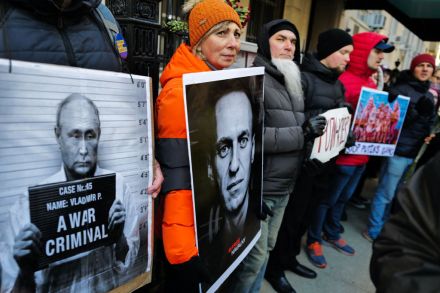
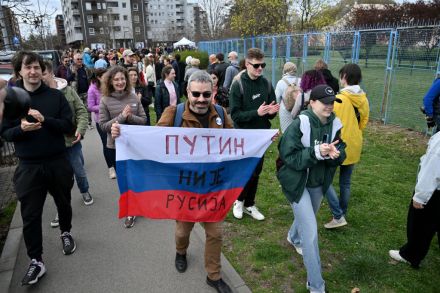
Today, Russians in Serbia are heading to the polls to cast their vote and protest against what many see as a sham presidential election. A polling station in the capital Belgrade opened this morning at 8am, but many decided to turn up at ‘Noon against Putin’, a protest called by the late Russian opposition politician Alexey Navalny.  Tens of thousands of Russians have settled in Serbia since the start of the war in Ukraine. Like millions of other Russian exiles around the world, they are eligible to vote in this weekend’s polls—which are almost certain to hand Vladimir Putin another six years in power. With no credible opponent and only one possible result, I asked Russians why they are bothering to show up at the polls.
wars

Lessons from costly wars past

Money is often a substitute for strategy in US foreign policy. We spent $2 trillion in Afghanistan, only to lose the country the minute our troops began to pull out. How much will it realistically cost, then, to beat Russia in Ukraine? Will the next $100 or $200 billion do the trick? This is not a question that supporters of war-spending ask themselves. As in Afghanistan, spending is a way to defer thinking about actually winning — or facing the serious possibility of losing. Our aid buys delay, not results. Ironically, while the specter of World War Two is invoked every time there’s a conflict, our experience then teaches the same lesson as recent attempts to purchase victory.

BRICS

Nixing BRICS: how to counter the China-led alliance

Americans are used to exercising influence through international entities such as NATO, the World Trade Organization or the World Bank. Each of these groups was set up with American leadership or at its instigation; all have been used to advance Washington’s vision of global liberal-democratic capitalism. No comparable international organization or collection of nations has been influential since the Soviet Union’s collapse. That may be changing. The so-called BRICS alliance (its founding countries were Brazil, Russia, India, China and South Africa) recently added new members Iran, Ethiopia, Egypt and the United Arab Emirates.

Pope Francis’s Ukraine war faux-pas

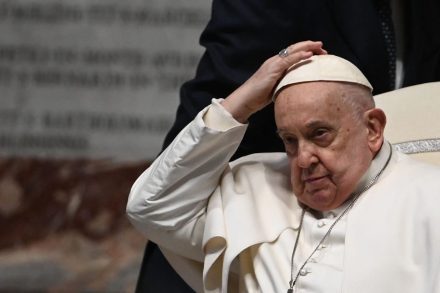
If you didn’t know any better, you might think that Pope Francis was no longer welcome in Ukraine. His recent interview with a Swiss broadcaster, excerpts of which were released over the weekend, has caused a whirlwind of disappointment and anger in Ukrainian policy circles as well as with some of Ukraine’s staunchest supporters in the West. The subject of derision: whether Ukraine should do a little less fighting and a lot more talking. Asked to comment about the debate between those who seek a negotiated end to Russia’s two-year-long war in Ukraine and those who oppose such a stance, Pope Francis chose the side of dialogue.

pope francis

Russia will not attack Nato

From our UK edition

There is a lot of war fever about. In January, Grant Shapps, Britain’s tiggerish defence secretary, said the UK was in a ‘pre-war’ period. The West’s adversaries in China, Russia, Iran and North Korea are mobilising, he said. Not wanting to be outdone, Shapps’s Labour shadow John Healey wrote in the Daily Telegraph: ‘If Putin wins, he will not stop at Ukraine.’ Timescales for when this conflict will come vary. Shapps said it could come within the next five years, whereas the estimates of European politicians range from three to eight years. Nato’s top military official warned that Europeans must be ready for a conflict with Russia within two decades. An Estonian military officer told Sky News that war with Russia was a matter of ‘when, not if.

Victoria Nuland was the Kremlin’s princess of darkness

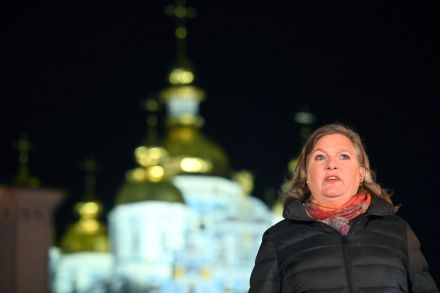
It was not a Super Tuesday for either Senator Kyrsten Sinema or State Department official Victoria J. Nuland. Each announced that they were stepping down from their positions. Sinema is declining to run once more in Arizona for the Senate. Nuland is exiting her post as the number three official at State, where she was widely seen as the champion of a hawkish approach to foreign policy. Sinema delivered a mawkish message that essentially blamed the American people for failing to recognize, let alone value, her valorous attempt to restore American power and prosperity. Nuland, by contrast, had to be satisfied with a statement from secretary of state Antony J. Blinken: “She always speaks her mind.

victoria nuland

Why Latvia is expelling its Russian speakers

From our UK edition

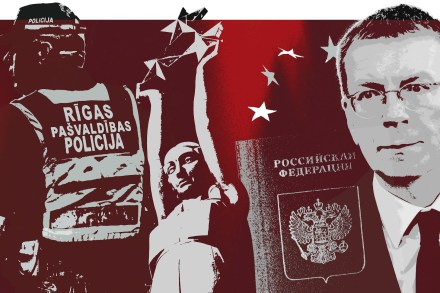
Riga, Latvia At the age of 74, Inessa Novikova, who is ethnically Russian, was told she had to learn Latvian or she’d be deported. ‘I felt physically ill when the policy was announced,’ she tells me when we meet in an office close to Riga’s city centre. ‘I’ve lived here peacefully for 20 years.’ There was no requirement for her to seek Latvian citizenship after the Cold War ended. Then, it was acknowledged that ethnic Russians, who make up a quarter of Latvia’s 1.8 million population, would co-exist with ethnic Latvians. But when Vladimir Putin invaded Ukraine, this arrangement ended. If Latvia’s ‘non-citizens’ had Russian citizenship, as Inessa did, they now had to apply for a new ‘EU residence’ permit, which meant learning Latvian.

A free spirit: Clairmont, by Lesley McDowell, reviewed

From our UK edition

Commentary on the young Romantics can be curiously puritanical. Not on saintly John Keats, who died too young to cause any trouble. But Byron and Shelley? Beastly to women, negligent as parents, destructive as friends, oblivious to their own privilege. Feminist observers tend to resemble the English visitors to Geneva in 1816 who borrowed telescopes to spy on the renegade inhabitants of the Villa Diodati across the lake, hoping to be scandalised. A central character in the summer that saw the birth of Frankenstein was the only non-writer of the villa’s gathering, Byron’s young lover and Mary Shelley’s step-sister, Claire Clairmont.

Bombed-out bank shares are a failure of modern capitalism

From our UK edition

When I read news of a fresh strategic plan for Barclays, I seem to hear a ghostly rustling from the corner cupboard in the living room. Could it be a forlorn protest from the dusty bundle of share certificates that are the last vestiges of my late father’s lifelong service to Barclays from junior clerk to deputy chairman? They were a modest farewell reward – 40 years ago, in the era before mega-bonuses for senior executives – that might once have been swapped for a country cottage but today would barely yield enough to pay for his upcoming centenary dinner. Even the Qatari sheikhs have sold down their Barclays holdings in despair.

Harry Mount, Lara Prendergast, Catriona Olding, Owen Matthews and Jeremy Hildreth

From our UK edition

29 min listen

On this week's Spectator Out Loud, Harry Mount reads his diary, in which he recounts a legendary face-off between Barry Humphries and John Lennon (00:45); Lara Prendergast gives her tips for male beauty (06:15); Owen Matthews reports from Kyiv about the Ukrainians' unbroken spirit (12:40); Catriona Olding writes on the importance of choosing how to spend one's final days (18:40); and Jeremy Hildreth reads his Notes On Napoleon's coffee. Produced by Cindy Yu, Margaret Mitchell, Max Jeffery and Natasha Feroze.

Alexei Navalny won’t be the last of Putin’s martyrs

Alexei Navalny, Russia’s most prominent opposition leader and a constant irritant to Russian president Vladimir Putin’s regime for more than a decade, has died in a remote penal colony in the Arctic Circle at the age of forty-seven. The news was greeted with shock, outrage and sadness across the US and Europe and came at a time when the West’s most high-profile politicians and security figures were in Germany for the annual Munich Security Conference.   There’s no denying Navalny’s bravery. Most high-profile Russian figures who criticize Putin and live long enough to tell the tale choose to live a life in exile. Navalny, however, was never interested in that option.

alexei navalny
navalny opponents

Will the West make Putin regret the death of Navalny?

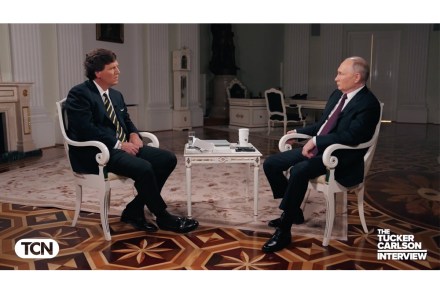
The death of Alexei Navalny, announced a week after Vladimir Putin's sit-down interview with Tucker Carlson and reported as senior officials gather for a security summit in Germany, is an expression of the ruthlessness of the Russian authoritarian. Add Navalny to the list of foes Putin's regime has assassinated — the most prominent since Boris Nemtsov was shot to death while crossing a bridge — and know that so long as the current regime is in power, it will continue to assassinate anyone who rises up against it. Whether they die by poison or bullet or walking in a prison yard north of the Arctic Circle, it's all the same to him. Navalny's defiant stand in opposition to the corrupt Putin regime is the definition of courage.

tucker carlson groceries

Why Tucker Carlson should have been less excited about his groceries

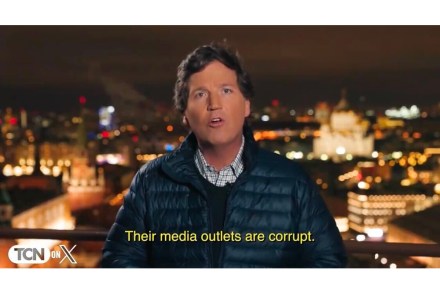
Tucker Carlson has been radicalized by a Russian supermarket. There’s a sentence you never expected to read. As part of his tour of Moscow, the week before Putin critic Alexei Navalny “died in prison,” the firebrand commentator visited a grocery store and was stunned by the low prices. “That’s when you start to realize,” Carlson marveled: …that ideology maybe doesn’t matter as much as you thought… Corruption… If you take people’s standard of living and you tank it through filth and crime and inflation, and they literally can’t buy the groceries they want, at that point maybe it matters less what you say or whether you’re a good person or a bad person, you’re wrecking people’s lives and their country.

How foreign policy will impact the 2024 election

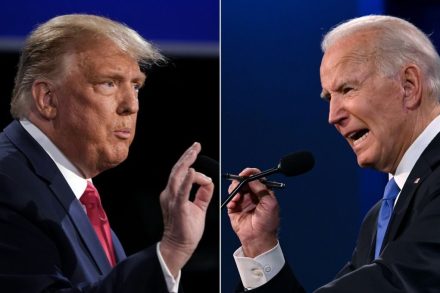
Donald Trump’s long march through the Republican primaries leaves little doubt about the inevitability of a Biden-Trump rematch in November — court cases and old age notwithstanding, of course. Unlike previous contests, foreign policy looks set to be at top of mind for many voters. Which, if you’re a Biden supporter, isn’t great news. In a recent AP poll, four in ten American adults named foreign policy as issues the government should work on in 2024. The president’s decisions abroad broadcast weakness, lack of direction and myopia, traits that have come to define his first term. The deadly and chaotic withdrawal from Afghanistan was only a sign of things to come, as more conflicts and crises sprang up around the world.

policy

Trump says he will let NATO down. How will Kamala Harris respond?

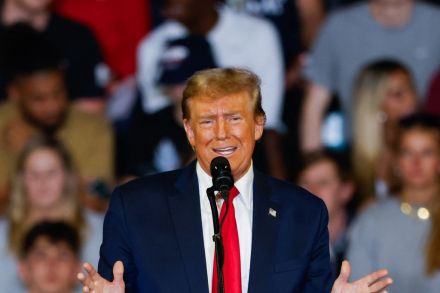
When Donald Trump declared that Russia could do “whatever the hell it wants” to NATO countries, he was espousing his own lifelong credo. Trump has done whatever he pleases for most of his life. It was generous of him to extend the same carte blanche to the Kremlin, which is presumably pleased with his offer but has yet to comment on it publicly.  Once upon a time, conservatives used to raise an eyebrow over the notion over doing whatever the hell you want. They were in a more censorious mode, arguing that this amounted to moral relativism. Now it seems that anything goes.  The old certitudes are gone.

donald trump nato

Vladimir Putin’s night at the Tucker Carlson circus

Tucker Carlson is a master contortionist. As conservative strategist David Reaboi reminded us this week, one of the most egregious examples of Carlson’s tendency for reality deformation came in the form of an interview with Kanye West, the troubled rapper who sat for an interview on Carlson’s erstwhile Fox News show a couple of years ago. It was the middle of West’s antisemitic meltdown, but because West was embracing Donald Trump, Carlson presented him as a sensible, even brilliant thinker. “Is West crazy?” Carlson asked at the top of the interview, before concluding at the end: “Not crazy. Worth listening to, even if you disagree with him.

tucker carlson

The biggest overreactions to Tucker Carlson’s Putin interview that no one has seen yet

Judging by some of the responses to Tucker Carlson’s announcement of his forthcoming interview with Vladimir Putin, you'd think the former Fox News host had been caught driving a tank into Kharkiv. Naturally, Cockburn is reserving judgment until he's seen the conversation itself — which is scheduled to be released this evening. Of course, Carlson has a track record of going easy in interviews with morally dubious guests such as Andrew Tate, Russell Brand and Kevin Spacey — and several other outlets were declined the opportunity to grill Putin by the Kremlin. Nonetheless, the reactions to Carlson's presence in Moscow seem particularly highly strung given no one currently knows what questions he asked. Among the most vocal critics of Carlson has been Hillary Clinton.

tucker carlson moscow

Will Rachel Reeves scrap the private equity tax break?

From our UK edition

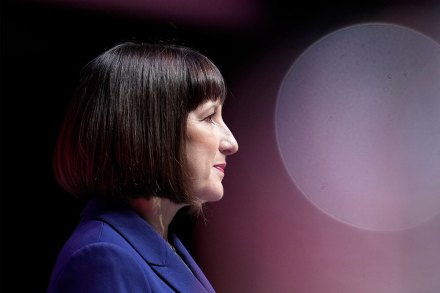
I’ve been reading – so you don’t have to – speeches recently addressed to a hot-ticket gathering of business leaders at the Oval cricket ground by Sir Keir Starmer and shadow chancellor Rachel Reeves. The nub is a promise to hold corporation tax at the current rate of 25 per cent for the duration of the next parliament, combined with a warning that ‘levelling up of workers’ rights’ will cause companies’ labour costs to rise. Then there’s all the usual guff you’d expect from a government-in-waiting about infrastructure and skills; plus an unusually warm tone towards the financial services sector, including a pledge not to reinstate the EU-inspired cap on bankers’ bonuses that was abolished by Kwasi Kwarteng.

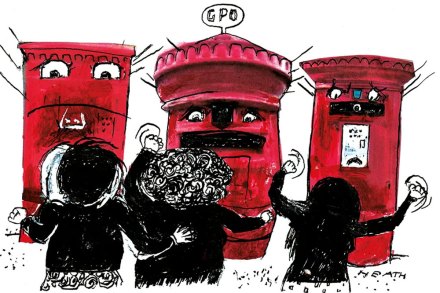
Can anyone save the Post Office? 

From our UK edition

Angry farmers offer a theme for the week – starting with the French at close quarters. Leaving the Eurotunnel at Calais en route to a wedding in the Alps, my car party encounters agricultural rage in the form of convoys of stationary trucks at all the port’s major exit points, as tractors blockade the autoroutes and police do nothing to shift them. Echoing recent protests in Germany, Poland and Romania, French farmers want better price protection, cheaper diesel, more import barriers, more aid from Brussels and less green regulation. We’re lucky not to be sprayed with manure, as was happening elsewhere. The protests have support from the powerful CGT union on the left and Marine Le Pen on the right, the latter calling the Emmanuel Macron regime ‘the farmers’ worst enemies’.

The stupidity of Biden’s liquefied natural gas export pause

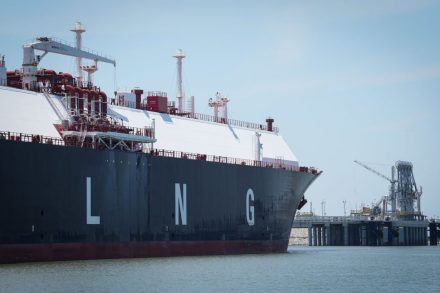
Last week's White House announcement that it was pausing new permits for exports of liquefied natural gas, or LNG, is a desperate move by a desperate president. Its principal beneficiaries are likely to be Vladimir Putin and Hamas-harboring Qatar, rather than Joe Biden’s faltering re-election campaign. The president’s political calculation is overt. “We will heed the calls of young people and frontline communities who are using who are using their voices to demand action,” Biden says. “The pause on new LNG approvals sees the climate crisis for what it is: the existential threat of our time.”  From a national security perspective, the pause is extraordinarily damaging.

liquefied natural gas