Lukas Degutis

Lukas Degutis

Lukas Degutis is The Spectator's editorial manager in New York.

The many faces of Houston

From our UK edition

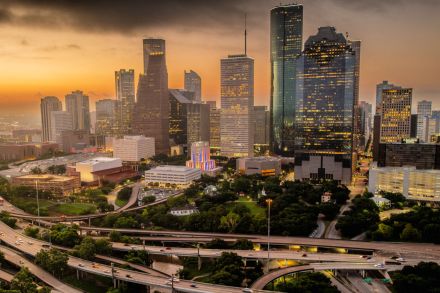
If Greta Thunberg ever docked in Houston, it wouldn’t be for long. Freeways stretch to 26 lanes, flaring oil refineries light the night sky and sports stadiums are sealed against the humidity with year-round refrigeration. At an Astros baseball match, a poster bluntly reminds attendees ‘TODAY’S GAME IS MADE POSSIBLE THANKS TO NATURAL GAS & OIL’. Between quarters at a Texans NFL match, a handful of fans score Chevron gift cards – ‘You’re going home with extra gas money!’ The crowd roars. Welcome to oil country. When fossil fuels enter Britain’s national conversation these days, it’s behind abstractions of net zero.

Woolworths cancels The Spectator

From our UK edition

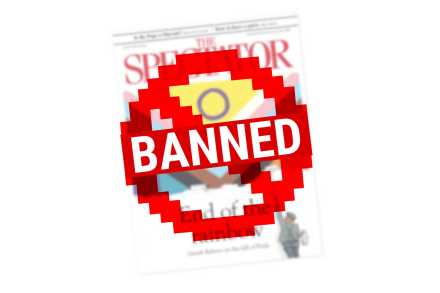
The Spectator has thousands of readers in South Africa, many of whom get their weekly magazine from Woolworths, the country’s upmarket retailer. Not any longer. Woolworths has taken the bizarre decision to stop selling The Spectator. The apparent trigger? Gareth Roberts's ‘End of the rainbow’ cover story. Does Woolworths really think its shoppers can’t cope with encountering such an image on their weekly grocery shop? The issue featuring that article hit newsstands at the end of May, on the eve of Pride month – just as Woolworths launched its own storewide rainbow campaign. It seems that Roberts’s piece, in which he argues that Pride’s fall can’t come soon enough, prompted a review of Woolworths's decision to stock The Spectator.

Disposable vapes save lives. Why ban them?

From our UK edition

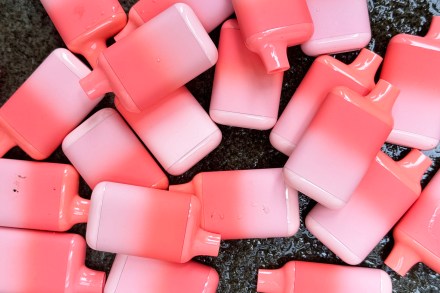
In a week’s time, it will be illegal to sell disposable vapes in Britain. Politicians from both parties will pat themselves on the back. The ban was introduced by Rishi Sunak and backed by Keir Starmer, and was hailed as a moment of non-partisan unity. In truth, it’s a policy disaster.  I used to smoke ten to fifteen cigarettes a day. Disposable vapes ended this habit. I haven’t bought, or been tempted, to buy tobacco for three years since quitting. Even when offered a cigarette free, it feels dirty; friends no longer bother asking if I fancy one. But in January last year, Sunak said there had been a ‘major spike’ in youth vaping. He claimed that the number of children vaping in the past three years had tripled. Not so.

How to eat like a president

From our UK edition

John F. Kennedy opted to serve New England lobster, Ronald Reagan a California-inspired garden salad – and James Buchanan 400 gallons of oysters. Held at Statuary Hall in the US Capitol, the inaugural luncheon for a new president is as much part of inauguration day as the swearing-in ceremony and the inaugural address.  Nixon enjoyed pineapple slices topped with cottage cheese and washed down with a glass of milk First time around, in 2017, Donald Trump’s inaugural meal featured dishes including Maine lobster and Gulf shrimp. But for those not on the guest list to find out what he serves tomorrow (McDonald’s ice cream, perhaps?), there are plenty of other opportunities to eat like a president in Washington DC.

Hungary is stretching the EU’s patience to its limit

From our UK edition

Hungary is no stranger to spats with its European neighbours. Under prime minister Viktor Orbán’s leadership, it has exercised veto rights to block Ukrainian military aid and Russian sanctions, delayed the Nato accessions of Sweden and Finland and shrugged off EU asylum regulations. For Budapest, the disputes have proven to be effective leverage in unfreezing funds — once €30million (£25 million), now some €22million (£19 million) — held by the Commission over rule of law violations and corruption concerns. For the EU, Hungary is a diplomatic headache - and one that may be about to get worse.

The lost America of Palm Springs

From our UK edition

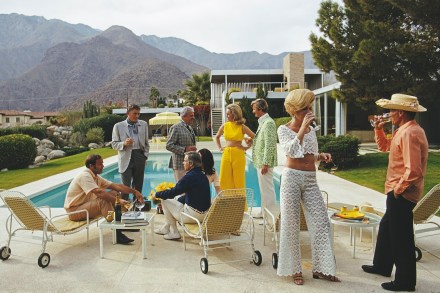
California was once home to a certain vision of the American dream; Mamas & the Papas records, grinning surfers, chrome bumpers. Now LA and San Francisco are full of glass and steel and petty criminals. Escape their sketchy downtowns and you’ll find huge copy-and-paste estates of identical homes. Urban sprawl has choked off California’s charm in everywhere but Palm Springs, a desert valley city to the east of Los Angeles.  Kirk Douglas lived here, alongside Rock Hudson, Janet Gaynor and Frank Sinatra. Elvis and Priscilla Presley honeymooned in the city for the whole of 1967. Producers would often oblige their stars to remain within a two-hours drive of their LA studios. Meanwhile, paparazzi were only reimbursed for travel within 100 miles of LA.

Lukas Degutis, Ysenda Maxtone Graham, Richard Bratby and Toby Young

From our UK edition

27 min listen

On this week’s Spectator Out Loud: Lukas Degutis reports from Riga, exploring Latvia’s policy of expelling Russian speakers (01:16); Ysenda Maxtone Graham explains why she believes applause has no place at a funeral (10:03); paying homage to Christopher Gunning, Richard Bratby argues that composers of ads, film soundtracks and TV theme tunes should be taken more seriously (14:46); and Toby Young questions the Bidens’ choice of dog (21:50). Produced and presented by Patrick Gibbons.

Plan Bibi: stalemate suits Netanyahu

From our UK edition

48 min listen

Welcome to a slightly new format for the Edition podcast! Each week we will be talking about the magazine – as per usual – but trying to give a little more insight into the process behind putting The Spectator to bed each week. On the podcast this week: plan Bibi In the early hours of Friday morning, Benjamin Netanyahu leaked his ‘Day after Hamas’ plan for post-war Gaza. But the plan is not a plan, writes Anshel Pfeffer – it is just a set of vague principles that do not stand up to the slightest scrutiny. Its sole purpose is rather to keep the ministers of Netanyahu’s fragile cabinet together to ensure his political survival.

Why Latvia is expelling its Russian speakers

From our UK edition

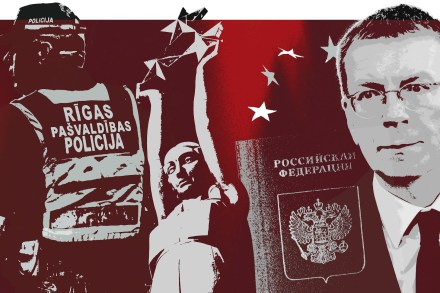
Riga, Latvia At the age of 74, Inessa Novikova, who is ethnically Russian, was told she had to learn Latvian or she’d be deported. ‘I felt physically ill when the policy was announced,’ she tells me when we meet in an office close to Riga’s city centre. ‘I’ve lived here peacefully for 20 years.’ There was no requirement for her to seek Latvian citizenship after the Cold War ended. Then, it was acknowledged that ethnic Russians, who make up a quarter of Latvia’s 1.8 million population, would co-exist with ethnic Latvians. But when Vladimir Putin invaded Ukraine, this arrangement ended. If Latvia’s ‘non-citizens’ had Russian citizenship, as Inessa did, they now had to apply for a new ‘EU residence’ permit, which meant learning Latvian.

I found peace at the gun range

From our UK edition

I like ice hockey, 7-Eleven Big Gulps and the choice of six lanes on the Interstate. I like almost everything about America except the guns, which is why I decided to challenge my prejudices at a pistol range in Fresno, California. Walking in, I was welcomed by ‘Don't tread on me!’ stickers and signs in military stencil fonts. I had anticipated hearing gunshots, but the irregular, endless bangs were worse than I’d expected.  I loaded the magazine with five bullets, pulled back the slide and felt an unnatural sense of gallantry ‘We’re from Britain and would like to try a gun,’ explained my friend. We signed some waivers and a friendly assistant called Tom reached back to the pistol rack behind him and replaced one of the handguns with my driving licence.

Lithuania’s support for Ukraine remains undimmed

From our UK edition

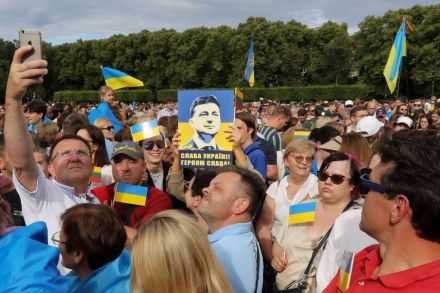
Vilnius, Lithuania This week, the world’s eyes were on the Lithuanian capital Vilnius as it welcomed global leaders for Nato’s 74th summit. The event was a logistical challenge not helped by the fact that Vilnius is only 30km away from the border with Belarus, which is now home to Russian nuclear weapons. Commercial flights were suspended for the duration of the summit. Air defence systems were stationed. Four-thousand troops, undercover police officers and bomb detection dogs roamed the streets. A Boeing E-3 Sentry – Nato’s eyes in the sky – circled the capital while a 30km radius no-fly zone was imposed.

The genius of Lana Del Rey

From our UK edition

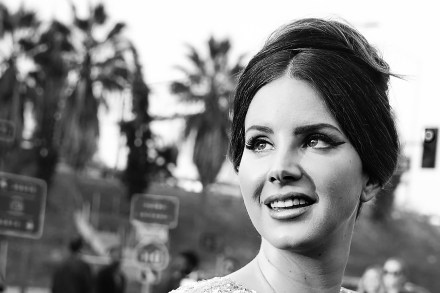
Over the past few years, Lana Del Rey has been engulfed in acclaim: Variety’s Artist Of The Decade, the first recipient of Billboard’s Visionary Award and Rolling Stone UK’s endorsement as ‘the greatest American songwriter of the 21st century’. Bruce Springsteen has named her ‘one of the best’ and Courtney Love called her a ‘true musical genius’. And now, with her long-awaited ninth studio album Did You Know That There’s a Tunnel Under Ocean Blvd released last weekend, the critics have not held back. From the Guardian to the Financial Times, Del Rey’s new album has collected a string of 4- and 5-star ratings. But to call Del Rey’s journey a bumpy one would be an understatement.

American ambivalence towards Ukraine only emboldens Putin

From our UK edition

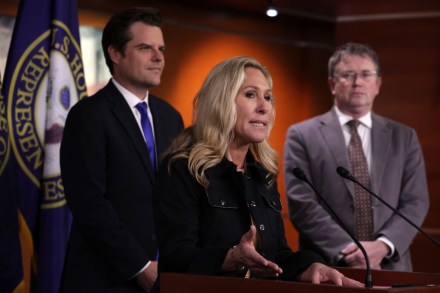
Volodymyr Zelensky’s address to Congress on Wednesday seems to have upset some in the Republican party. Four representatives refused to clap after his speech, and two of them – Matt Gaetz and Lauren Boebert – were seen seated throughout, captivated by their mobile phones instead. Boebert, the representative for Colorado’s third district, later published her response to Zelensky’s address on Twitter. Although she said it is ‘clear’ that Ukrainians are suffering and that ‘the war is deadly and horrific’, Boebert wants an ‘audit’ of the $50 billion that Ukraine has previously received before committing to any more.

In defence of the One Love armband

From our UK edition

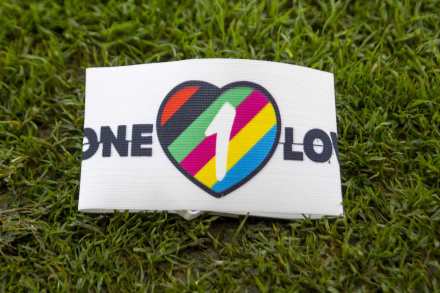
Wales’ football manager Rob Page was clear about why his team’s captain Gareth Bale would wear the ‘One Love’ armband at the Qatar World Cup: it was about demonstrating support of LGBT rights in a country where there are none. Whatever the pushback from Fifa, Page insisted last month that the armband would be worn: ‘That’s what we believe in, that’s what we stand up for’, he preached. The Welsh team were not alone in taking part. Football captains of eight other European nations – including England’s own Harry Kane – were vocal about their plans to wear the armband to promote inclusivity in a host nation where homosexuality is punishable by imprisonment and death. ‘Wearing the armband on the biggest stage in the world will have an impact’, Kane said.

How the coffee subscription ruined Pret

From our UK edition

I have a deep-seated hatred of the hospitality QR code. It ripped through the industry as part of questionable social-distancing initiatives during the pandemic, taking the place of menus and human interaction – and has stubbornly refused to disappear, making my heart sink when I find one sellotaped to the table of a bar or restaurant. However, there’s one hospitality QR code that I found myself developing a fondness for – the one that comes with Pret a Manger’s coffee subscription. Launched in September 2020, the scheme is a financial godsend for coffee addicts.

How The Spectator covered the deaths of previous British monarchs

From our UK edition

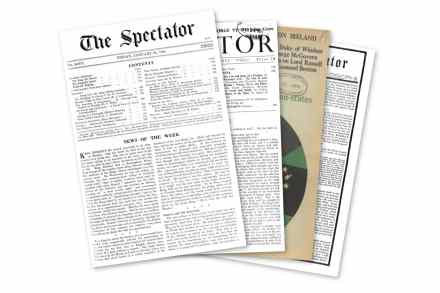
To commemorate the 70-year and-214-day-long reign of Queen Elizabeth II, this week’s issue of The Spectator is the first ever to feature a front-and-back design. Illustrated by Morten Morland, its design is inspired by Victorian-style mourning cards and includes a mixture of details from the royal coat of arms, as well as a few personal touches. Since 1828, The Spectator has covered the deaths of seven previous British monarchs. Here they are. King George IV Two years into the weekly publishing of the magazine, King George IV died on 26 June 1830. ‘Of his education we know very little; but that it was careful, there is no reason to doubt. His knowledge of French was perfect, and his English was singularly pure and elegant.

Neckerchiefs are a sartorial risk worth taking

From our UK edition

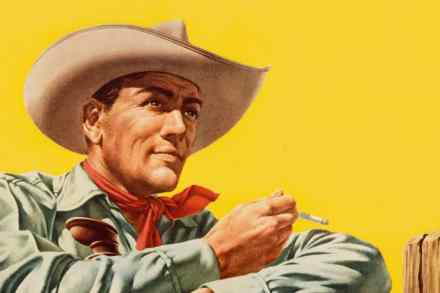
Neckerchiefs are an oddity. Once the cowboys' sweat-wiping tool, they are now a key accessory in the glamour – or camp and borderline tack – of a flight attendant’s uniform. My approach to them tends to sit somewhere in the middle. Neckerchiefs are useful, stylish, rebellious, but comforting – a rare choice for men’s fashionwear. A neckerchief can spice up a dull-coloured shirt without imprisoning your neck in a collar choked by its distant relative, the tie. But before becoming the fabric embodiment of smart-casual, the neckerchief was wholly utilitarian. Sailors began wearing them in the 16th century to combat the discomfort caused by dripping sweat rubbing against their stiff-collared shirts.

How Italy’s most famous coastline stays crowd-free

From our UK edition

A five-minute taxi journey costs €50, a single drink can set you back more than €20 – and if you want to avoid shelling out €60 for a plate of pasta, you might struggle to find a supermarket. But the Costa Smeralda offers one luxury that's hard to put a price on at the peak of the summer holiday season – a surprising lack of crowds. Back in the 1960s, this 20km stretch of beaches and pine forest on Sardinia's northern coastline was uninhabited and deemed of little value to the country's farmers. But the Aga Khan spotted a business opportunity. He purchased the land and began the process of turning it into a tourist destination for the upper classes, establishing a consortium to ensure all future development remained tightly controlled.

Why you should swap Mykonos for Milos

From our UK edition

Choosing an island in the Cyclades is a familiar summer conundrum for those who love Greece. The array of choice is so dizzying that many opt for the safety of well-known options: Santorini and Mykonos. But if you’re seeking something off the beaten track, why not venture away from the tourist centrals? With a population of roughly 5,000, Milos strikes the perfect balance between adventure and unspoilt natural beauty. Situated between Piraeus and Crete, the 150km2 horseshoe-shaped island is the rising star of this group of well-trammelled islands. It gained significant attention from tourists in the last decade, with 2019 recognised as its best year before the inevitable shake-up of the pandemic, a local says.

The EU’s weak response to Russian aggression plays into Putin’s hands

From our UK edition

The European Union’s top diplomat Josep Borrell is in Ukraine today. His mission? To show solidarity with Kiev in the face of Russian aggression. But the visit is too little too late. Former Soviet states, such as Ukraine, have grown used to the lofty rhetoric and empty gestures of their EU. The reality is that when it really matters, the West is failing to stick up for its allies. Linas Linkevičius, Lithuania’s former minister of foreign affairs, says it's time for Brussels – and the rest of the West – to change tack when it comes to dealing with Russia. Linkevičius is a stand-out Kremlin critic within European politics who believes that compromising with Russia only plays into Putin's hands.