Russia

Would I die for Britain? No thanks

From our UK edition

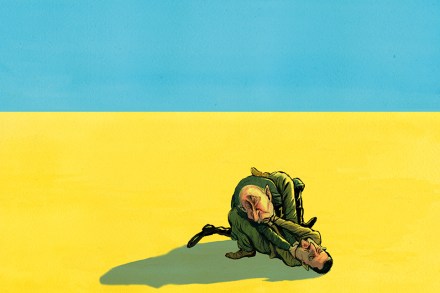
The West’s military posture has moved from ‘thick’ to ‘suicidal’. The recent speech of General Sir Patrick Sanders, the head of the British Army, in which he suggested that Britain needs a ‘citizens army’ to see off Russia, has forced the Government to deny that it wishes to introduce conscription – in advance of a great power conflict that Grant Shapps says is perhaps five years away. The media is casually debating ‘would Britons refuse to serve?’, on the basis that Gen Z is too neurotic to fight. The better question is ‘should we serve?’, on the grounds that our generation of leadership is so staggeringly dumb. What did Phil Ochs sing?

Where are the smart investments under a Starmer government?

From our UK edition

I worry that my Burlington Bertie life in London’s West End offers a misleading picture of the real economy. Yes, boutiques and brasseries are busy, but what’s it like in outer boroughs and distant provinces? To take a single morning’s headlines, on the plus side there’s upbeat trading news from ABF, the grocery and Primark discount clothing retailer, which reaches consumers everywhere; and a prediction that energy prices will fall 16 per cent by April. On the negative, warnings that ‘more than 47,000 companies are on the brink of collapse’ (from insolvency specialists Begbies Traynor); and that world trade faces a second wave of Red Sea disruption even if Houthi attacks stop (from the shipping giant Hapag-Lloyd).

Fujitsu should pay for the Post Office scandal

From our UK edition

Let’s talk about Fujitsu. In particular, let’s ask why the Japanese multinational IT supplier has not been taken to court, or heavily fined, or barred from bidding for new public-sector contracts, for the faults of its Horizon sub-post-office system and the mishandling of pleas for help from hundreds of innocent sub-postmasters who were wrongfully convicted. Public reaction to the ITV drama Mr Bates vs the Post Office has provoked the former Post Office chief Paula Vennells to hand back her CBE, but whatever she did wrong, she wasn’t the root cause of the scandal. So let’s take a closer look at the maker of the kit that failed. Fujitsu built Japan’s first computers in the mid-1950s.

The re-supplied Russians hit Ukraine with full force

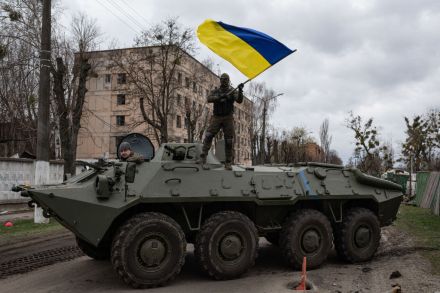
LVIV — The Japanese have a concept of forest bathing for health. Joe Rogan promotes daily ice baths for a little shock to get you going in the morning. But in Ukraine, people often experience missile-and-drone baths, and so it was in the early hours of last Friday, when Russia launched what seems to have been its biggest ever sky assault upon Ukrainian cities. It was the first major Russian attack upon Ukrainian since the summer, when Ukraine disrupted Moscow’s missile-launching Black Sea Fleet.  Since then, it’s been a brutal New Year.  Just before 5 a.m.

ukraine

No one wants to talk about Ukraine any more

From our UK edition

Apologies for this seasonal downer. Had the website such a listing, this column would surely soar to number one in The Spectator’s ‘Least Popular’ roster. For just now, few topics are a bigger turn-off than Ukraine. Following Russia’s invasion, I got caught up in the same waves of emotion that washed over most western publics, and I say that with no regret. After relentlessly battling the prevailing cultural winds these past few years, I was relieved to feel a sense of solidarity for once. Most of us were revulsed by the gratuitous aggression, allied with an underdog whose bite proved surprisingly fierce, thrilled by a former comedian’s unexpected rise to his nation’s occasion and consumed by a weirdly addictive loathing for Vladimir Putin.

The Ukrainian war can only end in a peace deal

From our UK edition

Kyiv In Ukraine, the political mood has become sombre and fractious. As the front lines settle into stalemate, Russia ramps up for a new season of missile and drone attacks, and vital US support for Ukraine’s war effort crumbles under partisan attack in Congress, one existential question looms large. Should Volodymyr Zelensky continue to fight endlessly in pursuit of a comprehensive defeat of Russia which may be unattainable – or should he consider cutting his losses and reaching a compromise? At the war’s outset, the Ukrainian President had a clear answer. ‘I am sure there are people who won’t be satisfied with any kind of peace [with Russia] under any conditions at any time,’ he told the Associated Press.

Was COP28 any more than hot air?

From our UK edition

What position should the distant observer take on the COP28 conference in Dubai? That the sight of 70,000 delegates flying into a desert oil state from around the world to discuss human impacts on climate change is beyond satire and that its proceedings are never likely to rise above Greta Thunberg’s encapsulation of all such jamborees as ‘blah blah blah’? Or that the climate problem is now so obvious and urgent that all efforts towards global action, however small, should be uncynically applauded? I leave that choice on the table.

What’s the point of a degree?

From our UK edition

‘Place nose on dot.’ That’s what my screen is telling me to do as the first step in a ‘liveness’ test I must complete to be accepted as a signatory on a club bank account. But if I align the image of my face with the dot, nothing happens. If I press my nose to the screen, I go cross-eyed. And if the test’s purpose is to make sure I’m not dead, it would be simpler to ask me to shout at it.

Facing the facts of the West

The century began with a global celebration — the West’s belief in liberal democratic capitalism had battled foes for centuries and emerged victorious. All that remained was for the rest of the globe to melt into the West’s soft and loving embrace. Two decades in, things look much less rosy. China’s rapid rise has not spurred democratization, as many suggested it might; instead it has nourished a massive ideological and political competitor that may supplant the West not only economically but as an arbiter of global culture and behavior. Western decline is not yet inevitable, but Western values will survive and spread only if leaders recognize two clear facts. The first is that the spread of Western values has in large part been due to the dominance of Western power.

west
poland

Poland and Hungary learn different lessons from history

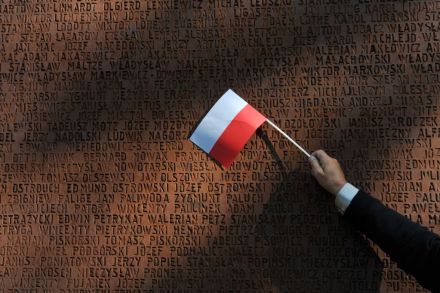
For decades, the European Union was dominated by a combination of French élan and German economic clout. By the late 2010s, a conservative Budapest-Warsaw alliance seemed poised to challenge this arrangement. The ideological firepower was supplied by Hungarian prime minister Viktor Orbán, who emerged as an unlikely spokesman for the international right, while Poland’s booming economy and large population lent the partnership some much needed heft. The Polish elections in mid-October not only marked the end of the Law and Justice party’s near-decade of conservative rule; they offered another blow to a Polish-Hungarian relationship already fraying over the war in Ukraine.

WeWork and FTX tell us visionary hype is always dangerous

From our UK edition

In the New York trial of Sam Bankman-Fried, founder of the collapsed FTX crypto exchange, there was never a moment when he looked like talking his way to freedom: he was found guilty on seven charges of fraud and conspiracy and now awaits what’s likely to be a very long sentence. Justice has been swift and sure, barring an extraordinary reversal on appeal. But what should worry thoughtful observers is the fact that during the period of the trial, from 3 October to 2 November, the price of bitcoin rose from £22,700 to £28,700. Perhaps investors saw the crypto currency as a safe haven after Hamas’s attack on Israel. Perhaps they just jumped on an irrational uptrend.

Is this where world war three starts?

From our UK edition

Daugavpils You can tell quite a bit about a place by the number of national flags on display. One or two on public buildings here and there is a healthy genuflection to a moderate and comfortable patriotism. But groups of the same national flag every five paces, on every building and festooning the parks and boulevards – well, there’s something going on, isn’t there? You’re in a place where trouble is surely just around the corner, a place where the national authorities may not feel entirely secure. What sort of trouble? Well, one wouldn’t want to be over-dramatic, obvs, but in this particular case, world war three.

Visiting with bears on the Russian border

Bear viewing in Finland can be a cloak-and-dagger affair. We were told to meet our guide, Pekka Veteläinen, at 5:45 on a Monday afternoon — not at a landmark, but at a set of GPS coordinates deep in the woods, fifty minutes outside a town called Kuusamo, just one kilometer short of the Russian border on logging road number 8691. Here are some of the instructions we received. Wear dark clothing. Take ready-made food with you. Bring cash because credit cards don’t work in this wilderness. We had an early dinner at a “wild food” certified restaurant in the Karelian town of Kuusamo — it’s Finland’s seventy-fifth biggest town, a distinction that means the place still has more reindeer than people.

bear

Europe needs to step up on Ukraine

From our UK edition

Vasyl, a burly, tattooed infantry commander who lost a leg to a Russian mine on the eastern front, sits swinging his remaining leg on the edge of the treatment table in the ‘Unbroken’ rehabilitation clinic in Lviv. He’s been inside the Russian trenches 50 times, he tells me. His stories are reminiscent of the first world war. I ask him what Ukraine needs for victory. Answer: ‘Motivated people.’ His T-shirt proclaims ‘no sacrifice, no victory’. After we shake hands and I wish him luck, he suddenly jumps off the table and starts skipping at amazing speed, his blue skipping rope whizzing around under his one foot, while he looks at me with a broad grin, as if to say ‘Here’s your answer’.

The attack on Israel must lead to an uptick in inflation

From our UK edition

A 10 per cent increase in oil prices translates to a 0.15 per cent loss of global GDP and a rise of 0.4 per cent in global inflation, says Gita Gopinath, deputy managing director of the IMF. Before Hamas launched its assault on Israel on 7 October, the Brent Crude barrel price had already moved 20 per cent above its summer level of $75 and pundits were predicting $100, based on prospects of tighter supply from Saudi Arabia and Russia. Natural gas prices have also risen sharply with winter approaching – and no one knows how escalation of the latest Middle East conflict might affect other energy flows and supply chains.

Ukraine’s fight has been eclipsed by the ‘Other War’

From our UK edition

The first indication that this was a literary festival like no other came with the request to provide ‘proof of life’ questions in case of kidnap. I’ve been to some unusual festivals – earlier this year I found myself discussing war-rape, ancient and modern, with the classicist Mary Beard on a barefoot island in the Maldives – and had some unusual festival encounters, such as the woman who asked me to sign a book to her dead husband, adding that he was reading it when he died. This, however, was my first in a war zone. There was a polite warning from the Lviv Book Forum organisers: ‘If there is an airstrike, we will interrupt the event.’ It’s all part of the resilience of Ukrainians, determined in the face of Russian aggression that life must go on.

The full English: how to fall in love with this country

From our UK edition

My nine-year-old half-Russian daughter has arrived in England for the first time since she was a baby. As she knows almost nothing about British culture apart from Peppa Pig and Willy Wonka, my job is to put together a week-long programme before she goes back to Italy, where she currently lives with her mother, my ex-partner. They were living in Russia but left following Vladimir Putin’s invasion of Ukraine. Ideally, my daughter will go home enthused about all things English and wanting a lifetime more. But where do I start? Peppermint Aeros and Crunchie bars are the things I want to pass on, far more than the music of Elgar First, there’s the question of food.

Metro’s story tells us markets are still fearful of a banking crash

From our UK edition

Market sentiment around the possibility of failures in the banking world remains as febrile as ever. Or so we might judge from coverage of Metro Bank – which reports suggested might have been edging towards collapse before finding a new owner over the weekend. Metro was the brashest of the ‘challenger banks’ that sprouted after the 2008 financial crisis and the only one that aimed to build an all-new network of 200 branches. Its American founder, Vernon Hill – whose other interests included a chain of Burger King outlets – declared an urge to ‘make banking fun’ when the first Metro opened in Holborn in 2010, offering free lollipops and dog biscuits. For some observers, it looked too gimmicky to survive. To have done so, having attracted 2.

Why the Greeks invented virtue

From our UK edition

I had a good talk with my NBF, Owen Matthews, at The Spectator’s writers’ party, and we agreed on the two subjects we talked about: Russia and women. I won’t exaggerate the enormity of our aggregate knowledge – and the way we have deployed it in our service, especially where the fairer sex is concerned. Suffice to say that it is far beyond the comprehension of most individuals who concern themselves only with money. Speaking of loot, I have a gent’s bet with a friend that Sam Bankman-Fried of FTX infamy – accused of having stolen billions while attempting to recover his financial blunders – will get away with a wrist slap. Bankman-Fried maintains his innocence.

What exactly is the new space race all about?

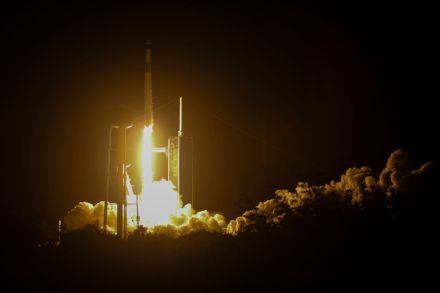
The recent spate of articles about attempts by different countries to land vehicles on the Moon make it clear that a new space race is on. Just last month, Russia launched its first mission there in forty-seven years. And although the automated Luna-25 spacecraft spun out of control and crashed at the last minute, India’s heavily-instrumented Chandrayaan-3 landed successfully just four days later. NASA itself aims to return humans to the lunar surface in 2025 with its Artemis program. Remarkably, more than eighty countries, including Israel and the United Arab Emirates, have thus far established some kind of presence in space.

space