Royal family

Queen Camilla’s unusual phone app 

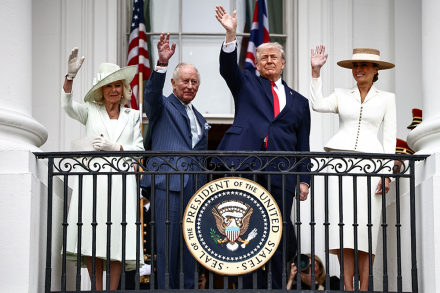
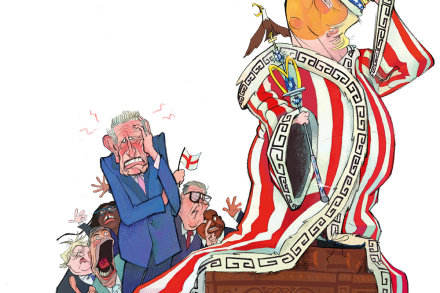
And so to the White House for a ringside seat at the Trump circus. Another assassination attempt on the President wasn’t going to stop the royal machine. After calls between Buckingham Palace, the West Wing and the secret service while the UK press pack nervously checked their phones mid-flight to Washington, praying for the British Airways wifi to hold, the King and Queen kept calm and carried on with their state visit. It was never in doubt. Despite the White House correspondents’ dinner shooting, there was too much fear behind Whitehall and Palace walls of disappointing the Donald to pull the plug. May I commend BA for its wifi and in-flight entertainment, which features The Royals, a lively podcast on the House of Windsor.

When will we admit that the special relationship does not exist?

It was to King Charles’s great credit that he refused to fall for the Trump power handshake thing and instead retracted his own hand so that the orange psychotic was left, for a nanosecond, flailing and unsure of what to do with his right arm. It is always good to call the bluff of a bully, because they usually are bluffing. I would have preferred it if Chaz had executed a swift jujitsu move and thrown the President over his shoulder and onto the ground. But one cannot have everything – and of course the King was there to be emollient and to remind Trump of the things he quite likes about the UK: golf and class distinction, basically. He doesn’t seem to like us for any other reason – which is, in fairness, the mindset of almost every previous US president.

Why Donald Trump won’t embarrass the royals

Elizabeth II was never particularly enthusiastic about birthdays. They were a good excuse for a parade or an honours list, but not a patch on a major wedding anniversary, let alone a jubilee. Those were a celebration of true dedication, not of mere longevity. Even so, were she still with us, the late Queen would have acknowledged that her centenary on Tuesday is a big deal. It would also have created a delightful conundrum for the Buckingham Palace anniversaries office, the department that sends out 100th-birthday congratulations from the sovereign. At the start of her reign, she was sending 385 of those each year across all her realms (by telegram). By the end, it was over 16,000 (by card).

Does it matter if Prince William believes in God?

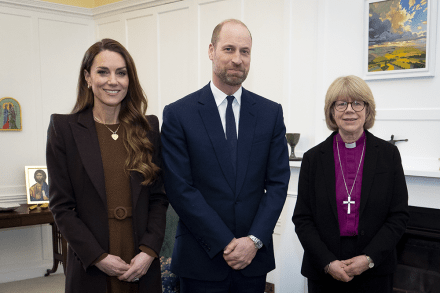
The Prince of Wales seeks to assure us that, as a friend puts into his mouth, ‘I might not be at church every day, but I believe in it.’ That formulation does not necessarily mean he believes in God or the doctrines of the Church of England. All it means is that he believes in the efficacy of the C of E and will dutifully fulfil his future role as its Supreme Governor. Actually, that is all we need to know. His great Tudor predecessor said she did not want to ‘make windows into men’s souls’; even kings are only men. The important thing, from a constitutional as opposed to a spiritual point of view, is that he acts the part with good grace, which he surely will. Whether he does so by divine grace poured into his heart is a question above all our pay grades.

Is my book about Meghan and Harry a ‘deranged conspiracy’?

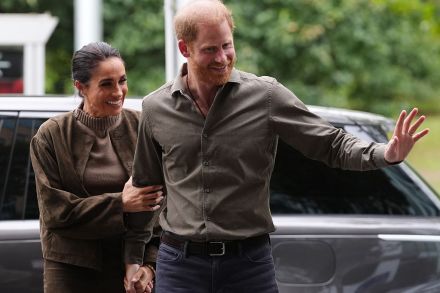
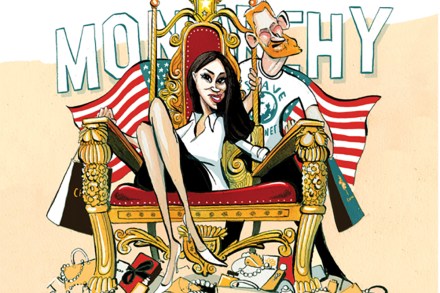
‘Deranged conspiracy’. That’s the Sussexes’ verdict of Betrayal, my second blast at Harry and Meghan, after the serialisation was in the papers at the weekend. Naturally, I’m grateful. The book now ranks No. 1 on Amazon. My biography of Robert Maxwell also benefited from his endless writs. Similarly, Richard Branson sued twice to prevent publication. He lost and was denied the licence to run the National Lottery. The tycoon Tiny Rowland was more subtle and effective. ‘Bower’s book,’ he announced, ‘is boring. He’s missed all the good bits.’ That hurt. My new book exposes the vainglorious Duke and Duchess’s downwards spiral over the past five years towards an inglorious endgame. Dwindling fame and fortune is forcing them to revalidate their royal status.

Could Andrew Mountbatten-Windsor become ‘Lord Andrew’?

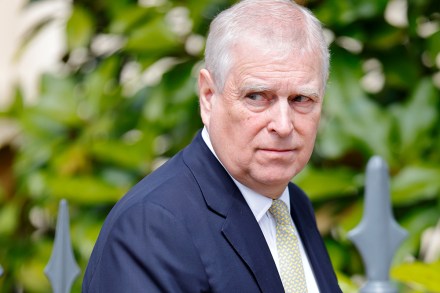
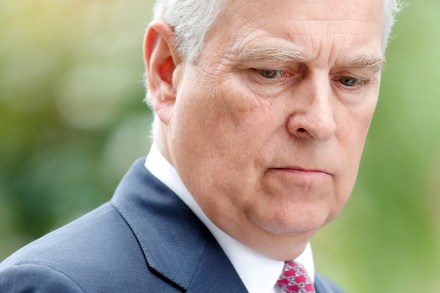
Never one for introspection, Andrew Mountbatten-Windsor has still managed to provoke some searching questions about the institution he once served. For example, what constitutes a family if it is royal? Since Victorian times, parliament’s rulebook, Erskine May, has forbidden ‘reflections’ on ‘the conduct of the Sovereign, the heir to the throne, or other members of the royal family’ in debates. Following Lib Dem pressure, that rule has been rewritten by Mr Speaker, who has stated: ‘Because this now relates to a person who is not a member of the royal family, the situation is completely different.’ But in what way? Clarity is needed.

Portrait of the week: McSweeney resigns, Starmer hangs on and Streeting plots

Home Morgan McSweeney, the helmsman of Labour, walked the plank by resigning as chief of staff to Sir Keir Starmer, the Prime Minister, whom he had advised in 2024 to appoint Lord Mandelson as ambassador to Washington. Mr McSweeney’s resignation statement began: ‘After careful reflection, I have decided to resign from the government,’ as though he had been a member of the government. In a speech meant to be about funding for local communities, Sir Keir said he was ‘sorry for having believed Mandelson’s lies and appointed him’. But he added: ‘I had no reason to believe he was telling anything other than the truth’, even though the Financial Times had in 2023 reported that Mandelson had stayed at Jeffrey Epstein’s house when the financier was in prison.

How Andrew could save the royal family

The tsunami of Jeffrey Epstein material released this month has been both horrifying and gratifying. It makes clear the extent of Epstein’s penetration of world elites – potentially even at the direction of various foreign intelligence agencies – and that this is a story as much about national security as financial and sexual irregularities. The lack of any proper oversight of the royal family may have given both the Russian and Chinese intelligence services their entry point into the British Establishment. The depositions also confirm the accuracy of what I had discovered researching Entitled: The Rise and Fall of the House of York, which was published last August.

How teetotal is Britain?

Royal removals The King has had more success in stripping Andrew Mountbatten-Windsor of his royal titles than George IV had in removing the title of his Queen, Caroline of Brunswick-Wolfenbuttel. George, then Prince of Wales, and Caroline married in 1795 having got engaged before they actually met. On their wedding night, both found each other physically disgusting – although they did manage to conceive a daughter. Caroline went on to have a string of affairs, prompting delicate royal investigations, even though George was hardly a picture of fidelity himself. She later left England and set up with an Italian manservant, Bartolomeo Pergami, but returned to England when George ascended to the throne in 1820. His efforts to dethrone her via a Pains and Penalties Bill failed.

The Epstein files are a reminder that emails live forever

Still they keep coming: email after email from Jeffrey Epstein’s personal correspondence, along with the almost unmanageable amount of other material in the Epstein files. They span two decades and an astonishingly wide range of topics: his Amazon purchases, missing laundry, the banning of his Xbox Live account, his reaction to photos of young women, how he considered potential plea deals and exchanges with famous people. There’s Sarah Ferguson’s message: To: Jeffrey Epstein [jeevacation@gmail.com] From: Sarah Sent: Sat 1/30/2010 10:22:44 PM You are a legend. I really don’t have the words to describe, my love, gratitude for your generosity and kindness. Xx I am at your service. Just marry me.

Which royals have appeared in court?

Political frenemies Nigel Farage accepted Robert Jenrick into Reform UK in spite of having previously called him a ‘fraud’ (for boasting about securing hotels for migrants when in government and then campaigning against them in opposition). Some more political make-ups: — David Cameron called Nick Clegg his ‘favourite joke’ before forming a coalition with him in 2010. — Donald Trump chose J.D. Vance as his running-mate in 2024 in spite of Vance having called him ‘America’s Hitler’ and a ‘really bad person’. — George H.W. Bush served as Ronald Reagan’s vice-president between 1981 and 1989 in spite of having previously accused him of ‘voodoo economics’.

Portrait of the year: Trump’s tariffs, the definition of biological sex and the fall of Andrew Mountbatten-Windsor

January Downing Street said Rachel Reeves would remain in her role as Chancellor of the Exchequer ‘for the whole of this parliament’. She made a speech standing behind a placard saying: ‘Kickstart economic growth.’ Axel Rudakubana, 18, was sentenced to at least 52 years in prison for the murder of three girls in a knife attack at Southport. Yvette Cooper, the Home Secretary, announced a ‘rapid audit’ of grooming gangs by Baroness Casey of Blackstock. Wildfires raged around Los Angeles. Luke Littler, 17, became world darts champion. The aftermath of the Palisades and Eaton fires in California (Mario Tama/Getty Images) February President Donald Trump of the United States and the Vice-President, J. D.

Snobbery is the best weapon against screen time

I can’t be the only neurotic mother to have rejoiced when the Princess of Wales revealed recently that she has a strict ‘no phones at the table’ rule. The Prince of Wales then later let slip that Prince George, who is 12, isn’t allowed a smartphone. When George eventually does get a phone, William added, it will be a brick without the internet – similar, one imagines, to the sort favoured by drug dealers. Hallelujah! Up until now, the best line for parents to trot out has been the old chestnut that ‘Silicon Valley guys send their children to schools where the tech use is unbelievably moderate because they know how addictive this stuff is’.

Why British diplomacy needs the royals

Watching David Dimbleby watching the royal family, I am instantly reminded of the BBC’s other royal David. It is pure Attenborough as he examines the exotic plumage and rituals of rex Windsorianus in its natural habitat. In this week’s first episode of What’s the Monarchy For?, a three-part study of the sovereign for BBC1, Dimbleby examines royal power, engagingly prodding and poking fun at both sides. However, it ends as it starts, with our host still scratching his head. The monarchy is the first thing much of the world thinks about when it thinks about Britain Perhaps we will have an answer by the end of the final episode.

What Andrew’s Norfolk exile will look like

When Russian dissidents were bundled off into exile under the tsars, they were sent to Siberia, the ‘prison without a roof’, and disappeared from society, never to be seen again. Many residents of Norfolk, where the King has exiled his brother, Andrew Mountbatten Windsor, will be hoping he follows the same route. ‘There may be a certain thrill about having him, like presenting Liz Truss in your sitting room’ Norfolk likes to call itself a ‘royal county’, as the Visit Norfolk website proudly proclaims. Sandringham, the family’s private home, is well known. But the royal connection pre-dates Queen Victoria’s purchase of the country retreat for her son Albert in 1862 by almost 800 years.

How popular is the British royal family?

Austere environment Who introduced the word ‘austerity’ into the political lexicon? While chiefly associated with attacks on the Conservatives, and subsequently Reform UK, by Labour and other left-wing parties, it was David Cameron who brought the word back into common parlance. In a speech to the Conservative party forum on 26 April 2009 he declared: ‘The age of irresponsibility is giving way to the age of austerity.’ He went on to say: ‘We’ve made it clear that a Conservative government would spend less than Labour. We’re not frightened of their idiotic ritual chants about “cuts”.’ An analysis by the LSE found that in the election year of 2010, right-leaning thinktanks mentioned ‘austerity’ nearly as frequently as left-leaning ones.

Should Prince Andrew be exiled? And how multiculturalism failed in Birmingham

45 min listen

This week on Quite right!: the slow-motion disgrace of Prince Andrew. As Virginia Giuffre’s new book reignites the Epstein scandal, Michael and Maddie ask: how much longer can the monarchy carry its most toxic member? Or should the Duke of York be stripped of his titles and sent into exile? Then to Birmingham, where sectarian politics, bin strikes and football collide. After Israeli fans were barred from attending a Europa League match, Michael and Maddie debate how Britain’s second city became a byword for failed multiculturalism. Has the country finally started telling the truth about integration – or just found new ways to divide itself? Finally, the British Museum’s attempt to out-glamour the Met Gala.

What are the risks of first cousins having children?  

Park life Locals were angered by the closing off of 1,500 acres of Windsor Great Park to create a secure area around Forest Lodge, the new home of the Prince and Princess of Wales. Medieval residents of Berkshire would have been in sympathy, as William I had the entire park closed off to the public under his Forest Laws. Large parts of the park were eventually opened to the public by William IV in the 1830s, though it wasn’t good enough for some. In 1972 anti-monarchists set up what they called the People’s Free Festival trying to reclaim the park for the public, claiming it had been illegally enclosed by George III. The festival was repeated for the following two years before being broken up by the police.

The comeback of George III

We no longer correct ourselves as we sing the first line of the national anthem. ‘Prince of Wales’ no longer means ‘Charles’. As we mark the third anniversary of his accession this week, it is possible to attempt useful comparisons between the reigns of Charles III and Elizabeth II. Set aside age and medical matters and the principal differences are pace and expectation. It was nearly a year before the UK heard a speech from the new monarch in 1952; in 2022, it took a day. Court mourning went from 16 weeks to one. Three years in, the late Queen was still on her first prime minister. The King is on his third. Family-wise, her main distraction was Princess Margaret’s passing passion for her late father’s equerry.