Rishi sunak

The Budget could be an awkward moment for fiscal conservatives

From our UK edition

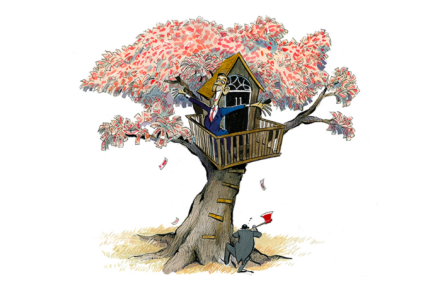
There is no getting around the fact that these are awkward times for fiscal conservatives, such as myself. It has never been harder to make the case for lower taxes. We have the largest national debt for half a century as we come out of the worst recession for three hundred years, with zero political appetite for public spending cuts. It is essential – for both the Conservative party’s political prospects and the country’s economic prospects – that the UK retain our reputation for sound finance. This is why the Treasury Select Committee have been gathering evidence on the options for tax after coronavirus, with our recommendations to be published tomorrow. One thing is clear: there are no easy options for the Chancellor in his budget this Wednesday.

Are the Tories about to ditch one of their biggest policy achievements?

From our UK edition

We already know much of what will be in Rishi Sunak’s Budget next week. Another £30bn for Covid-relief measures: furlough scheme into the summer, stamp duty holiday and the uplift in universal credit (which is also expected to be time-limited, despite pressure from the opposition to make a permanent adjustment). But this year’s spending splurges are becoming a footnote in a Budget dominated by the prospect of tax rises, for which the Chancellor is already receiving backlash from the left and right. Rumours of a corporation tax hike, circling for a week now, have not been denied. There’s also talk of capital gains tax coming under the Treasury’s spotlight, with some saying that Sunak aims to align it with income tax.

Tory nerves grow over Sunak’s Budget

From our UK edition

How will Rishi Sunak's Budget land with Tory MPs? As reports circulate in the press that the Chancellor is considering raising corporation tax and capital gains tax as well as bringing in a stealth tax for pensioner savings, nerves are growing among Conservative politicians.  The Northern Research Group of MPs, chaired by Johnson's old friend Jake Berry, have called on Sunak not to tax his way out of pandemic debt by raising business taxes in the budget. Tory MPs such as David Davis have warned they could refuse to vote for it if the reports are true. So who will Sunak listen to? Meanwhile, former prime minister David Cameron has popped up to say tax rises 'wouldn’t make any sense at all', comparing the Covid crisis to a wartime situation.

Starmer’s fundamental economic mistake

From our UK edition

Keir Starmer’s speech on economic recovery, delivered at Labour’s Southside HQ on Thursday, was hyped as one of the most pivotal moments of his leadership so far. A Labour insider told Politico it had been 'six months in the making with a huge amount of work going into it’. It was designed to establish a clear ‘fork in the road’ between the Conservatives’ and Labour’s economic visions, both in the short term — leading up to the Budget next month — but also in the future, as Starmer pledged to shape the economy ‘to look utterly unlike the past’. But for a speech that was supposedly months in the making, there was surprisingly little substance.

It’s time to call last orders on Britain’s rubbish pubs

From our UK edition

Oxford is famous for its pubs. Inspector Morse reveals that they are as much a part of the city’s life as any of its colleges. The insatiable undergraduate demand for cheap beer has meant that pubs like the Turf Tavern and the Eagle and Child have permeated (and intoxicated) the minds of students for centuries. So when the Lamb and Flag closed last week, it was as much a story as any of those bizarre murders John Thaw used to stick his nose into. No Jag-driving detectives are needed to work out why it has shut. A year of missed terms and lockdowns dramatically cut the pub's revenue. Owned by neighbouring St John’s College, the pub has stood on its current spot since 1615. C.S. Lewis and J.R.R.

Johnny Mercer takes another swipe at Rishi

From our UK edition

Oh dear. Rishi Sunak is the subject of criticism from lockdown supporters everywhere this morning over a Telegraph front page detailing the Chancellor's apparent concerns that scientists are moving the goal posts on when lockdown ought to end. Treasury sources are keen to play down the report – but the aspect that has Mr S's interest isn't so much the contents but one MP's response to the news, Step forward Johnny Mercer. The defence minister was quick to 'like' a tweet by commentator Dan Hodges suggesting Sunak 'needs to get back in his box and stay focussed on the economics'. While everyone is allowed the occasional accidental like on social media, this appears to fit into a pattern.

Will Boris Johnson’s Scotland trip backfire?

From our UK edition

The pandemic may still be in full swing but that hasn't stopped the SNP opting to push the case for an independence referendum sooner rather than later. Nicola Sturgeon claimed over the weekend that should the SNP win a majority (as expected) in the Scottish parliament elections, she will hold an advisory referendum on independence, whether or not Boris Johnson consents to the move.  Not everyone in government is convinced the First Minister would go ahead with this should push come to shove. But the fact it's even on the table points to the problem Johnson has on Scottish independence – his insistence that now is not the time for a second border poll will not be enough to make the issue go away. So, what will?

The Tory split over universal credit

From our UK edition

Today's papers are splashed with good news on the pace of the vaccine rollout, with over-70s now being invited for a jab. However, the issue currently causing angst in the Tory party is universal credit. Last week, Labour attacked the government over free school meals, today they will put the government under pressure over the universal credit uplift. At the start of the pandemic in April last year, Rishi Sunak increased the payment by £20 a week.  The issue of whether that increase will continue will be discussed at opposition day debate this evening. Boris Johnson is being urged to extend the benefit increase beyond 31 March when it is currently set to come to an end. This is an idea that has won support with many Tory MPs.

The Brexit deal has left the City to fight for its own future

From our UK edition

‘This Article shall not apply with respect to financial services.’ That’s what it says on page 92 of the EU-UK Trade Co-operation Agreement, and my search engine has found nothing else in the monster document offering any comfort to the sector, which contributes £130 billion to the UK economy and provides more than a million jobs. That’s in marked contrast to fishing — £1.4 billion, 24,000 jobs — which gets a compromise settlement (pages 919-925, if you’re keen) accounting for every last haddock, hake and horse mackerel.

Sunak unveils lockdown bail-out for businesses

From our UK edition

Rishi Sunak’s latest giveaway totals £4.6 billion in grants for the retail, hospitality and leisure sectors, amounting to up to £9,000 per outlet. Alongside this comes an additional £1.1 billion for local authorities and a £600 million discretionary fund for businesses that might not qualify for the main grant. This money is meant to help businesses with their fixed costs problem: having to pay rent, utilities and upkeep despite bringing in far less income (in some cases, no income at all). The largest cost for most business owners — payroll — was addressed in December when the Chancellor extended the furlough scheme to the end of April.

Rishi Sunak’s definition of a ‘sustainable’ deficit

From our UK edition

Last week, Katy Balls and I interviewed Rishi Sunak for the Christmas issue of The Spectator (out today) and his comments on debt have caused some interest in today’s newspapers. As ever with such interviews, there’s only so much you can squeeze into two pages but I thought it worth elaborating on his position today. I suspect it will come to define the political debate next year: yes, 2020 was a year of almighty splurge. Sunak has borrowed more in ten months than Gordon Brown did in ten years: but there was a pandemic. The question is how you get that back to normal. For a surprising number of Tories, it’s a question of 'whether' you get it back to normal. Why not let debt rip? Let it go from today’s 100 per cent of GDP to 120 per cent or even 150 per cent?

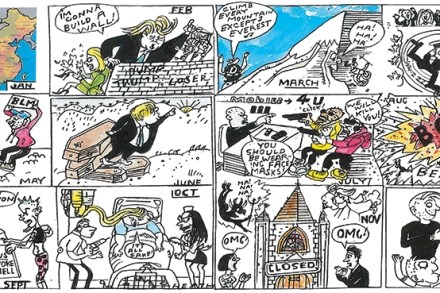
Portrait of the year: Coronavirus, falling statues, banned Easter eggs and compulsory Scotch eggs

From our UK edition

January Boris Johnson, the Prime Minister, signed the EU withdrawal agreement, sent from Brussels by train. Sajid Javid, the Chancellor of the Exchequer, promised ‘an infrastructure revolution’ in the Budget. An American drone killed Qassem Soleimani, an Iranian Islamic Revolutionary Guard commander, near Baghdad airport. Iran carelessly shot down a Ukrainian airliner taking off from Tehran, killing 176. Bush fires raged in New South Wales. Cases of acute viral pneumonia were noticed in Wuhan in central China. February Eighty-three British evacuees from Wuhan were quarantined on the Wirral. The Department of Health classified Covid-19 as a ‘serious and imminent threat’. In Hubei 68 million people were made to stay at home.

The public sector delusion

From our UK edition

I wonder how much more money we will have to bung the teachers in order to inculcate within them an amenability towards doing a spot of teaching? They still seem terribly averse to the whole idea. During the first lockdown, 60 per cent of young children received no virtual lessons at all from teaching staff, and one in five pupils over 12 was given no work to do, according to the Children’s Commissioner. Virtual lessons shouldn’t have been terribly difficult to arrange, but most of the time there were none. My own daughter had no virtual lessons from March to July (which is why she’s no longer in the state sector). She did, however, complete five physics papers and, being scatty, sent them — one after the other — to the wrong email address. Nobody noticed.

The foreign aid cut marks a change of priorities

From our UK edition

The proposed reduction in international aid from 0.7 to 0.5 per cent of GDP has elicited a furious reaction from some quarters. It has been condemned by five former prime ministers, three of whom never met the target when they were in office. What is missing from this debate is the historical context. The rise in development spending was part of the peace dividend that followed the end of the cold war. But the just-concluded defence spending settlement marks a UK recognition that this peace dividend is over — great power competition is back and this country’s military spending now needs to increase. Over the next decade or so, military spend is likely heading back to the level it was when the Berlin Wall fell.

Did Labour just fall into Rishi Sunak’s trap?

From our UK edition

Just what is the essential difference between our two main political parties? Certainly not their respective attitudes towards fiscal prudence; the thing which used to provide clear blue water between the two. Now we have two parties which don’t give a damn about public debt, who think that they can spend willy-nilly and that something, somehow will come round and save them in the end.  No, the message of today’s spending review is that the Conservatives and Labour are entrenching their respective positions as the representatives of two tribes: private sector workers and public sector ones. We all know there’s bad news on the horizon in the shape of tax rises and, inevitably at some point, spending cuts.

The Tory case for overseas aid

From our UK edition

There may be worse times to slash international development spending than the middle of a pandemic but it’s got to at least be in the top five. The reduction from 0.7 per cent of GDP to 0.5 represents a drop of £4 billion in investment. As Katy Balls notes, the current level was not only a manifesto commitment in 2019 but is enshrined in law, so ministers will have to ask parliament to legislate to allow them to break their own manifesto promise. International development is like foreign policy: there are no votes to be gained from it. In fact, abolishing it altogether would make the Tories more popular with their target voters. Even so, Rishi Sunak is making a mistake.

Sunak’s Spending Review and the devastating impact of Covid

From our UK edition

It’s been no secret that Covid-19 has sent the UK's finances into disarray — but today we received a further insight into just how bad the books are looking. Alongside Rishi Sunak’s Spending Review came updated forecasts and scenarios published by the Office for Budget Responsibility, which confirm the UK economy is set to shrink by 11.3 per cent this year — the largest economic fall in 300 years. The road to recovery is forecast to be a long one: economic output is not expected to return to pre-Covid levels for another two years: Q4 in 2022. There is still no sign of a sharp, V-shaped recovery, but rather another dip in 2020, before lacklustre rises in 2021.

The true cost of the coronavirus debt

From our UK edition

There is a view that we don't have to worry about the record debt the government has accumulated since coronavirus laid waste to our way of life and our economy. And in two senses I would half agree – though the other half of me is wracked with anxiety.  First, this is not a uniquely British problem; it is a problem of all developed economies. However, you should not underestimate the geopolitical significance of the explosion of debt in the rich West, because it represents by implication the fastest transfer of wealth and power to China and Asia in our lifetimes.  Second, there is the important counterfactual – namely what would have happened if the government had not borrowed and spent all that cash. Which does not bear thinking about.

Does Rishi Sunak understand the scale of the mental health crisis?

From our UK edition

Unsurprisingly, health spending will be a key part of Rishi Sunak's spending review announcements this afternoon, with the Chancellor expected to pledge £3 billion for the NHS as it recovers from the pandemic. Part of that will be a £500 million boost for mental health, which accompanies a 'winter care plan' that was published earlier this week. Ministers are very keen to say they recognise the pressure that the pandemic has put on services and people who may be developing mental health problems for the first time, as a result of the strain they have found themselves under this year. But this money won't go very far.