Rishi sunak

Sunak’s NHS pay rise headache

From our UK edition

Will the government press on with a 1 per cent pay rise for nurses? Despite the Chancellor announcing tax rises in his Budget, it's a recommendation over NHS pay that is proving the most contentious for ministers. The Department of Health has recommended a 1 per cent rise to the independent panel that advises the government on NHS salaries. This is below what had been expected — with nurses' unions campaigning for a pay rise as high as 12.5 per cent. Government aides are keen to stress no decision has been made as the independent body is not due to make its recommendation until May.  Speaking today before the health select committee, NHS chief Simon Stevens has confirmed that the NHS had budgeted for a higher pay rise of 2.1 per cent.

The thinking behind Rishi Sunak’s cash grab

From our UK edition

Rishi Sunak’s tax hikes pack a punch: by 2025, over £19bn is estimated to be raised from the freeze to the personal tax threshold, and a staggering £50bn from a new, tiered corporation tax structure. That’s a lot of people out of pocket, and businesses diverting their profits away from workers and consumers and towards the state. Criticisms of the cash grab are splashed across the front pages of the papers today. Across the pond, the Wall Street Journal has lambasted Sunak’s policies: 'Britain’s political class, and especially the governing Conservative party, prides itself on fiscal rectitude. So Mr. Sunak already faces pressure to “pay for” all this relief. We sympathise, but in this instance he would have been better off waiting.

Sunak’s Covid budget offers a glimpse of Britain’s Brexit freedoms

From our UK edition

Rishi Sunak’s planned corporation tax hike is a reminder of the importance he sets by trying to put the public finances on a sounder footing. He think that his room for manoeuvre in this crisis has been, in part, because the public finances were in reasonable shape before it.  The vaccination programme remains this government’s most important economic policy As I say in the magazine this week, his concern about debt has long been about the cost of servicing it (which remains low) rather than its precise level. But the debt pile is now so large that small movements in interest rates have big consequences. But straightening out the public finances will need growth.

The case for keeping business taxes low

From our UK edition

Why should business pay tax at all? That’s a provocative but forlorn question to ask in Budget week. Business pays corporation tax on profits because that’s what voters expect, partly because many are conditioned to believe profit is a sin and partly because all would prefer to pay less tax themselves. Investors pay tax on capital gains because — as the American bank robber Willie Sutton said of his crimes — that’s where the money is. And companies pay more tax as business rates on premises because that’s the easiest way to collect contributions towards public services from which they benefit — but it’s also an easy levy to relieve at times, like now, when the private sector needs help.

Rishi’s nightmare: will inflation crush the recovery?

From our UK edition

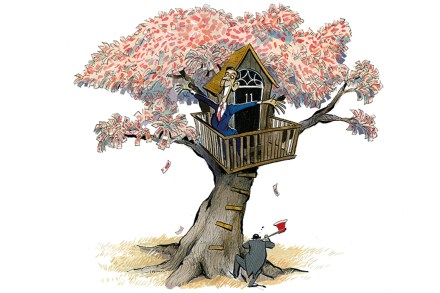
At first, it seems to make no sense. Britain is in the middle of the worst economic crash in recorded history, with a Chancellor who is famously keen on low taxes, spending control and sound money. But Rishi Sunak this week presented a Budget that seems inspired, in parts, by Labour’s last manifesto. Debt surging to £2.8 trillion. Public spending up by a quarter in a year. And taxes: soon going up. Corporation tax, freezes to the personal tax threshold. The explanation most Tories comfort themselves with is that Sunak wants to explain to a high-spending Prime Minister that today’s cash splurge is tomorrow’s tax rise. But in truth, Sunak is motivated by something else.

What Rishi Sunak could learn from the vaccine rollout

From our UK edition

Barely a year has passed since Rishi Sunak’s first Budget. Its centrepiece was a £30 billion stimulus designed to calm nerves about Covid-19 even though barely 500 cases had been diagnosed in the country. The Commons chamber was packed, with not a mask in sight. Few that day would have thought that in a year’s time the country would be in its third national lockdown and the economy would have suffered its worst slump since the Great Frost of 1709. The pandemic has made a mockery of nearly every optimistic prediction. The government is now moving with extreme caution. Even though vaccines have a greater effect with every passing day, restrictions won’t finally be removed until 21 June.

Caroline Lucas finds Rishi Sunak’s weak spot

From our UK edition

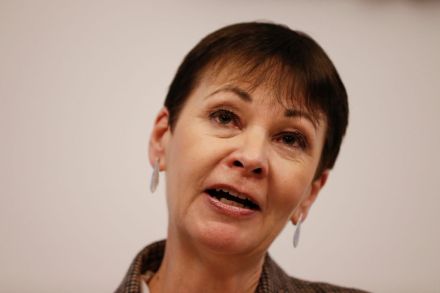
Rishi Sunak's Budget has been greeted fairly favourably. The Chancellor has succeeded in avoiding sparking uproar on the Tory backbenches. And Labour's response was muted. But not everyone is happy. Step forward Caroline Lucas. The Green party MP, beamed in to the Commons from Brighton (where else?), found a fatal flaw in Sunak's announcement: 'I say in all seriousness, our nation's health and prosperity would be better served by a Chancellor who cared rather more about hedges and hedgehogs and less about hedge funds' Mr S is glad to finally hear MPs sticking up for the issues that matter...

Rishi Sunak is a prime minister in waiting

From our UK edition

It is always a pleasure to see a first-rate mind in action, as we did during today's Budget. Equally, when a Chancellor gives such an assured performance, especially if his Prime Minister is, shall we say, controversial, it makes people think. The bubble reputation is a fickle business, especially when Tory MPs are the umpires. In recent weeks, Rishi Sunak's share price wobbled. Bears came into the market. Was this youngster as good as people had been saying?  There were grumblings on the backbenches – admittedly not an unusual sound in the modern Tory party – about the prospect of tax increases. By the time the Chancellor sat down, the bears were in trouble. Any recent losses had been overtaken by gains.

Rishi reveals his calculating streak

From our UK edition

Before the budget, the TV pundits like to tell us about divisions between the PM and his next-door neighbour. The story is that boom-and-bust Boris can’t wait to splurge cash on a set of mega-projects that would put a Persian emperor to shame. Build a bridge. Burrow a tunnel. Concrete over an estuary and plonk an airport on top. He wants to tarmac his way out of trouble. But the smooth and neatly combed Chancellor, Rishi Sunak, plans to create fiscal stability and to take things from there. He looked every inch the central banker as he delivered his budget today with his gleaming hair and immaculate blue suit. Next to him, Mark Carney would have looked like a tramp. Sunak offered a welcome glimpse of sunshine.

Will Rishi Sunak’s Budget give Britain the boost it needs?

From our UK edition

For a man who has only delivered two Budgets, Rishi Sunak is no stranger to fiscal announcements. Last March’s £30bn spending splurge was just the start of hundreds of billions of pounds spent in the fight against Covid-19. Today Sunak pledged another £65bn: furlough and the Universal Credit uplift were both extended; incentive payments for businesses to take on apprentices were doubled; and ‘restart grants’ worth £5bn to help businesses get back on their feet were unveiled. But this Budget wasn’t all giveaways. The Tory Chancellor announced a new, tiered system for corporation tax, which hikes the rate from 19 per cent to 25 per cent in 2023 for the most profitable businesses.

Labour is right to be scared of Rishi Sunak

From our UK edition

Labour is terrified of Rishi Sunak. Today's Budget showed exactly why. The Chancellor put in an impressive performance: It was assured and hit the right notes at the right times. It also laid the groundwork for a narrative on the economy that will work very well for the Tories. Sunak told voters that George Osborne's cuts created the money that comprised the Covid recovery spending. This ties together the whole of the last decade of Tory rule in a neat package – something Boris Johnson has avoided doing with his ‘I’ve only been Prime Minister for five minutes’ routine. Labour folk will now complain and shout ‘Tory austerity!’ until they are blue in the face.

Why Rishi Sunak is hiking corporation tax

From our UK edition

It might seem a strange thing to say about a Chancellor who is presiding over an annual deficit of £355 billion, but Rishi Sunak is a fiscal conservative. This is what explains his decision to hike corporation tax to 25p in 2023. He thinks that this move is necessary to begin to put the public finances on a sounder footing. The increase in corporation tax is offset by the so-called ‘super deduction’. This allows companies to write off 130 per cent of the cost of an investment against tax for the next two years. The aim is to try and boost investment and help address this country’s long-standing productivity problems. The move is particularly likely to benefit manufacturing which should help with the government’s levelling up agenda.

What the Budget is missing

From our UK edition

If Daniel Defoe had been writing about modern budgets, he would have adapted his famous saying to include the certainty of death, taxes and an absence of a long-term plan for adult social care. Once again, the statement from the Chancellor had a yawning gap where the settlement for funding the beleaguered sector should be. There was no mention of social care in Rishi Sunak's speech or in the Budget Red Book, either. The government's answer to complaints about this is that ministers will publish a white paper on social care reform — but we've been hearing this line for years now. There was no mention of social care in Rishi Sunak's speech or in the Budget Red Book Indeed, we might be hearing this line for longer than we're being led to believe currently.

Rishi Sunak’s furlough trap

From our UK edition

The trouble with emergency financial measures is that the crises used to justify them never seem to end. Just as the Bank of England couldn’t bring itself to think the time was ever right to reel back the ultra-low interest rates and quantitative easing it introduced at the nadir of the 2008/09 financial crisis, so the furlough scheme is steadily becoming a permanent part of Britain’s welfare infrastructure. Originally scheduled to end last June, it is to be extended yet again until the end of this September, by which time it will have been in operation for 18 months. This will be three months after all Covid restrictions are due to end. What, then, will be the excuse for the government to continue to pay the wages of employees who are not actually working?

A guide to parliamentary gadgets

From our UK edition

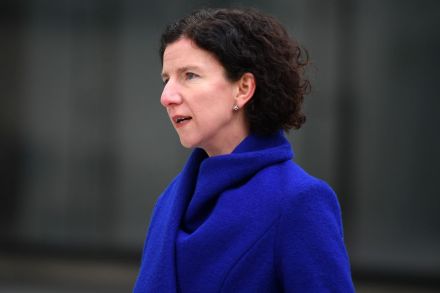
After famously criticising Rishi Sunak for his '£180 Bluetooth coffee mug' back in July last year, Labour's Angela Rayner seems to have started something of a gadget war. On Monday she came under fire for claiming a pair of Apple AirPods on parliamentary expenses. It was then swiftly pointed out that Peter Bone has also splashed out on some tax-payer funded ear gear. When it comes to the latest tech trends, Westminster is clearly leading the way.

20 taxes Rishi should bin

From our UK edition

When Rishi Sunak takes to the Despatch Box on Wednesday it will be against a backdrop of colossal national debt, the recent rise in government bond yields and the ongoing Coronavirus crisis. The British state owes £2.1 trillion, ten times the size of the entire economy of an independent Scotland. Yet some concerns over the health of the public finances are misguided – or at least exaggerated. The increase in borrowing to pay for Covid does not itself have to be repaid (at least in the short term). Why? Because provided the government can continue to make the interest payments, debt can simply be rolled over. What's more, the UK economy is already at – or close to – its maximum taxable capacity.

Labour doubles down on opposition to tax hikes

From our UK edition

Rishi Sunak kept his Budget cards close to his chest this morning as he toured the studios for both BBC One’s The Andrew Marr show and Sky News’ Ridge on Sunday. The Chancellor batted away questions about spending and possible tax hikes, repeating over and over again that it’s only ‘appropriate’ to wait until the fiscal event this Wednesday to reveal the details of his plans. There were hints towards areas that have taken the Chancellor’s interest, including a passing comment about ‘business investment’ on Sky News – a bugbear of many on the right, who have long-argued that the UK’s corporate tax rate regime is ungenerous to businesses that would invest money into making their company more efficient.

Sunday shows round-up: Chancellor says rebalancing the books won’t ‘happen overnight’

From our UK edition

Rishi Sunak – Government will do ‘whatever it takes’ to protect people and businesses Ahead of the Budget this Wednesday, both Andrew Marr and Sophy Ridge were joined by the Chancellor of the Exchequer Rishi Sunak. With the government’s roadmap for ending the lockdown having been published last week, all eyes are now on Sunak and the economic levers that he will be pulling as the pandemic hopefully begins its journey out of the news and into history. Sophy Ridge asked the Chancellor if the government’s furlough scheme would be extended beyond the current deadline of April. Without going as far as to say ‘yes’, Sunak suggested that an extension was on the cards: https://twitter.com/RidgeOnSunday/status/1365947358668816385?