Rishi sunak

A tax rise for care won’t solve the problem

From our UK edition

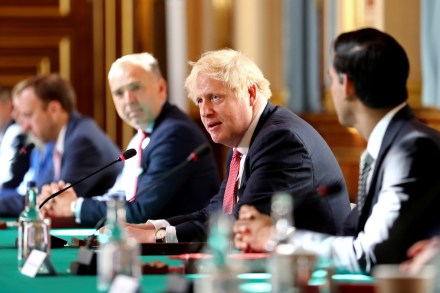
The tax burden in the UK is nearing a 70-year high — but that’s not stopping ministers from mulling over plans to hike taxes further. According to reports this morning, Boris Johnson and Rishi Sunak are close to agreeing an increase to national insurance to help address the NHS backlog (five million patients in England, and counting). They also want to fill the long-standing black hole in the social care budget: something Johnson promised he’d address nearly two years ago to the day when he first entered Downing Street. The rumours have immediately led to criticism of the government’s willingness to break its manifesto pledge, not to raise income tax, national insurance or VAT.

Boris and Rishi skip self-isolation

From our UK edition

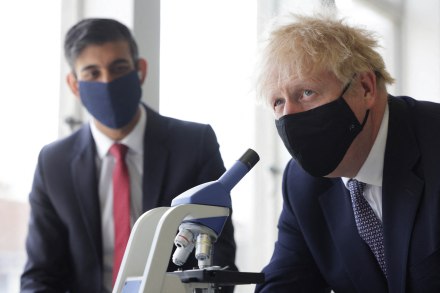
Following yesterday's news that health secretary Sajid Javid had tested positive for Covid, it seemed only a matter of time before other cabinet ministers were similarly forced to self-isolate. Javid had a 'lengthy' meeting with Boris Johnson on Friday afternoon, just hours before his symptoms developed. So, surely the Prime Minister will be expected to self-isolate? Think again...This morning, No. 10 has released the following statement: The Prime Minister and Chancellor have been contacted by NHS Test and Trace as contacts of someone who has tested positive for Covid. They will be participating in the daily contact testing pilot to allow them to continue to work from Downing Street. They will be conducting only essential government business during this period.

Rishi Sunak tries to charm Tory rebels after the foreign aid cut

From our UK edition

The government has won its vote on cutting international development spending from 0.7 per cent to 0.5 per cent of GDP. 333 MPs voted for the motion, with 290 MPs voting against. The debate on the cut featured a number of politely furious arguments from Tory rebels, from Andrew Mitchell, who spoke of ‘the Chancellor's silver tongue’ in trying to whittle down the numbers with a compromise, to David Davis, who called the cut ‘morally reprehensible’. Others, like Stephen Crabb, recalled the strenuous efforts that had gone into creating the target in the first place, telling colleagues that 0.7 per cent was still the right target to have. There were two striking things about this debate and the vote.

It’s time for Rishi Sunak to stand up to Boris Johnson

From our UK edition

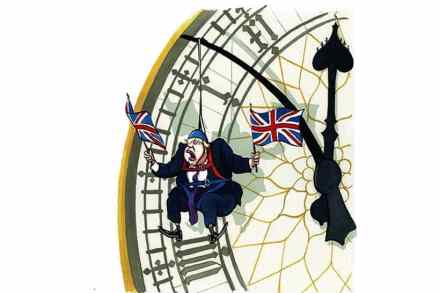
Finally the pandemic fog is lifting and the outlines of post-Covid politics are starting to take shape. While the Government is perfectly capable of generating many more unfortunate headlines by mishandling the Covid exit wave – or indeed, in the case of Matt Hancock, ignoring the 'hands, face, space' rule – it is clear that one key relationship will largely determine its longer-term fortunes. It is that between off-the-cuff scruff Boris Johnson and his immaculately turned-out Chancellor, Rishi Sunak – the man in the ironed mask.

Johnson vs Sunak: The political battle of the autumn?

From our UK edition

As ministers grow increasingly confident that they will be able to unlock by 19 July, Boris Johnson is facing a series of other political problems coming up the track. After the party lost the Chesham and Amersham by-election to the Liberal Democrats, Tory MPs with seats in the south are particularly restive. CCHQ has spent the weekend reaching out to these MPs in a bid to offer reassurance that the party has not forgotten about them. Yet the biggest problem Johnson faces is on spending. The spending review in the autumn will see all these various debates playing out Over the weekend, there have been a series of reports of a rift between the Prime Minister and his Chancellor on the Covid recovery. Figures in the Treasury are growing frustrated with a No.

Rishi Sunak and the coming Tory battle over climate change

From our UK edition

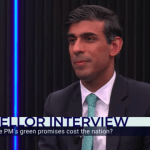
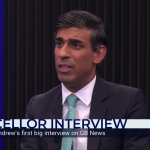
The Chancellor, Rishi Sunak, isn’t normally given to waffle, which makes his maiden appearance on GB News all the more remarkable. Asked by Andrew Neil who – government or homeowner – would have to pay the estimated £10,000 per household cost of replacing domestic gas boilers with heat pumps to help reach the target of net zero emissions by 2050 Sunak replied:  'So when you say the alternative is the household or the government, the government’s money is the people’s money. And that’s my point when I say ultimately we all pay. The government does have any separate money of its own' As a general point of political philosophy, it was a fair enough statement.

Rishi Sunak’s waffle exposed the flaw in Boris’s green agenda

From our UK edition

Who pays? It is one of the most important questions in politics, especially when it comes to the sort of expensive zeitgeisty ideas that governments love to take a reputational ride on. When Margaret Thatcher was Tory leader, she tried to exempt her party from this charge of vulnerability to fashionable notions that come with eye-watering price tags attached, once observing:  'The Labour party scheme their schemes, the Liberal party dream their dreams, but we have work to do.' Nobody who has followed the career of Boris Johnson at all closely would seek to exempt him. Indeed, 'schemes and dreams' appear to be what make him tick.

Why Rishi Sunak should keep the Universal Credit uplift

From our UK edition

Chancellor Rishi Sunak agreed to sit down with Andrew Neil on GB News last night for what turned out to be a fairly brutal grilling. The Chancellor floundered under interrogation on the pensions triple-lock, the cost of climate-friendly policies and the Tories’ big-government instincts. However, one of the more uncomfortable moments came when Neil pressed him on the future of the £20 weekly Universal Credit uplift. The benefit supplement, which also applies to the basic element in Working Tax Credit, was introduced at the start of the pandemic because the government acknowledged that the coming recession would inflict particular hardship on those already on the lowest incomes.

Rishi Sunak: I’m a fiscal Conservative (unlike Boris)

From our UK edition

When Rishi Sunak told Andrew Neil this evening that he had his eyes on the future, he was ostensibly talking about the nation's finances. But it was difficult not to conclude from his interview on GB News that he wasn't also keeping at least one eye on his own future, too. A particularly striking exchange came when Neil asked him what kind of Conservative he is: Andrew Neil: 'Beyond the pandemic are you a One Nation conservative, are you a big Government Conservative like the Prime Minister or are you a small government, fiscal Conservative?

How NHS boss Simon Stevens could soon cause trouble for Boris

From our UK edition

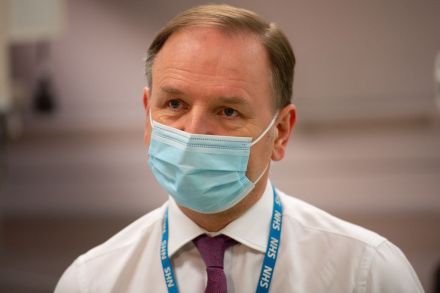
NHS England boss Sir Simon Stevens's final speech today was watched online by hundreds of health service bigwigs. But its main audience was much smaller. It was aimed squarely at just two people: Boris Johnson and Rishi Sunak. Stevens’s main message was about funding. The government, and, in particular, the Treasury, may not be thrilled once they wrap their heads around his statement on the five-million-strong (and Covid-predating) NHS backlog that 'when the health service is given the backing and the tools we need, we can deliver what's required'. Translated into plainer language, Stevens was saying: ‘Get your wallets out: this is going to hurt’.

Will the G7 tax deal survive?

From our UK edition

What are the chances of the G7’s agreement on a minimum rate of corporation tax actually coming into effect? While it was presented as a done deal last weekend, things are not going too well. Firstly, the G20 will have to agree — which is far from guaranteed given that smaller countries have less to gain from the proposal than the US. It is a tax designed to help countries with a large number of multinational companies who currently operate through subsidiaries in countries with lower corporation tax rates. While no G20 country currently has a rate below the agreed 15 per cent, (and the biggest loser, Ireland, with its 12.

Inflation fears grow

From our UK edition

Two months ago The Spectator reported on what was keeping Rishi Sunak awake at night ahead of the Budget: an inflation resurgence that could damage Britain’s economic recovery as it comes out of the pandemic. He deliberately designed his March Budget with inflation in mind, trying to make the UK’s finances ‘Biden-proof’ if inflation or interest rates started to move, and the cost of servicing the country’s debt became remarkably more expensive.At the time, Sunak was a lone voice on the matter. His inflation fears put the decision to raise tax into perspective, but many remained critical of his rather cautious approach. Inflation seemed a strange focus as the conditions for major change appeared glaringly absent.

Will social care reform be delayed yet again?

From our UK edition

Labour's Liz Kendall is today calling for the government to treat social care in the same way as it treats physical infrastructure. In a speech this afternoon, the shadow care minister said that 'in the century of ageing, social care is as much a part of our economic infrastructure as the roads and the railways'. This is quite a challenging analogy, as the state of the social care sector would make even the most outdated and crumbling parts of the northern rail network look pretty luxurious and well-appointed. Kendall is also speaking as a battle rages within government over whether social care reform will make it into the Queen's Speech.

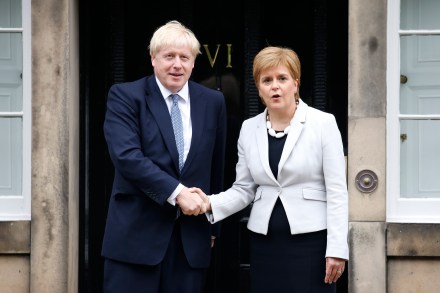
When will Boris next visit Scotland?

Poor Douglas Ross had a difficult outing on Radio 4's Today show this morning, being asked repeatedly as to whether the prime minister will visit Scotland prior to Holyrood polling on May 6 next month. A squirming Ross argued: I’m not sure if he’s going to come up in Scotland in this campaign. He had hoped to come up, and I thought he may come up, but given the pandemic and the restrictions to campaigning I’m not sure that’s likely now.

How Boris eclipsed Cameron

From our UK edition

Remember the days when David Cameron was the sleek young prime minister who had brought to an end 13 years of Labour government and Boris Johnson was just a clown on a zipwire? There seemed little doubt that Dave had won the race between the Bullingdon Club contemporaries for the glittering prizes of political life, seizing the chance to fashion a moderate Conservatism for the modern age. Boris, the great entertainer, was destined to be a far less consequential figure – a squanderer of his own talents. The Greensill affair underlines the perils of rushing to premature judgment.

Can Rishi Sunak get people back into the office?

From our UK edition

To what extent do workers want to return to the office? It’s a question on everyone’s mind – none more so than Rishi Sunak. If Covid working habits stick post-lockdown, with a majority of people continuing to work from their living room, it’s not just the working day that will be fundamentally altered, but the wider economy too. The economic implications for the shops and services designed to cater to the office worker will be drastic: large parts of city centres and high streets may find themselves without customers, or enough business to turn a profit. But these were not the main points the Chancellor made in his interview with the Daily Telegraph and the Sun, as part of a Conservative fringe event hosted by iNHouse Communications.

Andrew Bailey’s note of Covid caution

From our UK edition

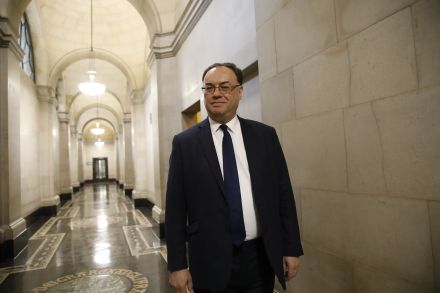
Speaking to BBC Radio 4’s Today programme this morning, Andrew Bailey threw his support behind one of the more optimistic scenarios for a post-Covid economic recovery: that the UK will be back to pre-pandemic levels by the end of the year. The combination of the UK’s hugely successful vaccine rollout combined with increased levels of lockdown immunity – that is, the economic impact of restrictions ‘reducing as we all adapt’ – had the Governor of the Bank of England suggesting that we could see a full recovery by the end of the year (notably earlier than the Office for Budget Responsibility’s Budget forecast of roughly the middle of next year).

The misunderstood motto of Rishi Sunak’s old school

From our UK edition

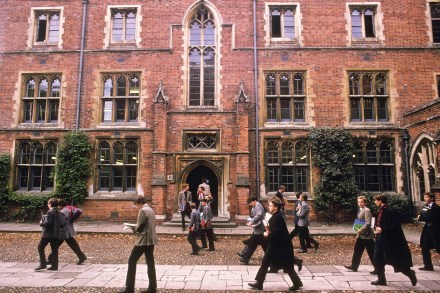
The first thing that Dr Tim Hands, headmaster of Winchester College, would like to clear up is his school’s world-famous motto, ‘Manners maketh man’. Whenever a Wykehamist makes the papers, this ancient phrase is wheeled out, referring to his (in)decent manners. But this isn’t quite right, says Hands. Two pieces of stained glass — one formerly in Bradford Peverell church near Dorchester, and another in the Warden’s Lodgings at New College Oxford (founded by Winchester’s founder Bishop William of Wykeham) — read ‘Manner maketh man’. This, says Hands, is the origin for the school’s motto. ‘“Manner” means what you are and what you do — not how you fold your handkerchief.

George Osborne takes a pop at Rishi Sunak’s tax hike

From our UK edition

Last week Rishi Sunak presented his second Budget to the House of Commons. Today, three former Chancellors weighed in. Speaking at an online event hosted by the Institute for Government, Norman Lamont, Alistair Darling and George Osborne joined the Institute's director Bronwen Maddox to discuss the state of the UK economy, and how their past experiences lead them to reflect on recent events. There was a surprising amount of consensus from the panel – not on the best way to handle or manage the economy, but about what is politically possible. Fuel duty came up multiple times as an area of policy that doesn’t gel with the government’s stated commitments to a green agenda; yet it was, and continues to be, an area the former Chancellors agreed was off-limits.

Rishi Sunak’s real opponent

From our UK edition

Things are starting to get more awkward for Rishi Sunak — something the Chancellor has long been prepared for. He knew that the early months of the pandemic, in which he gave out billions in taxpayers' cash, would fade to the rather more difficult landscape he now faces: trying to rein that spending in — and stop ministers from eking more and more out of the Treasury for their own departments.  At this morning's Treasury questions, Sunak inevitably faced questions about the bombshell dropped by NHS chief Sir Simon Stevens in a select committee hearing that the NHS had been budgeting for a 2.1 per cent pay rise.