Rishi sunak

‘Rishinomics’ could cost the Tories the next election

From our UK edition

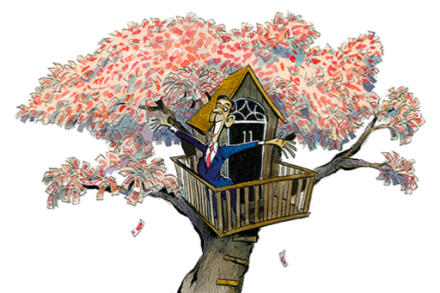
A truism is emerging that the Tories’ massive public spending has left Labour politically with nowhere to go. This quasi-social-democrat version of conservatism supposedly leaves all of the opposition’s attacks on the Tories blunted – if there’s a Conservative government spending big, what does Labour have to offer? There is another way of looking at this, however. The current Chancellor’s spending plans could result in a perfect storm for Labour at the next election – a chance for Starmer to attack the Tories from both the left and the right. From the left, Labour can claim that they will spend money in a more ‘caring and thoughtful’ manner, something their audience is already geared to believe.
Prepare for Javid vs Sunak in the next Tory leadership contest

From our UK edition

In 1992 a young footballer named Dion Dublin left my local team, Cambridge United, to take up one of the most coveted jobs in football – centre-forward at Manchester United. After a promising first few outings, disaster struck when he suffered a broken leg. By the time he was restored to fitness a genius named Eric Cantona had been signed and was strutting his stuff up front. Being a good lad, young Dion took it well enough. But it was basically game over for him at Old Trafford. As Sajid Javid rose from the Commons back benches this week to ask Chancellor Rishi Sunak a question about his summer economic statement, I could not help but be reminded of Dion and Eric. Sunak had just given yet another breathtakingly fluent, pitch-perfect performance.

The missing link in the government’s lockdown easing

From our UK edition

After Rishi Sunak's attempts to kickstart the economy on Wednesday, the government has announced plans to further unwind the lockdown. From this weekend, artists and musicians can perform live outside while outdoor pools will also be opened. As of Monday, beauticians, spas, tattooists, and tanning salons can reopen. Finally those looking to work off any lockdown pounds can celebrate the news that gyms, indoor pools and leisure centres will open on 25 July. As has become the new normal, each relaxation comes with new caveats on social distancing. The announcement suggests that, as things stand, the UK's roadmap out of lockdown is broadly going to plan. However, there are still missing parts.

Portrait of the week: Sunak’s statement, shop closures and a hoo-ha over Boohoo

From our UK edition

Home Rishi Sunak, the Chancellor of the Exchequer, announced measures intended to stimulate the economy. Under a £111 million scheme, companies in England would be given £1,000 for each new work experience place they offered. Under a £2 billion scheme, householders would be given two-thirds of the cost of energy-saving work such as insulation, up to £5,000. The government made available £1.57 billion in emergency support for the arts and heritage sites; it was to go to institutions, not freelance performers. Among business failures and job losses, sandwich chain Pret A Manger was to close 30 of its 410 shops and lose 1,000 staff. Up to 5,000 jobs were to be cut at the Upper Crust sandwich chain and other cafés owned by the SSP Group. T.M.

Rishi Sunak should try something new: silence

From our UK edition

A huge increase in job centre advisers; special grants for companies taking on trainees; free cash for anyone insulating their home; cuts to National Insurance; reduction in VAT, and a £500 shopping voucher to re-boot a collapsing High Street. Oh, and an emergency GCRF, or Garden Centre Rescue Fund, to subsidise anyone who helps our heroic horticultural industry by building a new rockery or water feature. Okay, I’ll admit, I made that last one up. But all the others are suggestions that have been put forward for the Chancellor’s mini economic statement tomorrow. But perhaps Rishi Sunak should try something new: silence. In truth, the government has done an extraordinary amount to help people and businesses through this epidemic.

The success of British Indians is troubling for some. Why?

From our UK edition

When Priti Patel told Labour MPs that she didn’t need any lectures on racism, they seemed to take it as a declaration of war. Last week, 32 of them signed a letter accusing the Home Secretary of ‘gaslighting’ black people’s experiences. The social media warriors were out in force, rebuking her for not being authentically ethnic. She was attacked for being a ‘coconut’, brown on the outside and white on the inside. It’s not the first time she has faced hostility for not conforming to expectations: one article last year called her ‘a product of internalised whiteness’. Mahatma Gandhi is also now under fire, with a petition to remove his statue in Leicester attracting more than 6,000 signatures.

Bailing out businesses looks inevitable – but it’s not all bad

From our UK edition

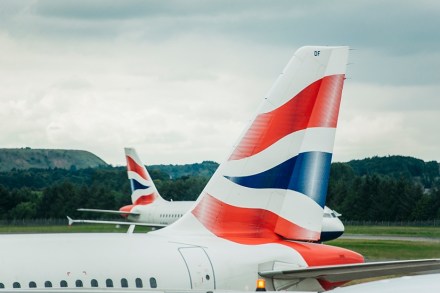
Should the government be prepared to take equity stakes in major companies that will struggle to survive the current crisis? That’s a question already on the table in relation to Jaguar Land Rover and Tata Steel, and likely to arise for British Airways, aero engine maker Rolls-Royce and others. We’re told Chancellor Rishi Sunak is working on a plan, called Project Birch, to bail out ‘viable companies which have exhausted all options’ and whose collapse would ‘disproportionately harm the economy’. That means large-scale loan support first, with conversion to equity as a last resort — and to some pundits it smacks of the 1970s interventionism that left swathes of under-performing British industry addicted to state subsidy.

Portrait of the week: Europe’s lockdowns ease, England stays alert and Broadway stays shut

From our UK edition

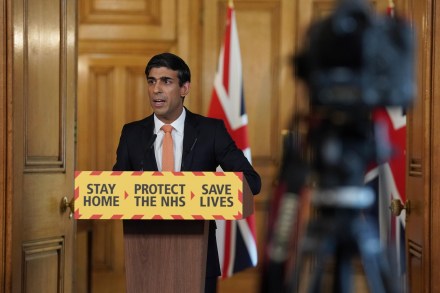
Home The government changed its slogan from ‘Stay home, protect the NHS, save lives’ to ‘Stay alert, control the virus, save lives’. Authorities in Scotland, Wales and Northern Ireland refused to adopt it. The day after a 13-minute televised speech to the nation by Boris Johnson, the Prime Minister, the government published a 50-page Recovery Strategy. A 14-day quarantine would bind anyone entering the country (with exceptions, such as people from France). Everyone should continue to work from home if possible, but workplaces ‘should be open’, apart from those required to be closed.

Extending the furlough scheme comes at colossal cost

From our UK edition

One of the most generous Covid-19 emergency measures in Europe has been extended until the end of October – with some caveats. Chancellor Rishi Sunak has just told the House of Commons that the furlough scheme – which covers up to 80 per cent of an employees’ wages, with a cap of £2,500 per month – will continue to operate unchanged between now and the end of July. From August, furloughing will become more flexible, allowing for part-time work. The scheme remains extended to all sectors, avoiding the optics of industry favouritism, which could easily extend to regional favouritism, given the dependence on certain sectors in different parts of the UK. At first, the scheme was intended for lockdown.

Sunak’s furlough scheme is a victim of its own success

From our UK edition

Who are we kidding? If you are still furloughed through July, August, and September, the chances are that your job isn’t on hold as you wait for lockdown to gradually be lifted or for your company to get back to normal levels of demand. In truth, you have probably been fired. It’s just that no one got around to telling you yet. Rishi Sunak's coronavirus job retention scheme, to give its full title, has in many ways been one of the most successful government projects we have seen for years. More than six million workers and half a million companies have taken it up. It has been brilliantly implemented by HMRC, who built the system in only a month, with hardly a hitch in the process (Who knew giving away free money was so easy? Maybe we should try it more often).

How will Rishi Sunak roll back the furlough scheme?

From our UK edition

Just weeks ago, Chancellor Rishi Sunak claimed that widespread use of the furloughing scheme was proof of its success. But it appears the government has over-achieved. The Treasury’s original prediction was that 10 per cent of businesses would use the salary safety net; the figure has turned out to be closer to 70 per cent. The cost for just one month of the scheme is estimated to be £8 billion, only £3 billion less than the NHS’s monthly budget. ‘We’re not talking about a cliff-edge but we have to get people back to work.’ says Matt Hancock, the health secretary. ‘We’ve got to wean off it.’ After telling ITV early this week that the scheme was ‘unsustainable’ for the long-haul, Sunak is changing tack.

Why Covid cuts are off the cards

From our UK edition

How will the UK recover after lockdown? Although social distancing is expected to continue for months, talk has turned to how the government will deal with its coronavirus debts. The Treasury is seeking to raise £180 billion over the next three months to meet its pledges – putting the UK on course to see its budget deficit rise to a level never seen before in peacetime. Some estimates put borrowing this financial year at over £300 billion, far outpacing the years following the financial crash. This has led a number of public figures to predict a return to the Cameron and Osborne era with mass cuts in the years ahead.

Rishi Sunak must stick to his guns

From our UK edition

Was the Chancellor wrong to guarantee only 80 per cent, rather than 100, of ‘coronavirus business interruption loans’ to keep small- to medium-sized companies afloat? Rishi Sunak’s announcement this week of fully guaranteed micro-loans for the smallest companies seeking to borrow up to £50,000 was reported as a partial climbdown in the face of pressure from the CBI and many of his own MPs to do away with the on-risk slice of the larger scheme, which provides loans of up to £5 million through 40 accredited banks — but which many would-be borrowers have claimed is a bureaucratic nightmare. Readers certainly confirm that picture.

At least some of the Chancellor’s promises are actually working

From our UK edition

The phrase ‘sharing economy’ was coined a decade or so ago to describe collaborative new business models made possible by the internet, from Airbnb and Uber to crowdfunding, peer-to-peer lending and skill bartering sites. It was about ways of monetising assets, circulating capital and earning casual livings that boosted economic activity after the ‘great recession’ and it will be a hive of creativity in the next recovery — even though its partner is the ‘gig economy’ whose insecurity has left so many people in hardship now.

Sunak bails out charities – but are his measures actually working?

From our UK edition

At Wednesday's coronavirus briefing, Chancellor Rishi Sunak turned his attention (and the Treasury’s coffers) to the charity sector, which will receive £750 million to support vital services for the community. The money will be divided between small, local charities working with vulnerable people and charities that provide ‘essential services,’ with Sunak citing St John Ambulance and the Citizens Advice bureau as two examples of potential beneficiaries. The support comes as organisations like Cancer Research announced in recent days that they would have to scale back their medical research due to a projected drop in donations on which they rely to keep their services going.

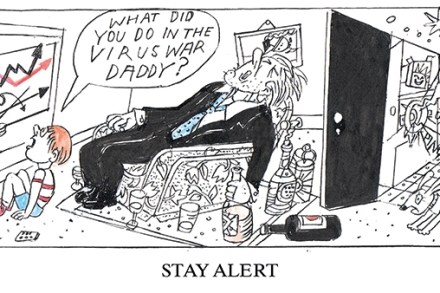
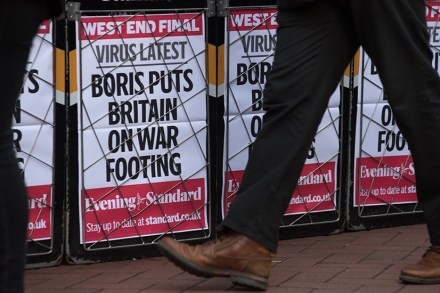
Don’t let anyone tell you there’s a war on

From our UK edition

‘Shut up — don’t you know there’s a war on?’ Strong hints of that attitude have emerged in recent weeks, and the hints are getting stronger. The attitude is mistaken. The right answer to any enquiry about whether we know there’s a war on is that there isn’t a war on. Nobody with sensible questions to ask about the current strategy or its implementation should be abashed to ask them. Hitler’s spies are not listening, Lord Haw-Haw will not be broadcasting them, and a grown-up citizenry does not confuse intelligent questioning with unpatriotic breaking of the ranks.

Coronomics: Ordinary remedies won’t be enough for a surreal crash

From our UK edition

We have seen crashes before, recessions and depressions, but nothing like this. Our fear of coronavirus has hindered and halted every aspect of daily life. We look out of our windows and barely recognise the country we’re in: police film dog-walkers and pour black dye into lagoons to deter swimmers. We wait in queues for empty-shelved supermarkets. The stock market collapses, surges, then collapses again. None of the old rules make sense. Welcome to the world of Coronomics. If this were a normal recession, the remedy would be simple: encourage people to go out, spend money and boost the economy. But today’s public health concerns require the government to repress the economy, while trying to keep it afloat at the same time.

Portrait of the week: Salmond cleared, Olympics postponed and Britain told to stay home

From our UK edition

Coronavirus Sunday dawned with 233 people in the United Kingdom dead thus far from the coronavirus Covid-19 (a week earlier it had been 21), and more than 12,000 in the world. Three days later it was 442 in the UK and more than 18,000 worldwide. About 107,000 of the world’s 410,000 cases detected had recovered. A billion people in the world were confined to their homes, joined from Sunday by a billion more in India, where confusion reigned. Testing was uneven, but, in fatalities, Italy, with 6,820 by Tuesday, had gone far beyond China (with 3,277). Iran admitted to 1,934 deaths and Spain had 2,800. China was reporting few new home-transmitted cases and Wuhan was to lift its lockdown in April.

How will the ‘war’ on coronavirus change Britain?

From our UK edition

In the past ten days we have seen the greatest expansion of state power in British history. The state has shut down huge swaths of the economy, taken on paying the bulk of the wages of millions of private sector workers, and told citizens that they can leave their homes only for a very limited number of approved activities. Boris Johnson likes to say that Britain is ‘at war’ with Covid-19. The parallel is hardly exact, but this expansion in state power is what you would expect in a war of national survival. It is worth remembering, as A.J.P Taylor wrote, that before ‘August 1914 a sensible, law-abiding Englishman could pass through life and hardly notice the existence of the state, beyond the Post Office and the policeman’.