Rishi sunak

Sunday shows round-up: Rishi anticipates ‘more economic stress’

From our UK edition

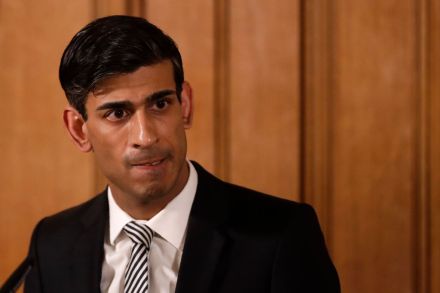
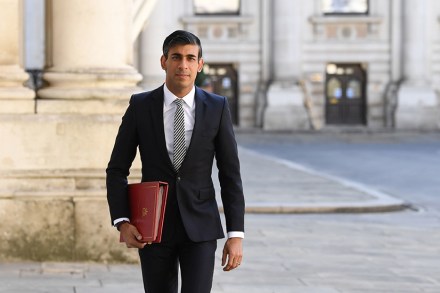
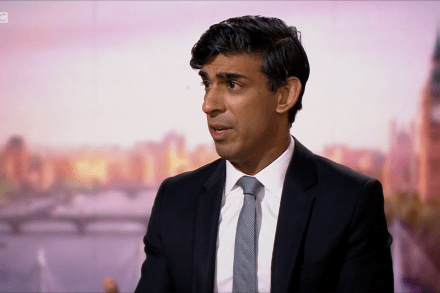
Rishi Sunak - There is more economic stress to come The Chancellor of the Exchequer will deliver the 2020 spending review this Wednesday, and it will shock no one to hear that the public finances are not in good health. Joining Andrew Marr in the studio, Rishi Sunak said that the economy was not out of the woods yet, and may not be for a long time: https://twitter.com/BBCPolitics/status/1330449174450606080?ref_src=twsrc%5Etfw RS: The economy is experiencing significant stress. We've seen that particularly in the labour market... [There is] more stress to come, and that is very sad to see... and it's something that we're going to grapple with for a while to come sadly.
The difficult decision Rishi Sunak has to make

From our UK edition

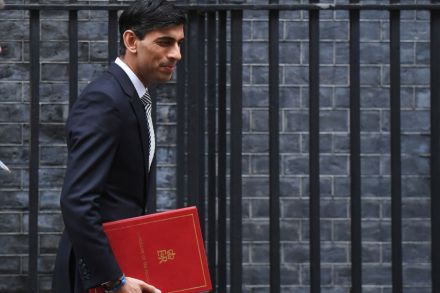
This week Boris Johnson is expected to announce an end to the national lockdown. However, with a return to normal still far away with the UK to move back into a stricter form of the three tier system, good news remains limited for the time being. That's also the case with the Chancellor's spending review. When Rishi Sunak gets up at the despatch box on Wednesday to announce his funding decisions, there will be hints of the difficult decisions he and Johnson face in the coming months and years as a result of coronavirus spending. Sunak and Johnson must decide whether to implement tax rises in this parliament, or fight the next election not being able to rule out 'hard choices'.

Why Boris, not Rishi, will lead the Tories into the next election

From our UK edition

Some Tory MPs are hoping that Dominic Cummings’ departure from Downing Street will bring with it a vital lift to Boris Johnson’s premiership. Other Tory MPs have made up their minds about Boris already. Either they think he was always a flawed character whose only use was winning them the 2019 general election, a job long since passed; or they have been turned off by any number of things that have transpired in 2020. Basically, some Conservative MPs will be disappointed in 2021 when Boris turns out to be Boris; others are past caring. In spite of this, it seems almost certain that Boris Johnson remains in Number 10 for the next three-and-a-half years and contests the 2024 general election as leader of the Conservative party.

If taxes must rise, Sunak should pick on private equity instead

From our UK edition

It’s not axiomatic that taxes must rise to pay for the pandemic, if you seriously believe the surge in growth, jobs and prosperity that will follow the rollout of a hyper-efficient national vaccination programme will generate sufficient revenues for Rishi Sunak to stabilise the public finances, albeit at the highest level of debt ever seen in modern times. On the other hand, the Chancellor is surely pondering this question: in the current mood of public gratitude for the NHS and government support for the economy, there must be taxes I can tweak that won’t lose sackloads of Tory votes and might chip the peak off the debt mountain — so where are they?

Treasury reveals it didn’t forecast economic impact of second lockdown

From our UK edition

Lockdowns are designed to temporarily delay the spread of the virus – but at what cost? This was the line of questioning that kicked off yesterday’s evidence session for the Treasury Select Committee, scrutinising the work HM Treasury has conducted in relation to lockdown. Chair of the committee Mel Stride asked Clare Lombardelli, Chief Economic Adviser to the Treasury, to comment on specific economic analyses conducted around lockdown restrictions, ranging from the closure of pubs, gyms and restaurants to ‘circuit breakers’ and working from home directives. It was quickly revealed that no analysis has been done.

Sunak’s furlough extension paves the way for more lockdowns

From our UK edition

England has only been back in national lockdown for a matter of hours and already economic support packages are rolling in — not for the duration of this lockdown (furlough was already confirmed until 2 December) but for the months to follow after the country exits lockdown. Chancellor Rishi Sunak has abandoned a return to the jobs support scheme when lockdown ends — which sees the majority of financial costs fall on the employer — and instead decided to extend the furlough scheme across the UK in its most generous form.

Why now is the perfect time to invest in art

From our UK edition

The Bank of England has told commercial banks to prepare for the possibility of negative interest rates. This last hypothetical spanner in the toolbox of monetary stimulus — since rates are stuck close to zero anyway and quantitative easing through bond-buying programmes has diminishing effects — sounds weird and worrying but has already been in use in Europe for some time. Its intended effect is to push the commercial banks to lend more to business by penalising them for depositing cash with central banks. But what on earth does it mean for personal savers? The fact is that all monetary policy since 2008 has been designed to stimulate moribund economies and keep companies alive on a broad front — with collateral impacts on individuals.

Sunak warns of hardship

From our UK edition

When Rishi Sunak was appointed Chancellor in February, he must never have imagined that his first address to the Conservative party conference would be made to an empty room. Nor would he have expected to have his entire speech dominated by a pandemic. Yet in his short, direct address, Sunak barely strayed from Covid-19. He reminded the public of the government's vast interventions to curb the impact of the virus — and hinted at what steps might be taken in future as the Treasury deals with the aftermath of our six month spending spree.

Portrait of the week: Curfew street parties, Trump’s taxes and a bone-eating vulture

From our UK edition

Home More than a quarter of the population of the United Kingdom (three-fifths of the Welsh, a third of the Scots and two-thirds of those in northern England) were put under harsher coronavirus restrictions. Boris Johnson, the Prime Minister, amid a flurry of local lockdowns, found himself unable to state the coronavirus restrictions suddenly imposed on the north-east. He said ‘six in a home, six in hospitality’ could meet, though the law said that members of different households could not meet at all indoors. Universal laws, brought in by statutory instruments, prohibited eating or drinking in bars, restaurants or clubs after 10 p.m.

Rishi Sunak prepares UK economy for ‘permanent adjustment’

From our UK edition

The UK economy is no longer hibernating; it is 'adjusting'. Today's measures announced by Chancellor Rishi Sunak are designed to help an economy expected to limp through the coming months, quite painfully in certain areas, hopefully on its way to recovery. But are they enough? The role of the government and the employer has switched: the six month jobs support scheme will see the state contribute to workers' wages if needed, but now the employer will be paying over 50 per cent of the costs, with the government paying 22 per cent.

Now get off your sofa to help save the arts

From our UK edition

Along, cold weekend brought a haul of business news more bad than good. The worst was from aero-engine maker Rolls-Royce, which announced a £5.4 billion half-year loss — adverse currency movements plus a collapse in new orders and engine-repair work — and warned that in the ‘plausible downside scenario’ of an extended slump in global aviation, the company might cease to be a ‘going concern’. That’s a horrendous prospect for what’s left of British engineering. And unlike recent losses on a similar scale at BP, there’s no consolation in terms of long-term repositioning of the business: in short, the fewer jets flying, the grimmer Rolls’s future.

8 things you didn’t know about Rishi Sunak

From our UK edition

It wasn’t the easiest news to have to break, but he delivered it with the kindness and compassion of a favourite uncle explaining to his nephew that his hamster has passed away. Afterwards, we were left thinking, “Well, what is a 20.4 per cent slump in the economy between friends, anyway?” Even the announcement that the UK is in the deepest recession of any G7 nation hasn’t taken the shine off Rishi Sunak’s approval rating, which remains light years ahead of other members of the government. When the Chancellor declares “we’ll do whatever it takes”, we believe him.

Why poetry matters

From our UK edition

Juan Carlos, ex-King of Spain, behaved foolishly in relation to money and sex, and so his decision to leave Spain is sad, but justified. That seems to be the view of most moderate people outside Spain who are not ill-disposed to the monarchy. But it is it right? Certainly Juan Carlos’s foolishness was real, but his imposed exile (it is not really voluntary) to the Dominican Republic is not a punishment for a crime: there has never been any legal process. It is a partisan political act which is bad for the unity of Spain. Juan Carlos’s exile was forced on the current King, his son Felipe VI, by a weak prime minister, the Socialist Pedro Sanchez.

Rishi-mania hits restaurants

From our UK edition

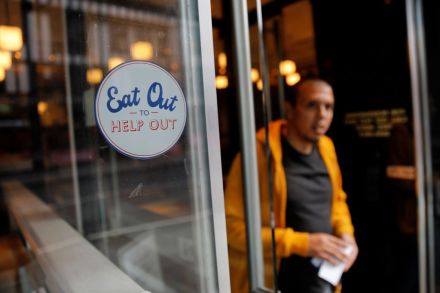
It has been a long few months for the Prime Minister, who has seen both his personal and his party’s poll-ratings take a hit, as the government struggles with the coronavirus pandemic. However, there is one Tory whose popularity continues to buck the trend. Step forward Rishi Sunak. The Chancellor of the Exchequer appears to be able to do no wrong in the eyes of many, as he has splashed the cash to help Britons get through lockdown. Having made a bold stroke early in the crisis with the furlough scheme, which has cost over £30 billion so far, Sunak’s latest move is the introduction of ‘Eat Out to Help Out’. The offer, first available yesterday, gives diners the potential to see half of their bills paid for them, care of the Treasury.

The Chancellor’s strange connection to cancel culture

From our UK edition

The cancel culture wants to obliterate people who do, or more often say, the wrong thing (for example, that there are such things as women) or even pronounce a taboo word. Taboo words have long been with us. The taboo word fuck was not even included in the first edition of the Oxford English Dictionary. Yet today the dictionary prints far worse words. Anyway, there is a curious connection between cancel culture and Rishi Sunak. In the 19th century, railway tickets were cancelled by clipping; indeed a scissor-like punch was known as a pair of ticket cancels. Postage stamps, the other glories of the Victorian era, were cancelled, often with Maltese crosses. But cancel originally meant to cross out writing using a lattice of pen lines.

Will masks mean the end of smiling at strangers?

From our UK edition

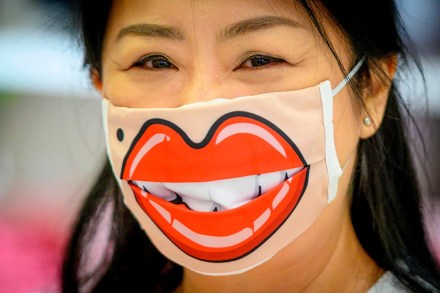
I’ve been a regular runner for 40 years, pounding my way across Hampstead Heath to Kenwood House and back. This year, thanks to a combination of heart surgery and coronavirus, I’ve become a walker, and my perspective has changed. Walking is a genial activity, requiring you to open yourself up to the world around you. Running is the opposite, a private battle with personal pain. You can see it etched on runners’ faces. They don’t smile until it’s over. I don’t think I shall take it up again. The pain of running once conditioned my life. Now I’m a walker it’s a great relief to experience, and convey, pleasure. One of the strangely endearing things about Zoom is its visual quality.

What has ‘deadweight’ got to do with Rishi Sunak’s magic money tree?

From our UK edition

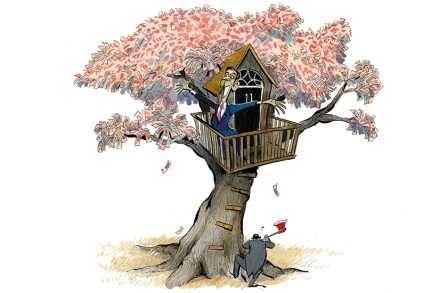
I was trying to understand what they meant on the wireless by deadweight costs. These were something to do with the magic money that Rishi Sunak, the Chancellor, was throwing out from his tree. Then my eye was caught by my husband dozing over his newspaper where a little patch of whiskyish dribble had spread over the business pages, and I felt enlightenment. Deadweight itself is plain enough. In the 17th century, when the earliest examples appeared, deadweight meant a static mass, as opposed to a mass in movement possessing kinetic energy. A deadweight, though, might drive clockwork by hanging from the works. In the 19th century, which I regard as yesterday, every political soul would have recognised a reference to deadweight.

Why isn’t the government learning the lessons of ‘red wall’ towns?

From our UK edition

A rare illness has broken out in Westminster. Last week a case of what was known before Brexit as ‘consensus’ was spreading. After two years of dithering, ministers published the ‘Magnitsky’ legislation, named for a lawyer tortured and killed after uncovering corruption by Russian officials. Finally, the UK can impose sanctions and close the door to human-rights abusers and their dirty money. Top of the list are those who targeted Sergei Magnitsky, who prop up a regime that oppresses LGBT people, Muslims and other minorities and that used chemical weapons on the streets of the UK. This is long overdue. It is equally welcome to hear that Saudi officials complicit in murdering journalist Jamal Khashoggi will face sanctions.

We’ll never know whether Huawei is still listening

From our UK edition

This column has been banging on about the peculiar nature of Huawei, the Chinese telecoms giant, ever since its expanded presence in the UK won what I described as ‘grateful applause from David Cameron’ back in 2012. I have deployed everything from serious intelligence sources to laborious knock-knock jokes (‘Huawei who?’ ‘Who are we kidding, prime minister? We don’t need to knock on your front door when we’ve already got a backdoor device in the Downing Street switchboard’) to make my point that the proliferation of Huawei kit in UK telecoms networks represented an obvious but unquantifiable security risk.

Portrait of the week: Face masks in, Huawei out and Amazon’s TikTok trouble

From our UK edition

Home New regulations would compel people to wear a face covering in shops in England from 24 July on pain of a £100 fine. Similar regulations had been imposed in Scotland. A report requested by Sir Patrick Vallance, the UK’s chief scientific adviser, said that, without lockdowns, treatments or vaccines, in a reasonable worst-case scenario, a second wave of infection could see coronavirus deaths in hospital alone range between 24,500 and 251,000, peaking in January and February. At the beginning of the week, Sunday 12 July, total deaths from Covid-19 stood at 44,798, with a seven-day average of 85 deaths a day; but in the following two days the number of deaths was 21 and 11.