Religion

Was Simeon of Jerusalem the first Christian in recorded history?

From our UK edition

28 min listen

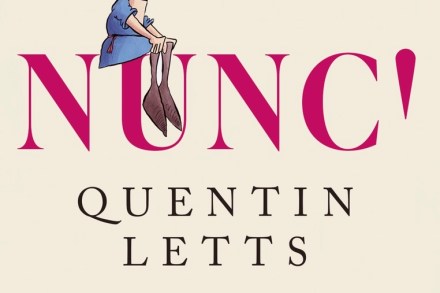
In Luke's Gospel, an ancient inhabitant of Jerusalem named Simeon meets Mary and Joseph when they bring Jesus to be presented at the Temple on the 40th day after his birth. He has been promised that he will not die until he has seen Christ, and as he takes the baby into his arms he utters the words, 'Lord, now let your servant depart in peace, according to your word; for my eyes have seen your salvation which you have prepared in the presence of all peoples, a light for revelation to the Gentiles, and for glory to your people Israel.'  This prayer, known down the centuries by its opening Latin words Nunc dimittis, explains the title of Quentin Letts's novel Nunc!, a delightfully quirky retelling of the story of Simeon and his friends.

America

Why is America so unhappy?

According to the annual World Happiness Report (WHR), America has dropped to 24th in the rankings, down from 11th in 2011. The study found that Americans are not just disgruntled, we’re not very nice to one another, either. “The impact of caring and sharing on people’s happiness” was the theme of this year’s report, and researchers concluded that following “the golden rule” of doing unto others as you would have them do unto you brings contentment. “Like ‘mercy’ in Shakespeare’s Merchant of Venice,” the WHR authors write in their executive summary, “caring is ‘twice-blessed’ – it blesses those who give and those who receive.

The C of E’s tragic misuse of its sacred spaces

From our UK edition

I am a priest in the high church tradition of the Church of England. The technical term is Anglo-Catholicism, but I come from a very different Christian background. My heritage is non-conformist evangelical – I was baptised in a swimming pool in the summer of my first year of university. St James’s in Piccadilly hosts events featuring ‘icons’ from RuPaul’s Drag Race UK It’s a long story as to how I’ve ended up wearing a chasuble and celebrating ‘Mass’, but a big part of it has been to do with church architecture. After several years in the charismatic evangelical scene, I became fascinated with the beauty of medieval churches, particularly cathedrals. I began to think of the large white-cuboid former bingo hall owned by our church as soulless and empty.

Letters: The romantic route to cheap flights

From our UK edition

Blood on our hands Sir: Paul Wood asks if anyone will be punished for the bloodbath in Syria (‘Massacre of the innocents’, 15 March). But where does one start? What we have seen most recently are the dreadful consequences – as also in Iraq and Afghanistan – of selfish western meddling in the Middle East for our own ends. I was on sabbatical in Syria at the end of 2010 interviewing Syrians of all religions and political persuasions. Well over 90 per cent and especially women saw the Assads as the only plausible bulwark against an Islamist theocratic nightmare. There was freedom of religion, freedom of association, the freedom for women to choose what to wear and be educated to university level.

When did RE teaching become so muddled?

From our UK edition

I recently offered my services as a part-time RE teacher to my local comp, an inner-city affair with a Muslim majority. Yes please, said the nice headmistress: the Covid-blunted Year 11s needed all the help they could get with GCSE revision. The syllabus consisted of Christianity and Islam. What could go wrong? The first thing that went wrong was that I talked about the Jewish roots of Christianity and Islam: Judaism was the original monotheism. ‘I don’t know if that’s right,’ said one girl, frowning. Well, you do now, I wanted to say. But of course what she meant was: I don’t know if you are to be trusted on this. I consulted the textbook, for objective evidence.

Massacre of the innocents: the return of sectarian persecution in Syria

From our UK edition

No one covers up their war crimes any more. They film them, celebrate them, post them on X. So we have videos from Syria this week showing Islamist fighters making terrified Alawite men get on their hands and knees and howl like dogs. In one video, the victims crawl along a street spattered with blood and gore as a bearded gunman clubs them with a wooden pole. The camera comes to rest on half a dozen bodies. Then we hear rifle shots. There has been a massacre of Alawites in Syria this past week: hundreds of civilians have been killed. The killings were perpetrated by the armed groups that put Syria’s new President, Ahmed al-Sharaa –formerly the militia leader known as Abu Mohammed al-Jolani – in power. For some, the true face of the country’s new rulers has been revealed.

Save Syria’s Christians

From our UK edition

David Lammy, the Foreign Secretary, and Marco Rubio, US Secretary of State, had rather tellingly different responses to the latest wave of violence in Syria. Lammy deplored the ‘horrific violence’ but failed to address where that violence was coming from. Rubio, by contrast, stated clearly that ‘radical Islamist terrorists’ were targeting minorities in Syria, including Alawites, Christians and Druze. Rubio is right. While precise numbers are difficult to ascertain, it appears that, according to a source verified by the Hungarian government’s State Secretariat for the Aid of Persecuted Christians – the only one in the world – up to 3,000 people may have been killed, the majority of them innocent Alawite civilians. A number of Christians have also been killed.

Modernisation has sent Russia spinning back to the Stone Age

From our UK edition

When Howard Amos first came to Russia, in 2007, it was a country you visited with interest, even enthusiasm. Modernisation, potentially a progressive development, was on the cards; America was getting ready to ‘reset’ US-Russian relations; foreigners were able to volunteer at Russian orphanages. That was what Amos did, working with disadvantaged children in Pskov Region. In the 2010s, he returned to Russia as a journalist and reported from places high and low. He draws on his experiences in this book’s 17 essays, centred on topics ranging from politics to poetry, religion to rural affairs. Inevitably, war is a recurring theme. One of Amos’s interviewees, Sergei, works for a German organisation set up to give fallen soldiers marked graves.

Americans should feel uneasy about the new Archbishop of Washington

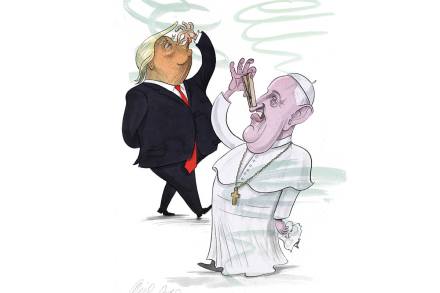
For an eighty-eight-year-old man who has spent only five days in the United States and doesn’t speak English, Pope Francis is a surprisingly partisan observer of American politics. For most of his life he was, like a typical Argentinean, viscerally but vaguely anti-American. By the time he became pope in 2013, he and the Democratic Party had embraced the ideology of the globalist left. And so they forged an alliance — one the Pope may soon regret, now that Republicans in the White House and on Capitol Hill are beginning to grasp the scale of the Vatican’s corruption. In 2016, Francis gave his blessing to the Hillary Clinton campaign’s Catholic front organizations, motivated not just by their shared obsession with anti-racism and climate change but contempt for Donald Trump.

Archbishop
Rome

Rome is ready for its close-up

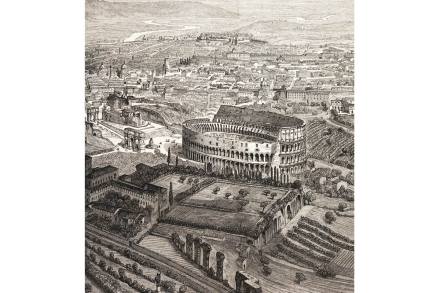
Rome Like a Parioli matron shedding her curlers, pins and hairnet in anticipation of a major family celebration, Rome’s monuments are emerging from shrouds of cladding and scaffolding ready for their close-up. The angels and river gods of the Ponte Sant’ Angelo and the Piazza Navona shine as blinding white as the day they emerged from Bernini’s workshop. The ancient granite basins of the Piazza Farnese fountains shimmer with an ethereal bluish light. The big occasion is the Papal Jubilee year of 2025, expected to draw a whopping 32 million visitors. That’s more than ten times Rome’s population, and half as many visitors again as in a normal year. If you’re planning a visit, do it soon before the city is entirely swallowed by crowds.

Why militant atheists don’t understand religion: a conversation with Alister McGrath

From our UK edition

36 min listen

In his new book Why We Believe: Finding Meaning in Uncertain Times, Prof Alister McGrath rejects the notion that belief is a relic of the past and takes aim at the ‘new atheists’ who attack religion without even knowing what it is. Prof McGrath, emeritus Andreas Idreos Professor of Science and Religion at Oxford University, has had a unique journey to religion. A former Marxist atheist with a doctorate in molecular biology, he’s now a world-renowned theologian and Anglican priest.  In this lively discussion with Damian Thompson he talks about the boundary between science and religion, something poorly understood by aggressive atheists such as Richard Dawkins and the late Christopher Hitchens.

Are these performances of the Bach cantatas the best on record?

From our UK edition

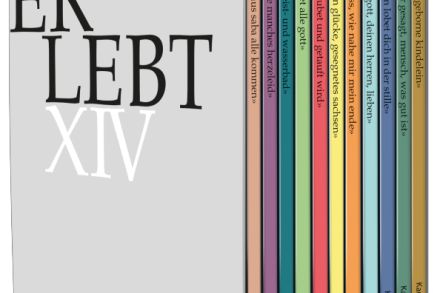
Three projects shedding light on the sacred music of J.S. Bach are nearing completion. The first consists of an epic 25-year project to record all the composer’s vocal works – passions, masses, motets and more than 200-odd cantatas – in electrifying performances supplemented by lectures and workshops. At the helm is a Swiss choral conductor renowned for his improvisatory skills – and surely the only baroque specialist to have played Sidney Bechet on a chamber organ. The second project is a guide to Bach’s church cantatas tailored at ‘cultural Christians’; that is, music lovers intrigued but intimidated by their Lutheran theology, unsure how to approach this treasure trove of, at a conservative estimate, more than 100 masterpieces of western civilisation.

Will science lead us back to God?

After generations of treating the universe as mere matter to be bent to our will, it seemed inevitable that the future of humanity would be to merge with machines. Billionaires and tech utopians now predict a near future in which the human mind itself might be “downloaded” or transferred into a digital realm, allowing us to overcome death itself by slipping the bonds of our physical existence altogether. Modern-day prophets like Yuval Noah Harari proclaim that we have embarked on a second industrial revolution, though the product this time will not be machines or vehicles or powerful new weapons but human beings themselves. There’s a certain logic to this way of thinking.

science
Peterson

Wrestling with Jordan Peterson

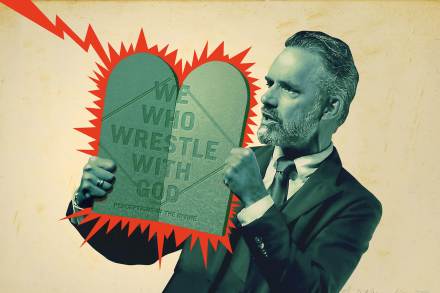
Jordan Peterson is one of those curious figures who has, thanks to the mysterious operations of the internet, been thrust into the limelight, willingly or not. While he has become a locus of hatred for certain left-wingers, thanks to his implacable attitude toward “woke” phenomena, in reality his supposedly controversial advice amounts to little more than that young people should work hard and take responsibility for their actions. Even the bolshiest socialist couldn’t really disagree. His 12 Rules for Life is a bestseller on both sides of the Atlantic, and he has a large and adoring fanbase.

The Vodou kingpin behind Haiti’s latest massacre

From our UK edition

For a politician known for his ability to shock, Donald Trump managed to outdo himself with his baseless claim during last year’s presidential debate that Haitian immigrants in Springfield, Ohio, were stealing, butchering and eating household pets. Regardless of this racist lie – new Haitian immigrants to Ohio do not eat people’s pets and are in the main perfectly respectable – Haiti itself is a mess and a good place to flee. The country’s extreme problems can’t be denied, although the US is doing a good job of ignoring them. Dictators assume guilt by association: if one old person is against you, they may all be killed Since the devastating earthquake of 2010, criminal gangs have grown larger and more powerful.

Letters: Where to find the best negroni

From our UK edition

Free thinking Sir: Your leading article (‘Article of faith’, 14 December) appears to have forgotten the connection between rationalism and natural rights. Liberals indeed think in utilitarian, Rousseauian and what they consider ‘rationalistic’ terms. But what about the logic of natural rights that come from John Rawls or Robert Nozick? The Declaration of Independence, the political culmination of Enlightenment-era thought on reason and rights, was in large part the product of irreligious minds. This document has been the model for a free society for centuries. And what about Milton Friedman’s argument for a free society?

The strange, beautiful Christmas I spent alone

From our UK edition

My parents gave up on Christmas altogether once I left home for university. They had never been people for celebrations and we were a household like Belfast in the religious sense – my father, the Catholic, went to midnight mass; my mother, Anglican, to the parish church at 8 a.m. I alternated, year by year, for the sake of fairness. It was a strained time. As an adult, living in my own place the moment I could afford rent, I never returned home for Christmas Day, but went to various generous friends – the sort of normal friends who had proper festivities, puddings lit with brandy and paper crowns, the works – and I learned how things ought to be done. Once I was married with children, so they were.

The end of Christendom is nigh

From our UK edition

If you are of a traditional turn of mind, you might well go to church this Christmas, sing the carols you knew in childhood and feel a bit of a Dickensian glow. If you are already Christian, the experience will confirm your sense that what is commemorated is the most stupendous thing in human history – the arrival of Jesus Christ, whether or not you believe the stories as told in the readings. Statistically, however, it is highly unlikely that you will be going back to church for months – probably not until next year. If you did venture into your local church on a normal Sunday, you would find a tiny band of old people like me who go regularly and who are wondering, all the time, how much longer it can all continue.

A Christian revival is under way

From our UK edition

This is my second Christmas as a Christian. As an atheist, I had dismissed the bright lights and customs of Christmas as traditions that had evolved to keep our spirits up as the cold of winter creeps in. But the more I learn about, and participate in, the rituals of my adopted faith, the less Grinch-like I become. Christmas isn’t just crass commercialism, it’s vital to a western revival. Celebrating it is more important than ever. The date of 25 December was significant before the birth of Christ of course. It coincided with the Ancient Roman celebration of Winter Solstice, just as 25 March was the Spring Equinox.

In defence of faith

From our UK edition

For what should we give thanks this Christmas? The faith that sustains millions through life’s challenges and inspires countless acts of compassion every day? The hope that our world may be redeemed by love? The charity that makes us think of the voiceless and the vulnerable who need our love and protection? Faith, hope and charity are virtues at the heart of Christian belief. They are not exclusive to Christianity, of course, but the place of religion in our national life has underpinned the moral reasoning which has upheld our civilisation. The idea that atheists are privyto some higher level of neutrality doesn’t stand up to scrutiny The principle of the equal worth of every individual is at the heart of Christian belief.