Religion

How scientists misled the world about faith

Sometime in 1953, Dorothy Martin was contacted by aliens. They had bad news and they had good news. The bad: Earth was about to be swallowed up by floodwaters. The good: as the leader of a chosen few, Martin would be saved by flying saucers. Mankind had brought this calamity on itself by following Lucifer’s agents – scientists – and abandoning Christ. Over the next year or so, Martin assembled a little flock of disciples who believed their salvation, and the world’s end, would come on December 21, 1954. A team of psychologists caught wind of Martin’s prediction.

UFOs alien psychology faith

Pope Leo is following in Francis’s footsteps

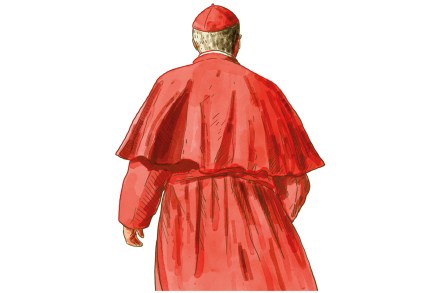
Since Pope Leo XIV’s election in May, Catholics have wondered whether he would continue Pope Francis’s radical agenda or ignite a more conservative reaction. After five months, the verdict appears clear. Leo will not only promote the principal policies in Francis’s agenda, but work to solidify them. This includes suppressing traditionalist theology and liturgy while bolstering activism on the environment, migration and same-sex relationships. Traditionalists initially viewed Leo with hope. They noted his ability to recite the Latin Mass, his choice of papal livery favored by Pope Benedict XVI and his meeting with Cardinal Raymond Burke, who supports maintaining the Latin Mass. But the new pope refuses to discipline bishops who move against traditionalists.

leo
black metal

Are black-metal bands going Christian?

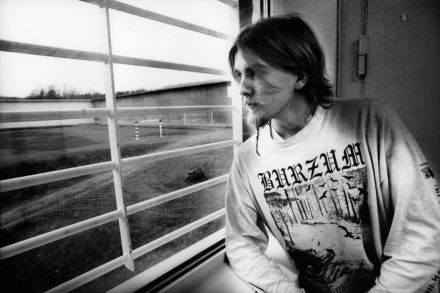
In his youth, Emil Lundin became obsessed with the idea of recording the world’s “most evil album.” The lanky, long-haired Swede formed a black-metal band and set to work. He faced an immediate obstacle. In making history’s most nefarious musical creation, he could hardly use Swedish, with its singsong tones. English was also out of the question: he didn’t want to sound like ABBA. That left Latin, the native tongue of the occult and, it is said, of demons. In a quest for suitably devilish lyrics, he pored over arcane texts. That led him to Latin editions of the Sayings of the Desert Fathers – badass early Christian monks – and St. Augustine’s Confessions.

The perils of Catholic social media evangelism

Jesus, it could be reasonably observed, recruited a motley cast to serve as the first heralds of the gospel. An endlessly squabbling band of fishermen, with a few tax collectors and zealots thrown in, the biblical narratives have them endlessly jockeying among themselves for prominence and status before they, to a man, flee when the going gets tough and their Messiah gets arrested. In the two thousand years since, the Catholic Church has done its best to balance the inevitable imperfections of its messengers with the perfect truths they are supposed to announce. It’s not always an easy task – and as with so many other things, the internet has made it much more complicated.

Catholic

How America’s Wasps lost their sting

From our UK edition

They moved, with a sort of nonchalant intent, up the aisle to make communion with their God; the men in bow ties and immaculate blazers, the women in pearls. They spent the service making small bows, singing (but not too loudly) and wearing looks of pacific – or rather, north Atlantic – calm. These were the Wasps and this was St Thomas Fifth Avenue, one of their high temples in New York, where they come for their moments of triumph and where the world often bids them adieu. It was hard to tell from those gathered on a recent Sunday morning if the stiffness of their physical motions was the result of societal convention or merely age. For as the age of those at St Thomas’s indicated, the Wasp is in its twilight years.

How did faith shape Thatcher?

From our UK edition

38 min listen

How did faith shape Margaret Thatcher’s politics? To mark the centenary month of Margaret Thatcher’s birth, Damian Thompson introduces a conversation between the Spectator’s Natasha Feroze, Thatcher’s biographer Lord Moore and Bishop Chartres who delivered the eulogy at her funeral. They discuss her relationship with faith, how both her family background and her training as a scientist influenced her beliefs and her understanding of the relationship between wealth and society based on Jesus’s parables. Plus – what would Thatcher have made of the much talked about ‘Christian revival’ in the West? Produced by Patrick Gibbons and Natasha Feroze.

Happy Birthday, Aleister Crowley

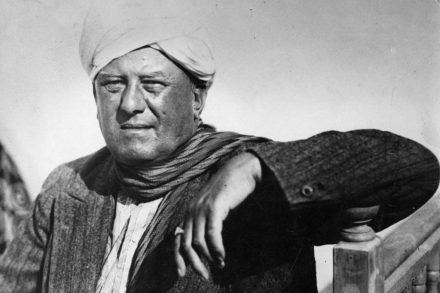
Aleister Crowley, who was born 150 years ago today, was once one of my idols. No one else seemed to match the panache of someone who could make a name for themselves as a magician, poet, artist, novelist, prophet, journalist, mountaineer, and spy. Yet, the outsized influence of such characters frequently attracts legions of charlatans. I met one during my adolescence when I became a student of a Tibetan Buddhist lama who claimed to be Aleister’s living son. It did not immediately occur to this bright-eyed seeker that the alleged son's chief interest seemed to be in shagging his female students, but eventually it did, and I grew disillusioned.

Crowley

Is the religious right shifting?

In 2021, for the first time in 1,400-odd years, Britain ceased to have a Christian majority. The United Kingdom, the political entity of which the island of Great Britain has been a part since 1801, has had its share of not-quite-Christian prime ministers over the years, with a handful of agnostics and quiet atheists. But in 2022, for the first time, the UK had a prime minister who practiced a non-Christian religion – and Hinduism had the distinction of claiming the first post-Christian head of state, Rishi Sunak. The West’s ethnic and religious foundations have already shifted in our great cities It may be some time before an American president is Hindu. Already, however, there are several prominent Hindus in the Trump orbit and near the top of the Republican party.

religious

Do Jews have a future in Britain? 

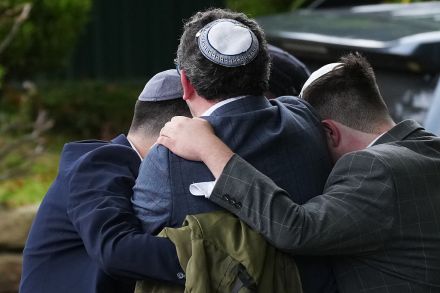
I was on my way to synagogue yesterday when I got news that was surprising and unsurprising at the same time. That there had been an attack at a Manchester synagogue on Yom Kippur was a shock, but only the location and the timing. The fact that terror had struck our community felt like the confirmation of our worst fears – and something that was grimly predictable.  For as long as I can remember, Jewish life in the UK has been closely guarded and protected. My childhood synagogue in the leafy London suburb of Surbiton was behind locked gates with security guards posted outside when anyone was in the building. My Jewish newspaper office today has similar protections and an address we’re told must never be made public.

Will America outlaw Sharia law?

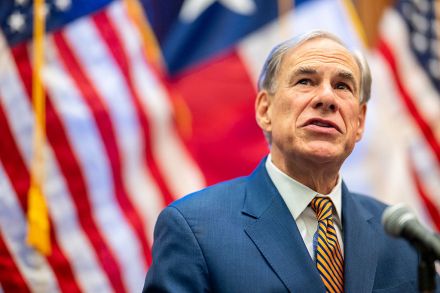
Florida Representative Randy Fine and Texas Representative Keith Self introduced the “No Sharia Act” last weekend in the U.S. House of Representatives “to ensure that no U.S. court, public agency, or legal institution can ever enforce or legitimize Sharia law. On X, Congressman Fine wrote, “You don’t get to come to this country and demand that our legal system accommodate your oppressive laws.” Meanwhile, Texas has operated as ground zero for the fight. On September 12, Texas Governor Greg Abbott declared on September 8 that Sharia law was illegal in Texas. In a post on Facebook the Governor wrote: “In Texas, we believe in equal rights under the law for all men, women, & children. Any legal system that flouts human rights is BANNED in the state of Texas.

Greg Abbott

Believe it or not, Russia is great

From our UK edition

I have been invited to Moscow by the Russian Orthodox patriarchate because the organiser is a fan of my podcast. Everyone at home thinks I am either dangerous or mad. My mother is convinced I’m going to be bumped off by the FSB or killed by a drone. Others claim I have become a useful idiot of the evil dictator Putler because the patriarchate are merely his stooges. ‘Is that true?’ I ask the patriarchate’s media affairs guy. ‘Well, under Peter the Great we were run by the government. And under communism we weren’t allowed to exist. So you could argue that, historically, we’re about as independent as we’ve ever been.’ When I put the same question to an archbishop, his response is more forthright.

The young Tennyson reaches for the stars

From our UK edition

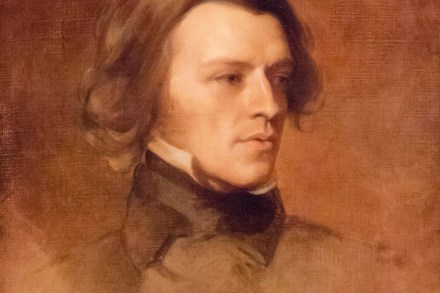
Edward FitzGerald had a good story about rowing across Lake Windermere at the end of May 1835 with his old friend Alfred Tennyson. As they rested on their oars and gazed into the clear, still water, Tennyson recited some lines from his work in progress, ‘Morte d’Arthur’, describing how the Lady of the Lake fashioned Excalibur out of sight: ‘Nine years she wrought it, sitting in the deeps/ Upon the hidden bases of the hills.’ Then he gave himself a little pat on the back: ‘Not bad that, Fitz, is it?’ The lines are better than not bad, as they imagine an invisible process of creation by incorporating several fragments of earlier writing.

spiritual

Go to church

It’s often noted that American society is becoming ever more politicized and polarized. Those who once imagined themselves uninterested in politics find themselves dragged into America’s culture wars. Small children now carry placards and attend political marches. Max Horder and Danit Sara Finkelstein explain the extent to which social media has played a part in this growing radicalism, not just because of the ideological echo chambers we now inhabit, but due to the mindset online algorithms create: rewarding outrage, encouraging extremism. Nuance and balance are anathema; shock and division set each day’s tone.

Christian

The inadequate response of Christian leaders to Charlie Kirk’s death

It has been very heartening to see all the clips online of people saying they are going back to church for the first time in ages – or going for the first time ever – because of Charlie Kirk. They’re picking up Bibles, even leaving the left. As the Wall Street Journal reports, the Charlie phenomenon is going global. You should also know that in some of the European media, he is being described as a right-wing extremist and freak (strong implication: who had it coming). Felix Nmecha, a Christian soccer player for a leading German team, got in trouble for posting mild, apolitical support for Charlie. “Rest in peace with God. Such a sad day,” wrote Nmecha. He later changed that to: “May the Lord assist the Kirk family with special grace at this time.

800 years on, why is Aquinas Gen Z’s favourite philosopher? 

From our UK edition

26 min listen

This year marks 800 years since the birth of the theologian St Thomas Aquinas. Aquinas, best known for his theory of natural law and his magnum opus the Summa Theologia, argued for the existence of God through faith-based reason. The influence of the 13th Century theologian on the philosophy of religion is unquestionable, but what is curious is his resurgent popularity amongst Generation Z – particularly in America. Is this part of the recovery of the sacred seen across the global west? Fr Gregory Pine OP, professor of dogmatic and moral theology at the Dominican House of Studies, joins Damian Thompson to talk about Aquinas’s legacy, unpack some of the philosopher’s more complicated arguments and describe his own personal journey within the Order of Preachers.

Why the canonisation of the first millennial saint is a cause to celebrate

From our UK edition

37 min listen

On Sunday the Catholic Church will acquire its first millennial saint, when Pope Leo XIV canonises someone who, if he were alive today, would be young enough to be his son.  Carlo Acutis, a ‘computer geek’ from a prosperous Italian family, died aged just 15 in 2006. In this episode of Holy Smoke, Damian Thompson talks to Mgr Anthony Figueiredo and the Italian-based journalist Nicholas Farrell about the extraordinary phenomenon of St Carlo, the miracles associated with him – and the scepticism they arouse – and a mean-spirited attack on him by one of the late Pope Francis’s closest advisers.  Produced by Patrick Gibbons.

Denmark’s ‘spiritual rearmament’ is a lesson for the West

From our UK edition

Something unusual is happening in Denmark – and other countries across Europe, including Britain, ought to pay attention. This spring, Denmark’s Prime Minister, Mette Frederiksen, stood before a group of university students and made a striking statement: ‘We will need a form of rearmament that is just as important [as the military one]. That is the spiritual one.’ Few expected such words from the leader of the Social Democrats, a party which spent much of the 20th century reducing the Church of Denmark’s influence in public life. Yet this was no passing remark. Just days earlier, Frederiksen had announced a major military build-up: increased conscription, a sharp rise in defence spending and intensified strategic readiness.

From the Bible to Tolkien: the risks & rewards of collecting rare books

From our UK edition

27 min listen

The Bible is widely said to be the most published book of all time. Despite this, many older versions of the Bible are still sought after. This is because, as Tom Ayling tells Damian Thompson on this episode of Holy Smoke, there is a great deal of diversity amongst the editions precisely because it has been so widely published. Tom, a young antiquarian bookseller who set up his own business, joins the podcast to talk about the risks and rewards behind collecting rare books. Tom explains why, for him, books are ‘most than just a text’; takes us through the various religious books in his collection, from old editions of the Holy Bible to the Book of Common Prayer; and reveals some of the more amusing mistakes he has come across. For more from Tom, go to: www.tomwayling.co.

The Catholic influencers spreading the word of God

From our UK edition

Vatican City In an auditorium just outside St Peter’s Basilica, the Vatican’s Secretary of State, Cardinal Pietro Parolin, sat solemnly in the front row as a young crowd sang, danced and hopped around to a pop hymn. The cardinal, who is 70, was widely expected to become the pope earlier this year. Instead, he inaugurated the Catholic Church’s first social media influencer conference. Around 1,000 influencers attended last week’s Jubilee of Digital Missionaries and Catholic Influencers. In his opening remarks, Parolin described social media as not just an instrument of communication, but ‘a way of living in the world’.

Massacres in Syria & the Congo: why aren’t Western elites drawing attention to religious persecution?

From our UK edition

28 min listen

After the fall of the Assad regime in Syria, many people voiced fears that the religious minorities in the country could face increased persecution. This could be at the hands of the new government’s supporters, or simply because the new regime can't protect them. Now those fears appear to have been realised. There is rising sectarian violence against Christians, the Alawites and the Druze (pictured). There are also frequent barbaric attacks on Christians in parts of Africa: more than 40 Christians have just been murdered by Islamists in the Democratic Republic of the Congo while attending church.