Religion

The C of E needs to talk about sex

From our UK edition

My friend Andy is getting married. It’s about time – he and his girlfriend have a one-year-old daughter. He wants to get married in church, so I introduced him by email to the local vicar. I was copied in to their initial correspondence. The vicar told Andy that the Church of England prohibits sex outside of marriage, so a church wedding would not be possible unless the couple repented of their sin and lived apart in the run-up to the wedding. Of course I made up the last bit. The vicar congratulated him and his partner on their decision and started talking dates. But isn’t it true that the church teaches that sex should only take place in marriage? Yes and no. The ambiguity sheds important light on the current crisis over homosexuality.

Does Keir Starmer’s atheism matter?

From our UK edition

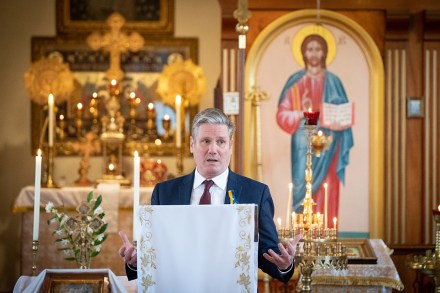
Good Friday, 2021, at Jesus House For All Nations church in Brent, north-west London. Face masked, head bowed, hands clasped, Sir Keir Starmer stands alongside Pastor Agu Irukwu. The pastor opens his arms to invoke Almighty God. We hear Starmer in voiceover: ‘From rolling out the vaccine to running the local food bank, Jesus House, like many other churches across the UK, has played a crucial role in meeting the needs of the community.’ A nice video tribute for Easter, this. Good to see churches getting some recognition. A sign, perhaps, of the inclusive national unity a Labour government would foster.

Donald Trump ‘the anointed one’ at the Road to Majority Conference

Donald Trump spoke at the Faith and Freedom Coalition on Saturday, with a few speakers deeming him “the anointed one.” Trump spoke for approximately one hour and twenty-five minutes. The coalition slotted multiple hype-men right before he appeared, including Republican governor Kristi Noem. The former president hit all his usual talking points — the economy, the border and immigration, Joe Biden, Ukraine, Israel, his cute "tic-tac" trick — and made sure to mention the Ten Commandments, and said, “We answer to God in heaven,” not to political leaders. There were at least two impressive instances in which Trump expertly responded to the inclinations of the crowd.

faith freedom donald trump

Scotland’s religious collapse

From our UK edition

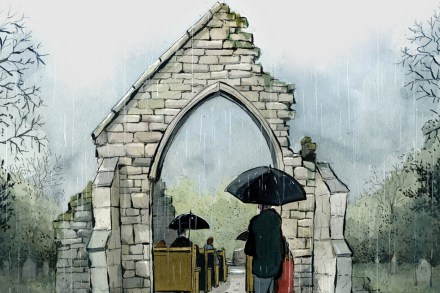
Last week, I had a drink with a Catholic priest friend who works with young people in custody. Inevitably, our talk turned to how radically unchurched they are – not badly disposed to Christianity, just unfamiliar with much of the doctrine and almost all the forms of worship, even though many had a Catholic granny or a non-practising parent. He mused over the startling speed of the secularisation of society. ‘Protestantism has collapsed,’ he said, and not in any triumphalist spirit. ‘Most people believe in or at least want to believe in some form of afterlife’ And so it has turned out in Scotland. The latest census, published last month, shows that for the first time a majority of Scots identify as ‘no religion’ whatsoever.

Letters: save our churches!

From our UK edition

Free the C of E Sir: Patrick Kidd’s article on the shortcomings of today’s Church of England maintains the importance of the ‘volunteers in the pews’ who bind the church together (‘Miracle workers’, 18 May). He warns that these people ‘can so easily run away’. This is exactly what happened to the Church of Scotland in 1843 when the hierarchy got things badly wrong. The Great Disruption was caused by a disagreement over patronage: should a patron be the sole arbiter in hiring and firing ministers or did this undermine the spiritual independence of the congregation? The exit of more than 400 ministers from the Kirk’s General Assembly and the formation of the Free Church of Scotland (the Wee Frees) was the answer.

A middle-aged man in crisis: How to Make a Bomb, by Rupert Thomson, reviewed

From our UK edition

Philip Notman is going through what looks like a midlife crisis. Travelling home from an academic conference, he feels sick and disoriented to the point where he is barely able to function. Back in London, he can’t quite explain to his wife Anya, or indeed to himself, what’s ailing him. Is it just me, he wonders, or is everything unbearably toxic? Instead of working on his next book during a sabbatical, he sets off on a journey in search of a remedy. Rupert Thomson’s new novel has no full stops. In their place are paragraph breaks, with sentences abandoned on the page, increasing the sense of dislocation: Everything sick, he thought Everything in pain Starting from the title, the atmosphere grows increasingly ominous.

When was the last genuine royal tour of Nigeria?

From our UK edition

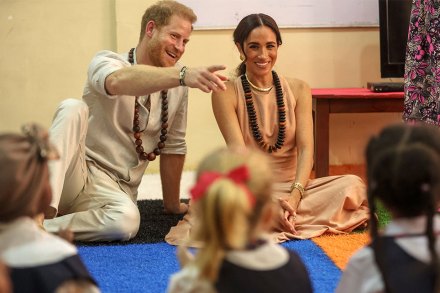
Royal welcomes The Duke and Duchess of Sussex visited Nigeria last week. When was the last genuine royal tour of that country? – The late Queen made a 20-day visit in 1956, four years before Nigeria’s independence. She went for three days in 2003 when she opened the Commonwealth Heads of Government meeting.– The then Prince Charles visited in 2018, when he joined a Peacebuilding and Interfaith Engagement, laid a wreath at the Commonwealth War Graves memorial in Abuja and attended a talk on poultry-rearing. Faith in politics A Liberal Democrat candidate in Sutton and Cheam has been deselected allegedly because of his Christian faith. How do religious groups tend to vote?

Why is it so hard to be a Christian in public life?

From our UK edition

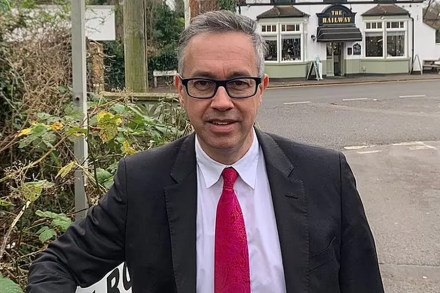
Is it any longer acceptable to be a Christian? News reaches me of a strange case involving the Liberal Democrat party. Ordinarily, I would pay no more attention to happenings within the Liberal Democrat party than I would to a golf tournament. But this case is a telling one. It involves somebody called David Campanale, who has been deselected from the Lib Dems’ parliamentary candidate list. You would have thought that is quite a difficult thing to do. First because it is extraordinary that anyone would want to join the Lib Dems – the party is hardly bursting with talent. Secondly, since the party and its predecessor have traditionally been led by alcoholics and dog-murderers, I should have thought selection is a tricky thing to fail.

An incisive memoir of life in the cloisters

Bishop Fulton J. Sheen, the immaculately Brylcreemed megastar of the golden age of Catholic television and radio evangelism in the United States, famously hated hearing the confessions of nuns. Doing so, Sheen is reported to have said, was “like being stoned to death with popcorn.” Despite this, Sheen — at one point broadcasting to over 30 million Americans — found himself hearing a lot of nuns’ confessions in his later career. He was reduced to this, alongside what was rather euphemistically referred to as his “international cassette tape ministry,” having fallen foul of the archbishop of New York, the doughty Cardinal Spellman.

Cloistered

The triumph of Katharine Birbalsingh

From our UK edition

There are two questions that need to be asked of any society: what is it that is going wrong; and what is it that’s going right that should be done more? It’s only natural to focus on the first question – not least because it is easier. But it is the second question that should be asked more. Whenever I think of the few things that are going well in Britain, I think of the Michaela Community School in Wembley, London. I have visited the school a couple of times. It sits in one of London’s most deprived communities. Set up under the era of Michael Gove’s free schools scheme, it is the creation of Katharine Birbalsingh. Pupils are almost all from non-advantaged backgrounds.

A Christian revival is under way in Britain

From our UK edition

Tom Holland recently invited me to attend a service of Evensong with him at London’s oldest church, St Bartholomew the Great. Holland, who co-hosts the phenomenally popular The Rest is History podcast, has been a regular congregant for a few years. He began attending while researching Dominion, his bestselling book which outlined the way the 1st-century Christian revolution has irrevocably shaped the 21st-century West’s moral imagination. It also recounts how Holland, a secular liberal westerner who had lost any vestige of faith by his teenage years, came to realise he was still essentially Christian in terms of his beliefs about human rights, equality and freedom. Christianity is not just a useful lifeboat for stranded intellectuals.

How the Church of England patronises African Christians

From our UK edition

17 min listen

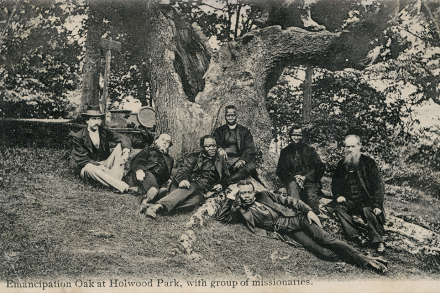
In this episode of Holy Smoke, I'm joined by The Spectator's features editor William Moore, who asks in this week's issue of the magazine whether the Church of England is 'apologising for Christianity'. A report by the Oversight Group, set up by the Church Commissioners to make reparations for African slavery, not only wants to see unimaginable sums transferred to 'community groups' – its chair, the Bishop of Croydon, thinks a billion pounds would be appropriate – it also deplores the efforts of Christian missionaries to eradicate traditional religious practices. But, as Will's article points out, those traditional practices included – at their most extreme – idol-worship, twin infanticide and cannibalism.

Is the C of E about to say sorry for Christianity?

From our UK edition

Is the Church of England going to apologise for Christianity? A report by something called the Oversight Group has declared that the Church should say sorry publicly, not just for profiting from the evils of slavery (through investment in the South Sea Company) but for ‘seeking to destroy diverse African traditional religious belief systems’. And having apologised, it recommends the Church ‘reach beyond theological institutions’ and ‘enable all Africans to discover the varied belief systems and spiritual practices of their forbears and their efficacy’. What would such an apology say about the Ugandan Martyrs executed in the 1880s by King Mwanga II?

Dinosaurs, dogma and the Victorian mind

From our UK edition

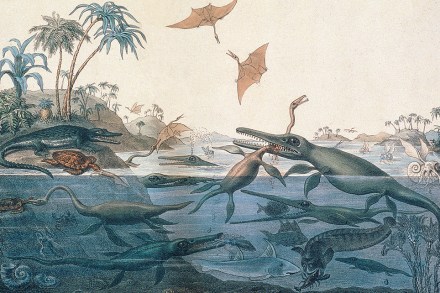
In March 1860, shortly after The Origin of Species was published, Charles Darwin wrote to Leonard Horner thanking him for some surprising information. ‘How curious about the Bible!’ he exclaimed. Horner had taken aim at the marginal notes that were printed in the standard (and ubiquitous) Authorised, or King James, Version. These began with the date of creation, 4004 BC, as calculated by Archbishop James Ussher in the 17th century. Darwin was astonished. ‘I had fancied that the date was somehow in the Bible,’ he wrote.

Britain’s Jews aren’t safe

From our UK edition

The explosion of hatred and extremism prompted by the October 7 massacre was never going to limit itself to the Jewish state. Even as early reports were filtering in, the news that Palestinian terrorists had infiltrated Israel and slaughtered its citizens appeared to kickstart a dynamo of Jew-hatred in the West. Since then, we have had only news reports and anecdotes to go on, but the trends were evident. Now we have the numbers. A report from the Community Security Trust (CST) finds there were more antisemitic incidents in the UK over the past 12 months than in any previous year, with October 7 pinpointed as the most significant factor. The CST recorded 4,103 cases of attacks, threats and abuse directed at British Jews, a 147 per cent increase on the previous year.

‘Maybe I have the healing I need’: speaking to Father Paul Wierichs

It used to be you had to get in close to hear Father Paul Wierichs speak. For two years the former FBI chaplain couldn’t talk above a whisper. Now he is a little louder, but very hoarse; though he still struggles to swallow you can at least hear his voice. Bell’s Palsy keeps him from moving the left side of his face, and he has a difficult time seeing out of that eye. His scalp is bandaged where the doctors removed a growth. There’s cancer in his prostate, too. He’s still held onto a good amount of hair for his age and his troubles — but he expects to lose it to surgeries by the end of the month. “I wore my collar on 9/11,” Father Paul recalled on a frozen January morning in Queens. “I had to throw them out, because they were covered in dust.

Wierichs
Dalí

The divine Dalí and his ‘Christ’

I arrived in the city of Figueres early one January morning to visit one of the most popular, and bizarre, art museums in the world, the Teatre-Museu Gala Salvador Dalí. It houses a dreamlike picture that, for the first time since it left over seventy years ago, has made a temporary return journey to Spain. Originally simply titled “The Christ,” the 1951 canvas depicting the giant figure of a man on a cross, shown at an overhead angle hovering over a moody seascape, was painted by the most famous son of Figueres, Salvador Dalí. Through April 30, it forms the centerpiece of a show exploring its creation, history, local connections and symbolism.

Easter

How eggs became the symbol of Easter

Thirty feet in the air off a northern Canadian highway stands the giant Vegreville Easter egg, rotating gently in the wind. The egg is eighteen feet wide, nearly twenty-five long and designed to turn with the breeze like a weathervane. It is decorated in a traditional Ukrainian pysanka pattern with thousands of gold, black and white aluminum triangles, for the egg is an homage to the Ukrainian immigrants who settled the area long ago. It is a technical feat: the tile- cutting technology developed to produce the mosaic on the egg’s curved surface was later used to tile the exterior of the Space Shuttle. Whatever day of the year you may spy it, it is undeniably an Easter egg.

What Jesus taught us

From our UK edition

This is the 47th year in a row that I have written a column for The Spectator’s Christmas issue. It began when I was a young 40-year-old, and is at present being written by an 87-year-old vet. The years have passed in an eye-blink. Recently I asked myself why do bad things happen to good people? (Well, not very good people, but well-intentioned.) This question has occupied thinkers throughout the ages. People who do not believe in a good God should logically have no problem with the existence of evil. In my case, I very much believe in God and it has served me well during a very long and very happy life. Recently, however, something bad happened to me in a Swiss village court of law, which led me to suspend writing my regular column. Then something extraordinary took place.

The real problem with ChatGPT is that it can never make a joke

From our UK edition

I have been reviewing books for nearly four decades – starting in this very magazine – and over the years I have encountered some real stinkers. But this is the first time I can recall being reluctant to pick up the book because of actual physical nausea. Intellectual nausea I’ve had plenty of times. Give me a 900-page book of magical realism and that’s what I’ll get. But this time it metastasised into real queasiness. I’ll explain why. (Well, that is my job.) The odd thing is, Benny the Blue Whale starts amusingly enough.