Religion

Saudi Arabia’s Grand Mufti declares chess to be a source of evil. How about jihadis?

My favourite Islamic scholar, the Grand Mufti of Saudi Arabia, has come out with yet another corker. He is the gift that keeps on giving. Sheikh Abdul bin Abdullah al Skeikh has decided that one of the world’s gravest sources of evil is the game chess. Never play it, he told his countrymen, for it breeds enmity and hatred in the world. Hmmm. On my top trumps list of stuff that breeds enmity and hatred in the world, chess comes some distance behind heavily-bearded Muslim mentalists, but that’s probably just me. Previously, old Abdul was reported to have told men that it is ok to eat their wives if they are feeling a little peckish – although he later denied this injunction, just as I was setting the table for dinner and sharpening the knives.

Does an understanding of Britain’s cultural debt to Christianity develop with age?

There’s a spate of statistic-based stories about Christianity in decline. Recently we heard that under a million Brits now attend the CofE. Now we hear that the proportion of Britons who say they have no religion is creeping up to 50 per cent. Already, most white Britons identify as non-religious. It’s not really news. For decades religion has been a minority thing, a subculture that the main culture ignores or derides. But this was half-obscured by a residual sense that most Britons were culturally Christian. In 2001 a surprising 72 per cent said that they were. We are seeing a new honesty from these cultural Christians – many of them are now moving away from the pretence that they are sort of Christian. And this means we can see the landscape a bit more clearly.

Britain is losing its religion, but nobody seems that bothered

This evening, if you have time and are around central London, there is an interesting lecture at the British Academy by the admirable sociologist of religion, Linda Woodhead, whose book with Andrew Brown on the CofE, The Church We Left Behind, is as depressing as it is largely to the point. The title is 'Why No Religion is the New Religion', and that is pretty much the size of it: the default identity of Brits is no longer reflexively CofE, but not-religious. (Actually, I am a Catholic of sectarian bent but I would personally hesitate to describe myself as religious, on the basis it is a bit of a self-regarding sort of identity, something you call other, smug, obsessive people you do not really approve of.

Gay marriage isn’t splitting the Anglican Communion – it’s holding it together

My line on the Anglican crisis is a bit eccentric. I think there are now grounds for hope that the Communion can survive – and the reason is the recent rise of gay marriage as the central issue. Lazy punditry says that gay marriage is the bone of contention. But it’s actually a new issue – it wasn’t being discussed a decade ago, when Rowan Williams was holding these summits. The real bone of contention is whether actively gay priests and bishops should be allowed. On this the two sides are obviously adamantly opposed. The arrival of gay marriage as a big issue seems to make the crisis worse than ever – but this is a superficial view. It is actually a blessing in disguise. For it allows a compromise position to emerge.

France has become a religious battleground

The new year has not started well for France. On the last day of 2015 - the most traumatic year for the French in decades because of the twin attacks in Paris - president Francois Hollande warned the nation in his traditional New Year's Eve address: 'France is not done with terrorism... these tragic events will remain for ever etched in our memories, they shall never disappear. But despite the tragedy, France has not given in. Despite the tears, the country has remained upright.' Hollande's warning was borne out within 24 hours. On the first day of 2016 a lone motorist - inspired by Islamic State - drove at a group of soldiers guarding a Mosque in Valence.

Away with the angels?

I remember the shock, like a jolt of static electricity. One day, between taking my degree and beginning my first job, while looking through a 16th-century book about numerology that had once belonged to John Dee in the British Library, I came upon an annotation in his own neat italic hand casting up the numerical values of the letters of his name. The total he wrote down came to 666. John Dee (1527–1609) was a magus, but we must not think that this made him a loony witch. An early Fellow of Trinity College, Cambridge, teaching Greek, he acquired a reputation for learning in mathematics, navigation and astronomy. But his long pursuit was of something he knew was dangerous and which I am not convinced he always thought licit: angelic conversations.

The great inscape

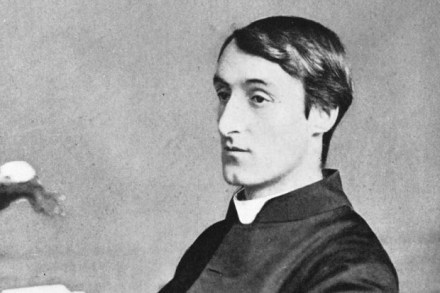
‘I am 12 miles from a lemon,’ lamented that bon vivant clergyman Sydney Smith on reaching one country posting. He was related to Gerard Manley Hopkins, a priest who, in the popular imagination, would quite possibly balk at the offer of a lemon. After all, 30 years before Prufrock, Hopkins did not dare to eat a peach, fearful of its delicious savour when offered one by Robert Bridges in a Roehampton garden. Hopkins was a complex man who delighted in simple things. Our sense of his view of the world has been complicated by the circumstances of his publication. Forbidden to publish his great ‘The Wreck of the Deutschland’, he largely squirrelled away, or burnt, his work.

Justin Welby is right to offer only a vague message about refugees

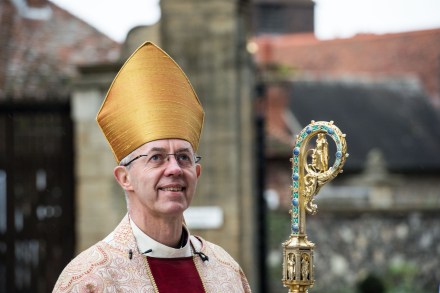
We should be more generous to refugees, said Justin Welby in his New Year message. Is he saying that the government should let more of them in? If so, should he be more specific? Does David Davies, the Tory MP for Monmouth, have a point? He wrote on his website: 'How wonderfully saintly it must feel to sleep at night with an easy conscience knowing you have roundly condemned the wicked politicians and bigots who worry about mass migration without actually having to take difficult decisions yourself and live with the consequences.' But Welby didn’t condemn those worried about mass migration: he just reminded people that hospitality to outsiders is an aspect of Christian morality. He kept it vague.

Lessons from Utopia

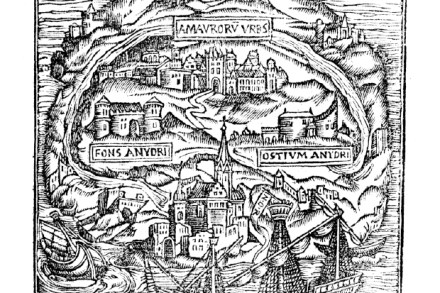
As anniversaries go, the timing could hardly be more apt. As Europe braces itself for the next Islamist attack, the next assault on our civilisation, a season of events marks the 500th birthday of a book that outlined an enlightened vision of the ideal society. Utopia 2016 is a year-long celebration of Thomas More’s Utopia at London’s Somerset House, where the Royal Society and the Royal Academy used to meet. Somerset House is a building that encapsulates the free-thinking values of the Enlightenment, and More’s Utopia is a book that encapsulates the Renaissance sensibilities that built it. We all know what sort of society Isis wants (the clue’s in the name), but what sort of society do we want? What rights are we defending?

Britain needs Christianity – just ask Alan Partridge

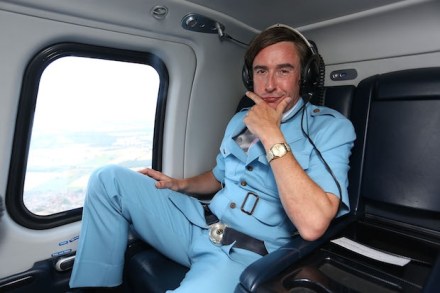
Are we really, as David Cameron claimed in his Christmas message, a country shaped by 'Christian values'? Yesterday’s Evening Standard poll – which found that shopping is three times more integral to Britons’ Christmas than going to church – makes you wonder what the phrase even means. It doesn’t just mean do-goodery, though that is important. About 10 million Britons get help from a church-based group every year. If you see a queue of homeless people in a town centre at about 6 o’clock in the evening, you can bet there are a bunch of God-botherers handing out sandwiches at the other end of it.

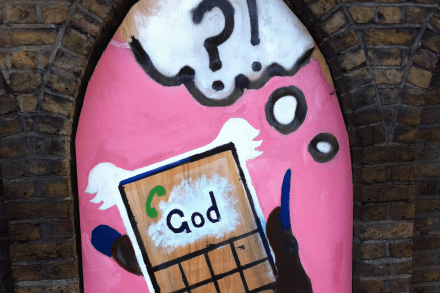
Biblical art, like Christianity, is always renewing itself

This sign adorns a local church in Harlesden. I suppose it could be called a Pop Annunciation. Who says religious art is stuck in the past? Then again, it is a perennial - and fascinating - question in Christian art: how much contemporary life to include in biblical scenes. For centuries artists have shocked the public by including ordinary-looking young beauties as Mary, ordinary working blokes as shepherds or apostles. Caravaggio is a good example, but even before him nativity scenes were transposed to Tuscan landscapes. In fact the first realistic landscapes in Western art were posing as biblical backdrops. The shock was rehashed by the Pre-Rapahelites, whose sacred scenes featured people you might meet on the street.

Atheism may be fashionable, but most intelligent people believe in God

Have we ever needed Christianity more than we do today? It’s a rhetorical question, for sure, because the loss of our faith and the inability to confront Islam have never been greater. When I was a little boy during the war, my mother assured me that if I believed in Jesus everything would be OK. This was during the Allied bombing on Tatoi, the military airfield near our country house where the Germans concentrated their anti-aircraft guns. My Fräulein, the Prussian lady who brought me up, was more practical. She handed me a beautiful carved knife that made me feel safer than my prayers ever did. Today, of course, 74 years later, my prayers are far more likely to give me peace of mind than a knife in my pocket. That’s the difference between being five and 79 years of age.

Twenty years on, I’m homesick for the Christian cult I left

When I was 21, I lived with a cult for a year. It was a commune really, a tight-knit group of Christians, but I’ll call it a cult because it was in Texas and for special occasions we all wore white. There were other cult markers, too: we had a charismatic leader; the younger kids were home-schooled; and, to my great excitement, one (now ex) member wrote a book after she left: I Can’t Hear God Anymore: Life in a Dallas Cult. That I ended up there is a testament to the dangers of showing off. All those endless questions after finals, all those inquiring adults: ‘And what are you going to do now? What’s your plan?’ Well, I had no plan.

The perfect religion for Guardian readers (plus some other neglected belief systems)

Exciting news from the world of philosophy! Next year will see the 20th anniversary of the New Stoa, an online community of ‘all those who are Stoics and who wish to be known by the commitment they have made’. Stoicism, the philosophy of choice for sanctimonious Roman billionaires, is evidently making a comeback. Its appeal, to an age obsessed equally by smartphones and virtue signalling, is no great mystery, I suppose. Seneca, who served as Nero’s tutor and whose manipulation of the overseas currency markets may well have precipitated Boudicca’s revolt, was a Stoic.

State of the Union

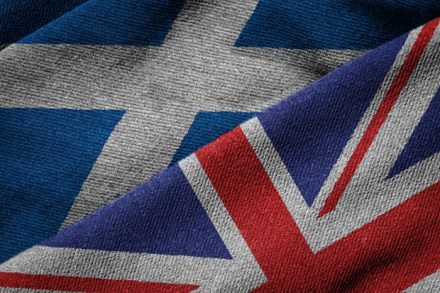
Last year, the United Kingdom came within 384,000 votes of destruction. A referendum designed to crush the Scottish nationalists instead saw them win 45 per cent of the vote — and become stronger than ever. Since then, the SNP has taken almost every Scottish seat in the Commons and is preparing for another landslide in the Holyrood election next year — giving Nicola Sturgeon the power to threaten a second referendum. We may be just a few years away from a second battle for Britain. In her short time as First Minister, Sturgeon has established herself as one of the most formidable politicians in Europe. She has raised a rebel army that she inspires with talk of destiny and dreams — while her opponents drone on about banks and the Barnett formula.

Would you believe it? A selection of ancient faiths ripe for revival

Exciting news from the world of philosophy! Next year will see the 20th anniversary of the New Stoa, an online community of ‘all those who are Stoics and who wish to be known by the commitment they have made’. Stoicism, the philosophy of choice for sanctimonious Roman billionaires, is evidently making a comeback. Its appeal, to an age obsessed equally by smartphones and virtue signalling, is no great mystery, I suppose. Seneca, who served as Nero’s tutor and whose manipulation of the overseas currency markets may well have precipitated Boudicca’s revolt, was a Stoic.

Am I a brave cult survivor, too?

When I was 21, I lived with a cult for a year. It was a commune really, a tight-knit group of Christians, but I’ll call it a cult because it was in Texas and for special occasions we all wore white. There were other cult markers, too: we had a charismatic leader; the younger kids were home-schooled; and, to my great excitement, one (now ex) member wrote a book after she left: I Can’t Hear God Anymore: Life in a Dallas Cult. That I ended up there is a testament to the dangers of showing off. All those endless questions after finals, all those inquiring adults: ‘And what are you going to do now? What’s your plan?’ Well, I had no plan.

Pastoral scene of the gallant South

During the first ten pages of this long work Paul Theroux, on a journey through the American South, meets two citizens of Alabama. The first, encountered in Tuscaloosa when he asked the way to the Cornerstone Full Gospel Baptist Church, was named Lucille, called him ‘Mr Paul’, said ‘Ain’t no strangers here, Baby’, took him to the church and said ‘Be Blessed’ when they parted. The second, a citizen of Gadsden, was named Wendell, called him ‘Sir’, clamped him on the shoulder, said ‘Kin Ah he’p you in inny way?’ and before they parted suggested they meet again for ‘a sandwich, peanuts or anything’.

Tricycle’s Ben Hur is magnificent in its superficiality – a masterpiece of nothing

It’s the target that makes the satire as well as the satirist. Is the subject powerful, active, relevant and menacing? Patrick Barlow’s new spoof, Ben Hur, must answer ‘No’ on all four counts. The show takes aim at two principal irritants: vain actors and the Hollywood epics of the 1950s, whose titanic scale was offered as bait to audiences besotted with their cosy new TV sets. Old Hollywood is a spent ogre these days and the foibles of the acting trade are hardly a threat to civilised life, so the show can’t embrace our immediate concerns. But the execution is compellingly assured.