Religion

Moltbook: has AI created its own religion?

From our UK edition

20 min listen

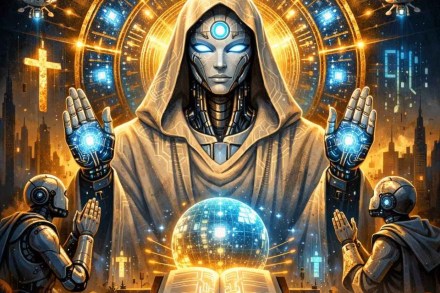
What did you most recently use Artificial Intelligence for? For most people, the answer would be as a glorified search function, using services like Chat GPT to ask questions, draft text and even produce images – like the Chat GPT generated thumbnail image for this episode. The capability of AI far exceeds this most though. Sean Thomas joins Damian Thompson for this episode of Holy Smoke to talk about 'Moltbook', a social network built exclusively for AI agents – and which has now created its own AI 'religion'. What does this mean for humankind? Is AI just replicating a belief impulse, to the extent that one exists within humans? And will we one day end up worshipping AI? Produced by Patrick Gibbons.

Moltbook: has AI created its own religion?

What Catholics get wrong about assisted dying

From our UK edition

The Catholic Church has always been remarkably relaxed about sin. It becomes distinctly jumpy, however, when it encounters any challenge to the Church’s designation of what is sinful. Human beings (it suspects) are and always will be sinners. The Church has no problem in dealing with sinners: they should confess. Absolution may be available, dispensed by a priesthood who have privileged access to the Almighty, and can intercede. It isn’t really the commission of a sin that worries the Church. It’s the rejection of a doctrine ‘We will tell you what’s unclean in the eyes of God. We also offer a laundry service to which we hold the monopoly.’ To a cynic it might occur that this a shrewd way of drumming up trade.

Why did Pope Leo choose a ‘safe pair of hands’ for Westminster?

From our UK edition

32 min listen

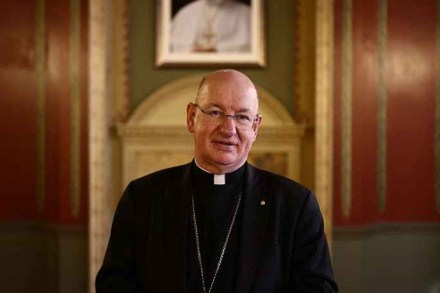
The next Catholic Archbishop of Westminster, Richard Moth, will be installed in his cathedral on February 14. Bishop Moth, formerly of Arundel and Brighton, is seen as a ‘safe pair of hands’. But why didn’t the job go to a more charismatic figure, such as Archbishop John Wilson of Southwark? What does this low-key appointment tell us about Pope Leo’s vision for the Church? Fr Alexander Lucie-Smith, a moral theologian and priest of Arundel and Brighton – and friend of Holy Smoke, joins Damian Thompson for a frank and wide-ranging discussion about the problems facing the Catholic Church in England and Wales. Produced by Patrick Gibbons.

What can we expect from the new Archbishop of Westminster?

The historic value of English churches – with Daniel Wilson

From our UK edition

22 min listen

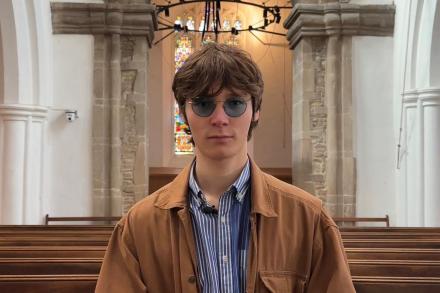
When was the last time you visited your local parish church? Historian and social media influencer Daniel Wilson joins Damian Thompson to encourage more people to visit their local churches – not just as a centre of worship but as a historical treasure trove. Daniel takes us through some of his favourite examples of medieval architecture, as he emphasises the importance of being a 'tourist in your own neighbourhood'. For more from Daniel, you can find him on Instagram and TikTok: @greatbritisharchitecture Produced by Patrick Gibbons.

My house is devouring me (and my relationship)

From our UK edition

The panic of another season bore down on me as the builder boyfriend painted the breakfast room with the green paint I’d chosen. But he couldn’t paint fast enough for my liking and we started to have the most terrible rows. Despite us being fully booked last summer, I had come to the view that the whole thing wasn’t viable and we were bound to go under. I started looking up estate agents who market big old piles in Ireland to stupid people in America. This house is like a monster devouring my money faster than I can feed it. I fed the beast by filling the oil tank to the brim at Christmas and it was a quarter gone by the new year.

Iran: why theocracies survive – with Peter Frankopan

From our UK edition

25 min listen

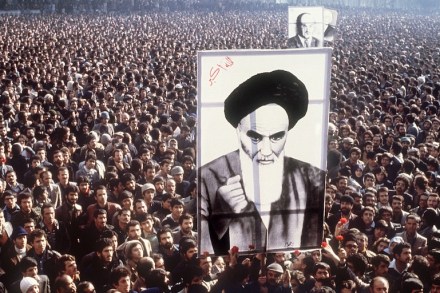
In the 21st century, the theocratic nature of the Iranian regime – ruled by senior Shia clerics – appears to be a rarity. The constitutional role of religion is perhaps matched only by the Vatican City and Afghanistan, though these vary in terms of autocracy – as evidenced by the brutal suppression of protests across Iran in the past few weeks. The regime, installed following the 1979 revolution and led first by Ayatollah Khomeini and now Ayatollah Khameini, has proven remarkably resilient; how has it survived so long?

My parents have driven us to boiling point

From our UK edition

After two weeks of us heating the house to the temperature my nearly 90-year-old father wanted it, the door to the guest bedroom would no longer shut. The central heating had swollen the wood so much that it had to be planed down. The builder boyfriend and I had been lying in bed each night with the radiators in our bedroom off and the windows wide open. I’d venture out into the hallway at 3 a.m. to investigate why we were still too hot and a wall of heat would hit me. The thermostat I had left on tick-over was rammed to the far right once more and the boiler was at warp speed.

The spiritual yearnings of David Bowie

From our UK edition

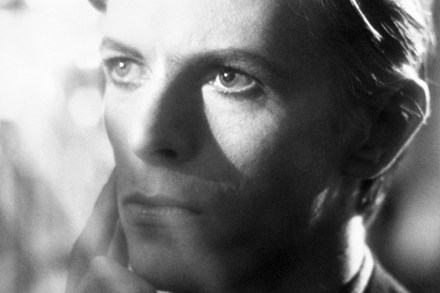
What did David Bowie mean by ‘No confessions/ No religion’ in his lyrics to ‘Modern Love’? Peter Ormerod proposes what at first seems an unlikely theory – that Bowie was talking about Gnosticism, the complex spiritual, though not religious, belief that God lies beyond the material world and that all humans carry a divine spark within. Ormerod admits that perceiving intellectual depths in a hit single sounds far-fetched – ‘an attempt to find weight in a scrap of fluff’. But he points out that Gnosticism, with its rejection of organised religion and its trust in God and man, was one of Bowie’s lifelong obsessions: a sincere enthusiasm he shared with Leo Tolstoy and Carl Jung.

At 53, I’m training to be a priest

From our UK edition

I have recently begun training for holy orders in the Church of England. I know, they’re getting desperate. My motivation for wanting to be a priest is selfish. I want more joy in my life. You might feel that joy is to be found in extreme sports, or pop concerts, or snorting coke from the midriffs of hookers. But I think you mean pleasure. Joy is deeper, linked to a sense of the goodness of existence. It seems to me that joy is to be found in doing cultural things. I don’t mean going to plays or art galleries; I mean cultural things that are very participatory and democratic. Things like this: getting to know people who are different from me, through putting on a little play, making stuff for a festival and seeing some local children enjoying it, singing a rousing song.

‘Islamist’ is a dishonest confection

From our UK edition

Convicted last month of plotting what could have proved the worst terrorist attack in British history, Walid Saadaoui had hoped to murder at least 50 people in Prestwich, because ‘Prestwich is full of Jews’. He was caught purchasing four AK-47s, two handguns and 1,200 rounds of ammunition. For Saadaoui’s fires of righteousness on social media had earlier drawn the eye of British law enforcement. ‘Avenge your religion Oh Muslims in Europe,’ he posted. ‘I pray to you not to catch me until I break my thirst with Jews, Christians and their proxies’ blood.’ Thus Saadaoui instructed an undercover officer: ‘Grab a Jewish person and slaughter him and remove his head, rub blood on my body, throw it away. That is the least we can do.

Iranians are risking everything to convert to Christianity

From our UK edition

Apostasy – specifically, conversion to Christianity from Islam – is punishable by death in Iran. Suspected Christians are routinely imprisoned and tortured. Despite this, evangelical Christianity is sweeping through Iran. A 2020 survey of 50,000 Iranians conducted by a Dutch NGO, the Group for Analysing and Measuring Attitudes in Iran, suggests that there could be more than 1.2 million Christian converts. In a country with a population of 90 million, that’s a sizeable portion – and it’s growing fast. ‘It’s probably more like two million today,’ says Father Jonathan Samadi, founder of the Persian Anglican Community of London. ‘The numbers increase every year.’ Father Jonathan converted as a young man, having found a Farsi copy of the New Testament in a Tehran library.

How transformative has 2025 been for Christianity?

From our UK edition

21 min listen

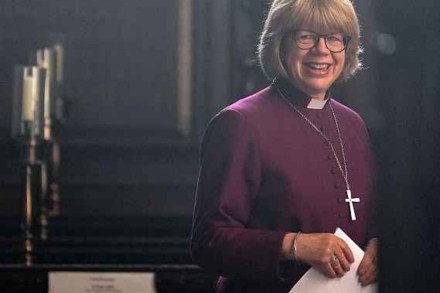
Anglican author The Rev'd Fergus Butler-Gallie, Catholic priest Fr Alexander Lucie-Smith and Evangelical commentator Fleur Meston join Damian Thompson to reflect on 2025. They discuss Pope Leo XIV's leadership so far, the choice of Dame Sarah Mullally as Archbishop of Canterbury and why Christianity has been coopted by the far right. Plus, was the 'quiet revival' of Church-going the start of a trend – or just a blip? Produced by Patrick Gibbons.

This Christmas, listen to Mary Did You Know?

A popular and poignant Christmas song, written late in the previous century for a church’s holiday program, incites passionate criticism from those who disagree with the way it phrases its message. Since first being recorded in 1991, “Mary, Did You Know?” has been performed by soloists and groups ranging from Carrie Underwood and Dolly Parton to Pentatonix, CeeLo Greene and Kathleen Battle. The lyrics are a series of questions to Mary, Jesus’s mother, asking whether she knew during his infancy about the profound impact he would make as an adult. Yet that powerful literary device annoys those who believe the song demeans its subject.

The terrible logic of looksmaxxing

For years, I’ve had a fantasy of destroying my own life by following every piece of extreme self-improvement advice the internet offers. Not the wholesome stuff. I mean the industrial-strength protocols: starvation diets, rhinoplasty, Invisalign followed by double-jaw surgery, chemical peels that promise an entirely new layer of skin. Whatever surfaces in the algorithmic swamp. The appeal is the same as another, more respectable fantasy: the one where a doctor scans your chart, finds The Problem and hands you a pill. You swallow it and everything clicks. Your suffering had a single, nameable, diagnosable cause. The cure might give you rashes or IBS, but who cares? You finally know what’s wrong, and what’s wrong can be treated. The uncertainty is over.

looksmaxxing

Why religious societies succeed – with Rory Sutherland

From our UK edition

35 min listen

Advertising guru – and the Spectator's Wiki Man columnist – Rory Sutherland joins Damian Thompson for this episode of Holy Smoke. In a wide ranging discussion, from Sigmund Freud and Max Weber to Quakers and Mormons, they discuss how some religious communities seem to be predisposed to success by virtue of their beliefs. How do spiritual choices affect consumer choices? Between Android and Apple, which is more Protestant and which is more Catholic? And what can modern Churches learn from Capitalism? Produced by Patrick Gibbons.

What makes a ghost Catholic or Protestant?

From our UK edition

W.H. Auden, in his essay on detective fiction, ‘The Guilty Vicarage’, asked: ‘Is it an accident that the detective story has flourished most in predominantly Protestant countries?’ He was thinking about confession and how this changes things. In Auden’s view, murder is an offence against God and society and when it happens it shows that some member of society is no longer in a state of grace. But confession gives a transgressor a means of returning to a state of grace, so the moral order can be restored without recourse to a policeman. You wonder: do ghost stories too flourish most in a Protestant (or formerly Protestant) society?

How was Commercial Christmas born?

From our UK edition

31 min listen

Historian and writer Charles Coulombe joins Damian Thompson to talk about how Christmas has changed over the past two centuries, the differences between Catholic and Anglican Christmas – and how a modern, commercial Christmas developed over time. Plus, he takes us through the origins of Christmas traditions from Christmas trees to Advent and whether we should say 'Happy' or 'Merry' Christmas.

The science of marriage

“Those whom God hath joined together, let no man put asunder.” With this stern admonition, the Church has long been a fervent defender of marriage. But as religion has faded as a social force, so too has marriage.  Does it much matter if people choose to shack up together instead of tying the knot? What is lost if some men want to be incels or some women decide a husband is a bothersome surplus to their needs? The problem is that all lifestyles alternative to marriage serve to undermine it. And like other major social institutions, marriage is not some arbitrary cultural construct like a federal holiday. Rather, it rests on genetically shaped behaviors that evolution has written into the human genome because of their survival value.

Marriage

Why is Westminster Cathedral leaving Jesus in the dark?

From our UK edition

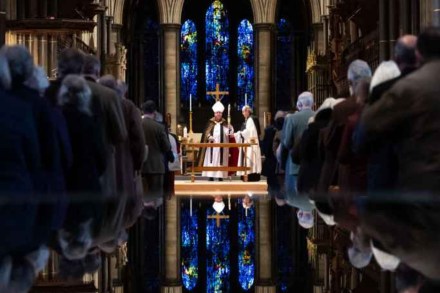
Sitting beneath the looming darkness of the unfinished ceiling of Westminster Cathedral, I found myself praying. I didn’t even know why, but I was walking past during a trip to London and I decided to go in, and I sat down, and then a priest came and began to say mass so I stayed, not knowing what was about to happen back in Ireland to the builder boyfriend, and not having any real feeling that you could call premonition – unless you count an overwhelming urge to be sitting in a cathedral praying, when I have passed there many times on similar trips and never once gone in. It was a lovely experience, except it seemed to me that it was shameful that we Catholics were allowing Jesus to hang on the cross in the dark.

How scientists misled the world about faith

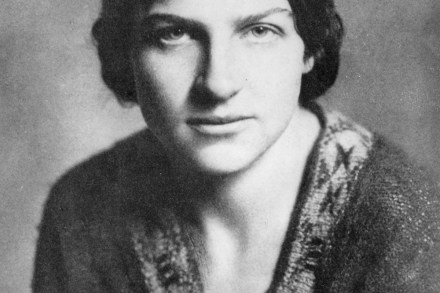
Sometime in 1953, Dorothy Martin was contacted by aliens. They had bad news and they had good news. The bad: Earth was about to be swallowed up by floodwaters. The good: as the leader of a chosen few, Martin would be saved by flying saucers. Mankind had brought this calamity on itself by following Lucifer’s agents – scientists – and abandoning Christ. Over the next year or so, Martin assembled a little flock of disciples who believed their salvation, and the world’s end, would come on December 21, 1954. A team of psychologists caught wind of Martin’s prediction.

UFOs alien psychology faith