Reading

Most-read 2020: What isn’t being said about the Reading attack victims?

We're closing 2020 by republishing our ten most-read articles of the year. Here's No. 9: Douglas Murray on June's Reading attack Imagine if on Saturday evening a white neo-Nazi had stabbed three men to death. Imagine, furthermore, if in the wake of the killings it had turned out that all three of the victims were gay. Or ‘members of the LGBT community’, to use the lexicon of the time. And then imagine if two days later nobody in the UK or anywhere else was very interested in any of this. So what if the victims were all gay? Why bother sifting around for motives. What are you trying to say? Bigot. Well something that might well be analogous to that happened in Reading on Saturday evening and over the days since.

Why I stopped reading novels

New York I received a letter from a long-time Spectator reader, James Hackett, enquiring about books I am reading. It is not often that I get letters that delight me, as this one did. It is a far cry from the readers’ letters you see in newspapers and magazines in the United States. Lots of them seem sanctimonious, holier than thou; others, I suspect, are written by the glossy magazines themselves promoting their own celebrity culture worship. James Hackett is an American gent whom I’ve never met, and I hope I don’t disappoint with my choices. The last time I read novels was literally some 50 years ago.

From half a shelf to a library: my life in books

‘Yes, I will have a coffee,’ said the van driver. He’d driven down to the south of France from Devon. I motioned him to take a pew at the kitchen table and asked him about himself. Ron was ex-army. Aged 17, he was faced with a stark choice: the building site or the army. Because he’d seen his builder father working in a trench all day with water up to his waist, he chose the army. He joined the Royal Engineers and trained as a driver. In the early 1970s he drove two SAS men around Belfast in an unmarked saloon car. That was the job. All day every day. Everywhere Gerry Adams went Ron followed him. Gerry Adams knew he had a tail and would give a friendly or an unfriendly wave, depending on how he was feeling. Yes, he enjoyed the army.

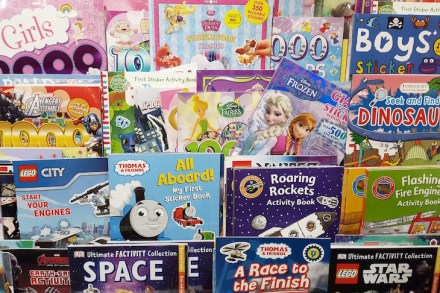
In defence of modern children’s books

A few years ago, I was surprised to open a newspaper and read that the head teacher of a London public school had decided to ban my books from his library. He described the adventures of Alex Rider, which have sold around 20  million- copies worldwide, in terms so derogatory that I have no mind to repeat them. Suffice it to say that the article quite put me off my cornflakes. But the strange thing was that — once I had got past the sheer offensiveness of his language and a mindset that believed that banning books could ever have good connotations — I was actually quite sympathetic to his wider point of view. Everyone agrees that children benefit from reading, but we seldom discuss what exactly we would like them to read.

Lydia Davis, like an inspirational teacher, tempts her readers into more reading

A good indicator of just how interesting and alluring Lydia Davis’s Essays proved might be my recent credit card statement. It was hard to read very far without being introduced to an unfamiliar author, and the terms of the introduction were frequently so seductive that I found myself breaking off to order several secondhand books. The fee for writing this review had long been swallowed up when I realised that if I read everything that Davis made sound irresistible I would probably never reach the end of this splendid collection — and end up like Achilles chasing the tortoise in Zeno’s paradox.

Low life | 25 October 2018

My reactionary first world war reading jag continues. The literature is vast, but so is my capacity and fascination. I began reading systematically, then went in search of thrills. Typing ‘my top ten first world war books’ into a search engine has also been a wonderfully fruitful source of leads. Space, and probably your boredom threshold, won’t allow me to list mine. I want to stick my neck out, however, and give a cheer for two books by liaison officers: one a Anglophile Frenchman liaising with the British, the other a Francophile Englishman liaising with the French. As one might imagine, both books are tragicomic. Emile Herzog was the son of a textile tycoon. In the first world war he served as an interpreter, then as a liaison officer.

Miss Marple to the rescue

Girl with Dove is a memoir by Sally Bayley, a writer who teaches at Oxford University, of growing up in a squalid, dilapidated house in a Sussex seaside town. It contains her mother Ange, her aunt Di, her grandmother, an unspecified number of siblings and a variety of temporary inhabitants who joined the Zion-seeking cult that evolved around Ange and Di. There are also a few longer-lasting denizens, such as Uncle David (first encountered unconscious on the sitting room floor), the sinister Woman Upstairs, and Poor Sue, who later seems to come to some kind of Poor End.

It’s World Book Day again. God help us

For parents of primary school children, the first Thursday in March has got to be the worst day of the year. Even an attendance Nazi like me, who won’t countenance any excuse for keeping a child home from school, would accept that on this occasion a ‘tummy ache’ is a perfectly legitimate reason. Why do I say this? Because the first Thursday of March is World Book Day. Now, for those of you without children, or whose children went to school before this annual ritual was invented by Unesco in 1995, I should explain that the reason it’s such a colossal bore is because parents are expected to mark the occasion by sending their offspring to school dressed as their favourite fictional character.

The tyranny of the bedtime story

All surveys carried out by retail businesses with a view to generating press coverage should be treated with extreme caution, but I cannot resist writing about one that has just been published by Furniture123.co.uk. The press release is headed ‘The Decline of the Bedtime Story’ and the key finding is that 64 per cent of parents do not regularly read a bedtime story to their children. Just 10 per cent say they do, while 6 per cent say they have never done it. Oh how I envy that 6 per cent! I am a member of the wretched 10 per cent who read to their children at night. Why wretched? Let me count the ways. First of all, children have absolutely no taste. None.

Philip K Dick: Five of his best books

Most science fiction writers got the future wrong. That’s OK. We don’t read sci-fi for predictions and, often, books set in the future tell us far more about the times they written in. But two 20th Century authors stand out as both relevant and prescient to anyone living in 2017. The great JG Ballard is one, and Philip K Dick, the other. While the majority of 20th Century science fiction writers predicted full automation, huge advances in propulsion technology or the colonisation of other planets, Ballard and Dick were visionaries of inner space, telling us what life would feel like for 21st Century (and later) humans.

Low life | 14 September 2017

The army patrols at Nice airport go around three abreast, steely-eyed, fingers on the trigger. They walk slowly and scrutinise the passengers carefully, assessing each individual for minute clues to their psychology. They take the incredibly boring job incredibly seriously, or appear to do so, which must be great comfort to those with honourable intentions but a nervous disposition. Contrast, then, these highly disciplined men with the armed pair I saw recently patrolling the floor of the departures lounge at Bristol airport. One had a comic, fall-guy, laughter-prone face, as characterful and funny to look at as George Formby’s. His boon companion looked like a great fellow to sink a few pints of cooking lager with, then go to a football match.

The pleasures of reading aloud | 24 August 2017

‘I have nothing to doe but work and read my Eyes out,’ complained Anne Vernon in 1734, writing from her country residence in Oxfordshire to a friend in London. She and her circle of correspondents (who included Mary Delany, the artist and bluestocking) swapped rhyming jokes, ‘a Dictionary of hard words’, and notes on what they were currently reading. Their letters are suggestive of the boredom suffered by women of a certain class, constrained by social respectability and suffering the restlessness of busy but unfulfilled minds. But that’s not their interest for Abigail Williams in this fascinating study of habits of reading in the Georgian period.

The pleasures of reading aloud

pkkkfffffffrrrffff-ffff! pkkkfffffffrrrffff-fff! Hobble leg, hobble leg, Hobble leg owhmmm! Into the bottle of fluff, rubbed the stuff under! pkkkfffffffrrrffff-ffff! pkkkfffffffrrrffff-fff! This is the voice of Tennyson reading ‘The Charge of the Light Brigade’, as recorded by Thomas Edison in 1890 and phonetically or farcically transcribed in a novel by Nicholson Baker over a century later. Drowned in static, ‘valley of death’ sounds like ‘bottle of fluff’, ‘rode the six hundred’ becomes ‘rubbed the stuff under’ and ‘Hobble leg owhmmm’ is — of course — ‘Half a league onward’.

Why Enid Blyton is still the queen of children’s books

As a child, I couldn’t get enough of Enid Blyton’s books. From the moment I discovered the Malory Towers series, set in a girls’ boarding school on a windswept Cornish clifftop, I was hooked. My strict grandmother called me a spendthrift for frittering all my pocket money (the princely sum of two shillings and sixpence a week) on paperback editions of Malory Towers, St Clare’s, The Naughtiest Girl and the Famous Five but I was too engrossed to care. Blyton’s first book, a slim volume of poetry called Child Whispers, was published in 1922 and she went on to publish more than 800 titles before her death in 1968.

Spectator Books of the Year: A celebration of the London Library

Far and Away: How Travel Can Change the World is a collection of pieces by the American essayist Andrew Solomon (Chatto, £25). From Moscow to Mongolia, Antarctica to Afghanistan, Solomon observes the world and reflects what he sees both on himself and on his own country. Resilience, hope, flux: Solomon has an outsider’s eagle eye. A dazzling volume. I also enjoyed On Reading, Writing and Living with Books (Pushkin Press, £4.99). This slim tome is among the first of a gorgeous new series culling extracts from the shelves of the London Library, an institution which celebrates its 175th birthday this year. Authors anthologised include Virginia Woolf and George Eliot. In half an hour, this book delivers the fruits of many days cruising the stacks in St James’s Square.

Holiday reading

Holidays are a welcome chance to lose ourselves between the covers of a book, especially for those of us who struggle to find time to read amid the assorted tyrannies of daily life. So the book that ends up in your suitcase had better be a worthy companion. The disorganised need not fear: you could do worse than grabbing a paperback at the airport. A holiday is a great time to read an easy new bestseller, not least because your friends are likely to have read it, so you can all discuss it over the third bottle of rosé during a long lunch. Just one note of caution: time tells. Many current bestsellers will have all but disappeared within a few years, whereas a classic endures for a reason. So to avoid your reading being too forgettable, for each new book, take an old one, too.

Low life | 10 March 2016

Nice airport was more or less deserted. Two-and-a-half hours early for the easyJet flight to Gatwick, I had a leisurely cup of tea and a bun at a café kiosk before going through security, sharing a counter with a couple of young gay Frenchmen who were bickering respectfully over the timing of some future arrangement. I took out my 99p 1987 charity-shop paperback, Mr Stimpson and Mr Gorse by Patrick Hamilton, and began to read. I love Patrick Hamilton’s novels, but until that moment hadn’t bothered to try the later ones, which he wrote when his alcoholism had taken a grip and he couldn’t get out of bed, as they are generally considered to be disappointingly bad. But for 99p I thought I may as well see for myself, and I read hoping to be pleasantly surprised.

Books will survive the age of the Kindle

The Kindle doesn't seem to be doing too well. According to Waterstones, sales of the e-reader have virtually disappeared, while in America, the Nook is losing $70 million a year. I’m not sure whether this is something to mourn or to celebrate; a triumph of bibliophilia over the new technology or the loss of an opportunity to promote reading. My old Kindle is useful on planes, but the technology is actually quite clumsy: the pages sometimes refuse to swipe and I’ve never quite got used to finding my place at ‘location 15,597’ or wherever. Anyway, I’ve always believed that books have an aesthetic quality, that they are more than the sum of their contents.

Notebook | 10 December 2015

This time last year I was running around excitedly telling all my friends that I had an African president in the family, something none of them could boast. My younger daughter Theo is married to Sasha Scott, son of Dr Guy Scott, who was president of Zambia from October 2014 to January 2015, and the only white African president since apartheid. When I first met him five years ago he was an opposition MP, but then in 2011 his party won the elections and the new president, Michael Sata, appointed him vice-president. Dr Scott’s job as veep seemed to involve constant travelling. President Sata was reluctant to leave the country, so he had to stand in for him at state funerals, of which there seemed to be an extraordinary number.

Lessons in dyslexia

The term ‘dyslexia’ has always been emotive, and it remains so. Julian Elliott and Elena Grigorenko’s book The Dyslexia Debate (2014) has done nothing to dispel the controversy. In a recent paper, ‘Why Children Fail To Read’, Sir Jim Rose, an apologist for dyslexia, said, ‘Dyslexia continues to come under fire as a myth. At its unkindest, this myth portrays dyslexia as an expensive invention to ease the pain of largely, but not only, middle-class parents who cannot bear to have their child thought of as incapable of learning to read for reasons of low intelligence, idleness, or both.