Reading

The unstoppable rise of stupidity

Hold the front page: I’ve found a very good contemporary novel to occupy my time. Such things have become vanishingly rare, even if one is grateful for David Mitchell’s metafiction, the occasional blast from Michel Houllebecq and Ben Marcus’s engaging lunacy. By and large, modern novels lack depth, originality of form and language, political unorthodoxy (i.e. freethinking) and a vaulting fictional imagination. Where, today, would you find the J.G. Ballards, the David Storeys, the Anthony Burgesses? In the sensitivity reader’s rejected pile, I suspect.

Why is a chatbot deciding what books our children read?

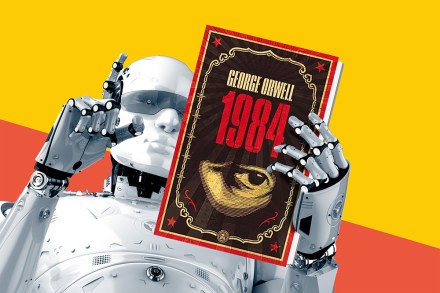
A school in Greater Manchester has stripped 193 books from its library because they are ‘inappropriate’, liable to upset pupils and thus a safeguarding risk. Among the dangerously destabilising material: Michelle Obama’s memoir and George Orwell’s Nineteen Eighty-Four. Who was entrusted with identifying these literary IEDs? An over-zealous head? A prurient librarian? A demented child psychologist? Nope. A humble AI bot. While writing my latest novel, The Hawk Is Dead, much of which is set in Buckingham Palace, I asked ChatGPT to produce a simple floor plan. Not a tough assignment – much less taxing than diagnosing nearly 200 books as existential threats to adolescent wellbeing. It got the Palace’s orientation wrong. For more than 200 years, the East Wing has faced the Mall.

Why it’s permissible to betray family secrets

Blake Morrison is the quintessential man of letters. More exactly, he’s a man of genres – poet, novelist, playwright, essayist, librettist and, most notably, memoirist. (Four memoirs so far, each a prize winner and/or bestseller). Although in the introduction to On Memoir he refutes the notion that he established the genre of life writing in the UK (he was professor of creative and life writing at Goldsmiths University, London for 20 years) or that he has ‘encouraged its growth’, he has somehow become its guru, the critic every literary editor turns to on the publication of yet another raw family story or celebrity revelation.

Will books soon become extinct?

I am glad that Radio 4 is producing a series called How Reading Made Us, presented by the subtle, super-literate Times columnist James Marriott. I must declare an interest. Roughly 98 per cent of my earnings over 45 years have depended on the fact that plenty of people like reading. Now we are thinking harder, however, about the fact that form affects substance. The idea of an encyclopaedia, for example, as developed (from classical roots) in the 18th century, was that all needful knowledge on a particular subject could be assembled and consulted in a book or series of books. With AI, there is little need for this form. The form of a book, which often seemed so compendious, can now seem cumbersome. Fiction, too, is affected by form.

How I learned to love audio books

According to a charity called Fight For Sight, 38 per cent of people who’ve been using screens more during lockdown believe their eyesight has deteriorated. I am definitely in that category. This time last year, I didn’t need reading glasses; now I do. When I’m working at my desk this doesn’t much matter, but it has made reading in bed more difficult because I was in the habit of doing this on an iPad under the covers so as not to wake Caroline. Keeping my glasses in place while lying on my side, with one hand clutching my iPad and the other pulling the duvet tight over my head to eliminate any light pollution, is surprisingly difficult. The upshot is I’ve switched over to talking books.

Revelling in reading: The Enchanting Lives of Others, by Can Xue, reviewed

Can Xue is an oddity in the landscape of world literature. Greeted mostly with bewilderment or indifference in her native China, her novels have gained a following among a certain type of erudite western reader over the past few decades, leading to an annual flurry of Nobel speculation and more works in English translation than nearly any other living Chinese author. The writing can be hard to enjoy. It often takes the form of avant-garde fairy tales populated by nameless characters who genially accept unsettling, inexplicable occurrences around them. When this works, as in last year’s gloriously strange Mother River, you get the disorientating feeling that you are the one who has gone insane, not the characters.

Letters: A teacher’s lessons for Rod Liddle

How to kill reading Sir: I am appalled by the response to Andrew Watts’s concerns about the teaching of reading at his son’s school. His article reveals a system almost guaranteed to discourage reading and an alarming turning away by a school from its responsibility to parents who have entrusted it with their children (‘Schoolboy error’, 17 January). Effective reading involves immersing oneself in the text without distractions, going at one’s own pace. The degree of involvement will be determined by the material and by the engagement of the reader. The remark by Andrew’s son’s head of English, that the school’s reading programme was not supposed to encourage reading for pleasure, indicates a wilful disdain for effective reading.

How the Queen is spreading the joy of reading

Queen Camilla loves a book. Almost any book will do. ‘There’s something so tactile about a book,’ she says. ‘I like the smell of the pages when you open the cover. I like turning the pages and folding down a corner ready for next time…’ The Queen, 78, has loved books for as long as she can remember. She says her father, Bruce Shand, inspired this lifelong passion: ‘He read to us as children. He chose the books, and we listened. He was probably the best-read man I’ve come across anywhere. He devoured books.’ Bruce Shand was a soldier. His father was a writer, about architecture, food and wine. His father was another writer, who, incidentally, was briefly and secretly engaged to Constance Lloyd, who went on to marry Oscar Wilde.

The rise of performative reading

‘To be or not to be’ may be the question but when it comes to eliciting answers, I’ve always preferred Mr Darcy’s epic conversation starter: ‘What think you of books?’ Two hundred years on, it has become harder than ever to find out what anyone actually thinks of books – and not just because our attention spans have been so corroded by dopamine addiction. There are more books published today than ever. TikTok creates relentless literary sensations, and the day after the murder of Charlie Kirk, AI-produced histories were available on Amazon giving ‘the full story’.  If social media is to be believed, everyone is reading so much it’s impossible to keep up. But what matters most is not what you think about books but how your books look.

How not to behave at a London gentleman’s club

After a 5 a.m. start, I arrived at the departure gate in Nice airport to discover there was an air traffic control strike and my flight had been delayed by two hours. Annoyance gave way to relief when the board turned red and all later flights were cancelled. This was the week of the Spectator summer party and, because of work commitments and for reasons of economy, I was flying back at 5 p.m. the following day. I was packing a lot into those hours: on arrival a late lunch in Pimlico, where I was staying in a flat belonging to a friend, Kate, who was away; the party; a hungover breakfast with Will, The Spectator’s features editor, the following morning; a solitary wander round the National Gallery and lunch with Martin Vander Weyer, before a dash back to the airport.

We’re losing the ability to read

A recent American study, called ‘They Don’t Read Very Well’, analyses the reading comprehension abilities of English literature students at two Midwestern universities. You may be surprised to discover that the title is not ironic. That they don’t read very well is an understatement along the lines of Spike Milligan’s ‘I told you I was ill’. The study’s subjects were given the first paragraph of Charles Dickens’s Bleak House, and asked to read it out loud, parsing the sentences for meaning. A doddle, you’d think, for anyone reading Eng lit at a university. Well, you’d be wrong. Most participants were unable to elicit a scintilla of sense from Dickens’s prose. It’s as if, dumbfounded, they’d been confronted with Linear B.

How my father’s bedtime stories shaped my life

It’s half an hour before lights out when my dad arrives at my bedroom door holding Roald Dahl’s Danny the Champion of the World. He kicks off his shoes, loosens his tie and wedges himself next to me in my small single bed, his toes waggling in their socks as they regain freedom after a long day in the office. In the evening he smells of the menthol toothpicks he always carries in his top pocket (in the morning, when he drops me off at school, he smells of the spicy pink toothpaste which I once tried and which burned the roof of my mouth).

Letters: Britain doesn’t have a ‘two-tier’ policing problem

Less is more Sir: While I wholeheartedly agree with Toby Young’s observation that ‘more censorship would make things worse, not better’ (No sacred cows, 10 August), I’m confused by his remedy – ‘more and better speech’. First, how does one decide what better even means, without it becoming a form of censorship? Second, and perhaps more worryingly, it feels like something Stalin might appreciate. ‘Quantity has a quality of its own,’ he once said. In their different ways, both incessant social media and weekly magazines rather disprove that.

Why children have stopped reading

It’s only when you read the old stories again, to a child maybe, that you become aware of the extent to which the characters still live inside your mind, bobbing about just below the level of consciousness. I still find myself puzzling over the stories collected by the Brothers Grimm, decades after I first read them. How could Little Red Riding Hood have avoided being eaten? (We read the original, merciless version.) What should Hansel and Gretel have done? Any good book leaves its mark, but the characters from the books you loved as a child embed themselves. They inform the way you think as an adult, which is why it’s so sad and so significant that children all over the West have stopped reading.

The rise of the competitive book list

I’m a hopeless technophobe. I dislike the stylish laptop I’m using and its subdued pad pad pad. I still long for the clatter and ting of my old typewriter. It was a sturdy soul, utterly obedient, only needing a new ribbon occasionally. It lived for 40 years before being interred in a quiet corner of my attic. I’ve had several computers since and they have all been tricksy. I often fantasise about tracking down another ancient typewriter that could be coaxed back into service. There are still several writers determinedly tapping away. The American novelist Danielle Steel has achieved a billion sales by working on a 1946 typewriter. Jilly Cooper wrote her recent bestseller Tackle! on a red manual called Monica.

Why adults should read children’s books

During a recent family trip to South Africa, there was one book from my holiday reading pile that I simply couldn’t put down. It had everything: suspense, mystery, humour, fantasy, plot twists, heroes, villains and, ultimately, a happy ending. It also contained talking animals, unicorns and fauns. Because this wasn’t the latest bestselling crime or psychological thriller – my usual genres of choice. It was The Lion, The Witch and The Wardrobe, the children’s story by C.S. Lewis that I’d first read almost 40 years earlier. Given that I have a nine-year-old son who adores books, you might imagine that my motivation for re-reading it was to do so aloud to him. Not so.

Beyond Dickens: the best Christmas short fiction

Claire Keegan’s Booker-shortlisted Small Things Like These this year revived the tradition of Christmas short fiction. It’s a deftly done parable about cruelty and kindness in the run-up to Christmas, with actual snow – and tears.   Although Keegan’s novella eventually lost out to Shehan Karunatilaka for the Booker, it perhaps served a greater purpose than prizes: it was a reminder of the value of stories that connect us with our humanity, particularly around this time of year.  It was also a reminder that cultural consumption at Christmas needn’t merely be about overloading on films.

Stalin the intellectual: the dictator cast in a new light

The link between mass-murdering dictators and the gentle occupation of reading and writing books is a curious one, but it definitely exists. Mao was a much- praised practitioner of traditional Chinese poetry; Hitler was widely if haphazardly read, dictated Mein Kampf and was a fan of Karl May’s Wild West stories; and Stalin, as Geoffrey Roberts shows, took books at least as seriously as the purging of foes, real and imagined.

Can I really be turning 80?

A princess of Hanover wrote in her diary: ‘My 30th birthday. There must be some mistake.’ Substitute 30th for 80th and you have how I feel this week. But age is all relative, being dependent on your genes, immune system and how it was primed in childhood; on your location, your income and luck. I had long-lived grandparents on both sides; had measles, rubella, mumps, chicken pox, whooping cough and scarlet fever before five; and in spite of semi-permanent tonsillitis was 20 before any antibiotic entered my body. I spent the years until 16 on the north-east coast of Yorkshire, through bitter snowbound winters, my lungs loaded with fresh sea air. Attitude and expectations are important too.

How TikTok can turn a book into a bestseller

I have an American friend who loves reading, but is clueless about technology. The last time I visited him he was still using Internet Explorer, which even Microsoft has given up on. My friend was puzzled when he walked into his local bookshop and was met by a table of books with the sign ‘#BookTok made me read it’. Soon afterwards I received a bewildered WhatsApp message: ‘What is BookTok?!’ Until recently, I didn’t know. Before the pandemic, I was a working stand-up comic. I’ve never been on television and you probably haven’t heard of me, but I was happy. I worked six nights a week, made enough to pay the bills and was recognised occasionally by someone in Tesco. And then came lockdown.