Race

Exquisite to look at, strangely tense and wholly riveting: Netflix’s Passing reviewed

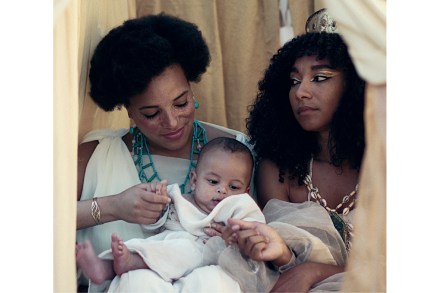
Passing is Rebecca Hall’s adaptation of the Nella Larsen novella (1929) about two biracial women, one of whom chooses to pass for white, and one who does not, and the effect they have on each other, and it’s superbly done. It’s tightly made, exquisite to look at, strangely tense, wholly riveting and it’s also, let’s be honest, just the right length for a film (90 minutes). Hall — who wrote the screenplay and directs, and is otherwise an actress — is the daughter of theatre director Peter Hall and opera singer Maria Ewing and you could say she has skin in the game. When she was growing up, she has

How the culture wars are killing Western classical music

Musicology may appear an esoteric profession. But several events in the past few years have pushed musicological debates into the columns of national newspapers, from the American academic who claimed that music theory was a ‘racial ideology’ and should be dismantled, to the Oxford professor who allegedly suggested that studying ‘white European music’ caused ‘students of colour great distress’, to the high-profile resignation of a professor at Royal Holloway, University of London, reportedly in response to academic ‘cancel culture’. These disputes have not emerged from nowhere. They are the result of longer processes that have forced serious questions about the very place of music, and above all the Western classical

A well-meaning but dull Official History: Olivier’s Normal Heart reviewed

The Normal Heart is not about Aids. Larry Kramer’s play is set in New York in 1981 at a time when clinicians were struggling to find a link between a handful of rare diseases that struck only gay men and heroin addicts. The term ‘Aids’ wasn’t adopted until late in 1982. And this dampens the wheels of Dominic Cooke’s production. A playgoer is likely to stifle a yawn as the characters on stage try to discover medical facts that have been common knowledge for decades. There are other problems with Kramer’s ageing script. The story follows an indignant activist, Ned, who has to persuade the city authorities to take the

Political arguments are now over words, not things

There is a picture book, by the excellent David McKee, of which my youngest child was very fond. It’s called Two Monsters, and its protagonists are, as promised, two monsters. The blue one lives on the west side of a mountain, and the red one lives on the east side of the mountain. They communicate verbally but never see each other. It all kicks off when one evening the blue monster calls: ‘Can you see how beautiful it is? Day is departing.’ The red monster shouts back: ‘Day departing? You mean night arriving, you twit!’ Cantankerous words are exchanged before bedtime and both sleep badly. The following morning the blue

Hugely pleasurable – a vision of summer: Jennifer Packer at the Serpentine Gallery reviewed

We need to talk about Eric. In Jennifer Packer’s portrait of her friend and fellow artist, Eric N. Mack sits on a yellow chair that might have been borrowed from Van Gogh’s bedroom. He’s wearing excellent odd socks, one pink to rhyme with his shoes, the other yellow matching his trousers and chair. But it’s Eric’s face that’s most compelling. Like the ‘Mona Lisa’, Eric’s expression is inscrutable. He might be thinking about what’s for tea, the crisis in pictorial representation or, quite likely, nodding off. This enigmatic quality is intentional. ‘When I painted Eric, I wanted accuracy, but I also wanted to privilege his subjectivity and privacy,’ says Packer.

Britain is a tolerant country and a few football racists don’t change that

The racist messages sent to England football players in recent days are shameful, but to suggest that the UK is a festering hotbed overflowing with racist thugs is a step too far. Out of the hundreds of thousands of social media posts about the Euro 2020 final, only a tiny number contained racist words. Of course, this doesn’t mean we shouldn’t speak out against such abuse. What happened is indefensible and the culprits should be dealt with by the police. But the frenzied debate the messages have generated risk giving those responsible the attention they crave and which they do not deserve. As well as failing to see the bigger picture here – that Britain, generally

Why do those who abuse Priti Patel get a free pass?

Remember when Labour MP Clive Lewis got into trouble for saying, ‘On your knees, bitch’? It was at a fringe event hosted by Momentum during the Labour conference in Brighton in 2017. Lewis uttered the line as a joke to the actress Sam Swann. People went nuts. Labour bigwigs accused Lewis of misogyny. He eventually ‘apologised unreservedly’ for his ‘offensive’ language. That phrase — ‘On your knees, bitch’ — sprung back into my mind this week as I read an exchange between Alastair Campbell and Priti Patel. No, Campbell did not use the B-word. He is far too civilised for that. But he did tell Patel to get on her

Oli London and the trickiness of being ‘trans-racial’

Not everyone will have heard of Oli London, a British social media influencer who made news for two reasons last week. The first was that London came out as plural. Which is to say that he came out as a non-binary person. Which is very 2020 and something so un-noteworthy that I’m sure you’ll agree it is hardly worth remarking upon. The other thing London did was more unusual. Which was that he came out as Korean. You might guess from his name that Oli London is not Korean, but he has spent some time there (in the South rather than the North apparently) and enjoys the language and culture.

This interactive Doctor Who show is as bombastic, fey and tedious as the TV series

Death of a Black Man is a little-known script from the 1970s written by Alfred Fagon who suffered a fatal heart attack in 1986, aged 49. It’s an intriguing but sloppily written play set in 1973 about a pair of black London teenagers who are hustling for cash in the music business and the furniture trade. Shakie has lucked his way into a Chelsea flat where he makes money flogging African chairs to gullible Americans. His best friend, Stumpie, needs a loan to bring a band of African drummers to the UK. Meanwhile Shakie’s ex-girlfriend, Jackie, has returned from Jamaica to sponge off him and enjoy the high life. Scriptwriting

Don’t blame ‘white privilege’ for the plight of working-class kids

Tory MP Robert Halfon is right to say that the underachievement of white working-class students is a ‘major social injustice’. He is also correct to call for ‘a proper funding settlement’ so that we have an ‘education system fit for purpose’. But this much-needed debate has been overshadowed by a red herring in the Education committee’s report: the use of the term ‘white privilege’. The report claims that the use of such phrases may have contributed to the neglect of disadvantaged white kids. Of course, as Halfon says, ‘it is wrong to tell a white disadvantaged family that they are white privileged even though they may come from a very poor background and may be struggling’. But blaming

Forget race or class, marriage is the big social divide

The latest spark to ignite the culture wars is a report from the parliamentary education committee on the underachievement of working-class white boys. But this isn’t about race. The boys don’t underachieve because they are white. Their skin colour is merely a marker by which we can see that a certain cohort is doing worse than another. And despite received wisdom, it’s not just about poverty, school funding or investment. Children of other ethnicities who are equally poor, and even potentially at the same school, will likely do considerably better. It’s not even about class, which seems to be the latest factor on which the fickle finger of blame is

The tragic plight of black children in care

A young black boy is living with me. He is my foster son. I know what he likes for breakfast, where his friends live and what makes him smile. I have watched in fear and then awe as he has taught himself skateboard tricks. I have taken him to the doctor, and on holiday. Now I have to tell him that he will be leaving to stay with another foster family. According to social workers, this family is better for him in the long run. But the stats suggest otherwise. He is more likely than most to face destitution, exploitation and incarceration Recently published figures from the government’s racial disparity

Taking the knee isn’t the best way of showing black lives matter

As a black football fan who grew up going to matches in the seventies and eighties, I know more than most about the beautiful game’s troubles with racism. I can still remember my own club West Ham United being the first English Football League side to select three black players in their starting team on Easter Saturday 1972; and I can still recall, for two seasons in a row, a particular section of fans in the old west side stand ‘Sieg Heil’ saluting during every home game. Nowadays, racism in football is less obvious but it still exists – and it needs to be called out. But I’m convinced that

Cambridge deserves better than Stephen Toope

Regular readers may be aware that in recent months I have been having a running-spat with a Canadian lawyer called Stephen Toope. I am rarely exercised by Canadian lawyers, but this particular one is the current Vice-Chancellor of Cambridge University, and he seems intent on running that crown jewel of an institution into the ground.  Since taking over as Vice-Chancellor, Mr Toope has been responsible for a wide array of anti-free speech initiatives through which, as I recently remarked in the Daily Telegraph, he appears to want to transform Cambridge University into something like the Canadian bar association, but without the thrills, or the pay. Anyhow – our spat came

France is divided on ‘taking the knee’

Until this month ‘taking a knee’ has not been a French phenomenon. When the Black Lives Matter movement spilled out of America twelve months ago and spread across the world, France was one of the few Western nations where it failed to make any headway. In a bold television address at the time, Emmanuel Macron declared that there would be no statues toppled in France. Meanwhile, the leader of the far-left France Insoumise, Jean-Luc Mélenchon, rubbished the idea of ‘white privilege’. The French looked on in bemusement as Britain seemed to lose the collective plot, hauling down statues, denigrating Churchill and then, when the rugby and football seasons started, dropping to their

Two hours of kitsch tomfoolery: Amélie at the Criterion reviewed

The latest movie to turn into a musical is Amélie, from 2001, about a Parisian do-gooder or ‘godmother of the unloved’. Some rate Amélie as the worst film ever made in France. Some consider it the worst film ever made. Our heroine is a 20-year-old waitress, a sort of proto-Greta, who plays truant from her restaurant job and wanders around Paris doing nice things to random strangers. Her inspiration is a box hidden by a child in her apartment 40 years earlier which she wants to restore to its original owner. Or, as the clunky narrator puts it, ‘Why is she holding that box like her future is inside it?’

British universities aren’t institutionally racist

There is a spectre haunting British universities: the spectre of institutional racism. ‘There is a lot of evidence that points towards universities perpetuating systemic racism, being institutionally racist,’ the University of East Anglia’s vice-chancellor, David Richardson, told an upcoming BBC Three documentary ‘Is Uni Racist?’. Viewers are likely to be left in no doubt that the answer to that question is ‘Yes’. Two people I know appeared in it, and it was moving to hear them share their experiences. Yet the reality is that for most black students there has never been a better time to study at a university in Britain. Of course, that doesn’t mean there aren’t still

The problem with Equity’s anti-racism guidelines

‘Rouse tempers, goad and lacerate, raise whirlwinds.’ Those were the words that Kenneth Tynan, the most celebrated drama critic of the 20th century, had pinned above his desk. During my five-year stint as The Spectator’s theatre critic I did my best to follow that philosophy. But according to a new set of guidelines devised by Equity and embraced by the National Union of Journalists, reviews should be ‘balanced, fair and designed to be productive’. Any critic living by that credo would be more likely to raise a yawn than a whirlwind. The guidelines, part of Equity’s anti-racism campaign, have been developed to help critics ‘challenge their own biases and to

The case against reparations for slavery

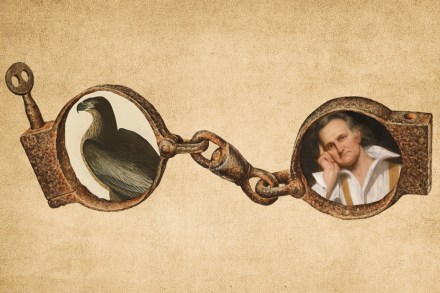
Last week, a bill cleared the US House Judiciary Committee that would establish a 13-person commission to consider federal reparations for slavery. Although similar legislation has been introduced in every Congress since 1989, this is the closest such a bill has ever advanced towards a full vote in the House. The President’s support for this pet far-left project is unsurprising. A reparations commission featured in Joe Biden’s campaign platform. Advocating the establishment of this commission is a hop, skip and a jump from advocating reparations, full stop. The UK’s proliferating parliamentary inquiries often function to kick sensitive subjects into the long grass. But an American panel convened to address such

What’s the problem with Apu?

Remember Apu, the kindly Indian shopkeeper from The Simpsons? Well, in the time since most people have stopped watching that 32-year-old show, past its prime for at least two of its three decades, the world has come around to deciding that he is actually a really racist character, perhaps even a 2D agent of white supremacy. If you’ve missed this particular culture-war controversy, I envy you. It is among the most ridiculous, and protracted, of recent years. It started with The Problem With Apu, a 2017 documentary made by American comedian Hari Kondabolu. Kondabolu is of Indian heritage, and despite liking The Simpsons as a kid, he has come to