Race

For those of a nervous disposition, is Sinners worth it?

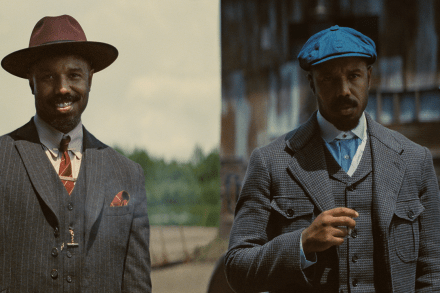
Ryan Coogler’s Sinners won four Oscars and was nominated for 16 and I’d yet to see it. Sometimes the labels associated with a film can be off-putting and, for me, ‘horror’ and ‘vampires’ have the same effect as, say, ‘experimental’ or ‘like a poem’ or ‘directed by Michael Bay’. It’s now landed on the streamers and it seemed like an omission that needed correcting, so I spent around ten hours with it. It’s only 135 minutes but should you hit pause every time it gets scary that’s how it might roll. Please don’t sell me a vampire film when it’s a zombie one, even if I don’t like either The

Which US city is the most violent?

Black in the day A new book claims William Shakespeare’s works were really written by a black woman and were stolen by a semi-literate chancer from Stratford-upon-Avon. Other historic figures who have been claimed to be black: — Queen Charlotte, wife of George III. Was born Charlotte of Mecklenburg-Strelitz in 1744, and was thoroughly German, unless you happen to believe that she was descended from 13th-century Portuguese king Alfonso III and his African mistress. — Beachy Head Woman. Skeleton of Roman-era young woman discovered near Eastbourne in the 1950s. A study of her skull claimed she was the first known black person in Britain, until DNA analysis found she probably came

The true villains of our TV crime dramas? The creators

Idly watching the first episode of a TV crime drama series recently, I found myself in a slightly troubled frame of mind. We were already 35 minutes in and no probable villain had shown their face. We had seen black people, Chinese people, lesbians, the disabled, the impoverished and powerless, Muslims, the young and idealistic… yikes, I thought to myself, it simply can’t be any of them, can it? Surely not. And then, as if the scriptwriter had heard my private worries, for lo, a very rich, marble-mouthed white woman emerged and was shown being beastly to some young and idealistic people and I thought: bingo! We have our villain.

Reform’s real race problem

I think it was Zadie Smith who I first heard point out that race is in America what class is in Britain: the conversation underneath every conversation. When I first heard that remark I slightly baulked. Not least because one had rather hoped that class would be less of a thing in Britain in the 21st century. I suppose it is, although you do still meet people who treat the English language as though it is a minefield in which one incorrect vowel will suddenly take them out. But if the class stuff still lingers in Britain, the good news is that we now have the American race obsession too.

Is Reform racist?

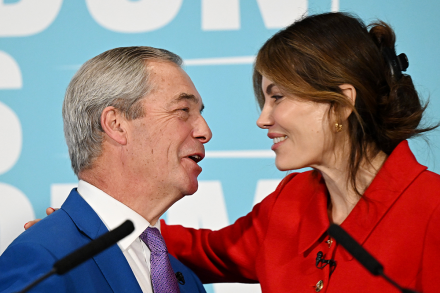
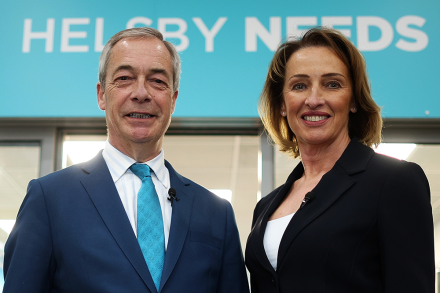
Sarah Pochin’s gonna take a lot of coachin’. You can’t just turn up on the telly and say you’re sick of all the blacks everywhere. And the Asians. Un-accountably, perhaps, you will be accused of racism, the definition of the term having been extended rather further than my interpretation: to discriminate against an individual on the grounds of his or her race. There will be outrage among the deluded; there will be faux outrage among the opportunistic. Your own party leader will slap you down by saying, in effect: ‘Well, she’s right, obvs, but you can’t say stuff like that.’ And her own leader is not wrong. The Overton window

A small world: Shibboleth, by Thomas Peermohamed Lambert, reviewed

Two shibboleths are treated in Thomas Peermohamed Lambert’s audacious debut novel. The first is the University of Oxford; the second is the Israeli-Palestinian controversy. ‘It is the great issue, isn’t it? The great shibboleth.’ Edward, the protagonist, is a state-educated undergraduate whose connection to Islam is a Muslim grandfather from Zanzibar. He finds himself in a world of wealthy public school boys with ‘a social calendar, rugby fixtures and sexual assault hearings’, and girls from sister schools, ‘fully recovered from eating disorders’. This fictitious world is outdated, but Lambert’s satirical touch still hits the mark about ‘the creatures of the written word [the university] specialised in churning out, as if

If ‘wokeness’ is over, can someone tell the Fitzwilliam Museum?

Optimists believe that the tide of ‘wokeness’ is now ebbing. If so, the message has not yet reached Cambridge, whose wonderful university museum has its classical façade covered in sententious phrases in neon, and which has recently opened a new exhibition in agit-prop style: Rise Up: Resistance, Revolution, Abolition. Such activism is fully in step with the Museums Association, the curators’ club that instructs its members to turn their institutions into activist cells. If all this makes its founding benefactor Viscount Fitzwilliam turn in his grave, all the better: he is stigmatised as a profiteer from the slave trade, even before one reaches the cloakroom. The same accusation was made

The problem with Dawn Butler

We hear a lot about white supremacy these days. But for some reason we rarely hear about black supremacy. I wonder why? There’s a lot more of it around. For Butler, describing someone as white or as trying to be white is clearly a great insult While it is vanishingly difficult to find an overt white supremacist in British public life, it is extremely easy to identify their black counterparts. As exhibit A I would present the Labour MP Dawn Butler. I have written about her once before, in 2020, when Ms Butler was in a car that was stopped by police. At the time I speculated that the coppers

Reinforces the caricatures it sets out to diminish: Slave Play, at the Noël Coward Theatre, reviewed

Slave Play is a series of hoaxes. The producers announced that ‘Black Out’ performances would be reserved for ‘black-identifying’ playgoers but the ticketing system is colour-blind and these so-called ‘segregated’ shows were attended by audiences of all ethnicities. The PR gambit generated lots of free publicity, but these stunts don’t always translate into ticket sales. The second hour involves screeds of impenetrable psychobabble as the couples bicker and moan The show appears to be a drama set in the Deep South before the American civil war. It opens with a white farmer humiliating his black cleaner, who easily outsmarts him. When he forces her to eat fruit from the dirty

Cheesy remake of Our Mutual Friend: London Tide, at the Lyttelton Theatre, reviewed

Our Mutual Friend has been turned into a musical with a new title, London Tide, which sounds duller and more forgettable than the original. Why change the name? To confuse fans of Dickens, presumably, and to keep the theatre half-empty while heaps of tickets are sold at a discount. At the end of Act One, an actor explains the entire plot. This might have been delivered earlier The plot is a cheesy Victorian whodunnit involving three main characters and multiple locations so it’s hard to follow the action as it flits from this lowly hovel to that seedy tavern. The chief personalities are a pretentious lawyer, a psychotic teacher and

I was dreading this show – how wrong could I be: Entangled Pasts, at the Royal Academy, reviewed

In the wake of the Fitzwilliam Museum’s exhibition Black Atlantic about its founder’s ties to the slave trade comes the Royal Academy’s Entangled Pasts, less of a mea culpa than an examination of conscience by an institution which, although hailed by its first president Sir Joshua Reynolds as an ‘ornament’ of Empire, was innocent of direct links to slavery. The exhibition is less of a mea culpa than an examination of conscience I confess that I was rather dreading this show, which sounded from the pre-publicity like a hollow exercise in Britannia-Rules-the-Waves breast-beating, but from the moment I stepped into the courtyard and saw the posturing Sir Joshua on his

The ‘professional liar’ at the heart of Prince Harry’s hacking claim

In the summer of 2019, Prince Harry and Meghan Markle were visiting their friends Elton John and David Furnish in the south of France when they were introduced to the barrister David Sherborne. This ‘chance’ meeting would be a massive coup for the man known as the ‘barrister to the stars’ (he represented Coleen Rooney in the Wagatha Christie trial and Johnny Depp against Amber Heard, among many others. Many years ago, he also acted for Harry’s mother, Princess Diana). The encounter led to Prince Harry becoming the star witness against three newspaper groups. ‘It was partially down to Elton and David,’ Harry later wrote in Spare. ‘At the end

Watching Queen Cleopatra felt like witnessing the death of scholarship

The most controversial aspect of Netflix’s new drama-documentary Queen Cleopatra – not least in Egypt – was the casting of a black actress, Adele James, in the title role. After all, one of the few things that seems certain about Cleopatra’s early life is that she was a Macedonian Greek. Luckily, though, the show had a powerful counterargument to this awkward and Eurocentric fact. As the African-American professor Shelley P. Haley put it with a QED-style flourish, back when she was girl, her beloved (if uneducated) grandmother once said to her: ‘I don’t care what they tell you in school, Cleopatra was black.’ Watching Queen Cleopatra felt alarmingly like witnessing

Trump’s second act: he can still win, in spite of everything

Everyone knows F. Scott Fitzgerald’s famous line from the end of his unfinished novel The Last Tycoon: ‘There are no second acts in American lives.’ But Fitzgerald wasn’t talking about second chances. He meant that, unlike in a traditional play – where Act I presents a problem, Act II reveals the complications and Act III resolves it all – Americans want to skip Act II and go straight to the resolution. The more I think about it, the more I think the Joe Biden presidency is Act II – and Donald Trump is not the last tycoon. He’s Act III. He’s the next president. The campaign of lawfare against him

Riveting and sumptuous: The Motive and the Cue, at the Lyttelton Theatre, reviewed

The Motive and the Cue breaches the inviolable sanctity of the rehearsal room. The play, set in New York in 1964, follows John Gielgud’s efforts to direct the world’s biggest film star, Richard Burton, in Shakespeare’s most demanding play, Hamlet. A member of Gielgud’s company, Richard L. Sterne, recorded the process and his notes form the basis of Sam Mendes’s riveting production. The show is a must for anyone who works in the theatre or wants to. Directors, in particular, will relish the glimpse it offers into Gielgud’s approach to a uniquely demanding text and to a wayward superstar who was free to accept or to challenge the notes given

A lesson for Rupa Huq from the ancient Greeks

The Labour MP Rupa Huq, of Pakistani heritage, has been suspended for suggesting that Kwasi Kwarteng, of Ghanaian heritage, was only superficially black and did not sound black on the radio. The ancients would have been baffled by her comment. They were fascinated by their world’s many different cultures, but colour held no significance for them. People’s beliefs, however, were a matter of great interest. The widely travelled Greek historian Herodotus (5th century bc) produced a fine example (among many others): while Greeks expressed utter revulsion at the Indian idea of eating their dead, an Indian tribe also did so at the idea of burning their dead. Conclusion: there was

Shame should not be heritable

Vice-chancellor Stephen Toope claims it was ‘inevitable’ that a university ‘as long-established as Cambridge’ would have links to slavery. Now that faculties gorge on racial guilt as Cambridge dons once famously feasted on roasted swans, what was really inevitable is that a body christened ‘The Advisory Group on the Legacies of Enslavement’ would find links to slavery. Why, it must have frustrated the authors of the report released last week that their three-year inquiry didn’t manage to dredge up any evidence that the university ever directly owned slaves or plantations. Rather, it’s the money that was tainted; lucre having always passed through dirty hands somewhere along the line, there’s no

One worldview has taken over the historical profession

Professor James H. Sweet is a temperate man. He seeks to avoid extremes. But he also seeks to be bold in his temperance. You can do that by emphatically stating an opinion that seems above reproach. But Professor Sweet miscalculated. His emphatic bromide blew up, and he was left offering emphatic apologies. For those who have not followed this little academic circus, Professor Sweet, who teaches history at the University of Wisconsin at Madison, is also the president of the American Historical Association (AHA). That’s an important post. The AHA has more than 11,500 members. It publishes the American Historical Review, ‘the journal of record for the historical profession in

There’s much more to Winslow Homer than his dramatic seascapes

Until the invention of photography war reportage depended on old-fashioned illustration, and even after that the illustrated press took a while to catch up. Photographic reproduction didn’t work on cheap newsprint, which demanded a crispness of definition that early photography couldn’t provide. So reports on the American Civil War in the new illustrated periodicals aimed at the middle classes continued to rely on wood engraving, and it was as a print designer that the 25-year-old Winslow Homer was sent by Harper’s Weekly to cover the fighting in 1861. Apprenticed to a commercial lithographer at the age of 19, Homer had no formal training as an artist but he had a

Viktor Orbán won’t save conservatism

It’s always the ones you most expect. Hungarian prime minister Viktor Orbán, nationalist strongman and post-liberal poster-boy gave a speech over the weekend on the evils of race-mixing. He was speaking on Saturday to attendees at Tusványos summer university in Băile Tușnad, Transylvania, previously an annual forum for Hungarian-Romanian dialogue but now an intellectual pep rally for the ultranationalist Fidesz party. According to the Budapest Times, he told his co-ideologues the West was ‘split in two’ between European nations and those in which Europeans and non-Europeans lived together. He declared: ‘Those countries are no longer nations.’ This is also how the Daily News Hungary and Hungary Today characterised Orbán’s remarks.