Property

How many people live in leasehold properties?

Back to the palace Donald Trump was invited for what will be his second state visit to the UK. Who else has been on more than one? – Olav V of Norway was entertained twice, in October 1962 and again in April 1988, although never at Buckingham Palace. On the first visit he was received at Holyrood Palace and the second Windsor Castle. – Margrethe II also undertook two state visits, in April 1974 and again in February 2000, both times to Windsor Castle. – Monarchs have an advantage as they tend to hang around for longer. Trump will be the first president to enjoy a second. Curiously, South Korea has had three state visits since 2004, but each with a different president. Low-flying planes How much low flying does the military undertake over the UK?

Why the London exodus is over

During the course of last year, Alex Greaves and his wife Sarah seriously considered moving out of London. The couple, who live in Southfields in the south-west of the city with their sons aged two and five, were tempted the idea of a new life in the country – inspired largely by friends’ idyllic tales of moving to the sticks and into a home far grander than anything they could possibly afford in the capital. In the end, though, Alex and Sarah decided to stay put. And they are not alone. In the past year the number of Londoners leaving the city has dwindled dramatically. Research by estate agent Hamptons found that during 2024, Londoners purchased just 5.7 per cent of all homes sold beyond the city limits. This is a decade-long low, and down from a peak of 8.

Confessions of a ‘gazunderer’

'John' has a dirty little secret – one so shameful that he has insisted on anonymity in order to tell his story. Last year, while in the process of buying a three-bedroom family house in Whitchurch, Hampshire, the 42-year-old office worker committed an act which, while perfectly legal, could kindly be described as ruthless. ‘We made an offer for the house, a bit below the asking price, and it was accepted,’ explains John. ‘But over the weeks that followed we started to have second thoughts. A few friends and family members were surprised at how much we were paying for the property. ‘It got to the point where I was hoping the survey would show something bad, so we could renegotiate, but it didn’t.

Britain’s shopfronts are a national embarrassment

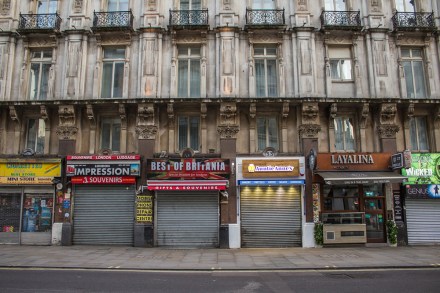
A few weeks ago, a couple of men with ladders started work on a former bridal boutique at the end of my road. I’ve no idea how old the building is. Its pitched roof and intricate gable and the sort of pattern brickwork no one seems to bother with these days suggest it’s Victorian, but it could be older. Beneath the first-floor windows was a decorative cornice. Under that, between a pair of attractive corbels, was a slim wooden fascia upon which the name of the shop was painted in stencilled letters. The chaps with the ladders got rid of all that. They ripped out the timber and chucked it in a skip. The building houses an estate agent now – a flat aluminium fascia, double the size of the old one, informs you of the fact.

Letters: The army that Britain needs

Common ground Sir: Katy Balls asks ‘Lawyer or leader?’ (Politics, 25 January), but it became fairly clear which Keir Starmer is when he appointed as his Attorney General Lord Hermer, a human rights lawyer. As was mentioned, Lord Hermer has often represented those rejecting British values rather than standing up for them. Sir Keir and Lord Hermer show a clear preference for international law over Britain’s common law. They ignore the reality that common law has served the nation brilliantly over the centuries. It relies on the precise written word and precedent, being non-political, transparent, predictable and fair. British laws are enacted by our democratically elected parliament which can amend or repeal them.

Steven Pinker: The inside story of my Covid ‘bio bet’

Betting men Sir: The bet between Martin Rees and me that Matt Ridley recounts pits two kinds of scruples of disinterested rationality against each other (‘Wuhan wager’, 7 December). One is the scientific ethos that calls for factoring in all relevant information in updating one’s degree of credence in a hypothesis. The other is the logic of the epistemological tool of betting, which demands an agreed-upon fixed criterion and deadline for resolving the bet. My degree of credence has been influenced by Matt and Alina Chan for the lab leak hypothesis, but also by counter-arguments from Peter Miller for the zoonotic theory.

Goodbye, Earl’s Court

Earl’s Court as I first remember it was where Australian travellers found a cheap bed for the night. It was also the place to go for beers with unfamiliar labels, and bags of kiwi fruit, a rare delicacy in the 1980s. And at a time when Neighbours was riding high in the TV ratings there was fun to be had eavesdropping on conversations littered with ‘fair dinkum’ and ‘strewth’. There are some troubling details: skyscrapers being built in a largely low-rise Victorian neighbourhood and the way streets at the perimeter of the site will be overlooked and overshadowed  Older generations will remember earlier waves of immigrants. There were the Polish soldiers who were resettled there after the second world war and set up shops, cafes and clubs.

We’re all caught in the insurance trap

In they pour, one after another, cheerily thudding on to the doormat: ‘Thank you for insuring with us again! Now, pay us more than you earn in a year!’ Yes, it’s insurance premium renewal time – and they’re shooting up once more. Insurance premiums have swollen unstoppably, expanding upwards for all the world like a batch of evil mushrooms. In our household, home insurance alone now comes in at the same size as a monthly mortgage payment. Whack on to this car insurance (necessary), pet insurance (necessary?) and health insurance (in this day and age, yes), and you’d have to be earning the annual equivalent of Andorra’s GDP. What are we even doing? Shoving quantities of moolah (already diminished by the taxman) out to insurance companies, on the off-chance of an accident?

How to get on the housing ladder

It is always interesting to watch the debates that roil a nation. So far as I can see, the current debate in parliament mainly consists of trying to work out whether the NHS is competent enough to kill people or not. This week one of our greatest Home Office ministers – Jess Phillips MP – was asked about the question of ‘assisted dying’. She said that, naturally, she is in favour of this ‘progressive’ policy. But one qualm held back her support. In Phillips’s estimation the NHS is ‘not in a fit enough state’ at present to kill patients on demand. Many people whose family members have gone through the NHS might beg to differ with Phillips on this point.

The surprising second life of Colonel Seifert

There was a time, not so very long ago, when the skyline of London was dominated by the work of one architect: not Sir Christopher Wren, but Colonel Richard Seifert. But while Wren is universally admired, Seifert has been reviled. Architects hated his success; the public his uncompromising brutalist aesthetic. Yet now, more than two decades after his death, that appears to be changing. Seifert – who did a spell in the Royal Engineers during the second world war and then insisted on being addressed by his military rank throughout his life – was often said to have had more of an impact on the capital than anyone bar the creator of St Paul’s.

How to buy a house that isn’t on the market

There are many, mutually reinforcing causes of the property crisis: it is too easy to borrow; there are too many people; there aren’t enough houses; what houses do exist are in the wrong place; and many houses have the wrong people living in them. Solutions exist to all of these, some of which involve building and some of which don’t. In south-east England it is not uncommon to find people living in£1 million homes who are skint Today we are going to focus on the fifth problem. Too many people are living in houses which are too big for them. In south-east England it is not uncommon to find people living in £1 million homes who are otherwise skint. I know someone who lives on a long road of four-bedroom houses where they are the only household of more than two. This is daft.

Could inheritance tax changes help farmers in the long run?

Britain’s farmers are in a bind. Despite sitting on land worth millions, they are unable to release that wealth without selling – and many struggle to make money from what they produce. According to Defra, almost one in five farms make a loss, while a quarter made less than £25,000 last year. Yet there are parts of the Labour movement that see farmers as money-grubbing, tweed-clad elites benefiting from special tax breaks and hefty subsidies. James Buckle, a farmer from Suffolk, understands those frustrations: ‘If our farm is worth £10 million, and we’ve got these new inheritance tax rules, we’ve got to pay something like £1.6 million to pass it on. And £10 million is a ridiculous value for an asset that one person owns.

Would you rent a John Lewis home?

John Lewis recently returned to its roots, resurrecting its ‘never knowingly undersold’ price-matching promise. But it’s hard to imagine how the company, which opened its first store on London’s Oxford Street in 1864, could apply this undertaking to its latest venture. For, not content with supplying the nation with sofas and curtains, lightbulbs and sewing patterns, John Lewis wants to provide the actual homes to put these items into – dipping its corporate toe into the world of 'build to rent', or BTR. The retailer has unveiled plans to construct almost 1,000 rental flats at three company-owned sites – above a Waitrose store in Bromley, south-east London; on a brownfield site in West Ealing, west London; and on a warehouse site in Reading, Berkshire.

Who first classified ‘working people’?

Working people Government ministers may have had trouble defining what was meant by ‘working people’ in the Labour manifesto, but where did the idea of classifying people who earn their living as a distinct group come from? – According to the OED,the term ‘working class’ has been traced back to the 1757 edition of the Universal Dictionary of Trade and Commerce written by Malachy Postlethwayt, a former adviser to Horace Walpole. Postlethwayt was born the son of a wine merchant in Limehouse, east London, in 1707. He certainly fitted Starmer’s definition of a working person in that he appears to have died, in 1767, owning no assets.

Goodbye to Old King Coal

So farewell, Ratcliffe-on-Soar: the UK’s last coal-fired power station shut down on Monday, having burned five million tonnes of coal per year since it opened in 1968. Back then, 80 per cent of national power came from coal, our primary energy source since the 1880s; at the turn of this century there were still 25 coal plants in operation across the country. Now there are none – and 36 per cent of our power in the past year came from wind, solar and hydro with 7 per cent from biomass, compared with 24 per cent from natural gas and just 1 per cent from Ratcliffe’s coal. That’s a remarkable transition – but far from proof that we’ll have sufficient clean energy to keep the mid-century lights on.

Why people would hate a property tax

My friend Tim Leunig is a cerebral thinker of the best kind. Though not party-political, he has worked for Tory chancellors and would give the same advice to governments of any stripe. Wikipedia calls him a prize-winning economist and that’s right, but he has a gadfly instinct and a remorselessly rational intellect that takes him into the deeps: into first principles, logical consequences and the reductiones ad absurdum of some of our trains of argument. He writes a substack (timleunig.substack.com) and it was his recent summary there of proposals he wrote as chief economist for the Onward thinktank that caught my eye. ‘I bought this house from savings that were taxed as I earned. Now you want to tax me because I have it. No!

Save our grey belt!

While working as a callow speechwriter for the Labour party in the mid-1980s, I suggested to a member of the then shadow cabinet that perhaps we should do something in support of the teachers, who were clamouring for more money. ‘Sod them, they’re all Tories,’ came the response. Well, how times change – and also how little. This supposedly marginal land is in danger of disappearing, and with it the wildlife that abounds These days there are just nine teachers in the country who vote Conservative and they keep their heads down in case a colleague dobs them in for the hate crime of existing. However, the principle of helping only those who voted for you seems to have been continued by Labour down the years.

Letters: You can grow to hate Wagner

Disappearing England Sir: Rod Liddle’s reference to Labour’s intention to build 1.5 million new houses (‘The great bee-smuggling scandal’, 13 July), even though there is not a shortage, leads one to worry where they will be located. The green belt was introduced for London in 1938 and the Town and Country Planning Act of 1947 extended powers with local authorities for self-designation. In 1937, John Betjeman wrote for one of his BBC talks: ‘England is disappearing and there is growing up, where the trees used to be and where the hills commanded blue vistas, another world that does not seem to be anything to do with England at all. This new world lives in ill-shaped brick horrors, for which it has had to pay through the nose.

Peter Hitchens: I invented the ‘left-wing face’

Sitting ducks Sir: James Heale is right to highlight the important question about Rishi Sunak’s replacement (‘Who will lead the Tories?, 13 July). A weak leader will be a sitting duck for Nigel Farage to target, resulting in a worsening split on the right and an open goal for Labour to exploit at the next general election. They need a bold, principled and pragmatic leader who is prepared for fierce resistance by Reform UK. All the proposed candidates are great at preaching to their own respective choirs, but are any of them prepared to bravely fight for their beliefs like a Margaret Thatcher? They need to reinvent themselves, akin to in 1975, when Thatcher took the necessary steps to change the Conservative party, providing an alternative to the normalised managed decline.

How to increase your home’s value – with a sandwich

It is a tenet of neo-liberal economics that there is no such thing as a free lunch. This is obvious baloney. There are free lunches everywhere. The problem is that those free lunches are no longer served to people doing useful work. They are instead handed out to the owners of a few favoured asset classes through untaxed gains. We have created far more tax breaks for rent-seeking than for productive work… and then we wonder why Britain has a productivity crisis. Under a future Sutherland regime, there would be no tax paid on beer drunk in a pub I must admit I enjoy a few free lunches myself – literally.