Police

The unicorns of crime-wave California

From our US edition

A crime wave haunts blue-state America, and nowhere more so than in super-blue California. Los Angeles police chief Michel Moore is trying to assure residents and tourists that violent crime is not out of control, which is not at all reassuring. Police departments statewide are stressed, and finding able recruits is a struggle. Faced with surging gun violence and a dwindling number of police officers, Oakland has proposed $50,000 signing bonuses to veteran cops. Since 2014, California voters have unshackled a fast-expanding criminal class that rolls expertly with the dice. Starting with Proposition 47, the state penal code has reduced many felonies to misdemeanors. Shoplifting and petty theft have been effectively decriminalized. Serious crimes go unprosecuted.

Why local crime hurts Democrats nationally

From our US edition

Preventing crime and punishing offenders is primarily the responsibility of local authorities. They have no greater obligation to the citizens who elected them and who fund the government. It is up to local police, supervised by political leaders and subject to the law themselves, to provide a safe environment for citizens to go about their lives, pursuing their own goals in peace and security. It is up to local politicians to ensure that police are adequately funded and properly trained. It is up to local prosecutors to follow up all justified arrests and prosecute offenders when the evidence is adequate. When police overstep their limits, prosecutors should pursue them too. The goal is a safe environment, subject to the rule of law.

crime

How black was the Obama presidency?

From our US edition

Barack Obama exited the presidency far blacker than he entered it. That’s a central theme of historian Claude A. Clegg III’s splendid and wide-ranging “interpretive history” of how Obama’s White House years “were witnessed, experienced, and interpreted by African-Americans.” That framing reflects a book that is self-consciously aimed at black readers, but it also illuminates an important truth about Obama, one that this reviewer realized after spending more than eight hours talking with him during three “off-the-record” visits to the Oval Office during the last nine months of his presidency. Clegg is too good a historian to be an uncritical fanboy like the many journalists who forfeited their professionalism during the Obama years.

obama

The nuances of the Kim Potter manslaughter trial

From our US edition

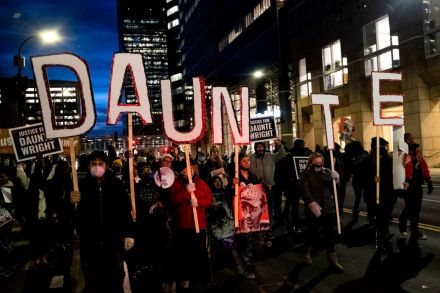
For the fourth time in the last four years, Minnesota is trying a police officer for excessive use of force in a highly-publicized case watched by people around the world. In three of the four cases, an officer killed a black man during an alleged misdemeanor stop in the Twin Cities metropolitan area. On April 11, 2021, Kim Potter, a former police officer from Brooklyn Center, Minnesota was training a new officer, Anthony Luckey, when they pulled over twenty-year old Daunte Wright. Luckey told Wright he was questioning him for displaying in his white Buick both an air freshener from his rearview mirror and  expired license plate tabs.

kim potter

A war on drugs? I do hope so

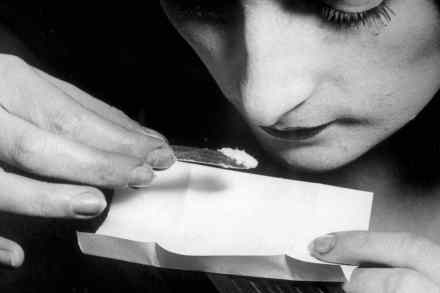
I’m not going to lie, I let out a little chuckle — maybe even a murmur of approval — when I read that the government plans to target middle-class drug users. About time, I thought to myself. For too long the so-called ‘war on drugs’ has focused on the poverty-stricken poppy-growers in far-flung fields, or the desperate ‘mules’ who risk life and liberty to get drugs across borders, or the working-class kids in the UK who get caught up in drug-dealing because they feel they have few other prospects in life. And all the while the privileged people whose narcissistic needs motor this industry, whose selfish desire for a synthetic high is the driver of all this risk-taking and crime, get off scot-free.

The Tories’ crime crackdown

Dealing with crime is a political necessity for the Tories, I say in the Times today. Whenever Labour outflanks them on the issue, as Tony Blair did, the Conservatives are in trouble. But law and order has taken on even more importance for this government because of its link to levelling up: Boris Johnson is convinced you can level up only if you deal with crime. He believes that places are poor because of crime, rather than the other way round. So, next week we’ll see a slew of announcements, with a particular focus on increasing drug rehabilitation efforts. Tackling crime and antisocial behaviour can show rapid progress The public are not sure what levelling up means but, as far as anyone can guess, dealing with disorder is seen to be part of it.

Andrew Mitchell relives the agony of Plebgate

Andrew Mitchell, as he readily admits, was born into the British Establishment. Almost from birth, his path was marked out: prep school, public school, Cambridge, the City, parliament, the Cabinet. At every step along the way he acquired the connections that would propel him to the stratosphere. But for one extraordinary event, who knows where he might have ended up? Certainly in one of the top jobs. In other circumstances this might have been a conventional story. Posh boy goes into the City, makes loads of money and then takes time out to come and govern us. In fact this is an unusual memoir — honest, self-deprecating and rich in anecdote. A fundamental streak of decency runs throughout.

Why Cressida Dick must go

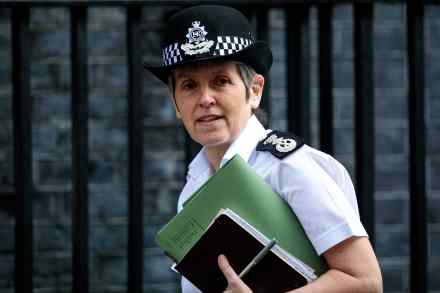
After the murder of Sarah Everard by Wayne Couzens, I have come to the conclusion that Cressida Dick needs to go. Yes, it’s easy to call for the resignation of a Metropolitan Police Commissioner. Things go wrong in the policing of London and when the mistakes are big enough, there will be calls for heads to roll. Often, such calls are just another way of expressing anger. But not only has Cressida Dick failed to produce tangible improvements over the past four years: under her tenure, things have become significantly worse. I was a police officer for 30 years and I’m afraid there is much truth in what critics of the police say. The problem exposed by Couzens is not confined to a few rogue officers.

Priti Patel strikes a bullish tone

The theme of Priti Patel's party conference speech this afternoon was very much 'large and in charge'. She devoted much of her address to talking about the immigration system, as you'd expect, promising stronger crackdowns on people being smuggled across the Channel in boats. Patel focused on the Vote Leave favourite: taking back control Whereas Boris Johnson and Michael Gove have talked about Britain 'voting for change' in 2016, Patel focused on the Vote Leave favourite: taking back control. She told the conference hall this was the key theme of her reforms to immigration, saying: 'My new plan for immigration is already making its way through parliament. At the heart of this plan is a simple principle. Control. That is not unreasonable.

The Met must face the truth about Sarah Everard’s murder

‘We are sickened, angered and devastated by this man’s crimes which betray everything we stand for,’ said the Metropolitan Police in response to the sentencing of Wayne Couzens. He is the former police officer who, when in service, kidnapped, raped and murdered Sarah Everard, later setting fire to her body. The case in March sparked national outrage about the levels of male violence towards women and girls. Not only do significant numbers of police officers spectacularly fail women when it comes to sexual and domestic violence, but they commit these crimes themselves. The two things are connected. If male police officers see women as worthless, and if there is little accountability when it comes to violence against women, they will feel double impunity.

Harriet Harman calls for Cressida Dick to resign

Labour's Harriet Harman has called for Cressida Dick to resign as chief of the Metropolitan Police after Wayne Couzens was sentenced to a whole-life order for the murder, rape and kidnapping of Sarah Everard. He is the first police officer to receive such a sentence. In a letter to the Commissioner, Harman writes that 'women's confidence in the police will have been shattered' by the case and that it is 'not possible for you [Dick] to lead' the changes necessary in the force following this case. It is significant that Harman has called for Dick to go. She is not a bandwagon politician and does not tend to call for scalps, even in high-profile cases such as this.

How the good intentions of Title IX ended up punishing the innocent

How do we have difficult conversations? Especially in an age of polarisation, where everything is immediately politicised? But also where calls for ‘nuance’ and ‘complication’ are sometimes used to justify what is really just bigotry. Is it possible to be both protective of the vulnerable and to allow for a larger pursuit of justice and compassion? These are the questions I was left with after listening to the podcast series The Inbox (part of the larger anthology The 11th), a tricky but sensitive look at the questions that surround the adjudication of sexual violence accusations on college campuses through the Title IX system. Sarah Viren wrote an essay for the New York Times about the accusations of sexual harassment against her wife that went viral.

The problem with the Met’s morality policing

Ah, the last days of summer. Long evenings, sunny weekends, and crusty Extinction Rebellion hippies blocking arterial traffic lanes to the audible grinding of teeth from the police officers tasked with standing by and politely watching their sub-art-school amdram productions, rather than getting on with the business of giving them a much-needed hosing down with Boris’s water cannons. As Charlie Peters has pointed out for the Mail, the impression of police impotence has nothing to do with the willingness of the bobby on the beat to break out a truncheon and apply it liberally to the thorax of middle-class graduates enjoying their day off by making everyone else late for work.

The policing of ‘non-crimes’ and the dark side of rainbow cars

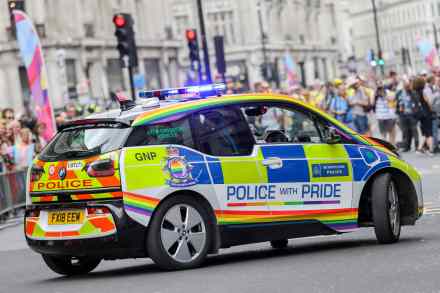
The great awokening of the British constabulary has got to be the most curious and infuriating part of our culture war. While knife crime continues to rise, an inordinate amount of police time now seems to be taken up by various virtue-signalling initiatives. Take the rise of ‘rainbow cars’. For some time now members of the public have been bemused to see cop cars patrolling their neighbourhoods emblazoned in the LGBT flag. Now the LGBT+ lead of the National Police Chiefs Council has felt the need to make an Instagram post explaining it all to us.

From 9/11 to 1/6

From our US edition

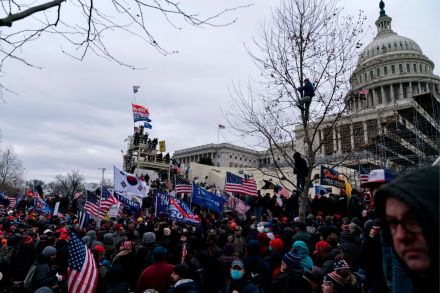
The season is almost upon us of lachrymose memorials to the victims of 9/11. As a nation we choke each year as the anniversary approaches. We can talk about the heroic firefighters and cops, those first-responders who that day sometimes made their last response. We can recount the lists of the dead and the daring of some survivors. A great many Americans remember in vivid detail how the horrors of that day intersected their own lives. What we don’t have is a strong sense of what 9/11 meant and still means to the nation. Even in this age of declining historical literacy, we have a ready sense of the defining importance of more remote occurrences: Plymouth Rock, Valley Forge, Gettysburg, D-Day. These days, we should add 1619, Wounded Knee and the Tulsa race massacre of 1921.

january 6

How Nextdoor became the new Neighbourhood Watch

Long before the official numbers began to rise, back in 2014, it was clear that knife crime was on the up. You could tell by the way small boys chased each other through the park with machetes, and by the zombie blades left in flower beds. Now, seven years later, I feel the same way about what goes by the cosy-sounding name of ‘neighbourhood crime’. There’s the fashion for car theft (as poor Sam Leith found out), and the constant predatory circling of iPhone thieves on e-scooters. But worse than that, I think burglary is back, and I think it’s thanks to crack. We know drug use is creeping up: on Tuesday it was announced that drug-related deaths in England are at the highest level they’ve ever been. As for burglary stats, for those I rely on Nextdoor.

Boris’s crime crackdown will be harder than he thinks

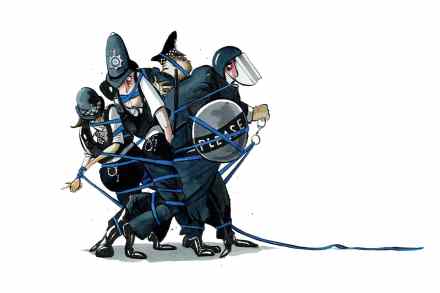
Can crime be beaten with a beaten down police force? The government certainly hopes so. Today, the Prime Minister launched the much trailed ‘Beating Crime’ Plan. Not trailed enough, according to the boss of the cops’ union, The Police Federation, who says the first he heard about the plan was last Sunday — shortly after his organisation, representing 130,000 front line officers, passed a vote of no confidence in the Home Secretary. How has this fracture between police and politicians come to pass? In rhetorical terms, this is the most pro-police administration in the last ten years. It has certainly worked hard to exorcise the malign impact of Theresa May.

Labour is picking the wrong fight with Priti Patel

The position of Home Secretary Priti Patel is clearly untenable. Presumably this means she must resign. Who says so? Why, only her Labour shadow Nick Thomas-Symonds. At least, he has said the first bit from which we can infer the second. And what has reduced Patel to this miserable status in his eyes? Could it be the fact that 18 months after she first promised to halt the cross-Channel boats that spill migrants onto our shores, there are more of them arriving than ever? No, not a bit of it. Thomas-Symonds is not interested in that. In fact, whenever he and the Home Secretary debate migration policy she runs enough rings around him to decorate an Olympic flag.

What the hell is going on in DC?

From our US edition

Imagine dining al fresco at a popular French brasserie in Washington DC. It’s a clear, summer night and the streets are buzzing with residents and tourists alike. You’re enjoying your Burger Americain, and suddenly gunshots ring out down the street. Diners duck and run for cover. You later hear that two men were injured just blocks away from where you were enjoying your meal. The stark realization hits: the heart of the nation’s capital is not safe. Thursday night’s shooting on 14th Street was just the latest shocking crime to occur in a well-populated and upscale area of DC. Three people were shot and wounded just outside of Nationals Park during a heavily attended baseball game last week.

dc

Does Derek Chauvin deserve a 22-year sentence?

From our US edition

Former Minneapolis police officer Derek Chauvin was sentenced to over 22 years in prison by Judge Peter Cahill on Friday for the murder of George Floyd. Prosecutors had asked the imposing punishment be closer to 30 years. State guidelines recommend a 12-and-a-half-year sentence for a first-time offender. Cahill went beyond the guidelines, citing Chauvin’s ‘abuse of a position of trust and authority and also the particular cruelty’ to Floyd. A 22-year sentence tends to be associated with more grizzly offenders. Last year, 17-year-old Jered Ohsman was sentenced as an adult by a Hennepin County District Court — the same court that sentenced Chauvin — for killing 39-year-old Steven Markey during a botched robbery.

chauvin guilty