Poetry

Churches are more Covid-secure than trains or takeaways

From our UK edition

Monday night’s murderous gunman in Vienna is officially described as ‘Islamist’. Brahim Aioussaoi, the man accused of murdering worshippers in a Nice cathedral last week, arrived (reported the BBC) with ‘three knives, two phones and one Quran’. These would seem to be the basic toolkit required. A friend who lives in southern France tells me that although the latest lockdown measures prevent church services being held, so serious is the terrorist threat to churches that many are guarded by police. So it seems natural that President Macron of France warns of the danger to French Catholics and speaks of ‘Islamist terrorist folly’. Each of his three chosen words rings true, and the link between them cannot be avoided.

A beautiful radio adaptation: Radio 4’s The Housing Lark reviewed

From our UK edition

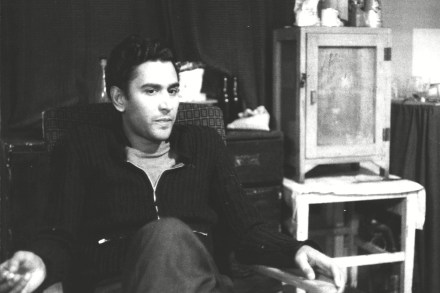
Nineteen fifty-six: the Suez crisis, the first Tesco, Jim Laker takes 19 wickets in a match. But also: Trinidadian pianist Winifred Atwell becomes the first black woman to have a UK number one with ‘The Poor People of Paris’; Kenneth Tynan announces a playwriting competition in the Observer, which is won by the Trinidadian dramatist Errol John, and a third Trinidadian, Sam Selvon, publishes his most enduring novel, The Lonely Londoners. He was photographed the same year by Ida Kerr, looking up out of shot past a crooked nose, a frown half creasing his forehead as a smile plays around the corners of his mouth. Selvon’s novels are fatalistic comedies, written with a keen ear for the ironic possibilities of spoken language. They are well studied but not much read.

The death of the Southbank Centre

From our UK edition

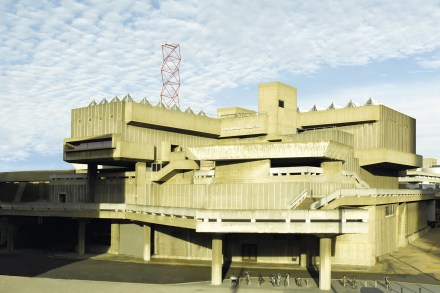
The one thing everyone agrees is that the Southbank Centre is in deep trouble. In May, the institution made an unusually public plea for government help. Management predicted the best-case scenario was ending the financial year with a £5 million loss, having exhausted all reserves, used the £4 million received from the furlough scheme and having gobbled up the remainder of its Arts Council grant. All the while, with the exception of the Hayward Gallery, the 21-acre site on London’s Thameside, incorporating both the Royal Festival Hall and the Queen Elizabeth Hall, remains closed. It was pitiful news, but there was worse to come. With no concerts, performances, talks or readings, drastic staff cuts are in the offing.

Why poetry matters

From our UK edition

Juan Carlos, ex-King of Spain, behaved foolishly in relation to money and sex, and so his decision to leave Spain is sad, but justified. That seems to be the view of most moderate people outside Spain who are not ill-disposed to the monarchy. But it is it right? Certainly Juan Carlos’s foolishness was real, but his imposed exile (it is not really voluntary) to the Dominican Republic is not a punishment for a crime: there has never been any legal process. It is a partisan political act which is bad for the unity of Spain. Juan Carlos’s exile was forced on the current King, his son Felipe VI, by a weak prime minister, the Socialist Pedro Sanchez.

To understand the past, you need to inhabit it for a while

From our UK edition

‘It’s no go my honey love, it’s no go my poppet; Work your hands from day to day, the winds will blow the profit. The glass is falling by the hour, the glass will fall forever, But if you break the bloody glass, you won’t hold up the weather.’ The first poem I ever heard was ‘Eenie, meenie, minie moe, catch a tiger by the toe. If he hollers, let him go’, etc. I found it mystifying. How would one catch a tiger by its toe? And do tigers ‘holler’? ‘There is something about this poem they’re not telling me,’ I thought, full of worry, my nappy beginning to chafe. This was last week, by the way. (Ha. Only kidding.

From blue to pink: Looking for Eliza, by Leaf Arbuthnot, reviewed

From our UK edition

On the way back from my daily dawn march in the park, I often pass my neighbour, a distinguished gentleman in his late eighties, taking the air on his doorstep. I stand behind the area railings and shout: ‘How are you?’ And he shouts back: ‘Bored!’ At least not lonely. His sixtysomething son is with him. But how solitary these lockdown weeks have been for the widow and the widower, the singleton and the bachelor. Leaf Arbuthnot, a freelance journalist, could not have picked an apter time to publish her first novel Looking for Eliza, a redemptive story about grief, isolation and why everybody needs good neighbours. Its 75-year-old heroine Ada is a poet of the Wendy Cope school.

The poetry of ‘Ambulances’

From our UK edition

The visible face of this virus, for most of us, is the ambulances. All else that we see – empty streets, spaced out queues, face masks, rainbows in windows – is secondary. Only the ambulances tell of the disease itself. They are the eerily siren-less blue flashing tips of the iceberg. So I am surprised that Philip Larkin’s poem ‘Ambulances’ has not, as far as I know, been identified as the text of the moment. I suppose it’s bleaker than one might like – uplifting poems are generally preferred at such a time. In fact I saw that another Larkin poem, ‘The Mower’ has been placed on a list of poems to help us through the crisis, due to its concluding exhortation to be kind to each other ’while there is still time’.

From Middlemarch to Mickey Mouse: a short history of The Spectator’s books and arts pages

From our UK edition

The old masters: how well they understood. John Betjeman’s architecture column ran for just over three years in the mid-1950s. Yet during that short run he experienced the moment that comes, sooner or later, to every regular writer in The Spectator’s arts pages. ‘It is maddening the way people corner one and make one discuss politics at the moment,’ he wrote on 23 November 1956, clearly as bored of the Suez crisis as the rest of us were, until recently, by Brexit: Because I write in this paper, people assume that I share its Editor’s views about Suez… But I don’t know what the views of this paper about Suez are, because I never read the political stuff in front.

The remarkable Martha Treichler

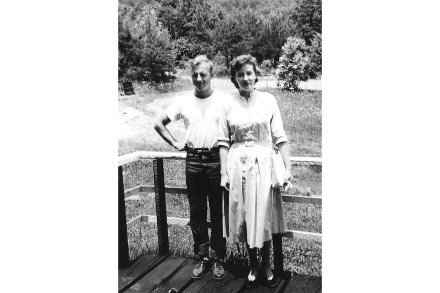
This article is in The Spectator’s March 2020 US edition. Subscribe here.Batavia, New York Shrouded in legend, Black Mountain College was an experimental school outside Asheville, North Carolina. For almost a quarter century (1933-57) it incubated, nurtured and disgorged the holy fools, ragged prophets and pretentious frauds of the American avant-garde and the (in some cases reactionary) counterculture: John Cage, Paul Goodman, Merce Cunningham, Willem de Kooning and Buckminster Fuller, to name a few. Yet for my money, the most remarkable couple to pass through Black Mountain were Bill and Martha (Rittenhouse) Treichler, two farm kids, the former an Iowan, the latter a daughter of Maryland, who met and fell in love at Black Mountain during the 1948-49 school year.

treichler

The audacity of verse

This article is in The Spectator’s January 2020 US edition. Subscribe here. Shelley famously and optimistically proclaimed that poets were the unacknowledged legislators of the world. Adorno famously and pessimistically declared that poetry was impossible after Auschwitz. In The Music of Time, his new study of poetry in the 20th century, John Burnside makes a rather more modest claim: that to write a poem at all is an act of hope. By any standards, Burnside’s own career seems cause for hope in poetry’s capacity to transform at least one individual life.

Johnson

The best Christmas gift you can give yourself is to learn some poetry by heart

From our UK edition

Every Christmas I find I am living in the past. I blame my father. He was born in 1910 — before radio, before TV, before cinema had sound, so he and his siblings made their own entertainment at Christmas. He brought up his children to do the same, which is why my unfortunate offspring have a Christmas that’s essentially a century out of date. There are three elements at its heart: board games that end in rows, parlour games that end in tears, and party pieces performed around the Christmas tree. I owe my very existence to my father’s love of board games. As a boy, his favourite was a game of military strategy called L’Attaque, invented in France in 1908.

Remembering the genius of Clive James

From our UK edition

‘Clive James Stirs.’ That was the standard subject line for the emails I used to get from the great Australian polymath. I liked it. It cast him, I thought, as a sort of barnacled kraken — still hanging in there, occasionally roused to action. He was usually submitting a new poem. For a while, after he first announced his illness and his poem ‘Japanese Maple’ had gone viral thanks to a tweet from Mia Farrow (Clive found this funny, and was pleased), there was a faintly ghoulish cachet in the thought that we might be the publishers of Clive’s last poem. But of course, he didn’t die — and the poems kept coming. ‘In the meantime I hope to have a couple more poems for you,’ he wrote in spring 2015, ‘if I am granted life.

‘Instapoetry’ may be popular, but most of it is terrible

From our UK edition

Poetry is on a hot streak. Last year, sales in the UK topped £12 million for the first time — a rise of more than 10 per cent for the second year running. According to Parisa Ebrahimi, the poetry editor at Chatto & Windus, one reason for the trend is that poetry is no longer the domain of the white male. This may be true, but how has it happened? Part of the answer is Instagram. Designed as a social network for sharing photos, recently the app has been adopted and adapted by writers — few of them white, many of them women — who, rather than selfies and sunsets, post snippets of verse known as ‘Instapoetry’. And a handful of these Instapoets have become hugely successful.

The many faces of William ‘Slasher’ Blake

From our UK edition

‘Imagination is my world.’ So wrote William Blake. His was a world of ‘historical inventions’. Nelson and Lucifer, Pitt and the Great Red Dragon, chimney sweeps and cherubim, the Surrey Hills and Jerusalem in ruins, the alms houses of Mile End and the vast abyss of Satan’s bosom.  He saw the fires of the Gordon Riots and the serpent in the Garden of Eden. His subjects were Milton and Merlin, Dante and Job, ‘Elegy Written in a Country Churchyard’ and the Book of Revelation. He held infinity in the palm of his hand, yet worked through the night to write and grave all that was on his mind. ‘I have very little of Mr Blake’s company,’ said Catherine Blake with the indulgent sigh of all wives of Great Men.

The joys of Radio 4’s Word of Mouth

From our UK edition

I first heard Lemn Sissay talking about his childhood experiences on Radio 4 in 2009. At that time he was still fighting Wigan social services for sight of the official dossier on his years as a child in care, fostered at first and then dumped back in the system and institutionalised in care homes and then a remand home. Eighteen years of his life stored in an Iron Mountain data facility. He’d been asking for his files, the story of his life, since he came of age. It was not easy to forget that programme; the banal cruelties of the system and Sissay’s resolute dignity in talking about them. At 18 he was told that the name he had been given by his foster parents was not his birth name.

Low life | 20 June 2019

From our UK edition

I walked in out of the rain, dripping, and sat down beside the fire on the primitive high-backed settle. ‘Is this OK?’ I said to the guardian. ‘Yes, you’re allowed to sit on the furniture, none of which is original,’ she said. She was a small woman in her fifties, radiating an attractive combination of reverence and humility. The log fire smoking quietly in the fireplace was a wonderful, essential touch, I thought. The slow tick of a grandfather clock and the rain squalling against the windows emphasised the silence of the cottage parlour. The cob walls, painted the colour of diluted pig’s blood, were a yard thick. There was also a dresser, an oil lamp, some plain old wooden chairs and a small round table. On the table was a violin.

Back from the brink

From our UK edition

Hugo Williams’s wryly candid reports from the front lines of sex and family life are a perennial delight. Often timeless, they also frequently bring the styles and music of the 1950s and 1960s back to elegant life. These pleasures can be found once again in Williams’s new book, Lines Off; but this time they’re not unmixed. For, in the five years since his last collection, the poet’s worsening health has led him to undergo a kidney transplant. Now the ultimate subject has presented itself, and has resulted in some piercing testimony. Of course, it’s much more than testimony: Williams, who characterises writing a poem as being like sealing a roll-up with ‘that final twiddle and lick’, would never produce anything so po-faced.

Blessed Brian

From our UK edition

Brian Bilston’s life is summed up perfectly by the incident with his neighbour’s dog. The annoying Mrs McNulty comes round to claim that the animal has spontaneously combusted. Brian has his doubts, not least because Mrs McNulty has never owned a dog. But he nevertheless uses the incident as inspiration for a poem, ‘The Day My Dog Spontaneously Combusted’: there he was, chasing sticks, doing tricks, and all that stuff next minute, woof Brian tweets the poem to his 23 followers. This is part of his ‘renewed commitment to social media’, but serves only to reduce his follower count to 17. What’s worse, ‘to add insult to invisibility’ he also gets angry messages from the RSPCA. Bilston is the greatest English anti-hero of our time.

Poetry in motion | 30 May 2019

From our UK edition

T.S. Eliot’s Four Quartets is full of music and movement. The players, such as they are, slip, slide, shake, tumble, wrestle, leap, kick, whirl, fold and kneel. There are lines like stage directions: ‘stillness’, ‘quick now’, ‘the dancers are all gone under the hill’. In her rendering of Four Quartets, the American choreographer Pam Tanowitz has denied reviewers the satisfaction of ‘Eliot in leotards’ jokes. Her dancers wear diaphanous ruched onesies. No Cats spandex here.

Poems for Memorial Day

James Jeffrey served in the British Army for nine years, from his commissioning as a second lieutenant shortly after 9/11 to leaving as a captain in 2010. He served in Iraq in 2004 as a tank commander with the Queen’s Royal Lancers, providing armored support to the 1st Battalion The Princess of Wales’s Royal Regiment, followed by another tour in 2006. He deployed to Afghanistan in 2009 with the headquarters of the Welsh Guards Battle Group on Operation Herrick 10, during which the regiment’s commanding officer, Lieutenant Colonel Rupert Thorneloe, was killed by a Taliban IED, the first commanding officer killed in action since the 1980s Falklands War. Jeffrey now works as a writer.