Poetry

William Rowley and the death of Prince Henry – poetry

‘To the Grave’ Unclasp thy womb, thou mortuary shrine, And take the worst part of the best we had. Thou hast no harbourage for things divine, That thou had'st any part was yet too bad. Graves, for the grave, are fit, unfit for thee Was our sweet branch of youthful royalty. Thou must restore each atom back again When that day comes that stands beyond all night. His fame (meanwhile) shall here on earth remain, Lo thus we have divided our delight: Heaven keeps his spirit stalled amongst the just, We keep his memory, and thou his dust. Prince Henry was the eldest son of James I and VI (that’s first of England, sixth of Scotland). In 1612 he died at the age of eighteen. An extraordinary period of spontaneous popular mourning followed.

Interview: Ciaran Carson on translating Rimbaud

Ciaran Carson was born in Belfast in 1948, and published his first book of poetry, The New Estate, in 1976. Fans of Carson had to wait eleven years for his second book, The Irish for No (1987), which earned him the Alice Hunt Barlett Award. Belfast Confetti (1990) won The Irish Times Literature Prize for Poetry. In 1993 Carson won the first ever T.S. Eliot Prize for poetry, for his collection, First Language; while his 2003 collection, Breaking News, won the Forward Poetry Prize. That same year, Carson was appointed Professor of Poetry, and Director of the Seamus Heaney Centre for Poetry, at Queen’s University in Belfast; a position he has held since. Carson has also proved himself to be an accomplished translator.

The shock value of John Wilmot, earl of Rochester

‘The Maidenhead’ Have you not in a chimney seen A sullen faggot wet and green, How coyly it receives the heat, And at both ends does fume and sweat? So fares it with the harmless maid When first upon her back she’s laid; But the well-experienced dame, Cracks and rejoices in the flame. Rochester is a favourite of A-level students because he writes about sex and uses rude words. That in itself would not make him an accomplished poet. Sex is not an obscure subject and there are lots of words which rhyme with ‘prick’. But there are good reasons to read Rochester. One is that he had a knack for creating effects which we have come to associate with literary authenticity and originality.

Outliving Ozymandias

In 1842, a wealthy heiress called Sarah Losh built a church in Wreay (rhymes with ‘near’, apparently), close to Carlisle. Coupling carvings of caterpillars with turtle gargoyles and a spattering of pinecones, she was, stylistically, half a century before her time. As a female architect and builder, she was still more precocious. The Pinecone by Jenny Uglow is the true, largely forgotten story of one of nineteenth-century England’s most forward-looking architects and – paradox standing - antiquarians. Sarah and her sister Katharine inherited land from their parents when their brother transpired to be ‘slow’.

Interview: James Lasdun’s art

James Lasdun published his first book of short stories The Silver Age in 1985. The debut won him The Dylan Thomas Award, and was followed by Three Evenings another book of stories. In 1998, Italian filmmaker, Bernardo Bertolucci, directed the film ‘Besieged’, which was an adaptation of Lasdun’s short story ‘The Siege’. In 2002 Lasdun published his first novel The Horned Man. The book earned him the New York Times Notable Book of the Year and the Economist Best Book of the Year. His second novel Seven Lies was shortlisted for the 2007 James Tait Black Memorial Prize. Lasdun is also a highly acclaimed poet. His collections include A Jump Start; The Revenant and Landscape with Chainsaw, which was shortlisted for the T. S.

The poetic lies against Old Ironsides

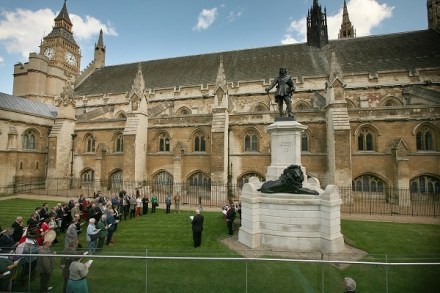
‘How the War Began’ by Thomas Jordan, 1663. 'I'll tell you how the war began: The holy ones assembled (For so they called their party then Whose consciences so trembled). They pulled the bishops from their seats, And set up every widgeon; The Scotch were sent for to do feats With oat-cakes and religion. They plucked communion-tables down, And broke our painted glasses; They threw our altars to the ground, And tumbled down the crosses; They set up Cromwell and his heir, The Lord and Lady Claypole; Because they hated Common Prayer, The organ and the maypole.' Three-hundred and fifty years ago, in September 1662, congregations in churches all over England were getting used to hearing services from the new Book of Common Prayer.

Modern life in verse

Julia Copus’s new collection The World’s Two Smallest Humans exists in four parts, each in their own way circling the theme of loss. Two parts – 'The Particella of Franz Xaver Süssmayr' and 'Hero' – take on historic themes, the first inhabiting that of a man in 1791 ‘translating direct from the silence’ of Mozart’s shorthand for The Magic Flute while also caring for Mozart’s wife, Constanze. The second channels history too, in this case an Ovidian past made new, rejigged for a few pages in contemporary idiom. Both brief sections work well. But the collection really gets going in the two other larger sections – 'Durable Features' and 'Ghost' – where Copus’s lucid lines come into gripping focus.

John Cleveland: discovering poetry

'Epitaph on the Earl of Strafford' ‘Here lies wise and valiant dust, Huddled up 'twixt fit and just: STRAFFORD, who was hurried hence 'Twixt treason and convenience. He spent his time here in a mist; A Papist, yet a Calvinist. His prince's nearest joy, and grief; He had, yet wanted all relief. The prop and ruin of the state; The people's violent love, and hate: One in extremes loved and abhorred. Riddles lie here; or in a word, Here lies blood; and let it lie Speechless still, and never cry.’ If Nick Clegg lived in bloodier times he might have ended up like Strafford by now. Executed on the eve of the civil wars, Strafford had a talent for alienating people who thought he was their natural ally.

Roger McGough interview

As Roger McGough approaches 75, his latest collection of poems As Far As I Know shows him writing with the same blend of mischievous word play, subversion of cliché and distinctive sense of humor that makes him one of Britain’s most popular poets. McGough became a prominent force in the late 1960s when his poems were included in ‘The Mersey Sound’: a Penguin anthology that has since sold over a million copies. To date, McGough has published over fifty collections of poetry for both adults and children. His work has always reached a wide audience due to its incredible accessibility.

Poetry by heart

In the magazine this week I have a piece on learning poetry by heart. Spectator readers will remember that Michael Gove received some flak from teaching unions earlier this year when he suggested that British schoolchildren should be able to recite a poem by heart. In the piece I try to explain why this is a good idea, both as a mental discipline and a way of accessing the best thought and literature. I was never made to learn poetry by heart at school, but I have been trying to remember what the first poetry I taught myself by heart was. I think it may have been portions of Edward Fitzgerald’s version of The Rubaiyat of Omar Khayyam. Its metre and rhyme scheme, and the fact that the stanzas are short, make it ideal to memorise.

Don Paterson interview

Don Paterson was born in 1963 in Dundee. He moved to London in 1984 to work as a jazz musician, and eventually began to write poetry. In 1993, Faber published his debut collection, Nil Nil, which won the Forward prize. In total, he’s published seven collections and three books of aphorisms. Paterson has won the prestigious T.S. Eliot prize for poetry twice. Other awards include: the Whitbread prize, and The Geoffrey Faber memorial prize. He received an OBE in 2008, and teaches poetry at the University of St Andrews.

A poem a day

I’m fresh back from the Port Eliot festival in Cornwall where I spent a day prescribing poetry prescriptions to those in need. It was a revelatory experience. Having spent twenty years or so promoting poetic excellence through the Forward Prizes for Poetry and broader access to the art-form through National Poetry Day, I’ve been battling with the challenge of making poetry appear more relevant to people in their everyday lives. Battling because there is no doubt that most people find poetry intimidating. It’s a fusty, dusty, back of a bookshop, elite, slim-volumed thing that’s not really for them. The occasional line of a poem will be lodged in their mind from schooldays but that will be it. Ask them the name of a living poet and they will struggle.

The delights of sin

Epigram 7 from The letting of humours blood in the head-vaine ‘Speak gentlemen, what shall we do to day? Drink some brave health upon the Dutch carouse? Or shall we to the Globe and see a play? Or visit Shoreditch for a bawdy house? Let’s call for cards or dice, and have a game. To sit thus idle is both sin and shame.’ This speaks Sir Revel , furnished out with fashion, From dish-crowned hat unto the shoe's square toe, That haunts a whore-house but for recreation, Plays but at dice to cony catch or so, Drinks drunk in kindness, for good fellowship, Or to a play goes but some purse to nip. Like tabloid exposés of celebrity sexual shenanigans, satire can tread a fine line between condemnation and titillation. Good writing can exploit that confusion.

Interview: Nick Makoha’s shame

“My shame was my father wasn’t there,” says Nick Makoha, the London poet who represented Uganda at the recent Poetry Parnassus. This frank vulnerability is at the core of his first collection of poetry and his new theatre performance, ‘My Father and other Superheroes.’ Uganda is a source of tension for Makoha as both the place of his birth but also a place he fled, a place from which he feels distant. “Most people are from somewhere else,” he says. “So the story of the exile isn’t the minority, we’re the majority. Look at T.S. Eliot, by all rights and purposes he belongs to America. He liked French poets, Italian poets.

The arts of voyeurism

Metamorphosis, a temporary exhibition at the National Gallery, London, showcases a range of contemporary artistic responses to Renaissance painter Titian’s Diana and Actaeon and Diana and Callisto metamorphosis paintings, inspired by Ovid. Daisy Dunn looks at the new poetry inspired by the collaboration.   When the hapless youth Actaeon peeled back a curtain dangling in a forest glade, he might just as well have been uncovering a religious icon as playing voyeur to a bevy of naked beauties. This, at least, is the way Titian saw it when he decided to paint the luscious velvetine hanging before the unwitting voyeur in his Ovid inspired canvas, Diana and Actaeon.

Discovering poetry: The world according to Ben Jonson

from Timber 'There is a Necessity all men should love their country: He that professeth the contrary, may be delighted with his words, but his heart is there. Natures that are hardened to evil, you shall sooner break, then make straight; they are like poles that are crooked, and dry: there is no attempting them. We praise the things we hear, with much more willingness, then those we see: because we envy the present, and reverence the past; thinking ourselves instructed by the one, and overlaid by the other. Opinion is a light, vain, crude, and imperfect thing, settled in the imagination; but never arriving at the understanding, there to obtain the tincture of reason. We labour with it more than truth. There is much more holds us, then presseth us.

The Spectrum – the week in books | 6 July 2012

UP: SHAKESPEARE IN LOVE Faber’s new Shakespeare’s Sonnets app is rated 12+ on account of its ‘Infrequent/Mild Sexual Content or Nudity’. After watching Andrew Motion’s  come-to-bed reading of Sonnet 142 we’re surprised it escaped an X-certificate. Who needs 50 Shades when you’ve got the third sexiest poet laureate (after Ben Jonson and Ted Hughes) wearing nothing but polka-dot pyjamas and braces? ‘Love is my sin’ indeed!     UP: 60s SUMMER READS Now's the time of year when literary pages replace serious stuff like reviews with drivel about what famous people are reading on their holidays.

A knight’s tale

I can’t help thinking that the literary editor is having a little chuckle to himself, in his own private way, as he hands me Walking Home: Travels with a Troubadour on the Pennine Way to review. What he knows is that, for my sins, I have never been anywhere near the Pennine Way, the long stretch that runs from Edale, Derbyshire, to Kirk Yetholm on the Scottish border. And yet here it is in my hand, a travel diary of sorts, dedicated to Simon Armitage’s 2010 sweaty ramble ‘backwards’ from the Scottish end to his hometown, Marsden, situated near its beginning. Thankfully, neither familiarity with the moors nor a particular fondness for Kendal Mint Cake are required. Armitage can make a flea sound fascinating.

Exiled at the Poetry Parnassus

While the Ancient Greeks ceased hostilities for the Olympic Games, this summer will be business as usual in many parts of the world. Exiled poets from Bangladesh, Sierra Leone, China, and Uganda presented their work yesterday afternoon at the Southbank center, participating in the ongoing Poetry Parnassus. Readings took place in the cavernous, skylit, Front Room at QEH. Yet the solemnity of spoken word kept being interrupted by river watchers on the terrace coming in to order more drinks at the bar or the walkie-talkie of the janitor as she made her way around the audience, sweeping up rubbish. Mir Mahfuz Ali, who was shot in the throat by a cop in Bangladesh, began the event in his gravelly rough sotto voce.

Interview: Jorie Graham’s poetry

Possessing a meticulously detailed and layered style, as well as having an exceptional ability to describe nature, Jorie Graham’s poetry is primarily concerned with how we can relate our internal consciousness to the exterior natural world we inhabit. In 1996, The Dream of the Unified Field: Selected Poems, 1974-1994, earned Graham the Pulitzer Prize in poetry. She is currently the Boylston professor of poetry at Harvard University. Her forthcoming book, Place will be her twelfth collection to date. She spoke to the Spectator about why poetry needs to be reclaimed to the oral tradition, how technology is corrupting our imagination, and why her work is laced with contradictions and paradoxes. What sort of ideas/ themes are you dealing with in your new collection, Place?