Piano

Bruckner by numbers

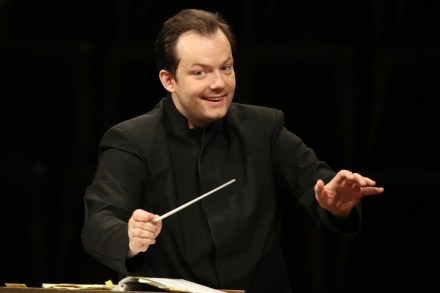
It used to be said that Bruckner composed the same symphony nine times, whereas, thanks to the comparative frequency of performances now, we know that his nine numbered symphonies are as different from one another as Beethoven’s nine. Nothing could make that clearer than the performances of the Fifth and the Ninth given by the Philharmonia Orchestra under Andris Nelsons, three days apart, at the Royal Festival Hall. The Fifth, as befits its stature and length, was given alone. It is Bruckner’s most demanding symphony both to listen to and to conduct. Nelsons is still, I think, at an early stage in his Brucknerian pilgrimage, and his account of the work was not a complete success, but then very few are.

Long life | 29 September 2016

Every threatened species of wildlife can count on the friendship of a member of the British royal family. There are few causes that royals can espouse without risking political controversy, but wildlife conservation is seen as one. This may be why they are ready to speak out for any newt, butterfly, or other creature facing the risk of extinction. Prominent among them is Prince William, Duke of Cambridge, who is an active campaigner for the greatest of them all, the African elephant, and last week made a strong appeal for a total ban by Britain on trade in ivory.

Bach to basics

The churning, rheumatic mechanism of a harpsichord — notes needling your ears like drops of acid rain — doesn’t necessarily play well to an audience whose sensibilities have been moulded around the picture-perfect delicacies of the classical piano. J.S. Bach’s freakishly popular Goldberg Variations remains best known through the recording made by the oddball Canadian pianist Glenn Gould in 1955, a record that would bleed unexpectedly into mainstream consciousness. For a whole generation, the sound of the Goldbergs became interchangeable with Gould’s quicksilver fingers — and a collective amnesia grew around the fact that Bach had actually conceived his most famous keyboard work for the harpsichord.

Doing bird

A decade ago, the French pianist and poly-math Pierre-Laurent Aimard announced that he was ‘very bored to live in a world that contains so much music that wants to please the masses’. It was a remark that might have dropped from the lips of the late Pierre Boulez, the part-pseud, part-genius who presided over an aristocracy of the avant-garde lavishly funded by the French government. Aimard was still in his teens when he was appointed pianist of Boulez’s Ensemble Intercontemporain in 1976. He made his name performing ruthlessly atonal music.

An American in Paris

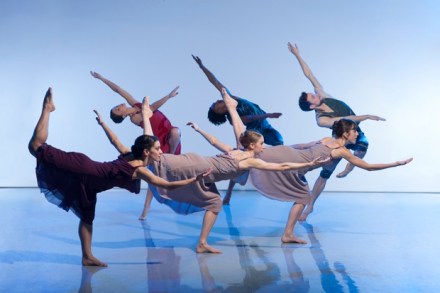
Paris Opera Ballet plays hard to get. It doesn’t deign to travel all the way over here, thanks to a combination of exorbitant expense and a languid disdain for the little Britons with their Johnny-come-lately ballet tradition (not even one century old, let alone three and a half). So if the mountain won’t come to Mahomet, it behoves Mahomet to go to the mountain. And now is the time to do it, with the ructions brought on by the arrival last year and the departure this of Natalie Portman’s husband as ballet artistic director. Benjamin Millepied is French but spent his career as a leading dancer in New York City Ballet, whose values are broadly the antithesis of the institutionalised, hierarchical Paris Opera Ballet.

Why I’m glad my piano teacher spent more time chatting than teaching

At the entrance to Marylebone railway station is an old piano that anyone can play. Unfortunately, whoever had this sweet idea can’t be bothered to fix the broken notes. Even so, about once a fortnight, on my way back from visiting my mother in Gerrards Cross, I put down my shopping bag and bash out Chopin’s Waltz in C-sharp minor. As I do, I invariably think about Mrs Irene Oates, the first proper eccentric I met. She was my only piano teacher and I’m grateful to her. On the other hand I’m not very good, even by amateur standards, and she’s partly to blame. When I was 11, my mother told me that she’d spoken on the telephone to a lady who was going to teach my sister and me the piano.

Salvation through music

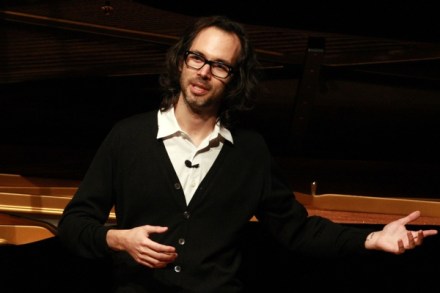
Ours is the era of everybody’s autobiography. Bookshops groan with misery-lit memoirs — Never Let Me Go, Dysfunction Without Tears — which dilate on anorexia, alcoholism, cruel bereavement. When is a life worth telling? B.S. Johnson, the London-born novelist (and tireless chronicler of himself), put the most revealing sexual details into his autobiographical novels of the 1960s. They might have amounted to mere solipsistic spouting, were the writing not so good. James Rhodes, a 40-year-old classical musician, was repeatedly raped at his London prep school in the early 1980s. In his memoir, Instrumental, Rhodes tells how he found salvation in music and became one of our leading concert pianists.

Moving pictures | 21 May 2015

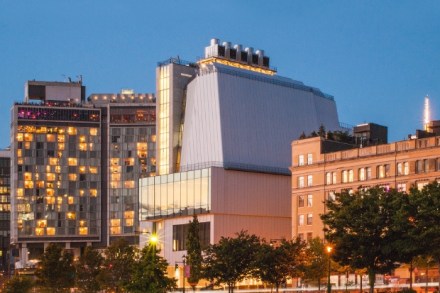
About six years ago the first section of the now celebrated High Line was opened in New York and made a palpable hit both locally and internationally. Locally it revealed what one might have guessed, that the inhabitants of Manhattan’s downtown suffered a severe lack of amenity. Every place to walk or run or ride a bike, every place to exercise the dog, is valuable and well used. This new and unusual park, restoring and converting the tracks of a disused overhead railway, was reserved neither for running nor biking nor walking the dog, but rather for strolling, sitting and sunbathing, and for the novelty of looking in on buildings old and new, from unusual angles and with an unusual degree of impertinence.

Is this 65-year-old British pianist the next big thing in classical music?

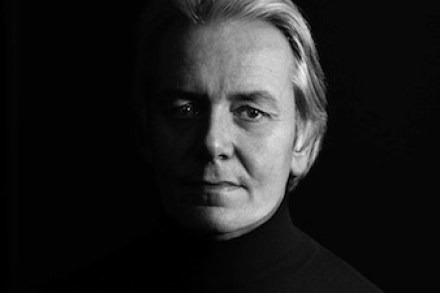
Earlier this month the Wigmore Hall was sold out for a Schubert recital by a concert pianist whose only solo recordings consist of two volumes of the Mozart piano sonatas. That would be understandable if he were 23 years old and the next big thing. But he’s 65. Though he may indeed be the next big thing. Christian Blackshaw started big, faded into obscurity, then burst back at around the time he qualified for Boris’s Freedom Pass. Whether he owns one I can’t say. I wouldn’t dare ask, since he can be a bit prickly. In fact, he’ll probably take offence at that, so let’s note immediately that he doesn’t look his age. He has the features of a matinee idol and the swept-back silver hairstyle that Beethoven would have sported if he’d owned a comb.

The drunk conductor who ruined Rachmaninov’s career

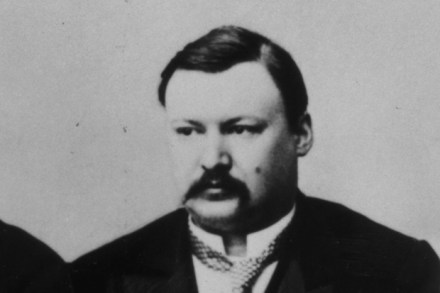
Would musical history have turned out differently if Alexander Glazunov hadn’t been smashed out of his wits when he conducted the first performance of Rachmaninov’s Symphony No. 1 in D minor? The best of Glazunov’s own neatly carpentered symphonies hover on the verge of greatness. Perhaps if he hadn’t been such a toper — swigging from bottles of spirits during lectures at the St Petersburg Conservatory, where he was director — they would do more than hover. Unfortunately, his drinking didn’t just screw up his own career. The 23-year-old Sergei Rachmaninov had spent two years working on his first symphony, whose climaxes erupt from melodic cells borrowed from Orthodox chant. Not that Glazunov would have noticed. He barely glanced at the score before the premiere.

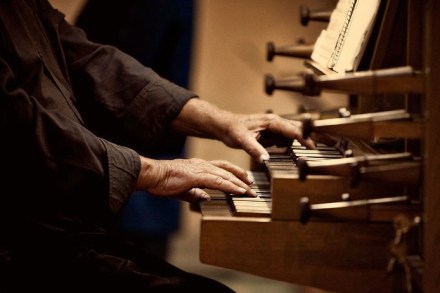
Wedding music lives or dies at the hands of the organist

A few weeks ago I was at the perfect wedding. My young friend Will Heaven, a comment editor at the Telegraph, married the beautiful Lida Mirzaii, his girlfriend since university. The service was in Wardour Chapel in Wiltshire, a neoclassical masterpiece described by Pevsner as ‘so grand in its decoration that it seems consciously to express the spirit of the Catholic ecclesia triumphans’. Most of the guests were in their mid-twenties and doing their best to control their boisterousness. The Oratorian priest wore an antique cope; if it had been a Mass he might have been allowed to borrow the chasuble in the sacristy believed to have been worn by Cardinal Wolsey at the Field of the Cloth of Gold. Will was a boy chorister at Salisbury so the choice of hymns was spot on.

‘Ashtray’ Annie Fischer was a piano giant. Why didn’t more people realise this?

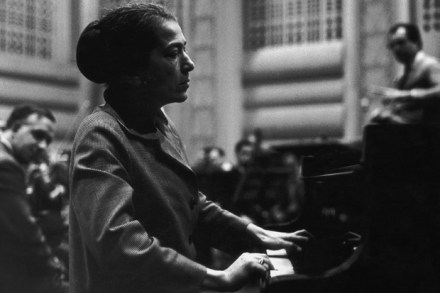
This year marks the centenary of a pianist whom London orchestral players nicknamed ‘Ashtray Annie’. Only at the keyboard did she have a cigarette out of her mouth. Annie Fischer (1914–1995) was one of those female pianists who, despite their spinsterish appearance, possessed far richer imaginations than splashy male virtuosos. Clara Haskil and Marcelle Meyer also come to mind. Of the three, only Haskil — a physically frail Romanian celebrated for her purity of line — is today given the recognition she deserves: Pope Francis recently named her as his favourite Mozart pianist. Meyer, who as a young woman played for Debussy, had a technique of such refinement that she could liquefy trills and arpeggios without any loss of accuracy.

James Rhodes’s diary: Trying to catch out Stephen Fry, and the scandal of music education

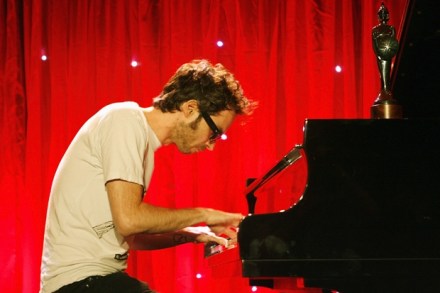
This was the best kind of week. It started with a three-hour road trip with my manager/surrogate father/shrink/bodyguard to Monmouth to record album no. 5. Glenn Gould (whom I worship with the fervour of a pre-teen Belieber) talked about the ‘womb-like security of the recording studio’. Which was why, in a somewhat pussy move, he retired from performing in public. And he was spot on. Bless my mum, but my first womb was a Valium- and gin-infested warm place of loveliness, and the recording studio is absolutely the next best thing. Me, the safety net of the retake, a (phenomenal) Steinway, heaters, Kit-Kats, tea and Beethoven can give any pharmaceuticals a run for their money. Even if Gould somewhat greedily chose all that and the pills too.

Exhibition review: Saloua Raouda Choucair, Shanti Panchal

Forgive my ignorance, ladies and gentlemen, but I must confess that I had never heard of Saloua Raouda Choucair before the advance publicity of the Tate’s exhibition. She’s not in the Yale Dictionary of Art & Artists (always a useful reference book, but by no means infallible) and I don’t believe I’d ever seen her paintings or sculptures before this show. But I may have overlooked one somewhere in a mixed exhibition, for her work does resemble that of a dozen other artists of international Modernism, and even of a number of the British variety. So why does Tate Modern now devote a solo show to her? Could it be because she is Lebanese (and we don’t see the work of many Lebanese artists in this country), female and has reached the distinguished age of 97?