Photography

When Lee Miller met Picasso

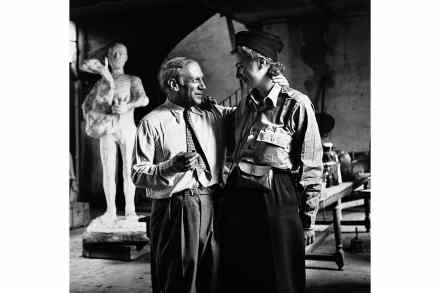
During the liberation of Paris in August 1944, the photographer Lee Miller made her way to Picasso’s studio on rue des Grands-Augustins, where she was greeted with a wide-eyed grin. ‘This is wonderful – the first Allied soldier I’ve seen, and it’s you!’ the artist exclaimed, reaching up to place his hand affectionately around her neck. Miller had just escaped house arrest for breaching the terms of her press accreditation by entering a combat zone. The PR office of the US Army had dispatched her – one of just four American female photographers they granted an official commission – to Saint-Malo in the mistaken belief that the fighting there was over.

Promethean grandeur: Maurice Broomfield – Industrial Sublime, at the V&A, reviewed

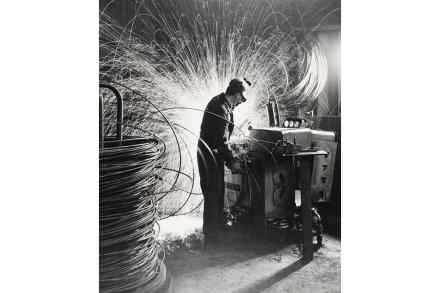
When Maurice Broomfield left school at the age of 15, he took a job at the Rolls-Royce factory, bending copper pipes on a turret lathe. That was what you did in Derby in 1931: Rolls-Royce was the town’s biggest employer, and entire generations expected to pass the best part of their lives behind the walls of its 13-acre plant. But Broomfield didn’t stay. Not long into his new job, he saw a photo of an ageing employee being packed off into retirement with a handshake and a gold watch. This was a person who’d never had any real control over his own life; who’d worked when he was told to, and stopped when they told him it was time. Broomfield wanted something else. When he returned to the factories after the war, it was as a photographer.

We are failing to curate the present

From our US edition

When I try to write a letter by hand, my hand has forgotten how to do it. I stumble at the end of words. I trip over letters I’ve known since I was five. It’s odd, too, because writing by hand is what I do. I am paid to letter the titles of books and draw offbeat, sophisticated hand-lettering for advertisements. I am a professional handwriter and I am losing my grip. Have I become obsolete or is it the pen? Writing manually has become abnormal. I now think onto my laptop’s screen via an arrangement of letters on a keyboard, an arrangement originally devised to insert a steadying difficulty into the typing sequence to protect the typist from speeds that might be dangerous. At one time it was believed that speed was dangerous, but now speed is the elixir.

artists

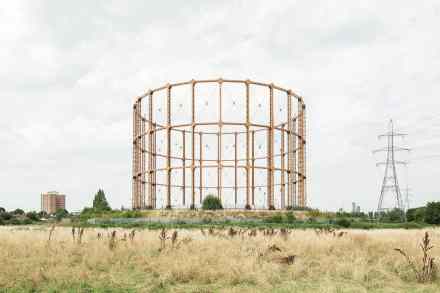
The beauty of gasholders

On 25 October 1960, a Boeing pilot aiming for Heathrow accidentally landed at an RAF base, only realising his error when the runway turned out to be alarmingly short. Disaster was averted, but the near-miss caused some embarrassment, and the minister of aviation had to answer questions in the House. What had confused the pilot, it emerged, was the advice from air traffic control to start his descent ‘in line with the gasholder’. He had picked the wrong one. Ever since, the gasholders near Heathrow and RAF Northolt have had painted on them, in 50ft-high letters, ‘LH’ and ‘NO’. There is a surprising amount of strange lore about these industrial relics, which once kept the nation’s homes and factories lighted and warm.

Was Thomas Edison guilty of murder?

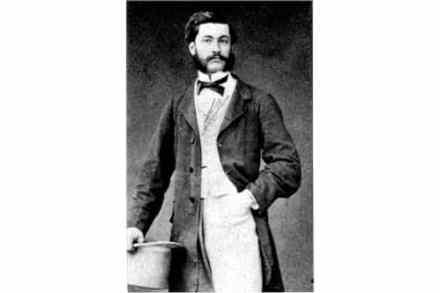
In September 1890 a Frenchman called Louis Le Prince left his brother in Dijon and boarded a train to Paris, with the intention of connecting to London and then to Leeds, before finally joining his wife Lizzie and family in New York. But the weeks turned into months, and to his wife’s astonishment and dismay he never arrived or saw his family again. He had disappeared. A mere eight months later Thomas Edison would unveil the ‘Kinetograph’ to the world, claiming his apparatus to be the birth of the moving image, featuring ‘pure motion recorded and reproduced’ for the first time. Recognising the device as a version of one invented by her missing husband, Lizzie became convinced that Edison was behind Louis’s disappearance.

Valuable reassessment of British art: Barbican’s Postwar Modern reviewed

Notoriously, the past is another country: what’s more, it’s a terrain for which the guidebooks need constantly to be rewritten. That’s one attraction of the new exhibition Postwar Modern at the Barbican. It’s a survey of what might seem all-too-familiar territory: British art in the two decades that followed VE day. Yet it succeeds in revealing numerous half-forgotten or undervalued movements and people, the good, the bad and – most intriguingly – candidates for reassessment. The decades that followed the second world war were marked by dreary austerity, perhaps explaining the tendency for the art to be coloured oatmeal, beige, grey and brown. But this was also a time of dawning hope, increasing prosperity and growing optimism.

Restless visionary: Man Ray was always ahead of his time

In the summer of 1940, after almost 20 years in Paris, Man Ray fled the Nazis for the country of his birth. Disliking New York, where he’d spent his youth, he made for the West Coast. He hoped to get as far as Tahiti or Hawaii. But his trip came to an end when, braced by the space, lifted by the lack of skyscrapers (‘made me feel taller’) and swept off his feet by a dancing girl (the latest in a long line of hoofers for whom he’d have the hots), he settled in Los Angeles. Though he would live there for more than decade, he never really liked the place. Nonetheless, he was far more productive in America than in Europe.

Meet climber, photographer and filmmaker extraordinaire Jimmy Chin

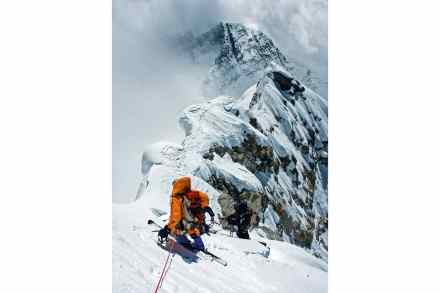
‘Why did you want to climb Everest?’ reporters quizzed mountaineer George Mallory in 1922. That the question even needed asking shows mountaineering is fundamentally different from other pursuits. No journalist would ever ask a footballer why they kick a ball around. But mountaineering is gruelling and you’re way more likely to perish from it than to make a fortune. So why would anyone climb any mountain, let alone Everest? Mallory’s rationale was short and sweet: ‘Because it’s there.’ And what about Jimmy Chin? Why does he climb? Chin, 48, is part Bear Grylls, part David Attenborough.

The art of seizing the moment in photographic portraiture

A Tatler photographer once told me that the secret to taking a good photo was the three Ts: tum, tits, teeth. Suck it in, push ’em out, show your pearly whites. Leaving aside David LaChapelle’s portrait of Pamela Anderson, there’s a shortage of Ts in Phillip Prodger’s Face Time. This looks likea coffee-table book but doesn’t bark like a coffee-table book. On first flick through, I found the pictures desultory, even depressing. I was expecting more of a Condé Nast vibe. Glossy and glossier. On second approach, taking text and pictures together, it became a more interesting beast. Prodger is a former head of photography at the National Portrait Gallery and the founding Curator of Photography at the Peabody Essex Museum in Salem, Massachusetts.

Fortifying snapshot of the gardener’s year: Saatchi Gallery’s RHS Botanical Art show reviewed

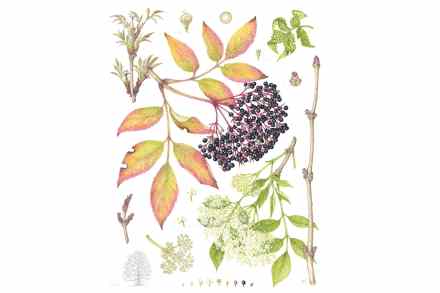
Elizabeth Blackadder, who died last month at the age of 89, was probably the most distinctive botanical artist of our time. Her paintings of lilies and irises, of cats poking their heads imperiously between poppies and freesias, are more alive than any such chocolate-box description could convey. The first woman to be elected to both the Royal and the Royal Scottish academies, Blackadder showed that botanical painting did not need to be twee and parochial. It could be as vibrant and interesting as narrative. The 15 artists and 19 photographers participating in this year’s Royal Horticultural Society exhibition at the Saatchi Gallery follow in Blackadder’s tradition.

Hugely pleasurable – a vision of summer: Jennifer Packer at the Serpentine Gallery reviewed

We need to talk about Eric. In Jennifer Packer’s portrait of her friend and fellow artist, Eric N. Mack sits on a yellow chair that might have been borrowed from Van Gogh’s bedroom. He’s wearing excellent odd socks, one pink to rhyme with his shoes, the other yellow matching his trousers and chair. But it’s Eric’s face that’s most compelling. Like the ‘Mona Lisa’, Eric’s expression is inscrutable. He might be thinking about what’s for tea, the crisis in pictorial representation or, quite likely, nodding off. This enigmatic quality is intentional. ‘When I painted Eric, I wanted accuracy, but I also wanted to privilege his subjectivity and privacy,’ says Packer.

Girls on film

From our US edition

We are familiar with Dorothea Lange’s gritty photographs of Okies during the Dust Bowl. New Woman Behind the Camera, which opens this month at the Metropolitan Museum of Art, showcases Lange alongside over 120 other female photographers who refashioned modernist photography in the same years. Photography developed through an ambivalent relationship to high art: the camera was often seen as a medium for journalism or advertising. Yet the modernist works here showcase the flexibility of the form. Still, there are inherent tensions in an exhibit like this. Georgia O’Keeffe once declined an invitation to be included in an exhibit of ‘women artists’: she wanted to be seen as competing with the best, not as part of an inferior subgroup.

woman

A high-end car-boot sale of the unconscious: Colnaghi’s Dreamsongs reviewed

In 1772 the 15-year-old Mozart wrote a one-act opera set, like The Magic Flute, in a dream world. Il sogno di Scipione was based on an account in Cicero’s Republic of a dream experienced by the Roman general Scipio Aemilianus while serving in North Africa in 148 BC. In the dream the younger Scipio is visited by his adoptive grandfather Scipio Africanus, who foretells his destruction of Carthage, dishes out advice on dealing with populist politics and shows him ‘the stars such as we have never seen them from this earth’. Scipio’s is a recurring dream: it inspired Dante’s vision of Heaven and Hell and it returns to haunt us in Colnaghi’s latest exhibition Dreamsongs.

Terry O’Neill: ‘Hollywood is lonely’

From our US edition

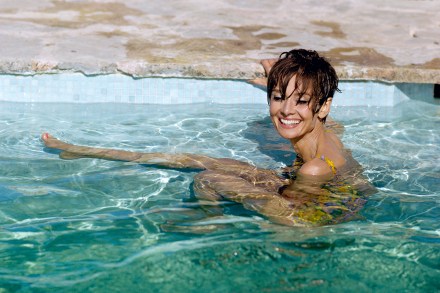
At the Maddox Gallery in Gstaad, that strange, swanky village on the roof of Switzerland, Jay Rutland is showing me the latest exhibition by photographer to the stars Terry O’Neill. It’s a lovely summer day, clear sunlight streaming in through the windows, and the high peaks on the horizon have never looked more inviting, but the Alpine view pales beside the photos on the walls. O’Neill photographed the world’s biggest rock stars and movie stars, the most famous people on the planet, yet these portraits are so fresh and intimate you almost feel you know them — not as aloof superstars but as fragile, familiar friends. Here’s Audrey Hepburn playing beach cricket with a piece of driftwood, grinning like a kid on holiday.

William Boyd on the miraculous snaps of boy genius Jacques Henri Lartigue

What must it be like for an artist to achieve success only at the end of a long, relatively ignored career? The word ‘bittersweet’ seems particularly apt. Yet, late recognition is better, I suppose, than dying in oblivion like Vincent van Gogh, Franz Kafka or John Kennedy Toole. One of my favourite photographers, Jacques Henri Lartigue (1894–1986), did manage to savour the sweet smell of success in his old age. Lartigue’s late flowering was down to New York’s Museum of Modern Art and its then director of photography, John Szarkowski. There’s a very good argument to be made that during Szarkowski’s tenure at MoMA (1962–91) his shows transformed 20th-century photography.

Mother nature is finally getting the art she deserves

I guess that few would currently dispute that the world is in crisis. I’m not talking about Covid-19. Nor am I primarily addressing the issues arising from the 36 billion tonnes of carbon that the human project sends into our atmosphere every year. Climate chaos is a part of the issue, but I’m thinking principally of those things that most impact upon the biosphere as an ongoing live enterprise.

Slight: Steve McQueen at Tate Modern reviewed

Steve McQueen’s ‘Static’ (2009) impresses through its sheer directness — and it’s very far from static. A succession of helicopter-tracking shots around the Statue of Liberty, it’s the first film you encounter in this quasi-retrospective from the Turner Prize-winning conceptual artist-turned-Oscar-winning film director. Shot shortly after the monument reopened after the 9/11 attacks, it offers the eye an exhilarating whirl of light and colour, while the mind — given the potency of that historical context — goes on an equally dizzying train of associations through the notion of American liberty. While you bring these associations yourself, they seem to emanate naturally and directly from what you’re seeing.

Stayin’ alive in ’75

From our US edition

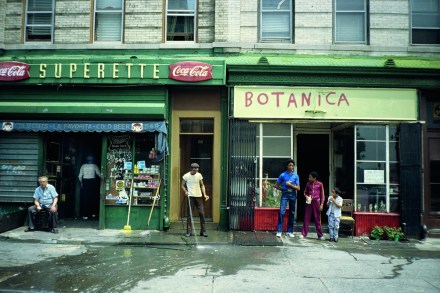
This article is in The Spectator’s January 2020 US edition. Subscribe here. ‘Ford to City: Drop Dead’ was the headline of the New York Daily News. To which the City said to Ford, you first. When the Daily News ran that famous headline on October 29 1975, New York was teetering on bankruptcy. President Gerald Ford had declared he would veto a federal bailout. It looked like the Big Apple was stewed. The world had written off New York. The feeling was mutual: the city had written off the world. Between 1970 and 1980, the city lost nearly a million residents, over a tenth of its population. Still, New York attracted people who, against the reigning wisdom, would not or could not live anywhere else.

meryl meisler

Why David Suchet makes the perfect Poirot

I can imagine a quiz question along the lines of ‘What do Shylock, Lady Bracknell, Sigmund Freud and Hercule Poirot have in common?’ The answer, of course, would be David Suchet, who has impersonated all these characters on stage or television during an acting career spanning half a century. In Behind the Lens, Suchet offers a series of autobiographical sketches, written in an amiably informal style and covering many aspects of his professional and personal life. He writes of his Jewish ancestry, his childhood, his schooldays (during which he was caned for hiding a forbidden Mars Bar in one of his shoes) and his private passions — for canals, music, foreign travel and for his family, the last being ‘the most important thing in the world to me’.

The truth about food photography

While looking at the photographs of food in this humorous exhibition at the Photographers’ Gallery, I thought of how hopelessly outdated our own snaps will soon look. What seems fresh, clean and wonderfully modern to our eye — an Ottolenghi salad, say, dotted with pomegranate seeds and za’atar — will soon look almost tragic. How we photograph food betrays some of our deepest fantasies about ourselves. What’s more, good taste can quickly sour. Feast for the Eyes brings together food photography from the 19th century up to the present day and reveals just how much our attitudes to food change. At first, photographers emulated the principles of still- life painting, using symbolic gatherings and classical references.