Philosophy

Why we need a biography of philosopher Bryan Magee

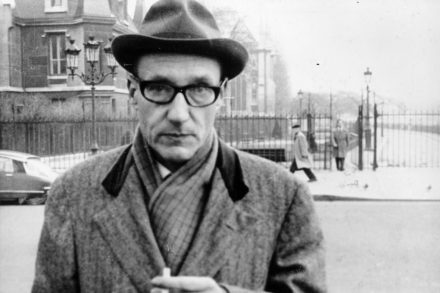
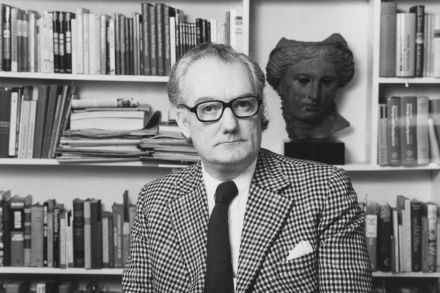
When I was a philosophy student at King’s College London in my early twenties, I came across a book called Confessions of a Philosopher by Bryan Magee. A history of western philosophy told through the story of the author’s relationship with it, it opens with a three- or four-year old Magee trying to catch himself falling asleep every night. Try as he might, he can never experience himself crossing the threshold from wakefulness into unconsciousness, a conundrum that keeps him in a state of ‘active mystification’. Magee spent the rest of his life like this, wrestling with the mysteries inherent in everyday experience. Far from being a fusty academic discipline with no relevance to the ‘real’ world, philosophy was, for him, an existential matter of immediate importance.

Living one’s best life

From our US edition

In our era of Twitter hot takes and Medium listicles promising to make you millions, I have a soft spot for life-wisdom books, meditations of the old school that you can spend quality time with even when the ideas presented in them are timeless. I’ve read with pleasure the popular life guidance books of the past decades, from The Happiness Hypothesis or Letters to a Young Contrarian to Zena Hitz’s quietly transformative Lost in Thought, and I felt a renewed connection with the ancient questions of existence in a modern retelling. It should be the habit of all widely read thinkers, whether coming from STEM, the humanities or the social sciences, to sit down and write an accessible recap for all of us of what they have found out.

wild problems

In search of the peripatetic philosopher Theophrastus

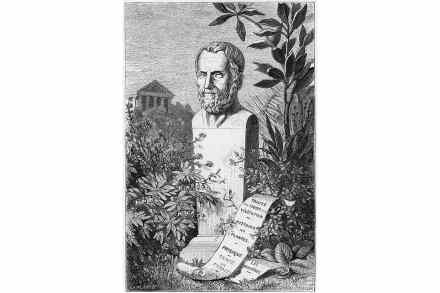
Publishers lately seem to have got the idea that otherwise uncommercial subjects might be rendered sexy if presented with a personal, often confessional, counterpoint. The ostensible subject of Laura Beatty’s book is the pioneering Greek botanist and philosopher Theophrastus. He was a friend of Aristotle’s, and was once thought his intellectual equal, but is now little known except to a few classicists and historians of science. But since no one wants to publish a straight book on Theophrastus, we get instead a book that is at least as much about Laura Beatty, her library researches, her travels in Greece and her kitchen garden. Her publishers describe the book as ‘genre-defying’.

The amazing grace of Bruce Lee’s fight scenes

Early on in Enter the Dragon our hero, the acrobatic Kung Fu fighter Bruce Lee, tells a young pupil to kick him. Needless to say, the kid’s kick comes a cropper. ‘What was that?’, Lee sneers, clipping the lad’s ear. ‘An exhibition? We need emotional content, not anger.’ Even at 12, when I first read about this scene (in the poster magazine Kung Fu Monthly, whose first 26 issues are handsomely reproduced in Volume I of Carl Fox’s Archive Series), I thought it sounded like a load of chop suey hooey. An exhibition is precisely what I’d have wanted, if by some miracle I could have wise-guyed my way into seeing Lee’s X-rated picture. Anyway, if anger isn’t an emotion, what is it?

What exactly do we mean by the mind?

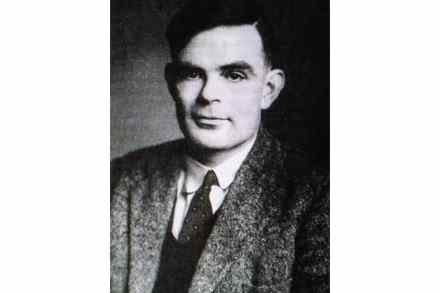
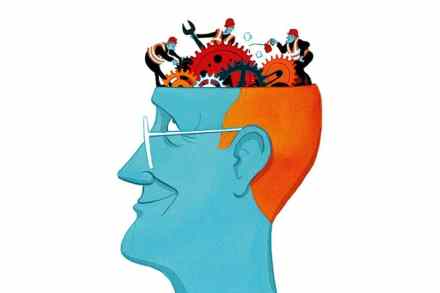
Given the ingenuity of machine-makers, said Descartes in the 17th century, machines might well be constructed that exactly resemble humans. There would always, however, be ‘a reliable test’ to distinguish them. ‘Even the stupidest man’ is equipped by reason to adapt to ‘all the contingencies of life’, while no machine could ever be made with enough pre-set ‘arrangements’ to be convincingly versatile. But suppose it could? In 1950 Alan Turing proposed a test remarkably similar to Descartes’s. A computer and a human are asked questions, each being invisible to the questioner, and their respective responses compared.

Life’s great dilemma: Either/Or, by Elif Batuman, reviewed

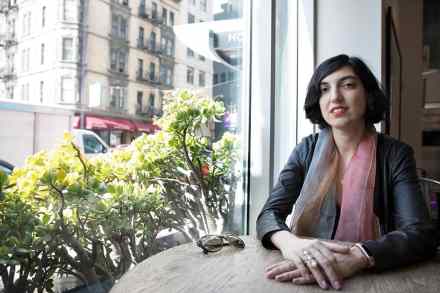
In this delightful sequel to her semi-autobiographical novel The Idiot (2017), which was a finalist for the Pulitzer Prize, Elif Batuman returns to Harvard to follow her protagonist Selin during her sophomore year. Selin has spent the summer of 1996 teaching English in Hungary, trailing her friend Ivan. Her crush on him remains unrequited and unconsummated, but she is determined to make up for lost time by having ‘interesting love experiences’ this year. The Idiot was preceded by The Possessed, a New York Times bestseller about Batuman’s fascination with Russian literature.

Government by the Very Online

From our US edition

Tucker Carlson has been telling us for months that American progressives are too online. In October, the Fox News host lit into Democrats for being more concerned with shattering the glass ceiling for transgender admirals than with addressing the supply chain crisis: “[Our leaders] do not care if the actual country, the physical country, comes apart at the seams, as long as the population dutifully repeats the correct slogans. Once you understand that, you understand why every day we get some frivolous new announcement about some social justice goal that in the end will not improve the life of a single American citizen.” Earlier this month, he played a clip of Jen Psaki laughing at the “alternate universe” Fox News creates for its viewers.

very online
china climate xi jinping thought

‘Xi Jinping Thought’ is taking over China’s classrooms

From our US edition

From last fall, in an extension of a personality cult not seen since Mao Zedong, “Xi Jinping Thought” is being incorporated into China’s national curriculum. School textbooks are emblazoned with Xi’s smiling face, together with heartwarming slogans telling readers as young as six that their leader is watching over them. “Grandpa Xi Jinping is very busy with work, but no matter how busy he is, he still joins in our activities and cares about our growth,” reads one. “Xi Jinping Thought” must be taught at all levels of education, from elementary school to graduate programs, and there is special emphasis on capturing the minds of the youngest children.

Know your left from your right: the brain’s divided hemispheres

The dust jacket of The Matter With Things quotes a large statement from an Oxford professor: ‘This is one of the most important books ever published. And, yes, I do mean ever.’ Can any contemporary work withstand such praise? The ‘intelligent general reader’ (the book’s target audience) should, however, not be discouraged, for Iain McGilchrist has to be taken seriously: a Fellow of All Souls, eminent in neurology, psychiatry and literary criticism, a thinker and — it’s impossible to avoid the term —a sage. His previous book, The Master and His Emissary, was admired by public figures from Rowan Williams to Philip Pullman. Some consider McGilchrist the most important non-fiction writer of our time.

What Bernard-Henri Lévy sees for the West

From our US edition

I meet Bernard-Henri Lévy at his apartment in central Paris on a chilly autumn afternoon. Considerations of security prohibit me from revealing its location. A French Jew who is a public and vocal enemy of both Islamism and some of the world’s worst regimes, Lévy is both perhaps the most important public intellectual in Europe, and a man with enemies. I have come to ask him about the future of the West — if, that is, he feels there will be one. Lévy, internationally known by his initials BHL, is a philosopher who has been at the heart of French — and international — society for half a century. But he remains an idiosyncratic figure.

lévy

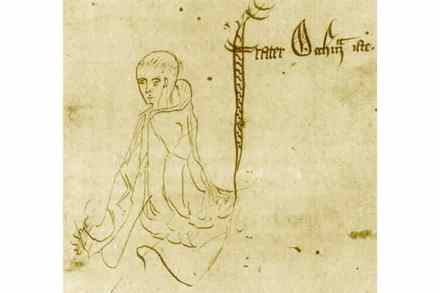
The great disrupter: how William of Occam overturned medieval thought

Astonishing where an idea can lead you. You start with something that 800 years hence will sound like it’s being taught at kindergarten: fathers are fathers, not because they are filled with some ‘essence of fatherhood’, but because they have children. Fast-forward a few years, and the Pope is trying to have you killed. Not only have you run roughshod over his beloved eucharist (justified, till then, by some very dodgy Aristotelian logic-chopping); you’re also saying there’s no ‘essence of kinghood’, either. If kings are only kings because they have subjects, then, said William of Occam, ‘power should not be entrusted to anyone without the consent of all’. Heady stuff for 1334.

When child abuse was avant-garde

From our US edition

Last month the New Yorker published an essay about a grotesque experiment that took place in West Germany in the 1970s, in which young boys who had been taken from, or abandoned by, their parents were placed with known pedophiles. It was no accident. It was quite deliberate. The powerful sexologist Helmet Kentler believed that pedophilic guardianship would foster an open and unashamed attitude towards sex that would preclude the development of fascistic attitudes. As the New Yorker says: ’Kentler’s goal was to develop a child-rearing philosophy for a new kind of German man. Sexual liberation, he wrote, was the best way to “prevent another Auschwitz.”’ A sensible reader could guess what happened to the boys.

pedophilia child abuse

How Foucault was shielded from scandal by French reverence for intellectuals

Consider the hare and the hyena. The hare, Clement of Alexandria told readers of his 2nd-century sexual self-help manual Paedagogus, was thought to possess both male and female sexes and swapped their roles from year to year. As for the hyena, it was believed to acquire an extra anus annually and ‘to make the worst use of these added orifices’, as Michel Foucault puts it in the newly translated fourth volume of his History of Sexuality. For early church theologians the moral lesson was clear: we must not emulate gender-bending hares or randy hyenas. Rather, sex should be procreative, not pleasurable; we must go forth and multiply, borne by duty, not ecstasy.

The monsters we become

From our US edition

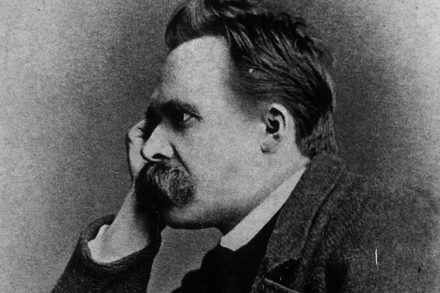
Nietzsche would have been great at Twitter. He excelled at epigrams, which are to philosophy as the fortune-cookie motto is to Chinese takeout, and he loved to hate. Scholars divide as to whether his epigrammatic excellence came from using a typewriter — he was the earliest philosophical adopter of this technology — or because he was no good at joined-up thinking but very good at vituperating about the news. It was Nietzsche who spotted that the emerging theme of democratic society was not the reign of reason and universal brotherhood, but the ‘stupidification of the world’ and resentment. He called it ressentiment. Philosophy goes better in French, and Nietzsche had lately turned against Wagner, anti-Semitism and German nationalism.

Nietzsche

The life cycle of the limpet teaches universal truths

Adam Nicolson is one of our finest writers of non-fiction. He has range — from place and history to literature and ecology, from the friendship of Wordsworth and Coleridge to the poetics of Homer, from the archaeo-ethnography of his own Hebridean island to the hardy and threatened lives of seabirds. To each he brings a vigorous curiosity and intellect, coupled with an emotional receptivity that ruffles the surface of his prose. Now he has turned his attention to the foreshore of Scotland’s west coast, and a particular point on the northern edge of the Sound of Mull — near Rubha an t-Sasunnaich —with its weeds and its wracks and its shelled and glutinous sea-creatures. Building a series of berms, he creates rock pools.

Waiting for Gödel is over: the reclusive genius emerges from the shadows

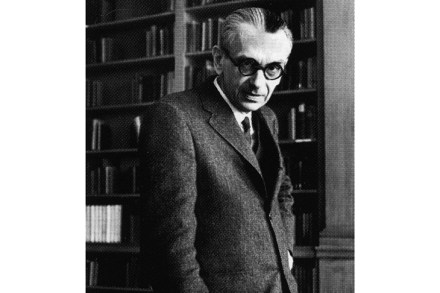
The 20th-century Austrian mathematician Kurt Gödel did his level best to live in the world as his philosophical hero Gottfried Wilhelm Leibniz imagined it: a place of pre-established harmony, whose patterns are accessible to reason. It’s an optimistic world, and a theological one: a universe presided over by a God who does not play dice. It’s most decidedly not a 20th-century world, but ‘in any case’, as Gödel himself once commented, ‘there is no reason to trust blindly in the spirit of the time’. His fellow mathematician Paul Erdös was appalled: ‘You became a mathematician so that people should study you,’ he complained, ‘not that you should study Leibnitz.

The truth about beauty

From our US edition

In the late 1940s, the German art historian Hans Sedlmayr observed that ‘many things that are classified as “back-ward”... might be the starting-point of real inner progress’. At a moment when the art establishment has abandoned art for political attitudinizing, the path forward begins with a movement of recuperation. In an age when anything can be a work of art, the question of whether something is art has ceased to be compelling: what matters is whether something is a good work of art, and about this the art world has rendered itself hors de combat. Should we be pleased with this state of affairs? Or, to put it another way, is the celebrity of people like Damien Hirst or Marina Abramović or the Chapman brothers a good thing for art?

beauty

Biden is wrong on Putin

From our US edition

I am no fan of Trump, but what Joe Biden said in a recent interview with George Stephanopoulos made me almost nostalgic for some aspects of the last presidency. When Biden was asked if he believes Putin to be a killer, he replied, 'I do.’ He also confirmed reports that in 2011, while serving as vice president, he personally told Putin that Putin does not 'have a soul’. Putin’s reply was quick and masterful: he wished Biden best health and inviting him to a public debate about big existential and ethical issues on Zoom. Biden’s strong words stand in sharp contrast to Trump who, in 2017, when the Fox News host Bill O’Reilly called Putin a 'killer’, suggested that America’s conduct was just as bad as that of the Russian president.

biden putin

Should we blame America?

From our US edition

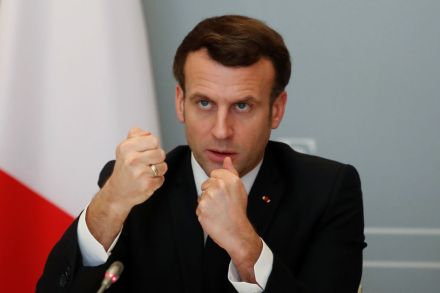
Americans might be unaware, but a great deal of right-leaning discourse in Europe holds the United States responsible for the outbreak or inflammation of their culture wars. In France, Emmanuel Macron has spoken disparagingly of 'certain social science theories imported entirely from the US' which are 'based on a different history, which is not ours’. His education minister was more explicit, castigating an 'intellectual matrix coming from American universities...which wants to essentialize communities and identities’. In the UK, meanwhile, in a column mischievously titled 'It’s All America’s Fault’, the English commentator Ed West blamed the US for the spread of 'social justice’ trends across Britain.

macron europe blame

The reason of Jordan Peterson

From our US edition

If only Hamlet had known Jordan Peterson. To be or not to be, Dr Peterson believes, is indeed the burning question — but it’s a question that can be resolved decisively in favor of Being with a capital B. And he’s willing to walk any modern-day Hamlet who cares to listen through the math. This reasoned position in favor of existence is at the heart of Jordan Peterson’s latest book, Beyond Chaos: 12 More Rules for Life. It’s also, I’d argue, at the heart of his popular appeal. Sure, his undeniable charisma doesn’t hurt; and of course, he’s brilliant, well-read and articulate. But so are many other public intellectuals.

cultural marxism jordan peterson