Philip larkin

Telling tales | 29 November 2018

Germaine Greer described biographers as ‘vultures’. I prefer to think of myself as a version of Philip Marlowe or Sam Spade: vultures hunt by instinct but the two private investigators went after secrets with deliberate foolhardy masochism. It’s human nature to want to know more about the writers we admire — but what you discover isn’t always pleasant. Most recently, I completed a life of Ernest Hemingway. It was a joy to write mainly because after reading thousands of unpublished letters I felt relieved at having been spared an encounter with the living ‘Papa’. I knew of his reputation as a fibber but I was astonished to find that from his teens onwards he was pathologically incapable of distinguishing fantasy from truth.

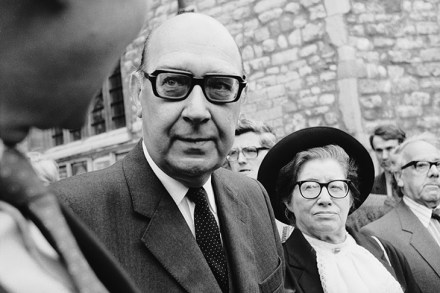
They fill you with the faults they had

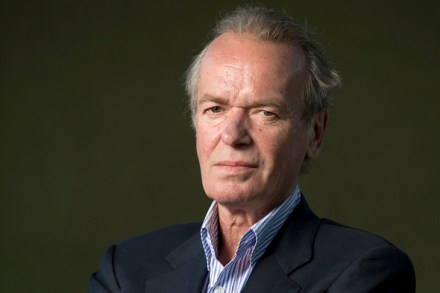
You attempt to write a review with a stiff dose of objectivity, but it’s hard not to start with a degree of fondness for an anthology put together by a magician who has performed in North Korea. Dale Salwak also has a sideline as a professor of literature at Citrus College in Los Angeles, and Writers and their Mothers is a collection of 22 pieces he has edited, by novelists, poets and literary critics, some biographical and analytical, some autobiographical. In his introduction, Salwak makes reference to an assertion by Georges Simenon that writers are ‘united in their hatred of their mothers’, an assertion, I’d suggest, that tells you much more about the whore-mongering Simenon than about writers in general.

Hull’s a poppin’

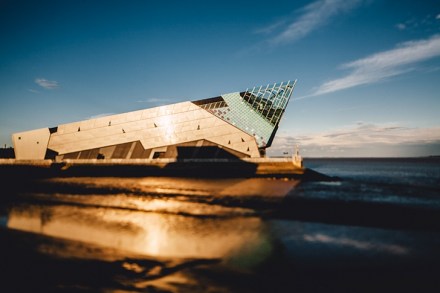
In early January, lastminute.com recommended its top 15 destinations for 2017. In 12th spot, just above Montreal, Croatia and Japan, was Hull. And if you’re tempted to opt for a snooty chuckle at this point, my advice would be to go to Hull — because, judging from my recent experience, even on a cold January weekend, the place is buzzing with a hugely infectious, if still slightly bashful, sense of rediscovered civic pride. ‘I’ve lived here for 50 years,’ one man told me, ‘and this is the greatest thing that’s happened to the city in my time.’ The ‘this’ he’s referring to is, of course, Hull’s status as the UK City of Culture for 2017.

Show me the Monet

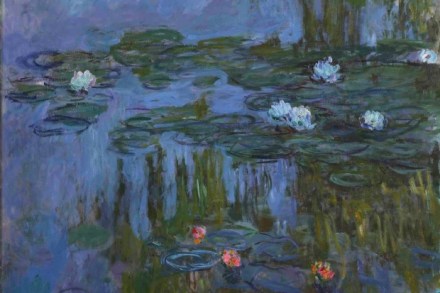
Philip Larkin once remarked that Art Tatum, a jazz musician given to ornate, multi-noted flourishes on the keyboard, reminded him of ‘a dressmaker, who having seen how pretty one frill looks, makes a dress bearing ninety-nine’. If you substitute paintings of flower-beds and dappled sunlight for chromatic keyboard runs, something similar is true of the new blockbuster at the Royal Academy, Painting the Modern Garden. That, however, is only half the verdict on this curious affair. It is a show that feels a bit overblown — like a visit to an enormous Victorian conservatory — but contained inside it is another, triumphantly successful exhibition that is inspiring, exalting and almost entirely about Claude Monet.

Shock and awe in Coventry, 14 November 1940

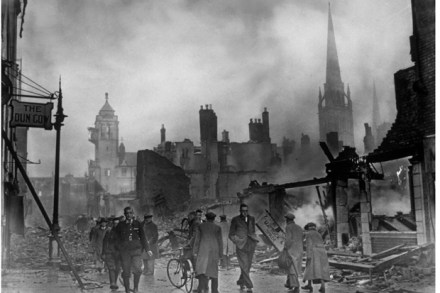
On 14 November 1940, at seven in the evening, the Luftwaffe began to bomb Coventry. The skyline turned red like an eclipse of the sun as clouds of cinders, lit red by the blaze, floated down over the great West Midlands city. Coventry seemed to have been hit by a meteorite. The mile-high roar of magnesium incendiary flames created a firestorm in which over 554 people died and twice as many were wounded. Life as Coventrians had known it, lived it and loved it, came to an end that Thursday night. Hitler’s first Blitz on an English city had taken the inhabitants by complete surprise. In the space of 11 hours, buildings and people were torn apart, crushed and suffocated.

How cool is Britannia?

Is it true that, having lost an empire, we reinvented ourselves as an island of entertainers? Do we channel the same rigour and vigour into film and music and literature as once went into conquering continents? Is there a residual colonialist bias in our arts, seen, for instance, in our cinematic penchant for creating patriotic period dramas such as Henry V or The King’s Speech? How much of our cultural success depends on the US market and the accident of a shared language? To what extent does our cultural expression reflect not our idea of ourselves but an American distortion?

Cats, curates and cardigans

Anyone who has ever listened to the thump of a rejected manuscript descending cheerlessly on to the mat can take comfort from the roller-coaster career of Barbara Pym. Between 1950 and 1961 Miss Pym (1913–1980) had published six modestly successful novels with the firm of Jonathan Cape. Then, on 24 March 1963 — ‘a sobering fourth Sunday in Lent’, as Ann Allestree is careful to remind us — came a bolt from the skies, in the shape of a letter from Cape’s editorial director, Wren Howard, turning down the seventh with the age-old publisher’s bromide that ‘in present conditions we could not sell a sufficient number of copies to cover costs’.

Who needs drugs when you have Radio 3?

I’m willing to bet it’s only on the BBC’s Radio 3 that you’ll find yourself listening to a programme quite like Words and Music (Sunday evenings). You might want to disagree. Surely, it’s just a few bits of music stuck together with some poems and other readings on a random theme dreamt up by the production team? How easy must that be to pull off? Seventy-five minutes (or sometimes even longer) of dirt-cheap radio, quick to make, very few overheads, involving just a few hours per programme of research (nowadays so easy on Google) and a dead-simple edit job splicing everything together. But name another station anywhere that could make it work week-by-week with quite the same style, panache and sheer brio of the team at Radio 3.

Why can’t country views be protected from wind turbines?

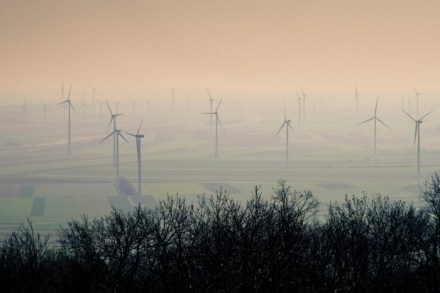
‘Surprisingly’, writes Geoffrey Lean (Daily Telegraph, 4 April), ‘two thirds of the country support onshore wind turbines’. It should not surprise him: those would be the two thirds who live in towns and cities, the people whose distinctive, familiar skylines are on the whole safe. When proposed city structures reach the height of St Paul’s they are the subject of deliberation and careful design. Not so in the country. I live in the East Mendips, a soft target for onshore wind turbines as it has little protection from developers: this is because its hills were sacrificed to quarrying after the war and it therefore does not qualify as an area of outstanding natural beauty. And yet it is outstandingly beautiful.

This be the verse

Spending pleasurable hours looking for books is not like drilling for oil. Recently, however, while browsing in the excellent Slightly Foxed bookshop in Gloucester Road, the black stuff spewed out like a geyser. A hardback collection of Philip Larkin’s The Whitsun Weddings was on offer for £40. It wasn’t a first edition from 1964, which would have put another nought on the price. The book belonged to the fourth impression, published four years later, but it came with an inscription from another famous writer, who had presented it to an actress friend. ‘I hope you like these poems,’ he had written. ‘They are what I wanted the play to be — very English and full of affection and dissatisfaction. All my love. A.

Two of a kind

They were ‘soulmates’ according to people who knew both of them. They were ‘soulmates’ according to people who knew both of them. The word has a double-edged quality; it may suggest that they got on well together because they presented such a problem to everyone else. Both Philip Larkin and Monica Jones found it difficult to suffer fools gladly, and in this collection of letters (ranging from 1946-84) from Larkin to his long-term companion and lover, the mean-spirited and misanthropic are given full rein. Larkin met Jones in 1946, and they soon became lovers. (So much for sexual intercourse beginning in 1963). She was a flamboyant presence in the English Department of Leicester University, remaining a junior lecturer until her retirement in 1981.