Pfizer

To waive or not to waive

From our US edition

Biden’s new-found support for a temporary waiver of COVID vaccine patents raises another fascinating set of questions. World Health Organization chief Tedros Adhanom Ghebreyesus makes the case for a waiver in terms of overwhelming priorities and the inequitable distribution of doses to date — 80 percent to the richest countries. Economic pragmatists add that the faster the whole world is vaccinated, the sooner global trade, including demand for exports from the rich West, will also recover.
waive

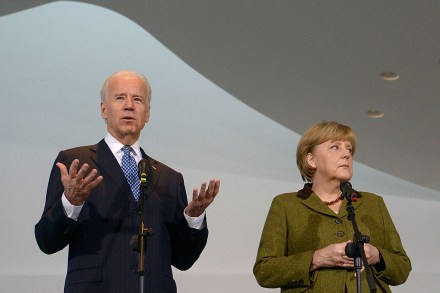
Merkel is right to reject Biden’s vaccine patent plan

She handed the vaccine procurement process over to the European Union. She didn’t invest much in new production. And she allowed an American multinational to take control of a brilliant discovery by a small German biotech company. Angela Merkel, the out-going German Chancellor, has not had much success battling the Covid-19 crisis, and her handling of vaccines has been a catastrophe from start to finish. But she has finally got one thing right: she is defending the patents that protect the pharmaceutical industry. In the last week, president Biden has signalled that the United States is ready to back suspending patents on Covid vaccines.

How much of a threat is the South African variant?

For residents of six London boroughs, as well as those in Smethwick in the West Midlands, the partial relaxation of lockdown rules this week hasn’t quite gone according to plan. They’ve had a day out in the sun, alright, but not necessarily sitting enjoying food and drinks in a pub garden – more likely they have been standing in a long queue to get ‘surge tested’ for the South African variant of SARS-CoV-2, the virus which causes Covid-19. So how much of a threat is the South African variant? In spite of anecdotal claims from South Africa that the new variant was affecting younger people, there is no evidence that it causes more severe illness.

Pfizer trial finds vaccine ‘100 percent effective’ against South African variant

From our US edition

Pfizer and BioNTech have released some extraordinary findings from a Phase 3 trial involving 46,307 participants, between seven days and six months after a second dose was administered. The vaccine was found to have a 91.3 percent efficacy rate. These findings line up with the real world data coming out of Israel, which has used the Pfizer vaccine to inoculate its population, and reported several weeks ago that it proved 94 percent effective in preventing symptomatic illness. But on top of the overall efficacy rate came even better news: Pfizer is reporting that the ‘vaccine was 100 percent effective in preventing severe disease’ as defined by the Centers for Disease Control.

pfizer

Pfizer trial finds vaccine ‘100% effective’ against South African variant

Pfizer and BioNTech have released some extraordinary findings from a Phase 3 trial involving 46,307 participants, between seven days and six months after a second dose was administered. The vaccine was found to have a 91.3 per cent efficacy rate. These findings line up with the real world data coming out of Israel, which has used the Pfizer vaccine to inoculate its population, and reported several weeks ago that it proved 94 per cent effective in preventing symptomatic illness. But on top of the overall efficacy rate came even better news: Pfizer is reporting that the ‘vaccine was 100 per cent effective in preventing severe disease’ as defined by the US Centers for Disease Control.

How effective are the Covid vaccines?

Reports have filtered through this morning about Public Health England’s assessment of the efficacy of the two vaccines so far administered to the public. The results have not yet been published, but the efficacy rates quoted in the Sun suggest that the Pfizer vaccine has proved to be between 79 and 84 per cent effective at stopping symptomatic infection after two doses. After one dose – which is all that most people have had so far – efficacy is reported as 65 per cent. Among the over 80s it is very similar, at 64 per cent. No figures are given for the AstraZeneca vaccine but it is suggested that the efficacy is 'similar'.

Can we boost immunity with the vaccines we have now?

What to make of the news this morning that Oxford University is to ask for volunteers to take part in a trial to ‘mix and match’ the Pfizer and AstraZeneca vaccines? Researchers will ask for 820 volunteers, all over 50 years old, who will be given two shots of a vaccine, two weeks apart. Some will receive AstraZeneca followed by Pfizer, some the other way around and some — the control group — will be given two doses of the same vaccine. Britain has set itself apart from the EU, not just in the speed and extent of its vaccine procurement programme but also for its willingness to experiment.

The EU goes to war over the vaccine

German politics is backing Brussels in the ongoing dispute between the EU and AstraZeneca over Covid vaccine shipments. The European Union alleges that the pharma firm, which is producing the Oxford-developed vaccine, is planning to supply the UK faster and while failing to fulfil its contract with Brussels. A meeting on Wednesday between officials and representatives from the Cambridge-based company was described as 'constructive' but no solution was found. Meanwhile, Martin Schulz, the former president of the European Parliament and prominent German Social Democrat, called for hard action against AstraZeneca. ‘This company is heavily dominated by the Brits and has apparently clear priorities as to which countries it supplies,’ he said.

How Israel became a world leader in vaccination

On a cold night three days before the end of the 2020 I drove down to Jerusalem’s Pais Arena. The area is usually a sports venue, next to Jerusalem’s stadium and mall, but in December it was transformed into a centre for mass vaccinations, open from morning till ten in the evening. By the first day of 2021 Israel had vaccinated more than 1 million people in two weeks, an unprecedented number, making the country a global leader in vaccinating against Covid-19. I was one of those who received the first jab of the Pfizer vaccine. Israel’s path to this milestone has been a rollercoaster of lockdowns and struggles over the last year. Back in February 2020 the country was on alert for the spread of the coronavirus.

Brits don’t appear to have been influenced by anti-vaxxers

Has the influence of anti-vaxxers been hugely overstated? That is one interpretation of the Office for National Statistics’ latest survey on social attitudes towards Covid-19 and the government’s efforts to tackle it. While fears abound that people might refuse the vaccine, with their minds turned by lies disseminated on social media about Bill Gates wanting to impregnate them with microchips, there is scant sign that the British public is becoming anti-vax. Across all adult age groups, 78 per cent say they are ‘fairly likely’ or ‘very likely’ to take the vaccine if offered it (and it is government policy that all will be offered it in time).

Europe’s slow vaccine approval is testing Germany’s patience

The Bundestag can’t be an easy place to be a politician right now. At the start of the pandemic, Germany seemed to be steering a steadier course than other countries, who looked on in awe at the speed with which it launched its testing regime. But as Britain, Canada and the USA begin vaccinations, Germany has been left tapping its feet. It is still waiting for the European Medicines Agency to approve the Pfizer vaccine, which it is set to do on 21 December – a state of affairs that is rapidly turning into a national and international embarrassment. The German public have grown increasingly irritated at the delays. ‘It’s just beyond belief,’ the Bild newspaper wrote in an editorial.

Don’t panic about the Covid vaccine allergy risk

In the coming weeks, you are inevitably going to see a slew of stories in the media about side effects from the licensed vaccines. The first one is already with us. Two healthcare staff – who both have a history of allergic reactions – have reportedly had adverse reactions to the Pfizer vaccine. This has lead to a change in advice about who should get the vaccination.  It is going to be difficult to initially ignore these stories but I am going to suggest if you don’t ignore them outright then try to dial down the volume. There are a number of good reasons to do this. Firstly, in the coming weeks and months, we are going to suffer from the most severe form of what is known as 'observer bias'.

Did Brexit lead to the UK’s vaccine success?

Today the United Kingdom became the first country in the West to clinically authorise a vaccine protecting against Covid-19, after the medicines regulator, the MHRA, said the Pfizer/BioNTech vaccine was safe to use. The announcement puts Britain ahead of Europe when it comes to rolling out the vaccine, as the EU’s own regulator, the European Medicines Agency (EMA), has not yet approved the vaccine. While Britain will begin administering Pfizer’s vaccine next week, countries like Belgium have announced that they will start their vaccination campaigns in January, subject to EMA approval. When it comes to vaccines, a few weeks of delay can make a big difference, given the economic and health costs of the pandemic.

Two unanswered questions on the Covid-19 vaccine

Britain, we learned this morning, has become the first country in the world to approve the Pfizer/BioNTech vaccine, which is likely to be deployed from Monday onwards. Is Britain being reckless, or are other countries dragging their heels?  The first point to make is that, however tempting though it may be to think so, it is not a case of Britain taking advantage of new-found freedoms enabled by Brexit. It may be in the future that Britain develops a more nimble regulatory system than the EU, and that British patients can benefit for the earlier administration of drugs, but the UK will remain under the European Medicines Agency’s regulatory system until the end of the transition period in a month’s time.

What we don’t yet know about the Oxford vaccine

We have become used to Mondays bringing good news on the vaccine front. But the publication of interim results from the Astra Zeneca/Oxford University vaccine – AZD1222 – will certainly please the UK government. Not merely because this is the home-grown option and we have already ordered 100m shots, but because, shot for shot, it is considerably cheaper to buy and administer than the other vaccine candidates. The vaccine itself is less than a fifth of the price of the Pfizer vaccine. Moreover, it does not need storing and transporting at minus 70 Celsius – it can be kept at ordinary fridge temperatures (2 to 8 Celsius), greatly facilitating any roll-out.

There’s nothing wrong with profiting from a vaccine

A couple of shots to the arm and this will all be over. With today’s news from Moderna, last week’s from Pfizer, and with a potential update from AstraZeneca in the next few days, we may soon have three vaccines against Covid-19 (and if you add in candidates from Russia and China perhaps more). And yet, it turns out, that some people are already fretting about potential side effects from that. And they don’t just mean a mild fever or muscle ache. They mean something far, far nastier. Profits. While most of us have been feeling a lot better about the epidemic over the last week, Jeremy Corbyn seems most worried that — once a vaccine has been approved and the virus eliminated — a big company might make some money from it.

Have Moderna outdone the Pfizer vaccine?

Another week, another set of preliminary results from a Covid-19 vaccine trial. This time it is the Moderna vaccine candidate, mRNA-1273. And, to judge by the figures put out by the company this morning, it has outdone the Pfizer vaccine in its efficacy. Out of the 30,000 people involved in the phase three trial (half of whom were given the vaccine and half of whom were given a placebo), 95 went on to contract Covid-19. Of those who became infected, 90 were in the control group and only five had been given the vaccine. Eleven participants had a severe case of Covid, all of whom were in the control group. The findings have allowed Moderna to claim, provisionally, that the vaccine is 94.5 per cent effective.

The questions we must ask about the Covid vaccine

After a difficult nine months, we are naturally all sick of lockdowns and other Covid restrictions. Everyone misses parts of their pre-coronavirus lives, from seeing friends and family, to pubs and restaurants, to the theatre and concerts and, yes, even our workplaces. It was therefore no surprise that this week’s news of a vaccine breakthrough was widely applauded. It is human nature, after all, to cling on to things that give us hope. Hope that was encouraged by leading scientists such as Sir John Bell. After the Pfizer news broke, the Oxford professor was asked on BBC radio whether we would be returning to normal by spring. His response? ‘Yes, yes, yes.’ This was a When Harry Met Sally moment that proved to be music to the ears of millions of Britons.

Pfizer U-turns at warp speed

From our US edition

Pfizer announced Monday that a coronavirus vaccine the company was working on had proven to be 90 percent effective at preventing COVID-19. It is not only great news for the country, but appeared to be a big win for the Trump administration's Operation Warp Speed. Vice President Mike Pence praised the 'public-private partnership' for spurring development of the vaccine. It turns out that Fox News's Sean Hannity was essentially right when he said that Trump could cure cancer and the media still wouldn't like him. Pfizer immediately distanced itself from its partnership with the Trump administration. The media quickly followed suit, determining that the President deserves no credit for the vaccine's quick development.

pfizer

Will the Pfizer vaccine live up to the hype?

So is this the big turning point? Markets certainly seem to think so. No sooner had news broken that the vaccine being developed by Pfizer and German firm BioNTech is 90 per cent effective, the FTSE surged by 5 per cent. Given that the US Food and Drug Administration (FDA) has suggested that any vaccine that proves to be more than 50 per cent effective could be licensed, this suggests the vaccine will go on to be approved around the world. Any vaccine that proves partly effective will be welcomed with open arms by a world which largely remains in lockdown or semi-lockdown. But does the reality live up the surge of relief which has gone around the world this morning?