Paywall

Where are world leaders educated?

This article is in The Spectator’s October 2019 US edition. Subscribe here. Leading minds Where are world leaders educated? According to an analysis by the UK-based Higher Education Policy Institute, the US has just overtaken Britain in the number of world leaders educated at the country’s universities. — 62 world leaders (monarchs, presidents or prime ministers) were educated at US universities. — 59 were educated at UK universities. — Two years ago, the respective figures were 57 and 58. — 40 current world leaders were educated in France, 10 in Russia and 9 in Australia. The burning question Is climate change making wildfires worse? Acres burned in US wildfires: 1928 43.54m 1938 33.81m 1948 16.56m 1958 3.28m 1968 4.

leaders

Does Trump have a better idea than endless wars?

This article is in The Spectator’s November 2019 US edition. Subscribe here. ‘WE WILL FIGHT WHERE IT IS TO OUR BENEFIT, AND ONLY FIGHT TO WIN.’ Thus did America’s Commander-in-Chief at long last enunciate a Trump doctrine, his use of all caps suggesting that this time he really means it. Trump had run out of patience. ‘I held off this fight for almost 3 years,’ he tweeted on October 7, ‘but it is time for us to get out of these ridiculous Endless Wars… and bring our soldiers home.’ Withdrawing US troops from Syria, a decision he first announced last December but then allowed to lapse, marked a first substantive step toward fulfilling one of the central promises of his 2016 presidential campaign.

endless wars

Junk food is my American dream

This article is in The Spectator’s October 2019 US edition. Subscribe here. I love junk food in an insane, passionate way. Perhaps this is because I was a fat kid and though I am not a particularly fat adult, my fat kid-ness has never left me. I am firmly of the belief that if you were once a fat kid, it is an indelible state that can never be escaped, much as one might try. The state of fatness during those years made me who I am today. Or perhaps my love of junk food is just one of the things that makes me distinctly American. We Americans love our junk food. One in three eats it every single day and they do it because junk food is delicious and because junk food is largely an American way of life.

junk food

Secrets of the maestro

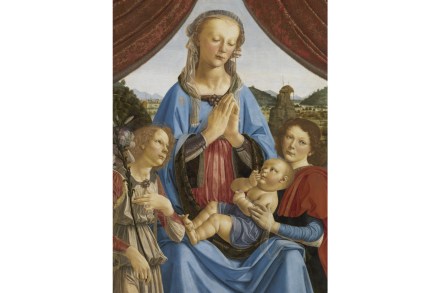
This article is in The Spectator’s October 2019 US edition. Subscribe here. At last, some justice for the ‘teacher of Leonardo da Vinci’. Verrocchio: Sculptor and Painter of Renaissance Florence, now at the National Gallery of Art in Washington, DC, reveals that this master was more than a mere footnote to his famous apprentice. Born around 1435 into the artistic boomtown that was Florence under the Medici, Andrea del Verrocchio may, in fact, have been the original Renaissance man. The greatest artists of the Florentine Renaissance took root in his studio and grew out of his mentorship: not just Leonardo, who stayed with him for over a decade, but also Pietro Perugino, Lorenzo di Credi and, most probably, Domenico Ghirlandaio and Sandro Botticelli too.

new york american

The differences between British and American readers

This article is in The Spectator’s October 2019 US edition. Subscribe here. New York This feels strange. Since 1977, I have been writing the High Life column in the London Spectator and concentrating on American goings-on for a British audience. Now I am about to write the High Life for an American readership. Are American readers very different? You betcha, though they are supposed to speak the King’s, or the Queen’s, English. Never mind. Both countries take their democracies seriously, and their freedoms even more so. One difference is that, over in the Old Country, people know that democracy is rare in distant parts of the world.

Grandpa, who were the Rolling Stones, and why?

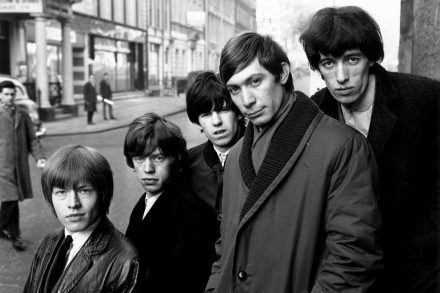
This article is in The Spectator’s October 2019 US edition. Subscribe here. The Rolling Stones’ delayed tour is back on the road. Not the tour they delayed after Keith Richards fell out of a coconut tree, but the one delayed because Mick Jagger had a heart attack. If you’re a boomer of advanced years and decayed taste, all this is no doubt a big deal, your last chance to see some of the last icons of the original and brief Rock Era, before you or they kick the bucket. Ladies and gentlemen, the greatest rock ’n’ roll band in the world, the Rolling Stones. Except they aren’t the Stones. They haven’t been the Stones for years.

rolling stones
podcasts

Pod almighty

This article is in The Spectator’s October 2019 US edition. Subscribe here. ‘Man the food-gatherer,’ wrote Marshall McLuhan, ‘reappears incongruously as information-gatherer.’ Once we foraged for information in the library. Now we graze among the podcasts. In the age of compulsive eating, podcasts are compulsive listening, an attempt to fill the silence. Nothing better to do? Click on a podcast, and let your attention drift. It takes no effort, it dissolves minutes into hours, and talking about the ‘great podcast’ you just listened to can sound just as smart as saying you’re reading War and Peace. After all, podcasts were originally made by nerds, for nerds.

Colleges should be ‘islands of excellence’

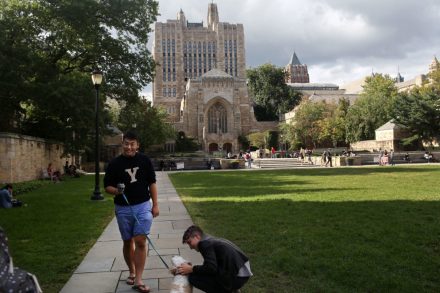
This article is in The Spectator’s October 2019 US edition. Subscribe here. America’s colleges and universities are in crisis. According to the latest data released by the National Student Clearinghouse Research Center, enrollment is down 1.7 percent compared with 2018, following a drop of 1.8 percent the previous year. If you contrast 2019 with 2017, that’s more than half a million fewer students. The brunt of this decline is being felt in New England, the center of America’s higher-education sector. In eastern Massachusetts, eight colleges have either closed or merged in the past four years, while in Vermont three colleges have gone to the wall in 2019 alone. Most experts think things will get a good deal worse.

yale colleges
smoking

Who else misses smoking in a bar?

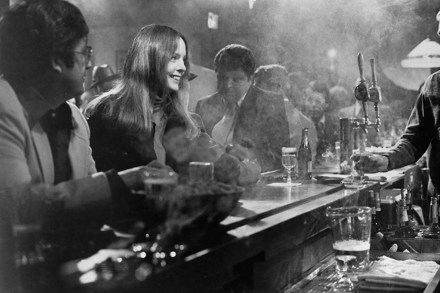
This article is in The Spectator’s October 2019 US edition. Subscribe here. The best bar in America serves water in Styrofoam cups, a half pour. It’s the house specialty. There are half a dozen Chicagoans lining the bar, half a dozen Styrofoam cups. They fall silent when the newcomer enters, eye him as he takes his water. They want to make sure he doesn’t sip it. He does not. The newcomer asks for a Budweiser. ‘Cash only,’ the bartender says. The newcomer produces a bill and then passes the third and final test: he lights a cigarette. The regulars return to chatting and smoking and dumping ash into their Styrofoam cups.

Pulling US troops out of Syria will prove to be the right decision

This article is in The Spectator’s November 2019 US edition. Subscribe here. Whenever neoconservatives and liberals chant in unison about American policy in the Middle East — as when they championed the Iraq invasion, for example, or the overthrow of Colonel Gaddafi in Libya, or the thwarted attempt to topple the Assad regime in Syria — it means we are being told a pack of lies. Par for the course is the hysterical response to President Donald Trump’s ‘betrayal’ of the Kurds in the wake of Turkey’s invasion of northern Syria. Turkey’s goal was to repatriate at least two million of 3.6 million Syrian refugees inside Turkey in a border zone controlled, until the invasion began, by the US-allied, Kurdish-led Syrian Democratic Forces.

turkey syria kurds

Felix Sater, superspy

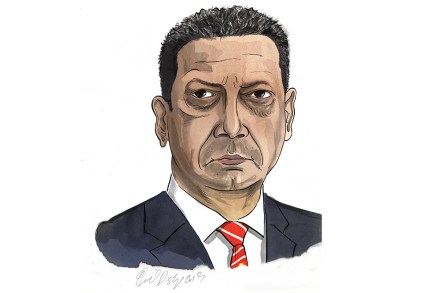
Felix Sater is mad at me. He telephones to say that after I called him a ‘mobster’ in The Spectator, his kids were unable to leave the house. ‘Paul, I am not a mobster. Do I know mobsters? Absolutely, lots of them...I was involved with all five [New York crime] families...I’ve known a lot of unsavory characters in my life...I was never a mobster.’ As one of the characters he’s known is Donald Trump — they were in business together — Sater’s life became public property as soon as Trump announced he was running for president. Since then, the labels stuck on Sater include: violent felon, stock fraudster, money-launderer, FBI informant, spy, double agent, triple agent, the Russian Mafia’s connection to the Trump Organization.

felix sater

The best comedy is the type that makes white people feel terrible about themselves

  Portland, Oregon Allow me to introduce myself. I am Godfrey Elfwick. I am a genderqueer Muslim atheist. I am also WrongSkin, which means I was born white but identify as black (West Indian to be precise). I came out on Twitter as transrace in January 2015. When Rachel Dolezal confirmed her WrongSkin status later that year, it was a great comfort to me to learn I was influencing others to be proud of their transethnic identities. I only wish this level of awareness had been around in 1990. It would have been so much easier for Vanilla Ice. Living with so many levels of minority status can be extremely difficult. As a biologically born white male who identifies as a black woman, I am constantly vilified.

comedy

Race to the finish

This article is in The Spectator’s October 2019 US edition. Subscribe here. ‘I have observed,’ Joseph Addison wrote in 1711 in the first article in the first issue of the first version of The Spectator, ‘that a Reader seldom peruses a Book with Pleasure, ’till he knows whether the Writer of it be a black or a fair Man, of a mild or cholerick Disposition, Married or a Batchelor, with other Particulars of the like nature, that conduce very much to the right understanding of an Author.’ Thomas Chatterton Williams has earned a reputation as a tough, thoughtful and genuinely interesting commentator on race.

chatterton

Hog wild in Indiantown

This article is in The Spectator’s inaugural US edition. Subscribe here to get yours. My old college roommate and I were sitting on a 180-pound wild male boar. Neither of us were habitual hoggers. It was our first rodeo. Florida Route 710, the Beeline Highway from Palm Beach to Indiantown, is a two-lane straight shot out of the tropics and into the scrub near Lake Okeechobee. In the Twenties, a Baltimore banker, S. Davies Warfield, built a railroad into central Florida from Palm Beach. Up went Indiantown’s gridded streets and houses, and the Mission Revival-style Seminole Inn, where Warfield’s niece Wallis Simpson stayed both before and after marrying Edward VIII. But Warfield’s plans were scuppered by two hurricanes and the Depression.

hog

Hipsters are getting high on an alcohol-free cocktail

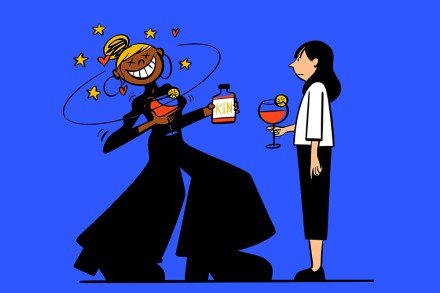
This article is in The Spectator’s inaugural US edition. Subscribe here to get yours. I met Jen Batchelor at a warehouse space in Brooklyn. She took a square, dark-red leather purse, unclasped it and removed a two-serving mini gold Martini shaker, two ornate cocktail tumblers, specialty bitters and a flask of Kin. Kin, an alcohol-free cocktail concoction that claims to occasion bliss and give rise to euphoria, is made from nootropics, adaptogens and botanics. It resembles a potion; it is not psychoactive. Its devotees will tell you it reconstructs the ritual of drinking.

kin
faddisphere jon faddis

A great time in the Faddisphere

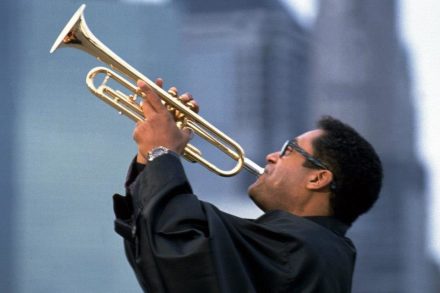
This article is in The Spectator’s inaugural US edition. Subscribe here to get yours. It’s easy enough to write an elegy for the jazz world, a tale of decline and fall, from towering heights to epigones plying their trade in the shadows of the giants. But like most such stories, lachrymose in spirit if not intent, it obscures as much as it reveals. No doubt many of the great clubs that existed in the Fifties and Sixties have faded away, but since the Eighties there has been a distinct revival of more traditional forms of jazz.

Puritanism is back…and welcome to it

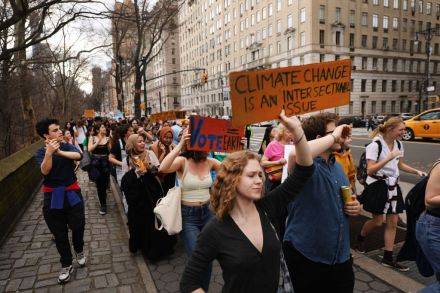
This article is in The Spectator’s inaugural US edition. Subscribe here to get yours. Cole Porter sang: ‘In olden days, a glimpse of stocking / Was looked on as something shocking / But now, God knows, / Anything goes.’ Everything went, and with it: humor. World War One was followed by a licentious riot of amoral libertinism, with the collapse of religious convictions, ethical norms, societal conventions and plain good manners. Nothing was sacrosanct and this turned laughter into hard work. Like going to see Waiting for Godot and waiting for the punch lines. Or skating over the thin ice on the river of despair in the novels of Evelyn Waugh.

wokeness puritanism
liquor american alcohol

Why do Americans and Brits write about alcohol so differently?

This article is in The Spectator’s inaugural US edition. Subscribe here to get yours. ‘No nation is drunken where wine is cheap,’ Thomas Jefferson famously said, laying the blame for insobriety firmly on ‘ardent spirits’. The third president was a notorious wine-fancier with a particularly soft spot for Sauternes, yet it is true that countries with a long history of winemaking tend towards more easeful drinking. Despite the ghastly interregnum of Prohibition, America has become a serious wine-producing nation — and yet ardent spirits seem to have left far stronger a mark, on the national mindset and on the nation’s prose.

batavia new york

I am a part of Batavia, New York

This article is the American Life column from The Spectator’s inaugural US edition. Subscribe here to get yours. Batavia, New York, my favorite place in the world, was described by Alexis de Tocqueville on his American tour: ‘Scattered houses then marshes. Rooms built of tree trunks.’ OK, it wasn’t the Frenchman’s most memorable passage. But Tocqueville was more charitable than my landsman John Gardner, the 20th-century novelist who called Batavia a symbol of ‘both spiritual death and the death of civilization’. Gardner, a nomadic academic who had left town years earlier, was responding to the federally funded razing of Batavia’s core in the 1960s under the cruelly misnamed Urban Renewal Program.

Will China meddle in the 2020 election?

This article is in The Spectator’s inaugural US edition. Subscribe here to get yours. Vladimir Putin, as we all know, has become chief electoral strategist in the western world. When he wanted Donald Trump president, he merely set his army of trolls to action and the American public was fooled into backing a candidate who would never have got anywhere near the White House otherwise. That is what the media has been telling us since 2016, anyway. But the idea that Russia can swing a sophisticated electorate of 300 million people with the aid of a fake-news tweet factory in St Petersburg was always fantastical. Even the Mueller inquiry could not prove it — not for want of trying.

china 2020