Paywall

GOP West: could Republicans have an Arizona advantage?

This article is in The Spectator’s December 2019 US edition. Subscribe here. November inflicted more dismay on Republicans. Twelve months out from the presidential election, state and local races this year subjected the GOP to another bloodbath. The party lost both chambers of the Virginia legislature and gave up the governor’s mansion in deep-red Kentucky, despite a campaign intervention by the President. The drubbing Republicans received in city and county contests near Philadelphia was the most frightening of all, presaging difficulty ahead for Trump’s reelection efforts in Pennsylvania. Democrats could relax: 2018 was not a fluke after all.


arizona

Keeping up with the sex robots

This article is in The Spectator’s November 2019 US edition. Subscribe here. The floor is slippery. I guess I shouldn’t be surprised, I’m taking a tour of Abyss Creations, the factory where the ‘Ferraris of love dolls’, RealDoll and Realbotix, are made. A thin layer of silicone coats almost every surface. A (real) woman in her late twenties, the PR coordinator, Catherine, shows me round. She has the attitude of a hostess at a theme-park restaurant: bored or stoned or maybe both. I’m sure she’s given hundreds of these tours, heard the same dumb jokes a million times and watched us all slap the ass of a doll reluctantly yet instinctively.

sex robot

A motel room of one’s own

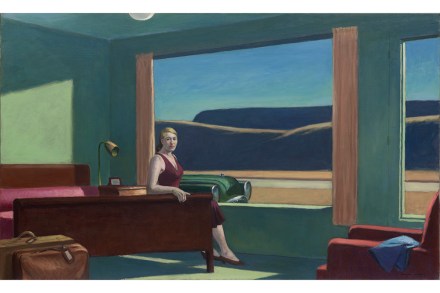
This article is in The Spectator’s November 2019 US edition. Subscribe here. To gauge a man’s character, note how he spends a month in Paris. Edward Hopper, according to the catalog of his 1933 retrospective at New York’s Museum of Modern Art, lodged with a ‘respectable French family’, studying French and ‘avoiding bohemia’. Asked if he met any painters during his visits, he responded, ‘No, I did not know anyone. Gertrude Stein was on the throne when I was there.’ Hopper knew it wasn’t his scene. Isolation was a persistent theme in Hopper’s art and life. Was he dogged by isolation or did he pursue it? ‘Did anybody really know this silent, non-communicative man?

hopper

Trump’s economic nationalism is an effort to save capitalism

This article is in The Spectator’s November 2019 US edition. Subscribe here. Elizabeth Warren looks like a deadly serious prospect for the Democratic presidential nomination. Bernie Sanders may never make it to that promised land, but there is no question that his spirit is still moving the Democrats toward democratic socialism. The party’s activist base and youth wing grow more anti-capitalist by the month. It’s enough to turn many a libertarian or Chamber of Commerce conservative into a Trump supporter, despite the president’s own defiance of free-market orthodoxy on trade. Yet the president might as well be Milton Friedman compared with some on the right who are, if anything, outflanking the left in their critiques of capitalism.

capitalism
extinction rebellion

Mass extinction

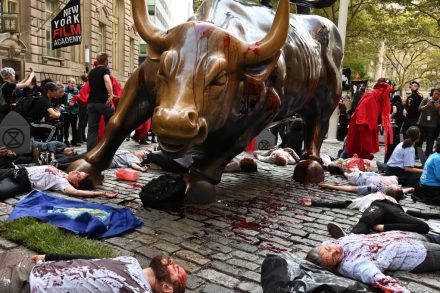
That the so-called Extinction Rebellion decided to spray Wall Street’s ‘Charging Bull’ statue with fake blood says it all. The protest group, which originated in Britain but whose protests have spread to New York, Washington and Chicago, is fundamentally an anti-capitalist movement. It is merely the latest incarnation of the antiglobalization and Occupy movements. While those groups gained little traction with the general public, Extinction Rebellion has discovered that by mixing up its demands with concern for the environment, it can win support — or at least a passing kind of support — from a much wider band of the population.

Brazilian wax

This article is in The Spectator’s November 2019 US edition. Subscribe here. When Brazilian president Jair Bolsonaro spoke at the United Nations General Assembly in late September, he depicted Brazil as a victim of colonialism. ‘The United Nations has played a fundamental role in the suppression of colonialism,’ he said, ‘and we cannot allow this mentality to return to these rooms and corridors at any pretext. We cannot forget that the world needs to be fed.’ Foreign countries, Bolsonaro alleged, have ‘an interest in keeping indigenous people living like cave men’.

brazilian
craft

Craft brewing’s Midwest comeback

This article is in The Spectator’s November 2019 US edition. Subscribe here. ‘No food or drink has evolved as much as beer in the past 15 years,’ says J. Ryan Stradal when we meet for a drink at the Beer Grotto, in Ann Arbor, Michigan. The author of the New York Times bestselling debut Kitchens of the Great Midwest is in the middle of his Midwest book tour. His latest novel, The Lager Queen of Minnesota, is a multi-generational saga that starts with two sisters, a stolen inheritance and a dream of making the best beer in Minnesota. It’s a family story told through beer goggles, which charts the evolution of Midwestern brewing from the 1960s to the present day.

Audio blitzkrieg

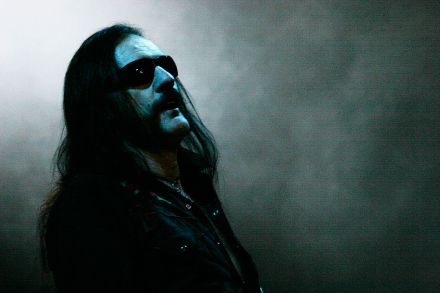
This article is in The Spectator’s November 2019 US edition. Subscribe here. Wokeness, first conceived of by the Armenian mystic George Gurdjieff (1872-1949) had barely reached the mainstream when Ian ‘Lemmy’ Kilmister died in 2015. Still, Lemmy had given considerable thought to staying woke. As a champion abuser of amphetamines, he’d spent more time awake and thinking than anyone since 1945. Perhaps his surprising death –– surprising, because he seemed indestructible –– was necessary in some Gurdjieffian way, to make room for the terrors that now occupy our psyches.

motörhead lemmy

The perfect crime

This article is in The Spectator’s November 2019 US edition. Subscribe here. Everyone loves a good murder. Tales of cold-blooded killing were bringing in audiences even before Truman Capote elevated the telling. Now, as if tales of real-life slaughter aren’t enough, podcasters color the horrors and hook the listeners with spooky music, awkward cliffhangers and a dubious sociological moral. The typical true-crime podcast has hosts who seem to be chugging wine from the box and narratives ruined by contrived social implications. A cynic or a detective would link this style to the appearance of listicles of the best true-crime podcasts in Good Housekeeping, Oprah Magazine, Town and Country and Women’s Health.

true crime
hendrick's nostalgia

Nostalgia sells — but you have to get it right

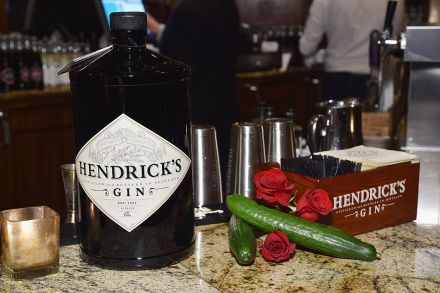
This article is in The Spectator’s November 2019 US edition. Subscribe here. People don’t believe me when I tell them we created Hendrick’s Gin 20 years ago — mostly because the bottle looks like it’s been on the market for more like a century. Over the course of those 20 years, we’ve gone from an unusual little gin to a global brand. We sell more than one million cases a year. The secret is nostalgia. Most of the products we design at Quaker City Mercantile, the creative agency I run in Philadelphia, are known as ‘nostalgia’ brands. Nostalgia can be a powerful thing, but it’s not as easy as slapping a faux-vintage label on and calling it a day. Any nostalgic design has to come from an inherent truth about the brand.

Is Lou Reed a rock ’n’ roll Dostoevsky?

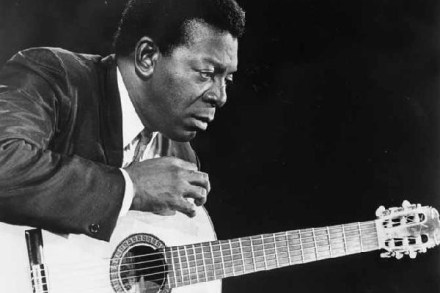
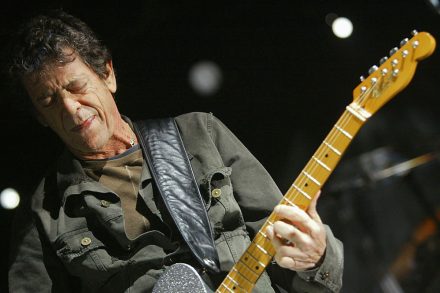
This article is in The Spectator’s November 2019 US edition. Subscribe here. A journalist friend was once ordered to interview Lou Reed in his hotel room. The meeting was not a success. Reed retreated to the closet bearing a copy of the poems of Delmore Schwartz and refused to come out until his guest had paid cash for it, saying, ‘Delmore needs the money.’ Reminded that the author of In Dreams Begin Responsibilities had died some years before, Reed observed, ‘Well, his family needs the money.’ $5.99 changed hands and the conversation continued.

lou reed
north korea michael palin

A vacation in a hell of a state

This article is in The Spectator’s November 2019 US edition. Subscribe here. Michael Palin in North Korea was a two-part 2018 documentary on the Monty Python actor’s tightly choreographed tour of North Korea. Palin dances with cheerfully drunk North Koreans on International Workers’ Day and picnics with his guide, a woman called So Hyang. He plays catch with an inflatable globe with some North Korean children and learns some taekwondo.

trans

Trans rights, voter wrongs

This article is in The Spectator’s November 2019 US edition. Subscribe here. Donald Trump will probably be reelected in 2020 – not because he is a good president, smart, or has good policies. He will win, I believe, because the Democrats are awful. The party that is meant to be ‘for the people’ has completely lost touch with the people. Rather than address real issues, the Democrats have resorted to virtue signaling. Take, for instance, the recent LGBTQ Democratic presidential town hall hosted by CNN. Candidate after candidate stood up and repeated the words ‘transwomen of color’ as many times as they could manage, hoping that this would win over voters. Have they learned nothing from the last election?

Why are young people so left-wing?

This article is in The Spectator’s November 2019 US edition. Subscribe here. The French economist Thomas Piketty, who made his name with Capital in the Twenty-First Century (2013), has another book out next year called Capital and Ideology in which he looks at changing patterns of voting behavior in Britain, France and America. One of his findings is that, until quite recently, the more educated voters were, the more likely they were to vote for right-of-center parties. Now, the opposite is true. Which might explain why Donald Trump declared at the height of the 2016 presidential election: ‘I love the poorly educated.’ Piketty has already published a paper about this and the data he’s accumulated is eye-catching.

left-wing

Top Boy wins the turf war

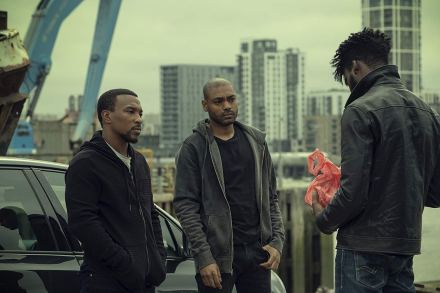
This article is in The Spectator’s November 2019 US edition. Subscribe here. I couldn’t stand The Wire. Everyone mumbled unintelligibly, the pace — inexcusably in a series about drugs and violence — was often glacially slow, and I found some of its characterization too transparent, like, ‘Ooh, I know. We’ll make the wise old black guy have the unlikely hobby that he repairs dolls’ houses, so that viewers will appreciate the nuance and hinterland.’ Top Boy (new on Netflix), on the other hand, is pacy, plausible and deliciously ruthless. It’s like The Wire, relocated to London with a much cooler soundtrack and with all the boring bits removed.

top boy

The shallow state

This article is in The Spectator’s November 2019 US edition. Subscribe here. If Donald Trump is driven from the White House, he’ll blame the Deep State. His belief in ‘the Deep State conspiracy’ was behind the call he made to Ukraine’s president that might now get him impeached. One of President Trump’s former aides, Sebastian Gorka, who’s now a radio talk show host, asked him how the effort to defeat the Deep State was going. Trump said he had already seen off the ‘absolute scum’ at the top of the FBI. ‘With the destruction of the Deep State, certainly I’ve done big damage...I think it’ll be one of my great achievements.

deep state
warren

Big Squaw E. Warren speaks with forked tongue

This article is in The Spectator’s November 2019 US edition. Subscribe here. Absent the appearance of a last-minute deus (or dea) ex machina, and always keeping in mind Harold Wilson’s observation that a week is a long time in politics, the bookies are coalescing around the prediction that the Democratic nominee for president will be Big Squaw E. Warren, senator from Massachusetts, purveyor of authentically fake ‘Pow Wow Chow’ which experts reckon are 0.1024 percent Cherokee, the same as paleface Warren herself. It was only yesterday, it seems, that the Democratic field was teeming with candidates. Whither Spartacus Booker and his imaginary friend T-Bone? What price Kamala Harris? Who remembers Mayor Pete?

Daddy issues: the fatherhood revolution has failed

This article is in The Spectator’s October 2019 US edition. Subscribe here. When I was growing up in the late 1960s, boys like me craved the admiration and approval of our dads; we wanted nothing more than to impress them. And now that we are dads, we crave the admiration and approval of our children; we want nothing more than to impress them. But the curious thing is, they don’t care about impressing us. In fact, our teenage children are just like our dads were — distant figures who are busy getting on with their own lives. Today we demonize dads of the recent past for being cold and uncaring. For failing to change diapers, read stories at bedtime, provide the unconditional love and praise children need to grow into happy, well- adjusted adults.

fatherhood
simenon lockdown

If only Georges Simenon had been a bit more like Maigret

This article is in The Spectator’s October 2019 US edition. Subscribe here. Georges Simenon, creator of the somber, pipe-smoking Paris detective Jules Maigret, pursued sex, fame and money relentlessly. By the time he died in September 1989, Simenon had written nearly 200 novels, more than 150 novellas, several memoirs and countless short stories. He matched this demonic productivity with sexual athleticism. ‘The goal of my endless quest,’ Simenon explained,‘was not a woman, but the woman.’ He demanded sex at least once daily from his wives, secretary, and housemaid-mistresses. How he found the time to write so many books is a mystery that Maigret might struggle to crack. Simenon described himself, without irony, as ‘a psychopath’.

warreh

Elizabeth Warren is the Hillary Clinton of 2020

This article is in The Spectator’s November 2019 US edition. Subscribe here. How did Elizabeth Warren, a left-wing populist, become the candidate of Democrats who dislike left-wing populism? Why is it fine for Warren to menace the rich — but not for Bernie Sanders? With some polls placing her ahead of the former vice president Joe Biden, the Massachusetts senator is suddenly basking in praise from mainstream newspapers as well as ‘progressives’ like Emily Tisch Sussman, a ‘Democratic strategist’ who appears regularly on MSNBC. Led by its star hosts, Chris Matthews and Rachel Maddow, MSNBC functions as the mouthpiece of an official Democratic party still dominated by the Clintons and Barack Obama.