Paywall

Trump vs the cities

Update June 2, 2020: There’s something very wrong with our cities, as the devastating riots this week show. Last year, in the the Spectator's Christmas US edition, I wrote about how in a few short years the liberal city rapidly became the progressive city under an organized insurgency of far-left activists embedding themselves in municipal governments. The results have been devastating, as our once beautiful cities marinate in dirt, disease and strife. Now, they are burning. Failed progressive policies have never been more evident than they are today. With the election five months away, Trump now has an opportunity to pitch himself as the leader who will fight against the degradation of the inner cities.


manhattan
books of the year 2019

The Spectator’s Books of the Year 2019

Andrew J. Bacevich I have reached the age when it seems important to give attention to the books I ought to have read long ago but skipped past. As an American born in the middle of the 20th century, I’m drawn to the literature of that era. Lately, I have been reading for the first time John Steinbeck’s The Grapes of Wrath (Penguin, $18), published during the Great Depression. Of course, I have seen John Ford’s gripping interpretation of the novel, starring Henry Fonda as Tom Joad. It’s a great movie. In my estimation, the novel itself is also a masterpiece. Of course, it is necessarily a product of its time, saturated with a sentimental depiction of those dispossessed by massive economic upheaval.

The haunting of Russell Kirk

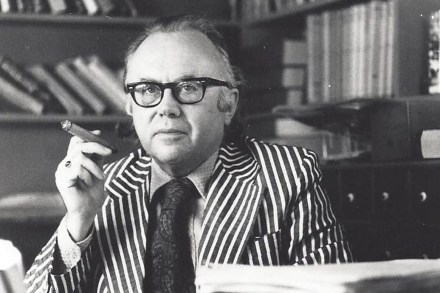
Russell Kirk’s novel Old House of Fear became a surprise bestseller when it was first published in 1961. First issued in hardcover by a small publishing house called Fleet, Old House quickly went through multiple paperback reprintings by Avon Books. Mary MacAskival, the red-haired love interest, has an increasingly tantalizing appearance on Avon’s succession of cheesecake covers. ‘Rich in atmosphere and intimations of impending doom… from the first muffled cry to the final midnight scream,’ declared the New Yorker of an edition on whose cover Mary sneaks around a Gothic portal in pink pajamas. ‘Wild excitement, sadistic violence.

russell kirk fusionism virtue
alice wokeland children’s greta literature wokeness

We are all Greta now

This article is in The Spectator’s December 2019 US edition. Subscribe here. For woke children everywhere, the exciting news is that along with the book on Gutsy Women that she has written with her mother, the indefatigable Chelsea Clinton had another book out this year. It’s called Don’t Let Them Disappear and it’s about animals in danger of extinction. A bit big for a child’s stocking, but could be one for under the tree. Last year, it was Start Now!, a guide for juvenile activists wanting to change the world, beginning at home. Before that, Chelsea C. published She Persisted Around the World, about 13 girls who ‘never took no for an answer’. And before that, in 2015, she produced her juvenile activist guide It’s Your World.

michael wolff

Michael Wolff is working on ‘nothing’

This article is in The Spectator’s December 2019 US edition. Subscribe here. New York ‘What are you working on?’ is a standard and annoying question often asked of creative types. Finally, I have a good answer: ‘Nothing.’ That was my response at a recent New York dinner party at the home of the Italian journalist Mario Platero and his British wife, Ariadne. The Plateros have been entertaining the New York media class for decades and many of their long-time guests are even older than I am. But they are all still announcing projects. More power to them. They are fighting obsolescence. I’m embracing it. For one thing, it is hard not to be fatalistic if you are a journalist.

Leonardo da Virtual

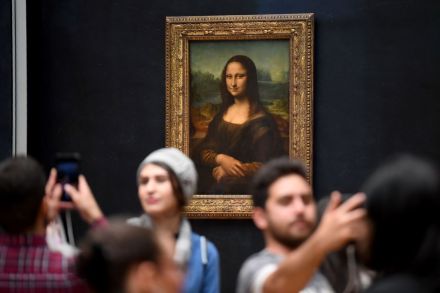
This article is in The Spectator’s December 2019 US edition. Subscribe here. The first time ever I saw her face, she was smiling. I knew her face before I saw it, but I cannot remember when I first knew it, because I had always seen it. But when I first saw her in the flesh, I couldn’t really see her at all. She was behind thick glass and a waist-high wall, and a crowd of people 20-deep were pushing toward her, shouting and pointing and taking photographs. She was still smiling, but as I forced my way out of the crowd, I felt as though the smile no longer expressed the mysterious inner mood of a high-born Florentine sitting in a loggia, but the bemused contempt of a woman sitting in the stocks for the entertainment of the mob.

mona lisa leonardo
distilling spirit

Transparent spirit: craft distilling has come to Washington DC big time

This article is in The Spectator’s December 2019 US edition. Subscribe here. A white cross once rested over the door of the windowless warehouse at 1135 Okie St NE in Washington, DC. Residents seeking a reprieve from the street gangs and drugs that plagued the Ivy City neighborhood would huddle on the second floor and listen to the holy men of Old Ship of Zion Baptist Mission Church preach deliverance. Deliverance came. Crime plummeted. The violence and poverty along H Street gave way to Zagat-rated restaurants, organic markets and boutique bars. The closest thing you’ll see to weapons now in Ivy City is at Kick Axe, a new watering hole offering flannel-clad Capitol Hill staffers the opportunity to have a drink and, well, throw axes at wooden boards.

The pod delusion

This article is in The Spectator’s December 2019 US edition. Subscribe here. At a recent party, a mortgage-banker friend approached, asking me to come on his podcast. I politely declined. ‘What do I know about mortgage banking?’ I protested. ‘I don’t know my ARM from my Fannie Mae.’ I’ve never made my amigo for the sensitive type. His hobbies include drinking tequila like he’s in a worm-eating contest and getting in fistfights at professional sporting events. But he seemed wounded. ‘My podcast isn’t just about mortgage banking,’ he said, ‘it’s about spirituality.’ Here, I was briefly tempted, as I’m more in touch with spirituality than loan originations.

podcasts podcast pod
politician

Payton’s place

This article is in The Spectator’s December 2019 US edition. Subscribe here. Four episodes in, I finally decided I really didn’t like The Politician (Netflix). Initially, I thought I might because there was lots of advertising assuring me how good and culturally important it was going to be. Also, it’s made by the same creative team responsible for Glee, that slick but likable and quite moreish series about an American high school glee club where an impeccably diverse class of gay and disabled people keeps bursting into implausibly accomplished cover versions of classic pop songs. But no. The Politician leaves you with the same unpleasant, dirty, life-just-wasted feeling I imagine you’d get from watching Japanese hentai porn.

mike michael bloomberg

Who likes Mike?

This article is in The Spectator’s December 2019 US edition. Subscribe here. It’s springtime for billionaires. Former New York mayor and media mogul Michael Bloomberg, who earned fame, among other things, for his abortive crusade against oversized high-calorie sugared drinks, is now joining liberal activist and billionaire Tom Steyer in running for the Democratic presidential nomination. Bloomberg, who turns 78 in February, has filed to enter the primary in Alabama and plans to skip the first four primaries in Iowa, New Hampshire, Nevada and South Carolina.

Forever in our debt

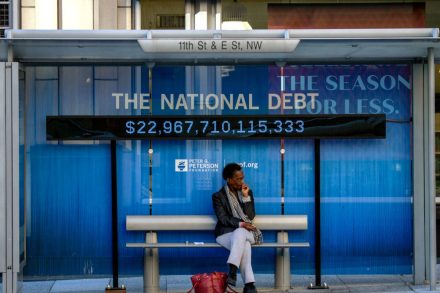
President Donald Trump will enter an election year with the threat of impeachment still hanging over him. Yet in most respects his administration is in a far better position than his critics could have imagined when he took office nearly three years ago. Economic growth, while in retreat in recent months, remains ahead of that of other developed countries. Stock markets, which Nobel Prize-winning economist Paul Krugman said might ‘never recover’ from Trump’s election, are at near-record highs. Where Trump’s opponents feared that his bellicose language would spark a nuclear conflict in North Korea, he defused the situation. His approach to foreign policy may be incoherent, but it hasn’t yet proven to be disastrous.

national debt

Britain is dangerously close to having an overtly anti-American prime minister

This article is in The Spectator’s December 2019 US edition. Subscribe here. What have Fidel Castro, Nicolás Maduro, Hamas and the Khomeinist regime in Iran got in common? That the US has not exactly seen eye to eye with them over past years and decades? Well, yes. But there is another thing too: Jeremy Corbyn, the Labour party leader who could soon be the British prime minister, has warmly praised them all. Castro, according to Corbyn on the occasion of the former Cuban leader’s death in 2016, was a ‘champion of social justice’. Corbyn rang in to a Venezuelan TV program in 2014 to praise Maduro, who introduced him as a ‘friend of Venezuela’.

jeremy corbyn

E-scooters are a wretched species to be introduced into the urban ecosystem

Scattered along the streets of Washington DC are electric scooters. Most have four-letter names: Bird, Lime, Skip, Jump, Bolt. Using one for the first time, you may prefer to employ another four-letter word. I know I did. My first taste of the e-scooter phenomenon was on a visit to Los Angeles in February last year. The Santa Monica company Bird had been up and running for only five months, yet already its scooters were all over the city, like avian excrement. Students at UCLA embraced the Birds. Nobody seemed fazed by the undeniable fact that you cannot look cool on a battery-powered two-wheeler. The epidemic then spread to other American metropolises: Atlanta, Minneapolis, Miami. New York has so far held out, but will likely soon fall.

e-scooters

My morning with Black Lives Matter UK

This article is in The Spectator’s November 2019 US edition. Subscribe here. Portland, Oregon It was a bright April morning and the sun shone benevolent golden rays upon me as I strode purposefully up the steps to the door of a house in the London district of Islington. Pressing the Victorian brass doorbell, I heard the comforting chimes of Toto’s ‘Africa’ emanating from within and nodded my head in approval. After a few seconds the door was opened by a charming white-passing transracial man who called himself Babatunde (I later found out his birth parents had named him Rupert). He graciously invited me into a spacious studio apartment decorated with tribal carvings from Ikea’s African Solnedgång collection.

black

The Ukraine blame game

This article is in The Spectator’s December 2019 US edition. Subscribe here. The unfolding deep-state effort to remove Donald Trump from office diffuses an acrid aroma of paranoia, partly because of its ever-expanding cast of enemies. After the tears and disbelief of 2016, there were rumors about ‘Russian collusion’ between the Trump campaign and Moscow. It emerged that investigations into Trump and his associates dated back to at least July 2016, when the FBI covertly launched ‘Crossfire Hurricane’ to investigate Michael Flynn, Carter Page, Paul Manafort, Roger Stone and other Trump campaign associates. The Obama administration had been sniffing around Trump since 2015, when his campaign first began to show signs of life.

ukraine

Everyone’s climbing aboard the Beyond Meat gravy train

This article is in The Spectator’s November 2019 US edition. Subscribe here. It’s summer in Wokeville, California, and the denizens congregate in their backyards, popping open craft beers and passing around kelp-flavored rice chips as the Beyond Meat burgers sizzle on the solar-powered grill. As Brad Paisley would say, it’s just another American Saturday night. Er. Wait. Not sure I caught that right. Backyards, yes. Craft beer, yes. Rice chips, well, OK. But did you say Beyond Meat? I am sorry to report this, dear residents of Everywhere Else, but yes, that’s what’s cooking in Wokeville these days.

beyond meat

California drinking: forgive them their granola

This article is in The Spectator’s November 2019 US edition. Subscribe here. Cyril Connolly famously opined that every young man of spirit wants to do two things: start a magazine and start a chicken farm. That’s about half right, I think. It would have been more accurate if he had included a true, if often unspoken, heart’s desire: to be a wine critic. Do you know anyone — anyone you still speak to, I mean — who hasn’t wanted to be one? Every Sunday, my family and I participate in an august ceremony that extols a beneficent God through whose ministrations we accept the gift of vinum...fructum vitis et operis manuum hominum: ‘wine… fruit of the vine and the work of human hands’.

pax mahle california

Tough gospel: the twin cities of Sesame Street and Mister Rogers’ Neighborhood

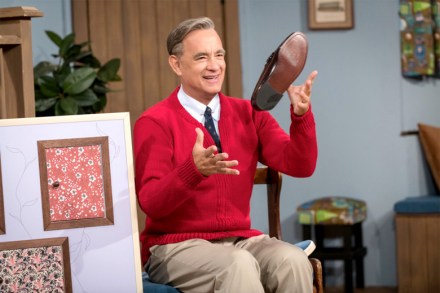
This article is in The Spectator’s November 2019 US edition. Subscribe here. For people who, like me, were born in the troubled times of the Seventies, Sesame Street and Mister Rogers’ Neighborhood were an educational crossroads. As we gazed into the cathode-ray tube for direction, each program led to a very different future. Sesame Street, now in its 50th season, remains unavoidable and familiar. Yet we’re captivated by the return of Mister Rogers’ Neighborhood, the unpolished creation of Fred Rogers that aired from 1968 to 2001. Last year, the documentary Won’t You Be My Neighbor? became a surprise hit. This week sees the opening of A Beautiful Day in the Neighborhood, a movie starring Tom Hanks as Rogers.

rogers
feminists

Fashion victims: how feminists are betraying Muslim women

This article is in The Spectator’s November 2019 US edition. Subscribe here. When I was growing up, one of my closest female friends was Muslim. At first, her parents didn’t want us to be friends; they figured that as a child of divorced parents, I’d be a bad influence. Their restrictions pushed her to what they would surely have thought of as the dark side, had they ever known what we got up to. She and I were devout feminists, and we knew that women’s equality was more important than the dictates of religion. Neither she nor her mother covered her hair with a hijab or wore a baggy abaya. I’d been raised in a Christian household where short skirts were prohibited, but I’d recently moved in with my more permissive mother and stepfather.

The ‘Russians’ of Brighton Beach

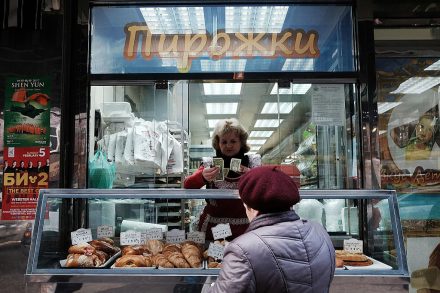
This article is in The Spectator’s November 2019 US edition. Subscribe here. At the very southern tip of Brooklyn, far from the hip avocado cafés and right before you hit the sea, there sits the neighborhood of Brighton Beach. Nicknamed ‘Little Odessa’ after the waterfront city in Ukraine, the area is home to primarily Russian-speaking immigrants from the former Soviet Union. It’s a jumble of identity. The immigrants are mostly Jews from Ukraine, hence the nickname, but also Russia, Belarus and the other Soviet republics. So what to call these people in America? In Russia, in Ukraine, in Belarus, our identity cards never described us as Russian, Ukrainian, Belarusian. We were just Evrei, Jews.

brighton beach russians