Parliament

Judgment day: the danger of courts taking over politics

From our UK edition

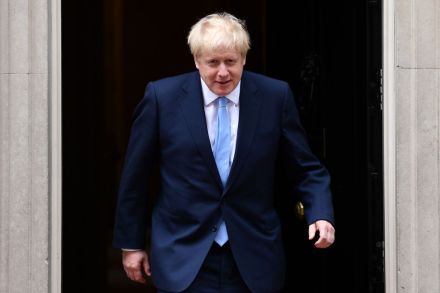
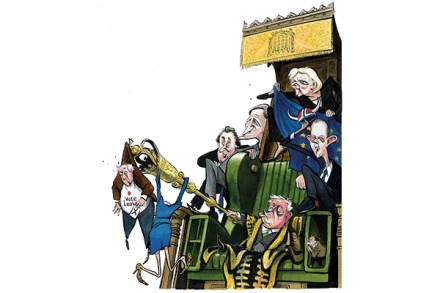
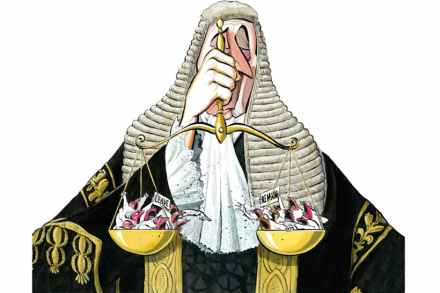
Who runs Britain? When Boris Johnson’s lawyers made their case in front of the Supreme Court this week, defending his right to prorogue parliament, they in effect brought it back to this simple question. This was a controversy for politicians to settle, not courts. Judges, they said, should think twice about ‘entering the political arena’ and unsettling the UK’s ‘careful constitutional and political balance’. He may be the first prime minister to frame the matter so starkly, but no previous prime minister has had to. This is about far more than Brexit. Britain is witnessing political litigation on a hitherto unseen scale. We have a government that has lost a working majority and is being forced by legislation to act against its own central policy.
Word of the week: ‘prorogue’

From our UK edition

It was most unlooked-for that a king should ally with Whig politicians to seek parliamentary reform, but that was what William IV did when Earl Grey was trying to carry the Great Reform Bill in 1831. When Grey apologised for putting him in a hurry, the Sailor King exclaimed: ‘Never mind that. I am always at single anchor.’ Parliament was bedlam, Peel seemed ‘about to fall into a fit’, the Speaker had ‘a face equally red and quivering with rage’. The Lords had tabled a motion to stop the King dissolving parliament. To head them off from infringing his prerogative, William decided to prorogue  it in person. When told by the Master of the Horse that the state coachman was absent, William cried: ‘Then I will go in a hackney coach.

Is this misunderstanding behind the rise of populism?

From our UK edition

The latest stage in a series of arcane gambits and cunning plans designed to frustrate Britain’s exit from the EU came in the form of Jeremy Corbyn's recent letter to leading opponents of a no-deal Brexit, inviting them to discuss the joint coordination efforts. In his letter, Corbyn rightly predicts that during the next few weeks the country will enter a ‘constitutional and political storm’. Up to now, however, the response of our political elite to this impending crisis has been confused. Radical Leavers claim Parliament can be prorogued to allow a no-deal Brexit to pass without further intervention from MPs.

Why October 10th is Boris Johnson’s best bet for a snap election

From our UK edition

Boris Johnson thrives on risk. His political life so far has consisted of a succession of gambles that have paid off: leaving the Commons to be Tory mayoral candidate in a Labour-voting city; choosing Leave in the referendum against the odds and the establishment; resigning as foreign secretary; and then becoming Prime Minister when many thought he was a busted flush. These decisions are the marks of a man from whom we ought to expect the unexpected. And there is good reason for him to now make the ultimate bet and call a snap election. It's now widely assumed that Jeremy Corbyn will table a motion of no confidence soon after Parliament returns from summer.

The six wittiest conservatives

From our UK edition

Left-wing people are funny and Conservatives are not. That’s the myth the Left like to perpetuate – particularly left-wing “comedians”, usually with all the wit and subtlety of John McDonnell at a Palestine Solidarity rally. We have in Boris Johnson a Conservative Prime Minister famous for his wit and wordplay – a man who famously declared during the 2005 election campaign that “Voting Tory will cause your wife to have bigger breasts and increase your chances of owning a BMW M3.” But, he’s not the first, and certainly won’t be the last, Tory to light up Parliament with his quips.

Jacob Rees-Mogg and the mystery of the conference recess

From our UK edition

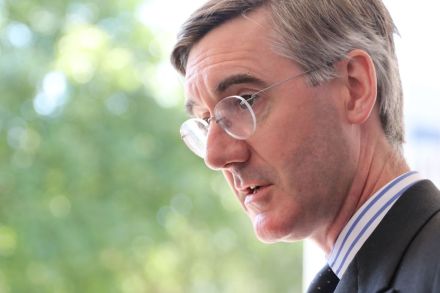
“What is going on with the conference recess?” asked Valerie Vaz during Jacob Rees-Mogg’s first outing for Business Questions as Leader of the House. She sounded exasperated, and who can blame her? After all, it was the sixth week in a row she asked the question. And it was the sixth week that she was fobbed off. So what is going on? Normally conference recess dates are bundled together with the dates of other recesses and tabled earlier in the parliamentary session. In 2018, the recesses for the forthcoming summer, conference, November and Christmas were approved on March 20th. In 2017, summer and conference went together on June 22nd (after the general election).

Why MPs’ mental health matters

From our UK edition

Given the level of threats that they face, and the bizarre life they often lead, it's no surprise that MPs have a higher preponderance of mental health problems than the general public. A study published this week in the British Medical Journal found that 34 per cent of parliamentarians had the symptoms of a common mental disorder, with the rate in the general public at a lower 26 per cent. What's more striking about the research, which surveyed nearly a quarter of MPs, is that so many of them – 77 per cent – had any idea that there was a dedicated mental health service in Parliament. The Parliamentary Health and Wellbeing Service is one of a few really positive changes in Westminster over the past few years.

Portrait of the week | 11 April 2019

From our UK edition

Home Theresa May, the Prime Minister, wrote to Donald Tusk, the President of the European Council, asking for an extension until 30 June of the period under Article 50 for which the United Kingdom should remain in the European Union. She hoped for parliament to agree to an ‘acceptance of the withdrawal agreement without reopening it’, perhaps through reaching a consensus by means of ‘a small number of clear options on the future relationship that could be put to the House in a series of votes’. She thought her talks with Jeremy Corbyn, the Leader of the Opposition, might reach such a consensus. Not only that, but she hoped that parliament would give its agreement before the elections to the European Parliament, due on 23 May, in which case they would be cancelled.

This is MPs’ chance to reinvigorate democracy. Will they take it?

From our UK edition

MPs are rather bewildered today. It's not just that some of them are trying to understand the intricacies of the Labour Party whipping operation, with frontbenchers saying one thing in broadcast interviews, and the whips saying quite another in private conversations. It's also that parliamentarians are having to decide what it is they actually want from Brexit. This is a significant shift for all of them, whether they were elected two decades ago or in the most recent general election: MPs' job is to decide whether or not to let legislation written by the government of the day pass unamended. Now, rather than simply rejecting a bill, or making changes to its detail rather than the overarching principle, they are having to choose from a long list of options.

Not even God knows what happens to Brexit now

From our UK edition

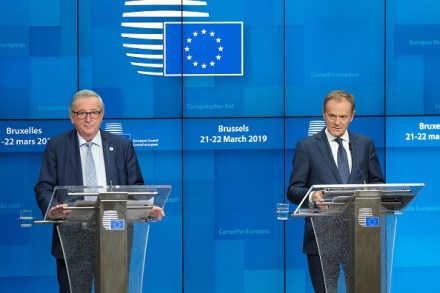
After yesterday’s historic negotiations between EU leaders here in Brussels – while Theresa May was out of the room – here is what we now know about Brexit. We are not leaving the EU on 29 March 2019, the Brexit day that was supposedly set in stone. We may yet leave on 22 May this year, but only if next week MPs finally – at a third time of asking, and probably on Tuesday – vote for Theresa May’s widely derided Brexit plan. We could leave without a Brexit deal on the new Brexit day, 12 April – if the PM’s vote is lost.

The EU has just given parliament more time to take control of Brexit

From our UK edition

Last night, the EU27 unanimously rejected Theresa May's request for a June Brexit extension and told her 22 May at the latest - or 12 April if she couldn't pass her deal). This pushes the cliff edge back by just a little, and makes nothing easier for her. If her deal doesn't pass, she would have to choose a no deal, or a long extension and agree to hold European parliament elections. But that's assuming that she will still be in control of the process at that point. Crucially, the extension gives time for MPs to take control of Brexit in the next three weeks. If her deal is rejected (as still looks likely) then parliament will have plenty opportunity to state its terms: for example, the Customs Union that Labour seeks.

Splitting headache

From our UK edition

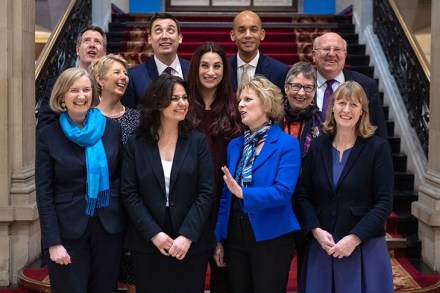
The first thing to note about the ‘South Bank seven’ is that they are nothing like the four former Labour cabinet ministers who split the party in 1981, forming the SDP. The Gang of Four were national figures who between them had held every major office of state, bar the top job. Most of the MPs who announced from a swish venue on the South Bank that they were quitting Labour to set up a new outfit have little to no public profile. They’re more likely to be an answer on Pointless than stopped in the street for a photo. While the most well-known member, Chuka Umunna, has high ambitions (his colleagues joke that he sees himself as the UK’s answer to Emmanuel Macron), his most senior role to date was as Ed Miliband’s shadow business secretary.

Why we are still no closer to a Brexit prognosis

From our UK edition

I have this mental image of Brexit Britain on a hospital ward waiting for treatment that never comes. We are hanging on for an operation that is supposed to make us stronger and happier, but we still don’t know what kind of procedure it will be – or even when or whether it will definitely happen. This coming Thursday was supposed to be a big day. It was billed as when MPs would vote on whether Brexit should be postponed, and what kind of Brexit they might eventually support. But it now looks as though the consultant in charge of our treatment, the prime minister, will announce on Tuesday or Wednesday that she would dearly love them to hold fire.

Boles’s crazy plan

From our UK edition

At first, it seems fanciful. A backbench MP, Nick Boles, proposes to take power away from the government and place it in the hands of MPs, to prevent a no-deal Brexit. Can one backbencher usurp power in this way? It’s ambitious. But under the British system, government reports to parliament, not the other way around. Usually the distinction is moot, because government can control the Commons. But when that control collapses, every kind of mischief becomes possible. Until a couple of months ago I was director of legislative affairs under Theresa May in No. 10, where it was my job to look at parliamentary procedures. It’s quite a minefield.

The rebel alliance

From our UK edition

Straight after the government’s epic defeat in the House of Commons on Tuesday night, the Chancellor, Philip Hammond, the Business Secretary, Greg Clark, and the Brexit Secretary, Steve Barclay, held a conference call with business leaders to try to reassure them. The principal worry was about ‘no deal’. The Chancellor’s message of comfort was revealing of where power has shifted to. He emphasised how backbenchers are manoeuvring to stop no deal. In other words, they needn’t take his word that it wasn’t going to happen; they should take parliament’s. It was an admission that the government is no longer in control of Brexit.

MP’s best friendship lies lost in the Commons

From our UK edition

As the Brexit vote looms closer, the whips are on a hunt for MPs. Not so much to discover how they'll be voting, though, but to find the owner of a lost ring. A message went out to MPs from their whips this morning saying that 'a silver ring with the inscription "forever best friends" has been found in the toilet in the voting lobby'. Mr S wonders what sort of an MP has a 'forever best friend' - and whether the ring was in fact discarded after the forever friendship was shattered by Brexit tensions. There are more than enough candidates for that...

Has Speaker Bercow outstayed his welcome?

From our UK edition

John Bercow has been an excellent, reforming Speaker of the House of Commons. He has supercharged backbenchers with greater use of urgent questions, for instance, and has also made Parliament more family-friendly. His pomposity while chairing Prime Minister's Questions - the endless chiding about what the public might think of MPs' behaviour, often accompanied with tedious jokes about certain members needing to take 'a soothing medicament' - was something even the MPs in question could forgive, given they had a Speaker who was making the legislature bolder. But in the past few months, there has been a shift in the Parliamentary mood.

The unbearable pointlessness of Parliament

From our UK edition

Christmas books pages usually invite columnists to nominate their publishing event of the year. Well, here’s a corker: The Ties that Bind: Citizenship and Civic Engagement in the 21st Century, published by the House of Lords Citizenship and Civic Engagement committee. That obscure body has 12 members and takes itself seriously. The Ties that Bind was the fruit of hearings it held into ‘civic engagement through the prism of the civic journey each one of us who lives in Britain will undertake’. Its 168 luxuriant pages of red and black print, published ‘by the Authority of the House of Lords’, has nine chapters, bullet points, footnotes, boxes, appendices and a further wodge of evidence online.

Paper chasers

From our UK edition

Christmas books pages usually invite columnists to nominate their publishing event of the year. Well, here’s a corker: The Ties that Bind: Citizenship and Civic Engagement in the 21st Century, published by the House of Lords Citizenship and Civic Engagement committee. That obscure body has 12 members and takes itself seriously. The Ties that Bind was the fruit of hearings it held into ‘civic engagement through the prism of the civic journey each one of us who lives in Britain will undertake’. Its 168 luxuriant pages of red and black print, published ‘by the Authority of the House of Lords’, has nine chapters, bullet points, footnotes, boxes, appendices and a further wodge of evidence online.

What happens next?

From our UK edition

Parliament is in deadlock over Brexit. So what can we expect in the coming days and weeks after the vote? These are the scenarios currently being war-gamed. May’s deal passes A political shock: Theresa May squeaks over the line after convincing Brexiteers that it was her deal or no Brexit — and Remainers that it was her deal or a no-deal Brexit. The DUP then rains on May’s parade. Seething over the backstop, it declares that the confidence and supply agreement is over for good. This scenario could involve delaying the initial vote in the hope this gives MPs time to come around. It passes on a second vote Theresa May’s deal fails to pass first time round by 50 votes.