Parliament

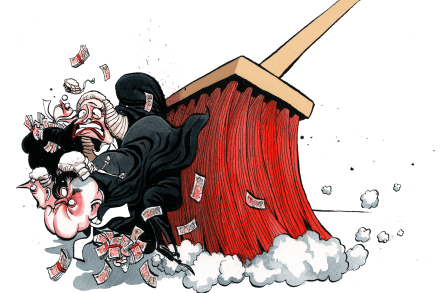
Abolish the Lords!

From our UK edition

So three million quid gets you a seat in the House of Lords? That’s according to the latest revelations about our sleazy second chamber. According to a Sunday Times and Open Democracy investigation, people who give big bucks to the Conservative party are virtually assured a seat on the red benches. Wealthy benefactors seem to be ‘guaranteed a peerage if they take on the temporary role as the party treasurer and increase their own donations beyond £3m’, the report says. It stacks up. Fifteen out of 16 Tory party treasurers have been offered a seat in the Lords. And 22 of the party’s main financial backers, including those who have doubled up as party treasurer, have been offered seats.
MPs vote to overhaul their own watchdog

From our UK edition

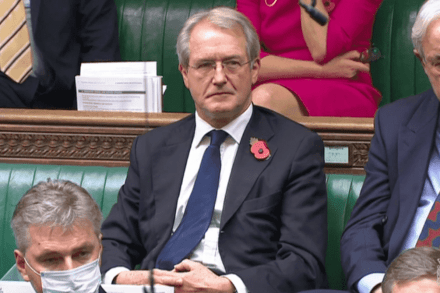
MPs have voted in favour of overhauling their own watchdog after its decision to ban a senior Tory backbencher from the House of Commons. The committee on standards found that former minister Owen Paterson had breached lobbying rules and recommended he be suspended from the House for 30 days. However, the government backed an amendment to the vote on his suspension — normally treated as a formality — that will now see a new committee set up to fix 'potential defects' in the way the current disciplinary system works. Detractors of the cross-party body have accused the standards commissioner, Kathryn Stone, of anti-Tory bias.

Rayner nails Boris at PMQs

From our UK edition

Angela Rayner is formidable. Until today, that adjective never suited Labour’s deputy leader. She can be combative, authentic, eye-catching and crowd-pleasing — and quite annoying. Clearly she’s as tough as a vintage Land Rover. But at PMQs, she added statesmanship to her roster of qualities. The session was sparsely attended. The press are in Glasgow covering the Frequent Flyers Summit, aka COP26. Boris came south, by jet of course, to put in a stint at Westminster. He was met by Rayner, soberly dressed and steely-eyed. Her tactics were well prepared in advance. She used feints and misdirection to keep Boris guessing and she varied long rhetorical assaults with punchy killer-blows. She began with a couple of questions about the alleged misconduct of Owen Paterson.

Could the Speaker cancel the Budget?

From our UK edition

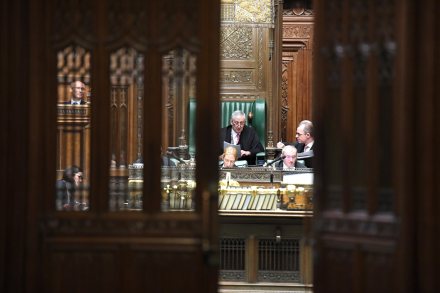
Lindsay Hoyle is, to put it mildly, on the warpath. The Speaker is now giving almost daily statements in which he complains about the government's habit of making announcements to the media rather than in parliament. Last week he was furious that Health Secretary Sajid Javid had held a Downing Street press briefing on Covid instead of coming to the Commons. Yesterday he granted four urgent questions as punishment for the latest round of briefings. Today he was back fulminating again, telling the chamber that the government was breaking its own ministerial code by giving Budget announcements to the press first.

It’s time to take back control from our judges

From our UK edition

The Judicial Review and Courts Bill has its second reading today. Writing for the Guardian yesterday, David Davis MP denounced the government’s plans as ‘an obvious attempt to avoid accountability [and] to consolidate power’ which is ‘profoundly un-conservative’. He could not be more wrong. The Bill is a welcome first step in restoring the balance of our constitution, a balance put in doubt by a decades-long expansion of judicial power. If anything, parliament should go further and amend the Bill to make it a more effective means to restore the traditional constitution.

Why is No. 10 snubbing the Commons?

From our UK edition

The Speaker was annoyed again today when the government only offered the Commons a Covid update after the Health Secretary's press briefing yesterday. Labour hauled vaccines minister Maggie Throup to the chamber for an urgent question. Before she had a chance to answer, Lindsay Hoyle scolded her superiors. 'This is not acceptable and, as I have warned the government, in those circumstances, I will allow the House the earliest opportunity to hear from a minister: in this case by an urgent question,' he said.

In praise of MPs

From our UK edition

My first full-time job, at the age of 18, was working for an MP. In the following 27 years, almost my entire career has been spent in or near Westminster. I know and have known lots of MPs. To coin a phrase, some of my best friends are members of parliament. This, of course, means I’m biased on the topic of MPs, inclined by reason or familiarity to think well of them as a group. But it also means, I hope, that I have a bit of knowledge — knowledge that might be worth sharing as the Commons remembers Sir David Amess and James Brokenshire. It’s hard to generalise about an inherently diverse group, but MPs as a whole are not, in an important way, like the rest of us. To reach the Commons requires a type of drive and motivation that most people lack.

Parliament hit by food shortages

From our UK edition

What with an energy crisis, a fuel crisis and a food crisis, you would think MPs have enough on their plates. But word reaches Mr S that our long-suffering elected representatives have now been hit by a shortage of crucial goods as the supply chain chaos resonates in the halls of Westminster.  Ministers used to working late on the parliamentary estate – burning the midnight oil on a diet of KitKats and Mini Cheddars – will have been horrified to discover that their favourite snacks are currently denied to them, as they work to tackle Britain's various crises.

Now I’m a backbencher, I’m free to speak my mind

From our UK edition

Politicians are supposed to have a survival instinct. Mine didn’t kick in last week, so I had no idea that my evidence session to a House of Lords committee on Wednesday would be my swan song. I was speaking about the work of the Ministry of Justice, where I had been lord chancellor for two years. The work, I said, is more than a series of desiccated processes. It is, and should always be, rooted in the rule of law, fairness and equality. With that off my chest, I rushed to Prime Minister’s Questions. In the middle of it, I received a text message saying that the Prime Minister wished to see me. By 2 p.m., my time in the cabinet was over and I was leaving government.

PMQs: Starmer’s caution lets Boris off again

From our UK edition

Today was the first PMQs clash between Boris Johnson and Keir Starmer in a packed Commons chamber. Starmer tried to pin down Johnson on whether he could guarantee that no one would have to pay their home to fund their care. Johnson dodged the question. But Starmer was limited by the fact that Labour can’t say how it would raise funds for the NHS backlog and social care, allowing Johnson to claim that Labour has no plan. Starmer is a naturally cautious politician, but his caution is leaving the field clear for Johnson on social care. Things would have been more difficult for the Prime Minister today if Labour was explicitly backing a tax on assets.

Lindsay Hoyle is right to give scruffy MPs a dressing down

From our UK edition

MPs are making their way back to Parliament with an order from Speaker Sir Lindsay Hoyle ringing in their ears. In the post-Zoom world, they must smarten up their appearance. ‘Members are expected to wear business attire in and around the Chamber,’ Hoyle reminded them.  ‘Jeans, chinos, sportswear or any other casual trousers are not appropriate. T-shirts and sleeveless tops are not business attire,’ continued his memo. ‘Men are encouraged to wear a tie, and jackets must be worn.’ Good for you, Mr Speaker! Perhaps you could send a similar directive to the rest of the country too. After 18 months of working from home, it’s not just MPs who have forgotten how to dress.

Revealed: Parliament’s plans for the Queen’s death

From our UK edition

This morning Playbook has revealed details about the plans – codenamed Operation London Bridge – for the sad day when the Queen passes away. But while the outlet's excellent write-up reveals much about the preparations involved for Her Majesty's death, Steerpike noted that one detail about the behind the scenes work was somewhat glossed over: advanced plans for the royal coffin to lie in state at Westminster Hall. Codenamed ‘Operation Marquee’ – a moniker last used for the Queen Mother’s ceremony in 2002 – the plans have been kept tightly under wraps for decades and will run with military precision, judging by its expenditure. Between 2010 and 2020 some £2.

Covid collapse fails to revive MPs’ bars

From our UK edition

The bars at Parliament have played host to many scenes over the years – plots, arguments, merriment and even fisticuffs – but rarely to an empty house. But for much of Covid, the watering holes of Westminster have been remained closed, in line with government guidance. And now Mr S has found that the restoration of our liberties and the collapse of Covid cases has failed to prompt a surge in sales; sobering news when one considers how some within the estate are itching to close its taverns. A list of the top 100 bar items sold between January to July reveals a dismal return of 2,967 items sold for an estate which employs approximately 3,000 people. Clearly, many are still reluctant to shed virtual working and mix in the fleshpots of SW1.

Did parliament’s Afghanistan debate matter?

From our UK edition

Today’s Commons debate on Afghanistan was unusually and surprisingly good. It had the benefit of speeches from many MPs who had themselves served tours of duty in the country, or were veterans of military action elsewhere. It had the advantage of a former Prime Minister speaking with all the authority of someone who knows just how difficult these matters are, rather than the criticisms of backbenchers who had only run their own constituency office. It was a full day’s session operating under usual rules, rather than the hybrid parliament of the past year and a half. This meant that MPs could intervene on speeches, amid the normal hubbub of the Chamber. So what did we learn from the government in today’s session?

How MPs can make the Afghanistan debate matter

From our UK edition

It is very easy to dismiss Wednesday’s recall of Parliament as a pointless exercise in handwringing that sums up the way most MPs approach foreign policy. There will certainly be plenty of frustrating hindsight on offer from politicians who haven’t taken a blind bit of notice of Afghanistan right up until the point where they scent an opportunity to bash the government. But there are also important questions to be answered that cannot wait for the normal return of the Commons in September. The first is whether there is any likelihood of British and NATO troops returning to the country.

A ‘Zoom parliament’ is bad for democracy

From our UK edition

Is the new normal here to stay? For the sake of our parliamentary democracy, let's hope not.  There is little doubt that holding the Government to account has been made harder by the imposition of restrictions during the pandemic. During the Covid crisis, politicians have been too keen to treat parliament as a normal workplace; the truth is that it isn't and never will be.  If ever there was a good excuse for an 'us versus them' rule exemption, surely it would have been to honour the public by ensuring scrutiny and pushback against the Government removing people’s liberties so easily. Instead, parliamentary proceedings have taken the hybrid form of in-person and Zoom proceedings. This is an unhappy compromise for which we are all worse off.

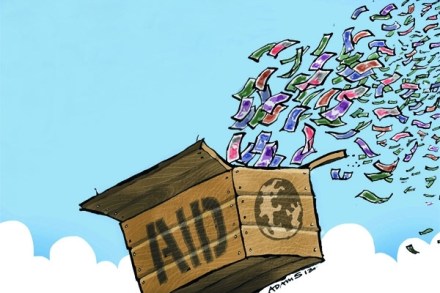
The vote to cut foreign aid is looking tight

From our UK edition

Things are looking tight this morning for the government’s vote on aid spending. Ministers were hoping that springing the vote on rebels at the last minute might help to peel away some softer MPs, and there's a list doing the rounds this morning of 14 backbenchers who’ve said they are supporting a compromise which would mean the government committing to restoring the 0.7 per cent target when economic conditions improve, using OBR forecasts to gauge when that is.

Warning for No. 10 as Tory MPs re-elect Graham Brady

From our UK edition

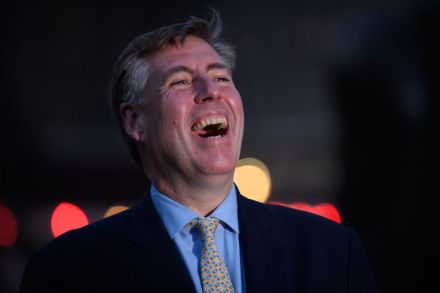
Graham Brady has been re-elected as chairman of the 1922 Committee of Tory backbenchers. Brady, who has been chair since 2010, saw off a strong challenge from the former minister and whip Heather Wheeler. Brady’s victory is a sign of the mood on the Tory backbenches. Wheeler’s supporters argued that Brady had been too public in his criticisms of the government’s approach to lockdown. That Brady won despite having voted against the government multiple times is a sign that Tory MPs are not in a particularly deferential mood towards No. 10 and that they want someone independent-minded to represent them. Several MPs told me they were voting for Brady because they knew he would be unafraid to deliver tough messages to No. 10.

The very British history of HP sauce

From our UK edition

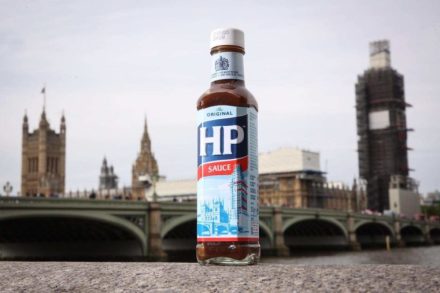
HP Sauce is a glorious thing. The French may have their five, gastronomic Mother Sauces but we in this sceptered isle have HP and that’s what counts. Because nobody wants a pool of hollandaise with their Full English. It first appeared on our dining tables in the late nineteenth century and has since grown to account for three-quarters of sales in our brown sauce market. Its story begins in 1884, when a Nottingham grocer, Frederick Gibson Garton invented the sauce in his pickling factory in New Basford (later also the home of Cussons Imperial Leather soap). It was a classic culinary product of Empire, with tomatoes, tamarind, dates, molasses and soy amongst its ingredients.

Boris Johnson avoids a Commons vote on foreign aid

From our UK edition

Update: Commons speaker Lindsay Hoyle has announced that a vote on the aid spending amendment has not been selected. Hoyle says the amendment is out of the scope of the current bill, meaning Boris Johnson will avoid a potentially difficult vote on the issue – for now. Hoyle suggested the government should give MPs an opportunity for a vote at a later date on restoring the foreign aid pledge to 0.7 per cent of gross national income. As preparations get underway in Downing Street for this week's G7 summit, trouble is brewing in the House of Commons. The government is facing a potential defeat on a vote it didn't want to have: the cut to the foreign aid budget.