Parliament

Brexit’s crunch point

From our UK edition

Unless Theresa May delays the vote, 11 December 2018 might be about to become one of the most important in recent British history; more important even than 23 June 2016. If MPs vote down Theresa May’s withdrawal agreement, as nearly all ministers expect them to, they will set Britain on course for either the softest possible Brexit or a second referendum. In the process, they may well split the Tory party. Theresa May’s strategy has been to play chicken with Parliament. Her team saw virtue in intransigence and calculated that at the last moment MPs would get out of her way. They thought that fear of no deal would bring former Remainers into the fold. Simultaneously, Leavers would reluctantly take this imperfect Brexit over the risk of no Brexit at all.
Why aren’t there more women MPs?

From our UK edition

It's 100 years today since women were able to stand for Parliament, and the Women and Equalities Committee marked it with a hearing on the barriers to getting more female MPs. It has only been in the past few years that the total number of women ever elected into Parliament has passed the number of men currently sitting on the green benches, and 32 per cent of MPs are women. This puts the UK at 48 in the world rankings for gender representation in its Parliament, which isn't great. I was one of those giving evidence to the Committee this morning, using research I've conducted for my book, Why We Get The Wrong Politicians.

Can Parliament really end its toxic culture of bullying and harassment?

From our UK edition

How could the sort of bullying and sexual harassment detailed in Dame Laura Cox's report on the treatment of House of Commons staff really have gone on for so long? There were policies in place for dealing with complaints, and on paper everything looked as though it was working well to prevent the rise of the 'serial offenders' that Cox refers to. This was the very defence initially mounted by the parliamentary authorities themselves when the allegations first came to light in the press earlier this year, but Cox's report shows how structures and cultures can be very different indeed.

Portrait of the Week – 6 September 2018

From our UK edition

Home Mark Carney kindly said he would stay on as governor of the Bank of England if it helped the government ‘smooth’ the Brexit transition. Lord King of Lothbury, Mervyn King, a former governor of the Bank of England, said that ‘incompetent’ preparation for Brexit had left Britain without a credible bargaining position. Paul Pester announced his resignation as chief executive of TSB after seven years, following the computing failure at the bank. Chris Evans announced on air that he would be leaving the Radio 2 breakfast show at the end of the year; he is to host Virgin Radio’s equivalent. David Watkin, the architectural historian, died aged 77. Lord Melchett , the former chairman of Greenpeace, died aged 70.

How ordinary people are priced out of Parliament by the most expensive job interview on earth

From our UK edition

Could you afford to go into politics? Chances are that the answer is no, unless you’ve got a spare £10,000 knocking around. In a survey that is being published later this week, I’ve found that candidates in general elections are having to stump up tens of thousands of pounds of their own money just to stand. This is not the money spent on campaigning, which is funded by the parties and donors to individual campaigns. It’s the personal expenditure that comes with having to take up to two years off work to campaign, moving to the constituency if you are not local, travelling around the constituency, attending events and so on.

The Tories only have themselves to blame for the ‘upskirting’ row

From our UK edition

How embarrassing for Tory MPs: one of their own has managed to block the unblockable: a bill creating a new criminal offence of 'upskirting'. Plenty of Conservatives have turned on the culprit, Christopher Chope, both in WhatsApp groups and in public, to show that they do not have the same views as him. To be fair to Chope (and it is hard, especially for a magazine that prefers its motto of 'firm but unfair'), he wasn't suggesting that upskirting was in some way OK. He is part of a group of MPs with the odd hobby of objecting to Private Members' Bills on principle because they don't think that MPs from opposition parties should be able to write laws which could cost the government money or could be very bad policy. Oddly, though, this doesn't stop them introducing their own bills.

MPs in mess over new data protection laws

From our UK edition

MPs are frantically deleting casework emails after being mistakenly advised that new regulations mean they have to clear the data that they hold on constituents. The General Data Protection Regulation comes into effect on 25 May, and is the reason your own inbox will be flooded by companies who've been sending you unsolicited emails for years who are now asking if you want them to stay in touch. It also has an impact on parliamentarians, who retain years' worth of correspondence about constituency matters. Recent briefings from the Commons authorities and political parties have left office staff and MPs confused about what they are allowed to keep, with one briefing suggesting that all data from before the snap election had to be deleted.

MPs are making the refit of Parliament all about them. It isn’t.

From our UK edition

Theresa May likes to avoid awkward rows at all costs: that much we already know. Today's papers carry two stories showing this: she is said to be abandoning plans to give a Brexit speech just in case it causes further divisions in her Cabinet, and is also racking up what The Times estimates is a £230 million bill by delaying the refurbishment of Parliament. Both the Cabinet and Parliament are dangerously unstable, with chunks falling from them every day. The latter, though, has been here a long time, is one of the most famous buildings in the world, and attracts vast numbers of tourists. Philip Hammond and Greg Clark don't raise quite so much interest, oddly.

Order, order | 13 December 2017

From our UK edition

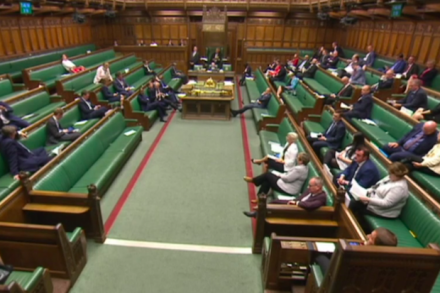
Diet nannies will spend Christmas telling us ‘you are what you eat’ but in the House of Commons ‘you are where you sit’. Are you a Tory Whips’ stooge or a Dominic Grieve groupie aching to block Brexit, a braw new blue Scot or an English provincial plodder without hope of advancement? Parliament-watchers discern plenty about your political leanings from where you park your posterior. Each side of the Commons chamber has five green-leather benches that are divided by a gangway. On the government side of the chamber, all MPs are Conservatives except for a couple who have had the Whip withdrawn. On the opposition side, the lower four benches ‘beyond the gangway’ (i.e.

Burning questions

From our UK edition

A new play at the Bush with a catchy political title. Parliament Square introduces us to Kat, a young Scots mum, who abandons her baby girl and her devoted husband and commutes to London to kill herself. She doesn’t want to die but shrill voices in her head are urging her to turn her body into a human fireball on College Green, opposite parliament. Her political cause is unclear. Her personal hopes are plainly set out: death and posthumous fame. Everything is ready. Kat douses herself in unleaded petrol (it’s not a carbon-neutral protest), and as the flames engulf her flesh she emits a blood-curdler from her solar plexus. ‘The worst scream we’ve ever heard,’ says the stage direction, an aim that the production achieves with more success than one might wish.

A guide to Parliament’s Brexit tribes

From our UK edition

There's relief in No 10 today after Theresa May and Jean Claude Juncker finally reached deal on the Irish border, EU citizens' rights and the so-called Brexit bill. The European Commission have subsequently recommended that 'sufficient progress' has been achieved in time for this month's EU council meeting – and that the Brexit talks should move on to trade in the new year. In order to get to this point, May has agreed a £40bn Brexit bill, time-limited ECJ role and a promise of no hard border between Northern Ireland and the republic. However, for the government the hard work is only just beginning. The second round of negotiations is where the real battle will take place.

Legal challenge

From our UK edition

Last week the Daily Telegraph’s front page showed the 15 Tory MPs who had voted against the government under the headline ‘The Brexit Mutineers’. One of the first things pointed out was that two thirds of the group were lawyers. (In fact, only nine of the 15 are barristers or solicitors; a tenth is the son of a High Court judge, but in the hereditary meritocracy in which we live, that counts as the same thing.) This seemed to be taken as a point in their favour — who wouldn’t want our politicians to be sensible lawyers? Certainly, it contrasted with the disdain shown for journalist-politicians, like Michael Gove or Boris Johnson. Would we really rather our MPs were lawyers than hacks?

Twenty years on, Brass Eye is still the best – as this film of unreleased material proves

From our UK edition

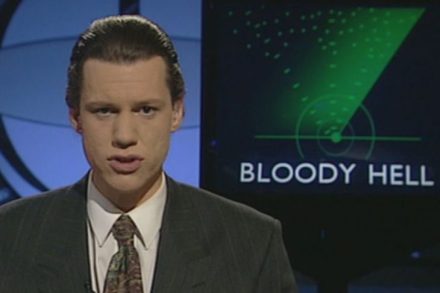
'Drug use among children has for many an education and with obvious alarm for both parents on the increase almost yearly.' Try reading that again. Maybe in the style of Huw Edwards. By all means, try it a third time but it’ll only give you a headache. It has the appearance of sense. It makes the same noises as normal sentence. But it’s not normal. It’s a Brass Eye sentence. Last night, at the Curzon cinema in Soho, 20 years after Chris Morris’s comedy masterpiece was first broadcast, there was a sell-out crowd who wanted more. And another sell-out crowd at 9.15. They were there to see Oxide Ghosts – 60 minutes of unreleased Brass Eye material screened by director Michael Cummings with the permission of Morris.

Portrait of the Week – 2 November 2017

From our UK edition

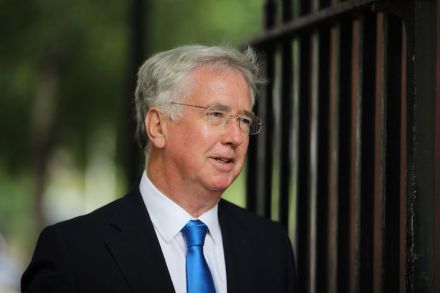
Home A great ferment of accusations of sexual impropriety was made against people in Parliament and out of it. Bex Bailey, a Labour party worker, said she was raped, not by an MP, at a party event in 2011 and a senior Labour official discouraged her from reporting it. Jared O’Mara MP had the Labour whip withdrawn while claims were investigated that he had called a woman he met ‘an ugly bitch’. Tulip Siddiq, a Labour MP, said that cases of sexual misconduct cases at Westminster could run into hundreds. Sir Michael Fallon, the Defence Secretary, was even driven to apologise publicly for putting his hand on the knee of Julia Hartley-Brewer during dinner 15 years ago, although she said that she had not been ‘remotely upset or distressed’.

So what attracted you to that powerful man?

From our UK edition

Somewhere towards the end of the 1980s I was suddenly promoted three grades upwards in my job at the BBC; a bit like going from the middle of the old fourth division to the top of the Championship. Yay. The immediate consequences were more money, more power and almost endless opportunities for sexual intercourse. Women who had hitherto been averagely amiable work colleagues became much friendlier — and in a very different way. It was as if I’d been transformed overnight from Marty Feldman into Orlando Bloom. What a delightful period of my life that was.

Portrait of the week | 26 October 2017

From our UK edition

Home  Of perhaps 400 Britons returned from the former territory of the Islamic State in Iraq and Syria, those who ‘do not justify prosecution’ should be reintegrated, Max Hill, the independent reviewer of terrorism legislation, told the BBC. Rory Stewart MP, asked about foreigners fighting for the Islamic State in Syria, said that ‘the only way of dealing with them will be, in almost every case, to kill them’. Jared O’Mara MP resigned from the Commons equalities committee after attention was directed to remarks he made online in 2004, such as that Michelle McManus had only won Pop Idol ‘because she was fat’.

Can we be friends?

From our UK edition

Have you heard the one about the new Labour MP who refuses to be friends with Tories? When Laura Pidcock dropped into an interview with a left-wing website that she has ‘absolutely no intention of being friends with’ any Tories, she was surprised by the fuss that followed. It might have seemed odd to her, but within Parliament it’s well known that friendships that cross the divide spring up the whole time. Sometimes it’s personal: Kezia Dugdale, leader of the Scottish Labour Party, caused headlines when she started dating a nationalist MSP. But more often, political: to achieve something, MPs from different parties often have to work together. But the new member for North West Durham sounds as if she is appalled at the whole system.

Britain über alles

From our UK edition

  David Cannadine was a schoolboy in 1950s Birmingham, which was still recognisable as the city that Joseph Chamberlain had known. In the 1960s the town planners demolished much of Victorian Birmingham. The bulldozing of 19th-century cities coincided with — and helped to cause — a boom in Victorian history, led by Asa Briggs. As a postgraduate student at Cambridge, Cannadine wrote a thesis on Birmingham’s 19th-century aristocratic landowners. Since then, there has been a torrent of academic research on 19th-century history, and this has had a ‘deadening and dampening effect’. The Victorians have gone out of fashion. Historians have migrated to the rich pastures of the 18th century or the newly available archives of the 20th.

These late night sittings will make Parliament much less productive

From our UK edition

One of the most noticeable things about MPs as they amble around Westminster today is how tired so many of them look. They’ve been kept up late the past two nights by unusually long sittings of the House of Commons, with the final three-line whipped votes not taking place before 10pm on both days. On Monday, it was the second reading of the EU Withdrawal Bill, and last night a prolonged debate on the Finance Bill meant everyone had to hang about until later to vote on Andrea Leadsom’s plan to make the Conservatives appear to have won the election outright after all by guaranteeing the government a majority on all public bill and secondary legislation committees.

Parliament needs to do far more than just stand up to the latest government power grab

From our UK edition

What a surprise: a government trying to make it easier to get legislation through the House of Commons. Today's Huffington Post story that Leader of the House Andrea Leadsom is trying to ensure that there is a Tory majority on every committee scrutinising legislation is just the latest example of Theresa May's government making every effort to make life easier for itself. Journalists at the Number 10 lobby briefing today pointed out that the Tories haven't actually won a majority and therefore do not deserve to have a majority in public bill and delegated legislation committees. Rather astonishingly, the Number 10 spokesman responded that 'the government has a majority on the floor of the House'.