Parliament

Tina Stowell is right – going tieless could magnify class division in parliament 

From our UK edition

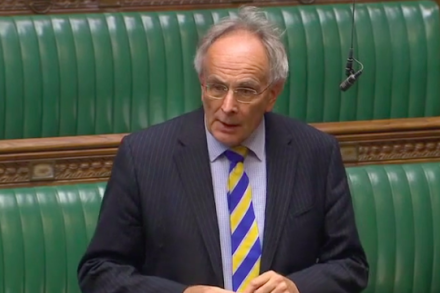
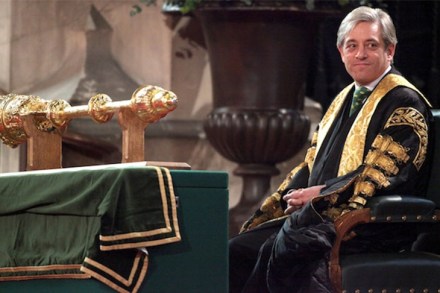
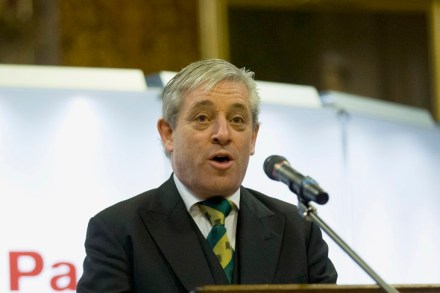
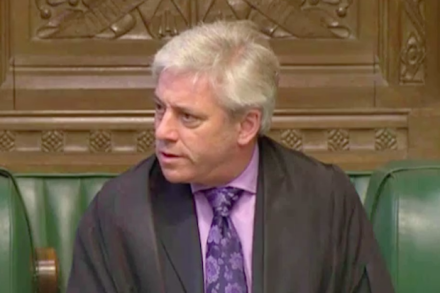
John Bercow’s decision to allow MPs in the House of Commons to dispense with ties has been hailed by some as a great liberation, and by others as an insult to tradition cast by a man who ought to be wearing a wig. But Tina Stowell, who joined the government as a secretary and ended up Leader of the House of Lords, has a different view: that ties (and, indeed, standard dress code) are a social leveller. She writes on her blog:- 'As someone without a degree who travelled a long path myself, I can see now that one of the most insidious ways those of us in powerful positions have diminished opportunities for non-graduates over the last 20 years is by undermining the importance of some standards hard-working people of all backgrounds used to share….

Parliament’s new tribe | 5 August 2017

From our UK edition

Politics is such a fickle game that it’s perfectly acceptable to believe six impossible things before breakfast without ever having to apologise for being so wrong. Remember, for instance, when everyone was predicting that the dead cert increased majority for Theresa May would lead to the creation of a new party? Perhaps, like everyone else who has since gone on to predict another series of impossible things with equal confidence, it’s easier for us to forget those old certainties. No one talks about a new party any more. The facts have changed, so we’ve changed our minds too. There aren’t the same conditions for that proposed new party about which Tony Blair and other grandees kept dropping loud, clanging hints.

If you want to get ahead in politics, wear a tie

From our UK edition

O tempora, o mores! The Speaker yesterday announced that men no longer have to wear ties in the House of Commons. In fact, until now it's only been a convention - not a rule - that they should wear one. And that's exactly as it should be. Politics is far too important to be trumped by sartorial rules. If you elect your representative, they should be allowed to wear shorts or a T-shirt in the chamber.  But not encouraged to. The thing about a suit and tie is that they just happen to make men look smarter than they do in shorts or T-shirts.

Was this Tory MP watching a racy clip in the Commons?

From our UK edition

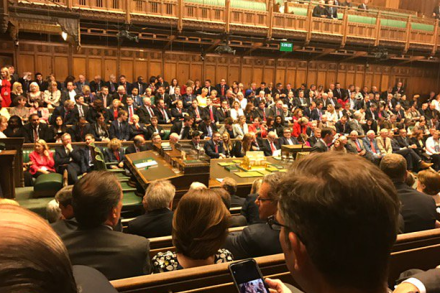
Parliament is back - but already some MPs are bored. One Tory backbencher was snapped glancing at his phone during the opening session in the Commons this afternoon. Yet the picture of the MP watching a clip on his mobile - which was tweeted out by Anna Soubry - raised a bigger question: what on earth was he watching? The unnamed MP appeared to be watching a racy video on his phone, with rumours flying around about what exactly was keeping the politician so occupied. Mr S. isn’t sure - although he can't help but think that whatever the honourable member was up to, it doesn’t look to be Parliamentary business… https://twitter.com/Anna_Soubry/status/874624713145933825 Update: It seems the MP may be a fan of showgirl art https://twitter.

Diary – 4 May 2017

From our UK edition

The Prosperity UK conference over a week ago kicked off with a dinner at Hatfield House that brought together Leavers and Remainers in the spirit of making the best of what happens next. Lord Salisbury (L) couldn’t resist a crack about his ancestor doing to the Pope what Mrs May is doing to Mr Juncker — negotiating a new dispensation, shall we say. Lord Hill (R) mentioned that Martin Luther started the Reformation 500 years ago this year; for England, that all got muddled up with a royal divorce. The next day, Niall Ferguson (R turned L) compared Brexit to negotiating a divorce settlement with 27 ex-wives. My godson came to lunch on his stag weekend after a night out in Newcastle.

MPs should practice what they preach – and have a shorter summer holiday

From our UK edition

One of the consequences of the early election is that Britain will find itself without a functioning parliament for six weeks at a time when arguably it has never needed one more. I am sure that many MPs will feel entitled to a holiday after yet another election campaign – or at least those who are not sent into premature retirement. But what about Parliamentary business? The Great Repeal Bill requires debate and scrutiny – and in Parliament, not the TV studio. As thing stand, Parliament will rise in the first week of May.   It will then reconvene in the middle of June only to break up for the summer recess little over a month later. It will not return until October, after the party conference season.

When our armed police open fire have we got their backs?

From our UK edition

I walked past Parliament, five days after Khalid Masood’s fatal attack. I looked at all the armed policemen on all the gates visible to the public. All were talking to one another rather than surveying the scene in front of them. As I write, the only person, so far as we know, being actively investigated by the authorities for his part in the events of last week is Sir Michael Fallon’s close protection officer, who shot Masood dead. Under our rules, it is automatic that the Independent Police Complaints Commission investigates any officer who shoots anyone. It is hard to know whether to admire this as a mark of civilisation or gasp in exasperation.

The Spectator’s Notes | 30 March 2017

From our UK edition

An email from the high-minded Carnegie Endowment, marking the triggering of Article 50 and the 60th anniversary of the Treaty of Rome, speaks of ‘The Closing of the European Mind’. ‘The cult of the protective sovereign nation-state,’ it goes on, ‘will not provide convincing solutions to 21st-century challenges, which are inherently transnational.’ This is true, in a way. Lots of modern challenges cannot be solved by the nation-state alone. But is there anyone — even including the ‘Anywheres’ defined recently by David Goodhart — who would be happy to inhabit a space completely unprotected by a sovereign state?

The response to the Westminster attack has been predictably farcical

From our UK edition

Since last week’s attack in Westminster, various readers have asked whether my list of ‘standard responses to terrorism’ has held true in the aftermath of this attack as in the aftermath of so many attacks before. And since it appears that good news must now immediately be seized from any tragedy – even within minutes of that tragedy occurring – in keeping with the times, I am happy to report that my list does indeed hold true. I had already noted last week that we were swiftly into the realm of hashtaggery with ‘Pray for London’ trending. I must say that I’m never sure how many of the people urging people to do this actually pray themselves, or think prayer works, or what it might achieve.

Of course we’re not cowed by terrorism – what other choice do we have?

From our UK edition

Stay safe, London. Stay safe, everyone. It’s nice, isn’t it, as a sentiment, which is just as well because it is the motto du jour of every celebrity who has added his or her mite to what passes as debate on the terrorist attack last Wednesday. And, my goodness, they all piled in: JK Rowling, Katy Perry, James Corden, Neil Gaiman; every man and woman of them, you’ll be pleased to hear, against this sort of thing, and urging us all – especially those not actually resident in London – to 'stay safe'. The other trope is that 'nothing will divide us', that this is what terrorists want – Stella McCartney et al. This is presumably for the benefit of those people whose reaction to the man from Tunbridge Wells is to go out and punch a Muslim.

What the papers say: How can we prevent a repeat of the Westminster attack?

From our UK edition

Theresa May told MPs yesterday that Britain will not waver in the face of terrorism. She is widely praised for her emotional address in the Commons, in which she said simply: 'We are not afraid'. But still the question lingers: what can we do to prevent a repeat of Wednesday’s attack? Theresa May hit precisely the right note in her address to MPs, says the Daily Telegraph, which compares the Prime Minister’s response to that of Margaret Thatcher’s after the Brighton bombing in 1984. Yet while her message is an important one, there are ‘inevitable questions’.

Around the world, Westminster is a byword for political moderation

From our UK edition

As many people have remarked, a terror attack in the centre of London was expected at some point, although it is no less shocking for that. Aside from St Peter's Basilica or perhaps the Eiffel Tower, there is probably no other European building as recognisable to Europe's enemies as the Palace of Westminster. Theresa May wasn't quite correct when she referred to it as the oldest Parliament - both Iceland and the Isle of Man have more ancient bodies, being descended from those egalitarian Vikings - but it's certainly fair to call Westminster the Mother of Parliaments, a powerful symbol of representative government.

Westminster terror attack: Theresa May’s statement to the Commons

From our UK edition

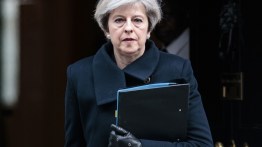
Mr Speaker, yesterday an act of terrorism tried to silence our democracy. But today we meet as normal – as generations have done before us, and as future generations will continue to do – to deliver a simple message: we are not afraid. And our resolve will never waiver in the face of terrorism. And we meet here, in the oldest of all Parliaments, because we know that democracy, and the values it entails, will always prevail. Those values – free speech, liberty, human rights and the rule of law – are embodied here in this place, but they are shared by free people around the world. A terrorist came to the place where people of all nationalities and cultures gather to celebrate what it means to be free.

Westminster terror attack: Today’s newspaper front pages

From our UK edition

Five people are now confirmed to have died in yesterday’s terror attack in Westminster and police have arrested seven people in connection with the incident. Here’s how the newspaper editorials and front pages have covered the atrocity: The Sun says the terrorists are wrong if they think that yesterday’s attack means ‘we will be cowed’. The nation will mourn those killed but ‘normal life goes on’. But the Sun says that we must now rethink how to tackle the terror threat. Yesterday’s attacker ‘could barely have picked a more ­fortified place’, the paper points out. But ‘imagine how much greater the carnage might have been elsewhere’.

Westminster attack: Terrorist named by police

From our UK edition

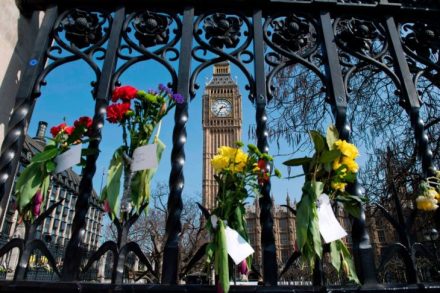
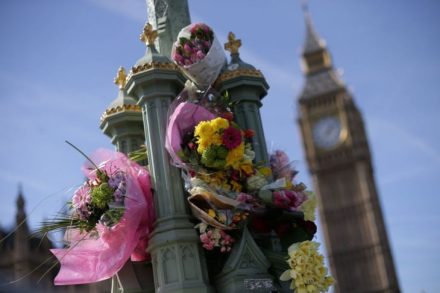
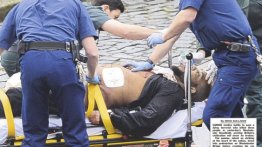
A terrorist who killed four people and injured forty others in yesterday's 'depraved' attack in Westminster has been named by police. Khalid Masood, 52, who was born in Kent and is believed to have been living in the West Midlands, was a career criminal with a series of previous convictions. Scotland Yard named the Westminster attacker hours after Theresa May told MPs that the man responsible had previously been investigated by MI5. In her statement to the Commons, the PM also paid tribute to the dead police officer, PC Keith Palmer, who she said was 'every inch a hero'. Aysha Frade, 43, who worked at a college in Westminster, Kurt Cochran, an American tourist, and 75-year-old Leslie Rhodes, from Streatham in south London, were also named among the dead.

Theresa May tells the country to go about its business normally tomorrow

From our UK edition

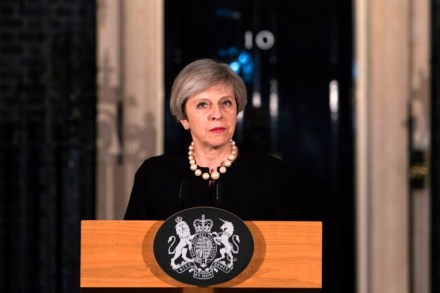
Speaking in Downing Street this evening, Theresa May has urged people to go about their business normally tomorrow. In a statement that struck an appropriately defiant tone, May said that the targeting of Westminster and the Houses of Parliament ‘was no accident’. But that that any attempt to defeat the values of ‘democracy, freedom, human rights, the rule of law’ through ‘violence and terror is doomed to fail’. Talking of the police officer who died in the attack, and the others who have been injured, she praised the ‘exceptional bravery of our police and security services who risk their lives to keep us safe’. This is the first terrorist attack that Theresa May has had to deal with as Prime Minister.

Letters | 23 February 2017

From our UK edition

Seeing off the Speaker Sir: If senior Tories in Buckingham had had their way, John Bercow’s career as Speaker could have been over long before he had a chance to make any ‘spectacularly ill-judged’ remarks (Politics, 18 February). At the 2010 election, an impressive local Tory was keen to prevent the new Labour-supported Speaker retaining the seat where the party had had an 18,000 majority in 2005. Conservative headquarters insisted that Buckingham must abide by the long-standing convention that the Speaker is returned unopposed. The local Tories should have gone ahead; there is no such convention. All ten Speakers since the war have faced opposition. Six, including Bercow, have faced independents or minor parties.

In (conditional) defence of John Bercow

From our UK edition

James Duddridge is not wrong. The Tory MP for Rochford and Southend East, who has put down a ‘no confidence’ motion in Mr Speaker Bercow, says John Bercow has abused ‘his employment contract’ by his openly political remarks. The last straw was telling students at the University of Reading that he voted Remain in last year’s European referendum. Duddridge is a fiercely outspoken Leaver, but his complaint is that the Speaker should not have revealed any preference at all. Few should contest this. Anger over the Reading revelation builds on a history of complaint: the most recent example is still fresh.

The Spectator’s Notes | 9 February 2017

From our UK edition

As we have been reminded this week, the most famous words (apart from ‘Order, order’) ever uttered by a Speaker of the House of Commons were those of William Lenthall. When King Charles I entered Parliament in search of the ‘five birds’ in 1642, Lenthall knelt to the King but told him, ‘I have neither eyes to see, nor tongue to speak in this place but as the House is pleased to direct me.’ It is only on that basis that the Speaker speaks. As soon as John Bercow said — of the speculative possibility that Donald Trump should address both Houses of Parliament — ‘I feel very strongly that our opposition to racism and sexism’ meant that the speech should not take place, he was out of order.

Motion of no confidence in Bercow tabled

From our UK edition

The Tory backbencher James Duddridge has formally tabled a motion of no confidence in the Speaker John Bercow. Duddridge’s attempt to remove the Speaker follows Bercow’s outburst against Donald Trump from the chair on Monday, which further called into question his impartiality and his judgement. Duddridge’s motion is unlikely to succeed. The SNP and nearly all Labour MPs will back Bercow while the government has no appetite for getting drawn into this fight. The vote, though, will be an embarrassment to the Speaker. There’ll be a sizeable number of Tories who vote for it, 150 is the number being talked about tonight, and it will show how Bercow has lost the confidence of a section of the House. But Bercow is not the type to be embarrassed into standing down.