Paris

An alternative Paris: Château Rouge, by Amit Chaudhuri, reviewed

From our UK edition

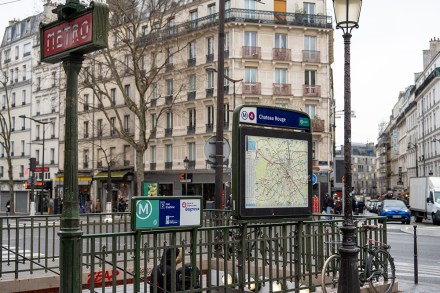
Nearly ten years ago, the author, critic and classical Indian musician Amit Chaudhuri took up a visiting fellowship in Paris. It’s not quite clear from the pages of his autobiographical novel Château Rouge which branch of his professional life was to be nurtured by the experience, officially at least, but a glance at this slim hardback, liberally adorned with creative white space, will tell you that it is a book which leaves many things unsaid. Chaudhuri is determined to escape the oppressive influence of the many other writers who have gone before him, to try to see this great city afresh. Chief among these is inevitably Ernest Hemingway, a man with whom, on the face of things, Chaudhuri would have little to talk about if they were to meet.
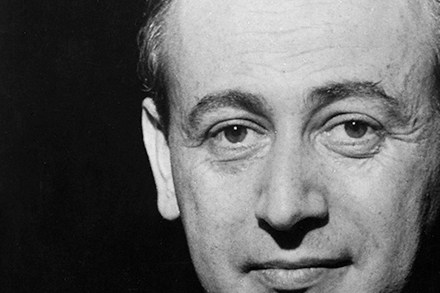
The tragedy of Paul Celan – trapped in his own allusive poems

From our UK edition

Some time in the late 1950s, Jacques Derrida and other intellectual luminaries at the École Normale Supérieure in Paris were surprised to be told that the excruciatingly introverted German-language instructor they had been avoiding in the corridors for several years was ‘the greatest living poet in the German language’. Paul Celan was reputed to be as ‘difficult’ as his poetry – rebarbative, then intriguing and finally unforgettable. His best known poem is ‘Todesfuge’ (‘Death Fugue’), which may refer to Jewish musicians in a Nazi death camp: ‘Black milk of dawn, we drink you at night...’ He can be heard online reciting the poem in a rising tone of suppressed hysteria.

French letters – Albert Camus’s great epistolary love affair

From our UK edition

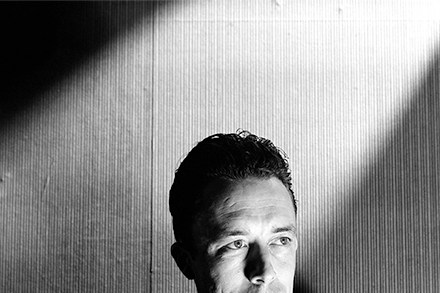
The extraordinary correspondence between Albert Camus and the love of his life Maria Casarès must rank among the most passionate ever written. Rarely can two lovers have expressed with such fervour a comparable range of emotions, from ecstasy to darkest despair. At times one shies away from the letters’ raw, searing intimacy, feeling like an intruder; but the sheer force of the feelings expressed and the finesse with which they are articulated propel one through. These letters were first published in France in 2017 by Camus’s daughter Catherine, who was given them for safe-keeping by Casarès shortly before her death in 1996.

Is the Pont-Neuf bridge the new Plato’s cave?

From our UK edition

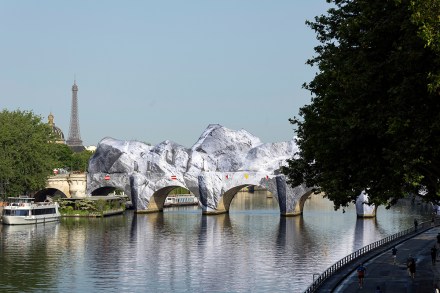
An artist, J.R., working with something called Snap Inc., has covered the Pont-Neuf bridge in Paris with a gigantic tarpaulin shaped like a cave, through which the public is invited to walk. It is supposed to represent the underground cave where Plato (d. 348 BC) thought most of mankind metaphorically lived. Of course it bears no likeness whatsoever, being empty of everything with which Plato filled his cave. But then he is an artist, beyond such banausic considerations. Plato’s cave is seen as an allegory of the human situation. Plato sees mankind chained into position from birth like prisoners, able to see only the wall directly in front of them.

Was Marcel Duchamp’s notorious ‘Fountain’ even his own work?

This slim volume has only one fault. It has no illustrations. So you’ll have to do some Googling or visit the current Duchamp exhibition at MoMA (until 22 August) if you want to know what ‘The Bride Stripped Bare by Her Bachelors, Even’ looks like. Otherwise it’s perfect – wittily written and packed with many fascinating characters besides the ever intriguing Marcel Duchamp. He didn’t actually arrive in New York until 1915, but when he did he found himself already famous. His ‘Nude Descending a Staircase, No. 2’ had been included in the 1913 International Exhibition of Modern Art, alongside works by Picasso, Van Gogh, Gauguin, Matisse and Braque, and completely stole the show. Duchamp didn’t even know the painting was being exhibited.

France is throwing a tantrum at Trump

France is intensifying its counter-offensive against what it calls misinformation. Earlier this month, Paris prosecutors confirmed they have opened a criminal investigation into Elon Musk and X. Musk had ignored a summons to appear for a voluntary interview on April 20. The French state requested Musk assist in an investigation into algorithmic manipulation and the spread of AI deepfakes on X. Musk responded to the criminal investigation by labeling the prosecutors “faker than a chocolate euro and queerer than a pink flamingo in a neon tutu!” On the same day, Paris unveiled its “French Response” strategy. The head of the Ministry of Foreign Affairs, Jean-Noël Barrot, posted a video on X (where else?

France misinformation

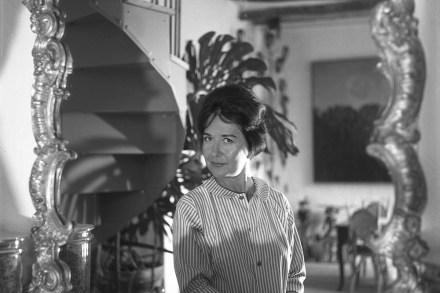
Defiantly creative to the end: the transgressive Dorothea Tanning

From our UK edition

I received this book for review on the same day that Dorothea Tanning was making headlines in the auction world, breaking records with the sale at Christie’s of a tiny but key early work for more than £4 million. Her prices have risen an astonishing sevenfold in the past year, as collectors cotton on to her significance as a Surrealist; and while she may still be trailing on Leonora Carrington’s coat-tails, she looks to be steadily catching up.   Born in America to Swedish parents, Tanning was the very model of a fiercely independent artist, and her works are singular and disquieting like few others. She was largely self-taught as a painter and developed a virtuoso technique.

James Baldwin – dogged by painful uncertainties throughout life

From our UK edition

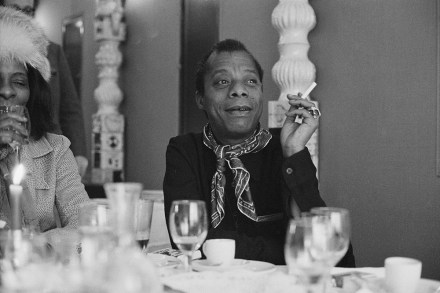
James Baldwin, like many American novelists before him, F. Scott Fitzgerald and John Dos Passos included, spent his formative years flitting restlessly between New York and Europe – New York being a source of fascination but also of creative burnout. He completed his first novel, Go Tell It On the Mountain (1953), not in Harlem, where he grew up and set the book, but in a Swiss chalet owned by the family of his then boyfriend, Lucien Happersberger. As he lived and worked in Loèche-les-Bains, Baldwin reasoned that the village children who shouted ‘neger’ at him did not mean to be unkind. They were simply curious and could never have known ‘the echoes this sound raises in me’.

Adventures in the City of Light: Rousseau’s Lost Children, by Gavin McCrea, reviewed

From our UK edition

What biographer would pass up a time-travelling opportunity to meet their subject face to face? This novel’s protagonist, Gavin Mulvany, an academic specialising in Jean-Jacques Rousseau, is somehow able to slip back in time to 1777, a year before the fractious French writer died. He turns from irritating fan to close companion, accompanying Jean-Jacques on long philosophical rambles and coach journeys around Paris. They attend the premiere of Voltaire’s last play (as does Marie Antoinette), call on Benjamin Franklin and visit the Marquis de Sade in a lunatic asylum. Gavin’s long-delayed book about Rousseau is concerned to solve the puzzle of why a passionate theorist on children’s education could dispatch his own five newborns to a foundling hospital, never to see them again.

The turbulent life of the Marquis de Morès – the 19th-century aristocrat turned populist thug

From our UK edition

The Marquis de Morès (1858-96) was a man of many abilities, but balancing a chequebook was not one of them. Bested (savaged, frankly) by the Chicago meat-packing lobby and frustrated in his attempt to build a railroad across Indochina, the soldier, duelist and self-styled ‘economist’ returned to his native France in 1886, caused havoc and invented fascism (if we allow the Italian historian Sergio Luzzatto to have his way) – only to meet his nemesis much closer to home.

‘Invalid’ has become invalid

“They should ask me. I’m a complete cripple,” said my husband, heaving himself from his chair with great determination to reach the whisky. Britain’s Department for Transport is asking disabled people whether the term invalid carriage in legislation should be changed and what term they might prefer was used instead. “Language has moved on and changed,” the UK government says, since 1970, when the legislation was first drafted. One problem is having to keep changing terminology. No one, even my husband, should be called a cripple. No one should be called handicapped. Now it has been decreed that no one should be called disabled, but rather a person with a disability. These changes are paralleled in the languages across Europe.

invalid

Yes, Europe’s civilization is being erased

Last week the Trump administration expressed its fear that Europe faces "civilizational erasure." Its concern was articulated in a 33-page National Security Strategy that outlined Donald Trump’s world view and how America will respond economically and militarily. The sentence that caused the most reaction on the other side of the pond was the assertion that, if current trends continue, Europe will be "unrecognizable in 20 years or less." Those trends are mass immigration and what conservative French commentators call the "Islamification" of Europe. If Europe doesn’t address these trends, the Trump administration predicts the continent’s "civilizational erasure.

Are America’s women heading for the exit?

Life is apparently so disagreeable in Donald Trump’s America that 40 percent of women aged between 15 and 44 want to leave. That is four times higher than the 10 percent who wanted to quit the US in 2014. According to Gallup, which conducted the poll, nearly half the nation’s younger women have “lost faith in America’s institutions.” This disenchantment accelerated after the Supreme Court’s 2022 decision to overturn Roe v. Wade, which enshrined the constitutional right to abortion. Younger American men are bearing up better. Only 19 percent share women’s distaste for the Donald, a 21 percent differential which is the largest recorded by Gallup since it began asking the question in 2007.

Women
Surrealism

Reconciling dreams with reality

Should you be waiting in line at the Philadelphia Museum of Art to see the exhibition Dreamworld: Surrealism at 100, don’t be put off by “Tête” (1974), a sculpture by Joan Miró that is big and ugly and plopped down directly at the entrance. Be aware that Miró’s true métier was painting; “Tête” was cranked out long past his prime. You can’t blame an old man for cashing in on his reputation, particularly when his formative years were burdened by poverty. You can blame a curator for including a flagrant piece of product as a how-do-you-do to a centennial celebration.

Monet

Monet’s Venetian moment

If you crave art that will envelop you, book a ticket, pronto, to Monet and Venice at the Brooklyn Museum. Enveloppe was the term the French impressionist artist Claude Monet (1840-1926) used to describe the “beauty of the air around” the objects and landscapes he painted. “Other painters paint a bridge, a house, a boat… I want to paint the air in which the bridge, the house, and the boat are to be found – the beauty of the air around them, and that is nothing less than the impossible,” he said.

Is this the end of the French croissant?

Occasionally, a French person reveals – without any malice or superciliousness – that they run on an alternative operating system from us Brits. And on an entirely different motherboard from our American cousins. Over the years of gathering supporting anecdotes, a surprising theme has emerged: butter. Take my first visit to Paris, more than 30 years ago. I innocently asked for butter with my croissant. Simple answer: “Non.” Naturally, I remonstrated. The waiter retorted: “A croissant eeez butter!” And, in fairness, he had a point. Upon biting into said viennoiserie, I had to concede: it was nothing like the dry grocery store versions I was used to. Moments later, a small pot of raspberry confiture was graciously placed on my table.

croissants

Did the Louvre robbers want to get caught?

It is more than a month since thieves stole the crown jewels from the Louvre and the chances of recovering the loot, worth an estimated €88 million, diminish with every passing day. The robbery was initially dubbed the “heist of the century,” a brazen theft in broad daylight as visitors strolled through the world’s most famous museum. There were up and down the ladder and in out of the museum in seven minutes, giving the impression that this was the work of villains well-versed in daring robberies. But soon details emerged that suggested the gang of four weren’t quite of the caliber of the thieves immortalized in the Hollywood movie Ocean’s Eleven.

Paul Poiret and the fickleness of fashion

From our UK edition

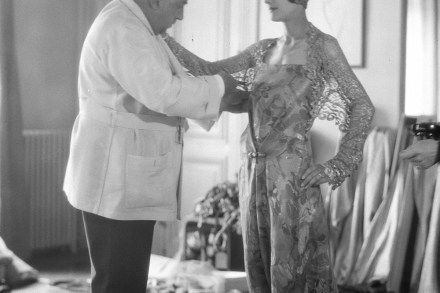
Such was Paul Poiret’s influence that he is the only couturier whose clothes are known to have caused several fatal accidents. At a time (1910-11) when fashion was loosening up he persuaded chic women into the hobble skirt, a garment so narrow round the ankles that only tiny, mincing steps were possible, with the result that several tripped over when stepping down from a pavement and one toppled from a bridge into a river where, unable to swim from the constriction around her ankles, she drowned.  In Mary E. Davis’s book, however, this dangerous garment gets only a brief mention.

Is DEI to blame for the Louvre heist?

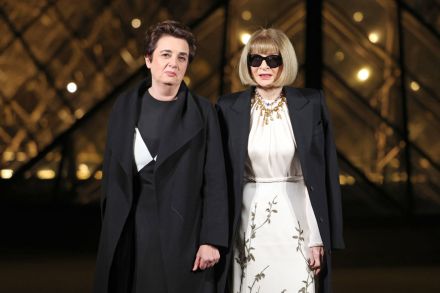
Police in Paris have arrested two men after the "heist of the century" at the Louvre museum. According to the French press, the pair were arrested separately as they prepared to leave the country on Saturday evening; both are in their 30s and from Seine-Saint-Denis, the sprawling suburb north of Paris. As yet there is no indication that police have recovered any of the crown jewels that were stolen from the museum in seven sensational minutes last Sunday. The search for them and the two other gang members goes on. The 88 million euros ($102m) heist has been deeply embarrassing for France, and the fact that those responsible appear to be local villains as opposed to the international criminal masterminds that some had suggested will only further redden the Republic's face.

Laurence des Cars

What is Charles Kushner doing in Paris?

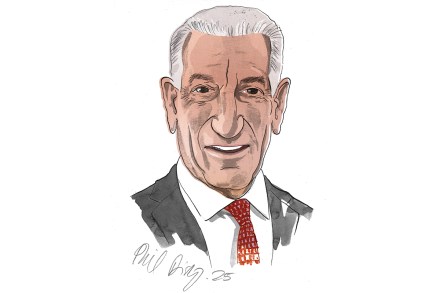
When Charles Kushner took up his appointment as American ambassador to France this summer, his first official visit was to the Shoah Memorial in Paris. As a child of Holocaust survivors, he tweeted, “fighting anti-Semitism will be at the heart of my mission.” So it has proved. Last month, Kushner published a letter in the Wall Street Journal in which he accused Emmanuel Macron of insufficient action in the face of soaring anti-Semitism in the Republic. The ambassador was summoned for a dressing down. He didn’t attend as he was on vacation Kushner also castigated the French President for his imminent recognition of Palestinian statehood.

Kushner