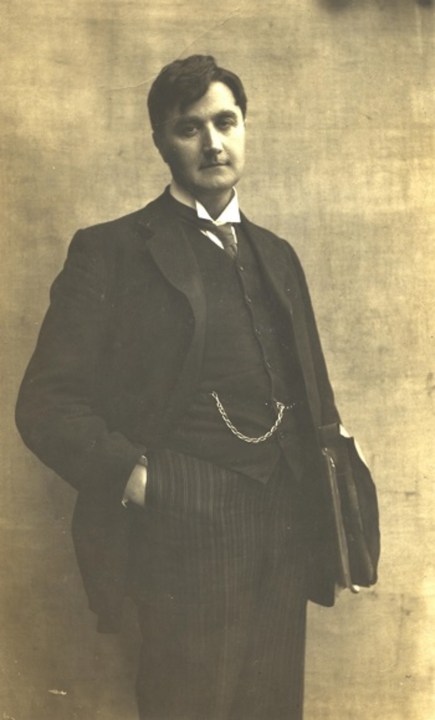
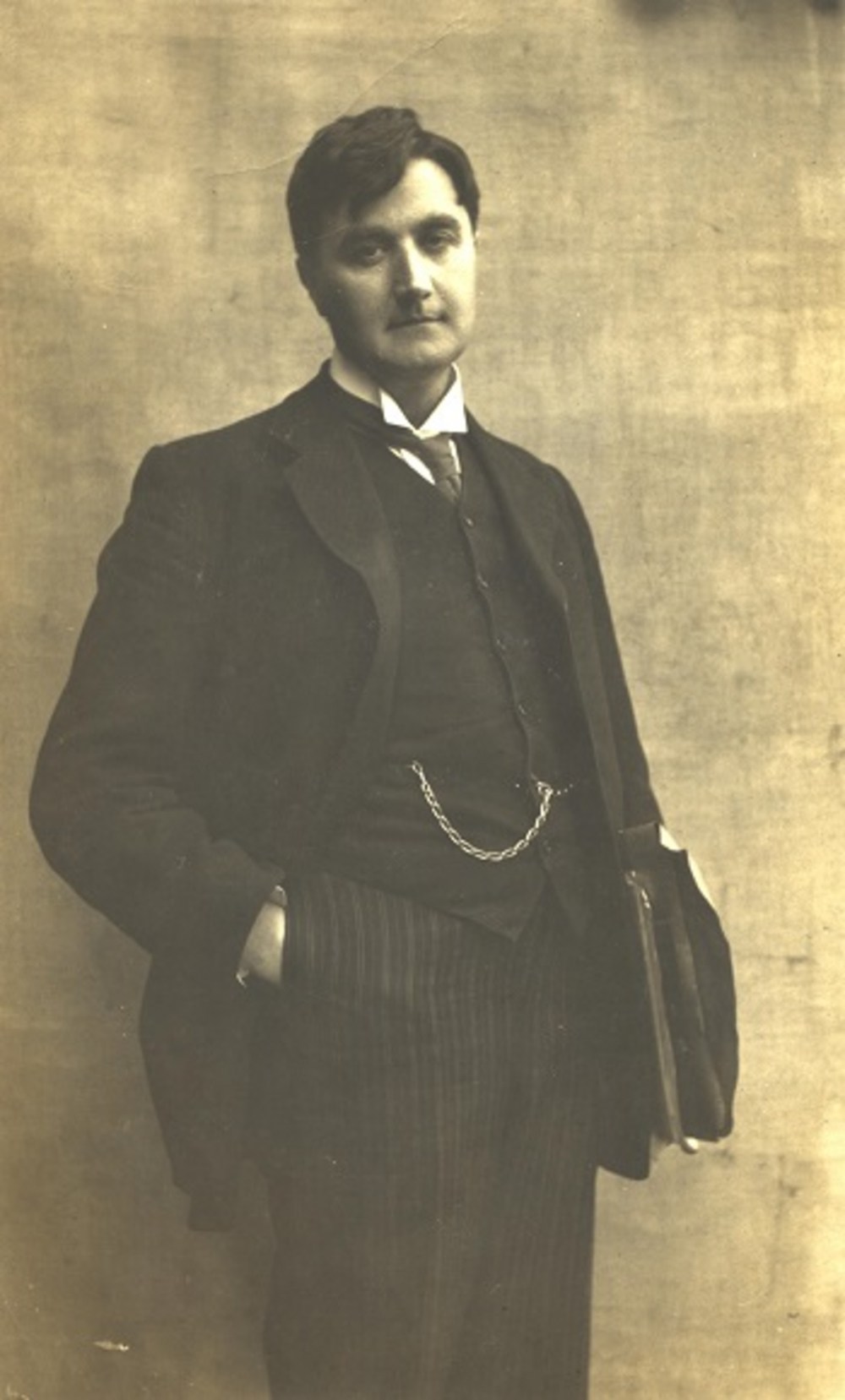
In January 1905, Ralph Vaughan Williams, aged 33 and not yet famous as a composer, visited the Norfolk port of King’s Lynn in order to gather folk songs as source material. Unsurprisingly, the tweed-suited, Cambridge-educated man felt out of place among East Anglia’s hop-pickers and farm labourers. Yet in a dilapidated quarter of the town he found himself transfixed by a fisherman who sang a shanty about a teenage cabin boy tortured and killed on the high seas by the ship’s captain. ‘The Captain’s Apprentice’ made such an impression on him that he wove its haunting, doom-laden melody into his ‘Norfolk Rhapsody No 1’ of 1906. In today’s terms, the song had been ‘sampled’.
The composer’s week-long stay in King’s Lynn altered the direction of his life. Despite having amassed more than 250 folk melodies from across rural England, Vaughan Williams discovered in the fisherman’s gruesome ballad new possibilities of melody, harmony and emotion. Two years later, in the winter of 1907-8, he travelled to Paris to study composition under the young French composer Maurice Ravel. The cross-Channel venture paid dividends. Vaughan Williams’s subsequent music, with its dreamy, introspective wistfulness, often bore the unmistakable imprint of Ravel.

Lessons in Harmony, Jonathan Coe’s 16th novel, reimagines the decades-long friendship that developed against the odds between Ravel and RVW (as Vaughan Williams is referred to throughout). The men could not have been more different. Where Ravel was a dandified spirit with a gastronome’s delight in fine dining and couture clothes, RVW was a shambolic chap who habitually wore an ‘egg-stained tie’ (Coe rather piles on the clichés) and puffs meditatively on a pipe. Fearing that his music might become leaden with Germanic counterpoint after Brahms and Wagner, RVW is only too pleased to give ita bit of French polish courtesy of Ravel. Mysteriously aloof and hungover when RVW turns up for his first harmony lesson, Ravel commends the brevity of his pupil’s folkish East Anglian rhapsody (all 12 minutes of it) and announces that one should not make a fetish of the symphony. ‘Other musical forms are available,’ he explains to RVW, who is all ears.
The novel is narrated by a music critic called Pierre ‘Mylo’ Mylonas, who is loosely based on the Paris Conservatoire eminence who had introduced the two composers. Mylonas intrudes a tricksy paraphernalia of found manuscripts, unpublished memoirs, lost diaries and missing journal entries. In this playful spirt (part Nabokov, part B.S. Johnson), mock-scholarly footnotes abound and quotations are deliberately misattributed. ‘I normally write while sitting on my bum’ was not said by RVW to the British composer Cyril Scott – thinly disguised here as the no-hoper Sidney Harper– but to Sir Henry Walford Davies, an altogether different composer. None of this matters much, as Coe tweaks the historical record to achieve comic effects.
In pages of charming comedy he portrays RVW as an ingénue out of his depth in late Belle Époque Paris. The Englishman frowns over fancy foodstuffs on a restaurant menu and affects a confused, bluff manner when Ravel takes him to see a risqué cabaret show. It would be easy to consign Lessons in Harmony to the frivolous pastures of the literary bagatelle. As a comic-satirical study of cultural misunderstandings between the French and English, it reminded me of Coe’s 2013 Cold War caper Expo 58, where an English civil servant finds himself in deep water in Belgium. Yet Lessons in Harmony has a serious edge and is often moving to read. Coe is at pains to point out that RVW was anything but insular-minded in his pursuit of folk idiom. He winced at any talk of Merrie England, with its sepia-tinted associations of maypoles and fireside sing-alongs, and disliked displays of jingoism. Englishmen who ‘wave flags and shout their patriotism from the rooftops’, RVW’s first wife Adeline Fisher tells Mylonas, ‘are not the most sincere patriots’ – a jibe on Coe’s part at the völkisch Faragists among us today? (Coe is known for his anti-Brexit sympathies.)
Over the Ealing-comedy-like high jinks looms the spectre of the Great War and the human devastation to come. Ravel is everywhere present in RVW’s great ‘Pastoral Symphony’, Coe reminds us, completed in 1921, two years after the composer was officially demobilised and returned from the Western Front. The music conjures a prelapsarian Albion untouched by the clamour and carnage of the fighting save for a doleful bugle motif that sounds a last call.
If we are to believe Coe, Vaughan Williams has not previously appeared in a work of fiction. Lessons in Harmony is, then, a first, and a quite delightful one at that. I have just one grouse. In his bibliography, Coe mentions The Captain’s Apprentice by Caroline Davison, but misspells her name as ‘Dawson’. (I should know: she was a student of mine at the University of East Anglia.) Truth and fiction blend very nicely in this novel, but some errors need attending to.






Comments