Paranoia

Distant shadows: Frame 37, by Nicholas Shakespeare, reviewed

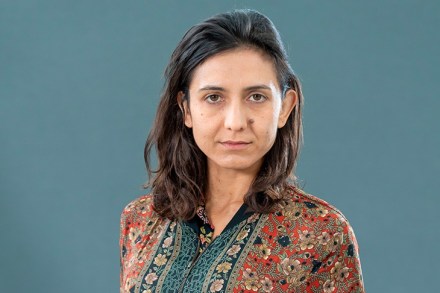
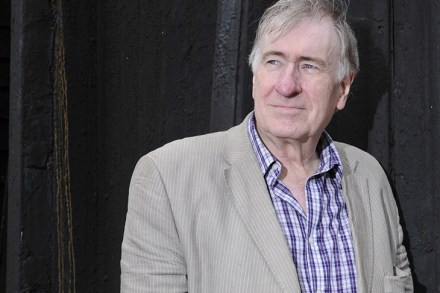
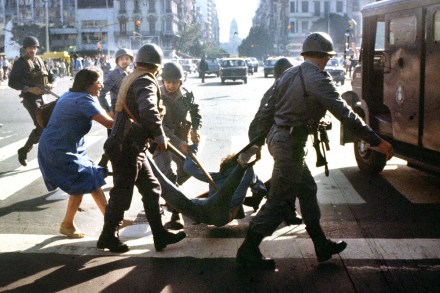
In photography, balance, whether radial, conceptual or symmetrical, is critical to the success of a composition. An unbalanced photograph can confuse, obfuscate or otherwise diminish an image. It is the same for a literary writer (Nicholas Shakespeare has twice been Booker-longlisted) taking on the thriller genre. Finding an equilibrium between prose styling and fine plotting requires considerable skill and a gentle touch. In his second outing for the former journalist John Dyer, Shakespeare treads this tightrope nimbly. Following the events of The Sandpit (2020), Dyer is in Tasmania, engaged in research for a book on the Tupian peoples of the Amazon. He is soon interrupted by a voice from the past, that of Miguel Girondo de Belew, an Argentinian photo-journalist.
The tragedy of Paul Celan – trapped in his own allusive poems

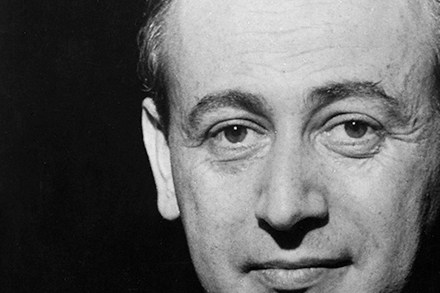
Some time in the late 1950s, Jacques Derrida and other intellectual luminaries at the École Normale Supérieure in Paris were surprised to be told that the excruciatingly introverted German-language instructor they had been avoiding in the corridors for several years was ‘the greatest living poet in the German language’. Paul Celan was reputed to be as ‘difficult’ as his poetry – rebarbative, then intriguing and finally unforgettable. His best known poem is ‘Todesfuge’ (‘Death Fugue’), which may refer to Jewish musicians in a Nazi death camp: ‘Black milk of dawn, we drink you at night...’ He can be heard online reciting the poem in a rising tone of suppressed hysteria.

The mind-body conundrum

I’m committed this winter to too many expensive building projects at once. As the balloon of my bank balance drifts ever lower towards the waves, and the crests of red ink lick the wicker of my basket, I’ve realised something has to be thrown out. Thus it was that last week I found myself in London’s Hatton Garden. Tucked into my little knapsack was my passport and a couple of one-ounce mini bars of gold I had bought after the last banking crisis, and stored in an old kettle. It was late afternoon, and dark.

The Russian spies hiding in plain sight

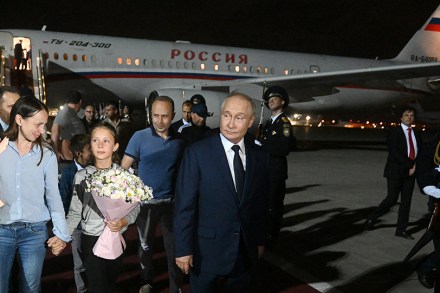
In June 2022, Vladimir Putin tipped up at a party at the headquarters of Russia’s foreign intelligence service, the SVR. This was to mark, of all things, the centenary of the country’s programme of deep-cover spies, who live for years abroad under elaborate false identities while passing secrets back to their masters at home. The weirdness of that espionage hoopla, just four months after the invasion of Ukraine, leaves one wondering what other bizarre birthday events Putin might have in his diary. The 85th anniversary of the assassination of Leon Trotsky, perhaps? Ah, you can imagine the banter. The cracker hats. The roll-out noisemakers.

At home in the multiverse: Bridge, by Lauren Beukes, reviewed

Lauren Beukes is a writer who puts cerebral propositions into breakneck thrillers: structural misogyny in The Shining Girls; the flipside of patriarchy in Afterland. In Bridge, she investigates the depressive’s favourite hypotheticals – could have, should have, would have, might have. The protagonist is Bridget, whose mother, Jo, has recently died from brain cancer. Jo was a scientist, interested in rather eccentric ideas, and has bequeathed Bridget a problematic legacy. It seems as if Jo had found a way, using harmonics, visual stimuli and an odd, worm-like thing (think fungus or parasite or the nematode in a tequila bottle) to access other realities. Through trial and error, Bridget manages to live up to her name and bridge universes.

A visit from the devil: Russian Gothic, by Aleksandr Skorobogatov, reviewed

Like light from faraway stars, fiction from outside the Anglosphere may take decades to reach English-language readers. This sinister, indeed sulphurous, novella by a Belarus-born author was first published in Russian in 1991, and won major awards. Ilona Yazhbin Chavasse’s English translation, as creepily compelling as the book deserves, appears long after the contemporary hook that Aleksandr Skorobogatov embeds in his tale has lost its topicality. Recent events, however, make this fable of obsession, madness and violence timelier than ever. It almost vindicates a belief in Russian history and literature as an epic recycling of eternal themes. In a dismal Russian town lives Nikolai, a drifter and drinker on a meagre government pension.

The United States of paranoia

From our US edition

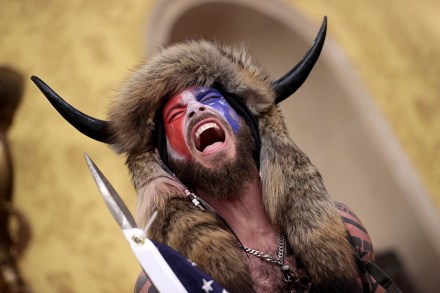
Half a decade ago, with America’s elites trying to make sense of the rise of Donald Trump, an essay from the Sixties made a surprising comeback. Richard Hofstadter’s “The Paranoid Style in American Politics” became part of the conversation over fifty years after it was first published in Harper’s. It was less something concerned citizens actually read, more something they mentioned at dinner parties to sound smart. Writing with Barry Goldwater’s 1964 presidential bid in the background, Hofstadter described in pseudo-psychological terms what he saw as the right’s tendency towards the paranoid style, a phrasing he chose “simply because no other word adequately evokes the sense of heated exaggeration, suspiciousness and conspiratorial fantasy that I have in mind.

cults
paranoia

In defense of paranoia

From our US edition

Maybe it’s because I grew up during the “stranger danger” milk carton kid era (for those too young to know what I’m talking about, milk cartons were the original Amber Alert) or because of the burgeoning twenty-four-hour news cycle — or maybe I was just born neurotic — but I became convinced as a child that I was going to end up getting murdered by my bus driver in a schoolbus lot on the outskirts of town. Every morning, I’d ask my mom no fewer than a hundred times if she was going to be there when I got off the bus. My fear seemed irrational for a seven-year-old, but I was obsessed.

Portrait of a paranoiac: Death in Her Hands, by Ottessa Moshfegh, reviewed

Like Ottessa Moshfegh’s first novel Eileen (2015), Death in Her Hands plays with the conventions of noir. Vesta Gul, a recently widowed 72-year-old, lives in a secluded lake cabin in rural New England. Walking her dog one day in the woods, she finds a cryptic note under a rock: ‘Her name was Magda,’ it reads. ‘Nobody will ever know who killed her. It wasn’t me. Here is her dead body.’ With no trace of a body or other clues in sight, Vesta pockets the note. Is it a prank, she wonders? Or ‘the beginning of a story tossed out as a false start, a bad opening’? What follows is less of a whodunnit than a portrait of paranoiac unravelling in isolation.

All things lead to 9/11

In the immediate aftermath of 9/11 many writers spoke of feeling immobilised. The scale of the attacks and the world’s shared experience of the media event seemed to demand a response; but simultaneously writers such as Ian McEwan, Martin Amis and Jay McInerney described a sense that the tools at their disposal were inadequate — that the reality of what had taken place exceeded fictional representation. These three all recovered from their shock reasonably quickly, contributing to the flood of 9/11 fiction that poured into bookshops during the 2000s. In recent years this torrent of novels and stories has slowed, but as Christopher Priest’s eerily powerful An American Story demonstrates, it most certainly has not stopped.

american story