Pakistan

The Taliban’s Afghanistan quagmire

From our US edition

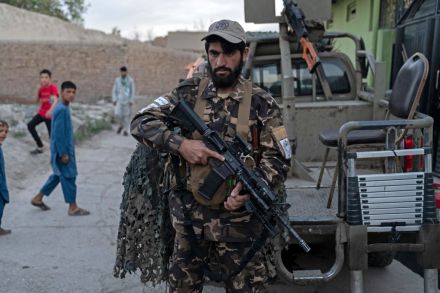
Hibatullah Akhundzada is a secretive man who is only occasionally heard and seldom seen. But on May 1, the Taliban’s supreme leader was delivering a sermon in Kandahar’s central mosque, bragging about his organization’s supposed successes. “Congratulations on this victory, freedom and success,” said the reclusive Akhundzada, surrounded by armed bodyguards. Nine months after the Taliban captured Afghanistan and forced the hapless Ashraf Ghani to flee the country in a helicopter, its chief official remains content with relishing the past. But truth be told, the Taliban has nothing to brag about.

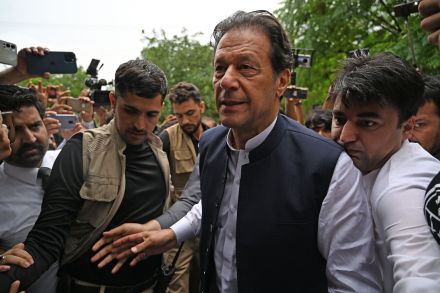
What next for Imran Khan, Pakistan’s ousted leader?

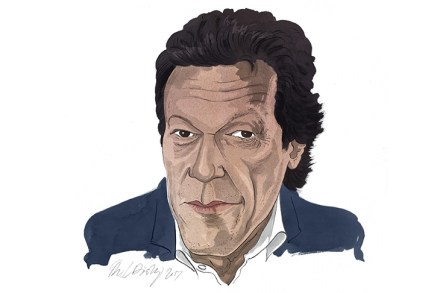
On Sunday, Imran Khan became the first prime minister in Pakistan’s history to be ousted by a no-confidence vote. Followers of Khan’s Pakistan Tehreek-e-Insaf party naturally took to the streets; much of their anger has been directed at the generals who engineered their leader’s downfall. It was a clash with the all-powerful military that, like so many of his predecessors, finally ended Khan’s prime ministership. The former cricketer had attempted to oust one of the country’s all-powerful spy chiefs, a move that finally ended the uneasy relationship between the PM and the military. Attempting to save his own politician skin, Khan tried to block a no-confidence vote by dissolving the assembly last week but this was deemed illegal by the Supreme Court.

Can Imran Khan cling on to power in Pakistan?

In the brief interlude of Chechen independence between the Russia-Chechen Wars of the 1990s, I travelled with Imran Khan from Grozny to Baku, where we were due to meet Azerbaijan’s finance minister. We had different reasons for our visit. I was interested in the business potential of the countries of the Caucasus, while Khan, a former cricketer turned fledging politician who had recently formed the Pakistan Movement for Justice party (PTI), was keen to support the then independent Sufi Islamic state of Chechnya. To get to Baku we had to catch a plane from the neighbouring Russian republic of Dagestan. Our Chechen hosts told us that we did not need papers to get across the border.

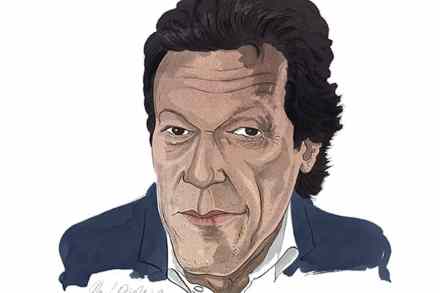
Is this the end of Imran Khan?

Imran Khan’s innings as the Pakistani Prime Minister may be coming to an end. The Muttahida Qaumi Movement, one of his coalition partners, has split from the government. Khan has now lost his majority in the National Assembly, which is set to meet for a no-confidence vote on Sunday. And while all this falls perfectly in line with parliamentary norms, in the context of the country’s tumultuous political history, Khan’s premature exit would be another blow to democracy. Not a single Pakistani prime minister has completed their five-year term in the country’s 75-year history, almost half of which has seen direct military rule.

Democrats double down on wasteful foreign aid

From our US edition

The latest version of the Democrats' $1.5 trillion spending bill being pushed through Congress includes funding for questionable foreign projects, such as "gender programs" in Pakistan and democracy building in authoritarian nations. According to a section of the bill outlining State Department funding for the year, an unspecified portion of the nearly $4 billion available in bilateral economic assistance — meaning direct transfers from the United States to other countries — shall "be made available for programs to promote democracy and for gender programs in Pakistan.

changes come covid pakistan
terror

Noninterventionists never win arguments

From our US edition

I’ve been thinking about where I was on the eve of the US invasion of Iraq in 2003, and my memories of the event are quite depressing. What have we learned? As a research fellow at the Cato Institute at that time, I was working with other analysts preparing research, authoring commentaries, publishing op-ed articles and giving interviews to the broadcast media, warning about the consequences of the coming American military conquest in the Middle East. It's not polite to toot one’s own horn, but we were right.

Ahmad Shah Massoud was Afghanistan’s best hope

Ahmed Shah Massoud was described as ‘the Afghan who won the Cold War’. While famous in France (he was educated at the Kabul lycée, and the French saw him as the ultimate maquisard who drove a super-power out of his country), he is not a familiar figure in Britain. This book, a rich and detailed account of the travails and tragedy of Afghanistan between 1976 and Massoud’s murder in 2001, will correct that. Sandy Gall’s knowledge of the jihad is encyclopaedic. He was the first well-known journalist to make the dangerous journey into occupied Afghanistan and bring the human cost of this terrible war to our TV screens. To produce such a book at the age of 93 deserves admiration. Many warlords are also writers: Babur, T.E.

Pakistan is relishing its role as kingmaker in Afghanistan

The details of engagements involving the head of MI6 are, unsurprisingly, usually kept secret. But not so Richard Moore's meeting with the head of the Pakistani army, General Qamar Javed Bajwa. Officers from Britain's intelligence service are also said to have met the Taliban, both in Kabul and Qatar. How do we know? Because hours after Moore met Bajwa, the news was plastered all over Pakistani media, much to the dismay and horror of British officials. Pakistani leaders have spent much of the past fortnight basking in the Taliban’s triumph. Imran Khan lauded the Taliban for breaking the ‘shackles of slavery’.

Will the Taliban’s victory lead to attacks on British soil?

The security services in Britain have been concerned about the rise of the Taliban for many months. In government briefings they have been telling ministers that it was almost inevitable the Taliban would gain some role in the government of Afghanistan once Western forces withdrew – it was just a question of how much. It is easy to ignore, after the sudden collapse of Afghan forces, the fact that the national army had been losing ground to the Taliban over several years and bloody attacks have remained a constant in the centre of major cities in the country. The Taliban killed 16 people and injured 119 in a suicide bomb attack on a residential compound in the capital just days before the leadership was due to meet President Trump at Camp David in September 2019.

Pakistan’s masochistic support for the Taliban

Taliban flags are already flying in Islamabad. Among those hoisting the white flag of the group is the women’s madrassa Jamia Hafsa, affiliated with the adjoining Lal Masjid (Red Mosque), which has also released a song celebrating the Taliban as ‘the symbol of Islam’. Lal Masjid, a few miles from Pakistan’s military headquarters and parliament, has been an emblem of terror and factory of jihad in Pakistan since its formation in the 1960s. The Lal Masjid cleric Abdul Aziz has in the past pledged allegiance to Isis and appeared to defend the 2014 Peshawar school attack which killed 141, mostly schoolchildren. When the army moved against Lal Masjid in 2007 it led to a nationwide explosion of terror attacks.

Pakistan is the true winner from the Afghan debacle

'Everyone is getting out – and fast', the man tells me over a crackling line. He is tired, clearly subdued. A UN staff member, he was in Afghanistan until very recently and is still trying to process what happened. 'We knew this was going to happen,' he continues, 'but everyone was caught by surprise at the speed of the Taliban advance.' UN staff are now being evacuated to Almaty in Kazakhstan, from where they will make their way to their respective countries. But what about the local Afghans that worked with them? 'Our Afghan colleagues were given letters of support for country visas in the region: Iran, Pakistan, and India.

Pakistan’s profane blasphemy laws

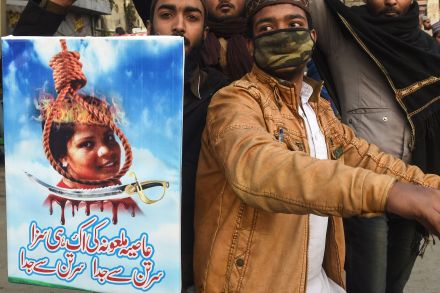
An eight-year-old Hindu boy is currently in custody in the southern Punjab. He is the youngest person in Pakistan to be charged with blasphemy. The boy, accused of urinating in a local madrassa, was released last week on bail — in retaliation, a Muslim mob vandalised a local Hindu temple. Meanwhile, on Thursday, a day after the temple attack, a transgender person was arrested on blasphemy charges in Abbottabad, around 100 miles north of the capital Islamabad, for allegedly burning the Quran. These are but the latest in an unrelenting spree of blasphemy cases, a victimless crime that carries the death penalty in Pakistan.

China is the latest victim of Pakistan’s Islamist problem

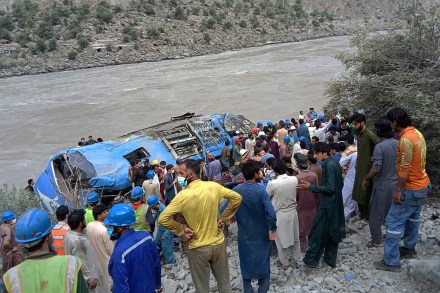
Nine Chinese engineers were killed in an explosion near Pakistan’s Dasu hydroelectric dam last Wednesday. The government initially said that their bus suffered a ‘mechanical failure’ after it plunged into a ravine, but officials eventually admitted that the incident was a terror attack after Beijing decided to send its own investigators. China has now postponed work on the $65 billion (£47 billion) China Pakistan Economic Corridor, a network of roads and infrastructure projects. The programme represents Beijing’s largest overseas investment and is a critical part of its Belt and Road Initiative.

Why did no one diagnose my sister’s TB?

In 2016, Arifa Akbar’s elder sister, Fauzia, died suddenly in the Royal Free Hospital, London at the age of 45. Until the last hours of her life, the cause of her coughing, chest pain, night sweats and breathlessness had eluded a series of baffled experts. But you do not need a medical degree to hazard a guess at what might have been behind these symptoms. From Keats’s famous death to the consumptive heroines of 19th-century opera, spots of blood on a handkerchief were all that was missing to complete the picture. Only after Fauzia had a catastrophic cerebral haemorrhage, however, did someone think to test a sample of her spinal fluid for tuberculosis. It was positive. Sense came too late. The mycobacteria had disseminated through her organs and were nesting in her brain.

Imran Khan’s dangerous bid to export Pakistan’s blasphemy laws

Imran Khan appears to want to impose Islamic blasphemy laws across the world. ‘I want the Muslim countries to devise a joint line of action over the blasphemy issue with a warning of trade boycott of countries where such incidents will happen,’ Khan said in an address on Monday. Last week, talking up his plan to launch a global movement, and his love for Islam’s prophet, Khan warned, ‘There will come a time when people in the West as well will be scared of blaspheming against our prophet (peace be upon him)’. The Pakistani premier’s rejuvenated bid to outlaw blasphemy against Islam came after he succumbed to the demands of proscribed radical Islamist group, Tehrik-e-Labbaik Pakistan (TLP), which Khan’s own government had banned.

Imran Khan’s cowardly response to Pakistan’s rape crisis

Pakistan's prime minister Imran Khan has once again blamed women for an appalling rise in rape cases. Khan used a televised question and answer session this week to say that sexual violence was a result of 'increasing obscenity'. Women in Pakistan should remove 'temptation' because 'not everyone has willpower', he added, urging females to cover up to help reduce the sexual violence which has plagued our country. Khan pointed the finger of blame at Bollywood and Hollywood, for spreading ‘vulgarity’. He also repeated the growing divorce tally of the UK as evidence of the ‘ethical plunge’ of the West, which he said is messing up the moral compass of the Muslim world and Pakistan.

Will Modi’s ceasefire with Pakistan last?

The perpetually fractious relationship between India and Pakistan reached a particularly low point two years ago, after dozens of Indian paramilitary personnel were killed in a suicide attack in Pulwama in the mountainous terrain of Kashmir. India blamed the attack on Pakistan and bombed what it believed was a terrorist training camp in Balakot across the border. The Pakistani air force retaliated by shooting down an Indian air force plane in a dog-fight, with the pilot having to eject on enemy soil. The airman was returned; but the downward spiral in ties accelerated with the two countries withdrawing their high commissioners and suspending bilateral trade altogether.

When will Pakistan take a stand against terror?

Last week, Pakistan’s Supreme Court ordered the release of UK born Ahmed Omar Saeed Sheikh who was accused of kidnapping and beheading the Wall Street Journal reporter Daniel Pearl. The verdict came after Sindh High Court overturned the death penalty for Sheikh and three alleged abettors last year, ruling that there was insufficient evidence to find them guilty of murder and stating that they had served their sentence for their role in the kidnapping. The decision has outraged Washington, with Joe Biden’s new State Department chief Antony Blinken dubbing it an ‘affront to terrorism victims everywhere’ and announcing his readiness to prosecute Sheikh in the US.

When will Britain take a stand against Pakistan?

Well, now that we’re all fired up about Britain’s moral role in the world courtesy of Theresa May, who is indignant about cuts to the overseas aid budget, how about moving on to Pakistan? This week a Pakistani court has ruled that a 12-year-old Christian girl, Farah Shaheen, consented to her marriage with an alleged abductor over twice her age and consented freely to convert to Islam. When the girl was recovered from the household of Khisar Ahmed Ali in December, she was reportedly too traumatised to speak about what happened to her over the five months since she, ah, consented to marry a 29-year-old and convert to Islam.

Imran Khan’s rape crackdown won’t make Pakistan safer for women

Rapists in Pakistan will soon face a stark choice. Under a law backed by the country's prime minister, Imran Khan, those convicted of rape can either be chemically castrated, face life imprisonment or even a death sentence. But while the new law sounds radical, it's unlikely it will be enough to curb the wave of sex attacks against women in Pakistan. The tough measures have been painted as something of a compromise by Khan, who has said those found guilty of sex attacks should be hanged in public. Dismissing this as an option, Khan said introducing such a punishment would 'not be internationally acceptable'. 'The trade status given to us by the European Union will be affected,' he added.