Ashis Ray

More diplomacy won’t stop the advance of the Taleban

From our UK edition

On 11 August, at Russia’s initiative, an ‘extended troika’ will meet in Doha, Qatar to take stock of the Taleban’s major offensive to take over Afghanistan. The United States, scheduled to withdraw its forces by the end of this month, has been invited to this ‘Moscow format’, as have China and Pakistan. As of yesterday, the violent Islamist group had taken control of six provincial capitals in Afghanistan – though not the most important cities in the country. The US negotiator at Doha, Zalmay Khalilzad has warned that ‘a Taleban government that comes to power through force in Afghanistan will not be recognised.’ But so far the militants have refused to engage in negotiations with the elected Afghan government.

Will Afghanistan fall to the Taleban?

From our UK edition

A last-ditch effort to broker peace in Afghanistan will be made in the Qatari capital of Doha this weekend. A senior Afghan government delegation which includes Abdullah Abdullah, chair of the country’s High Council for National Reconciliation, and former national president Hamid Karzai will engage in talks with the Taleban. Afghanistan’s unending 42-year civil war has predictably intensified with the imminent departure of western armed forces led by the United States. This week a Pulitzer Prize winning photojournalist with Reuters, Danish Siddiqui, was killed near the Spin Boldak border crossing between Afghanistan’s Kandahar province and the Pakistani region of Balochistan – he was apparently a victim of indiscriminate Taleban firing.

The emptiness of the UK-India trade deal

From our UK edition

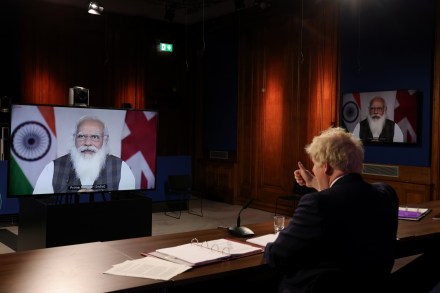
Britain and India have been trading for over 400 years. For 190 of those, between 1757 and 1947, the subcontinent was close to being a captive market of the United Kingdom. Today commercial turnover between the two nations is a mere £23 billion — a tenth of the goods and services traffic between Britain and the European Union. For many Leave voters, Boris Johnson included, expanding trade ties beyond the EU’s borders was a major motivation for Brexit. India was seen as both an exciting emerging market but also a nation that is culturally entwined with this one. However, five years after Britain voted to depart the lucrative single market, all Johnson and Narendra Modi have been able to conjure up is a below-expectation 'enhanced trade partnership'.

Myanmar is on the brink of civil war

From our UK edition

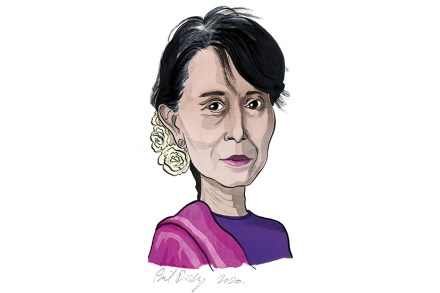
For more than two months now Myanmar has been convulsed by a burgeoning civil war. The confrontation between the country’s military and large parts of the country has little prospect of an early resolution unless China and Russia withdraw their support for the junta, which jettisoned a five-year power-sharing arrangement with Aung San Suu Kyi’s party. The country’s armed forces evicted the National League for Democracy from office in February but have failed to consolidate the coup d’etat. The younger generation of Myanmarese have tasted a decade of democracy and freedom — they show little sign of buckling. The men in uniform ruled oppressively from 1962 for nearly half a century, seeing off challenges to their brutal authority.

Myanmar’s killing fields and the weakness of the west

From our UK edition

The killing fields of south-east Asia are tragically alive and kicking. Pol Pot, the butcher of Cambodia, may be long cremated. But the military in Myanmar are maintaining his heinous heritage. On Saturday, they indiscriminately gunned down over 100 people, including children. It was the bloodiest sequence in two months of continuous brutality, which has led to the deaths of at least 400 civilians. The demonstrators' only crime has been to object to the unlawful overthrow of an elected government by the murderous men in uniform. The khaki has tragically trampled over this land of rich natural resources for much of its existence since independence from Britain in 1948.

Will Modi’s ceasefire with Pakistan last?

From our UK edition

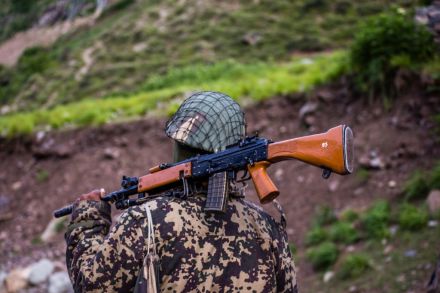
The perpetually fractious relationship between India and Pakistan reached a particularly low point two years ago, after dozens of Indian paramilitary personnel were killed in a suicide attack in Pulwama in the mountainous terrain of Kashmir. India blamed the attack on Pakistan and bombed what it believed was a terrorist training camp in Balakot across the border. The Pakistani air force retaliated by shooting down an Indian air force plane in a dog-fight, with the pilot having to eject on enemy soil. The airman was returned; but the downward spiral in ties accelerated with the two countries withdrawing their high commissioners and suspending bilateral trade altogether.

Will Burma’s Buddhist monks help bring an end to the military coup?

From our UK edition

In what could transpire to be a significant development, Buddhist monks joined tens of thousands of anti-coup protesters in the Burmese capital of Rangoon on Wednesday. This is the sixth continuous day of mass demonstrations since the military seized control. In a country where over 80 per cent of the population are Buddhists – and devoutly so – men of the cloth are influential. In fact, saffron-robed monks taking to the streets in 2007 paved the way for an end to 49 years of military rule in Burma in 2011. Along with China, they are key to restoring democracy in the south-east Asian state.

Will Myanmar’s military get away with their coup?

From our UK edition

In 1962 the Myanmar military staged a coup d’etat. Their iron-fisted rule lasted 49 years. On Monday, after a nine-year interlude when they remained covertly in control, they have officially and overtly retaken power. Min Aung Hlaing, who has been commander-in-chief of the armed forces since 2011, is now directly at the helm of a renewed dictatorship. Prime Minister Aung San Suu Kyi, the country’s President Win Myint and numerous others of the ruling National League for Democracy party are under arrest. The military television station announced there will be a one year state of emergency. Ostensibly fresh elections will be organised. But given their track record, the word of the power-hungry generals is untrustworthy.

A UK-India trade deal is needed now more than ever

From our UK edition

Within a year of being elected leader of the Conservative party, David Cameron made clear the importance with which he viewed Anglo-Indian relations: “I attach the highest priority to Britain’s relationship with India. For too long, the politics of this country has been obsessed with Europe and America.” That he meant business was underscored by the 2010 Tory general election manifesto which promised a “new special relationship with India”. The British head of state Queen Elizabeth ratified an “enhanced partnership” with India in her speech at the opening of parliament. Cameron, now prime minister, rushed to Delhi, where India endorsed the idea, but did not really execute it.

The coalition against China

From our UK edition

There was cautious expectation China would become a responsible member of the international community, given its 40-year surge towards free trade. This has sadly not come to pass. China’s offence-is-the-best-form-of-defence posture after the spread of the coronavirus pandemic from its soil, has confirmed the Chinese communist party's aggressive streak. But now countries neighbouring China are building a coalition aimed at reining in their increasingly noisy neighbour.  Foreign ministers of a revitalised QUAD – a grouping consisting of the US, Japan, India and Australia – met in Tokyo last week. After the meeting, US Secretary of State Mike Pompeo railed at Beijing’s 'bad behaviour' and the threats it posed.

Could Covid give rise to a theocratic India?

From our UK edition

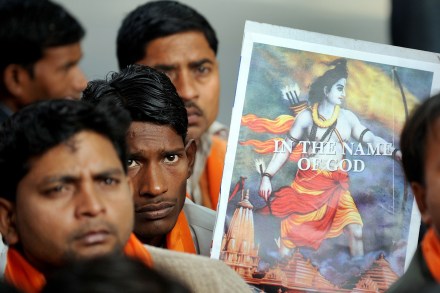
The second day of October is a red-letter day in the Indian calendar. It’s the birthday of Mohandas Gandhi, better known as Mahatma or 'great soul'. The man who with non-violence and non-cooperation brought British rule in India to its knees. The anniversary of Gandhi’s birth is a national holiday in India; a day of celebration and remembrance. Not this year, though. India has just clocked the dubious distinction of 100,000 Covid-19 deaths; later this month it could exceed the United States to record the highest number of people infected by the deadly virus. A country not entirely integrated with the international travel grid ought to have fared better. Narendra Modi's response was delayed, draconian and unscientific.

India and China are on a path to war

From our UK edition

The foreign ministers of China and India, Wang Yi and Subrahmanyam Jaishankar, will meet today on the sidelines of a conference in Moscow. Their conversation is sure to be frosty: earlier this week, a four-month stand-off between the two countries’ armed forces escalated into warning shots being fired in the western Himalayas. This was the first discharge of guns between the two nations in 45 years. Chinese president Xi Jinping and Indian prime minister Narendra Modi have so far refrained from speaking to each other to defuse the tension. Worryingly, the belligerence from the Chinese bears resemblance to its tone before the two countries went to war in 1962.

India-Pakistan relations have reached rock bottom

From our UK edition

Seventy-three years ago on 15 August, the nation of India awoke, in the immortal words of its first prime minister Jawaharlal Nehru, ‘to life and freedom’ after 190 years of British rule. It was a truncated triumph. Before its departure from the subcontinent, Britain conceded to demands for a separate homeland for Muslims and carved out significant swathes of India into Pakistan. Vocal and influential land-owning Muslim elites were convinced they would be unbearably subjugated in an independent India where Hindus were hegemonic. If the partition of India was intended to usher in reconciliation, this is yet to materialise. The two South Asian neighbours have since bloodily engaged in three major and two minor wars.

Does Facebook hold the key to the Rohingya genocide?

From our UK edition

Does Facebook hold the key to bringing the perpetrators of the Rohingya genocide to justice? Four in ten people in Burma use Facebook. Among them was the omnipotent commander-in-chief of the country’s armed forces Min Aung Hlaing, before he was banned from using the platform in 2018. Now Gambia, backed by the Organisation of Islamic Countries, has initiated court proceedings in the United States to compel Facebook to release data on ‘suspended or terminated’ accounts of General Min and other of Burma’s military top-brass. They hope this will yield vital evidence that can be used in the International Court of Justice (ICJ) at the Hague to prove that Burma is guilty of horrific crimes against the Rohingyas.

Xi’s bid for global domination could easily backfire

From our UK edition

China’s multi-pronged militarism against its neighbours in recent weeks is intended as a show of strength. In fact, it reveals a weakness at the top of Xi Jinping’s Communist party which could prove to be counterproductive. Why is Xi lashing out? A detection of dissatisfaction among China's people, mixed with a perceived opportunity for China to assert itself while the rest of the world is distracted by coronavirus, appears to have led to attacks against Indian troops and a crackdown in Hong Kong. But the gambit could backfire; and the country’s bid to attain superpower status might easily become a longer march than Xi is hoping for.

Modi’s muted response to China is infuriating Indians

From our UK edition

The mood in India simmers with retaliation following the death of at least 20 Indian soldiers in clashes with their Chinese counterparts on the decades-long unsettled border between the two countries. And there is bewilderment too at the muted reaction from India’s prime minister, Narendra Modi. When Modi first came to power, he promised a ‘muscular’ foreign policy. Yet when it matters most, this seems to be missing in action. On Friday, Modi said that ‘neither is anyone inside our territory, nor is any of our post captured’. This appeared to contradict previous and subsequent statements by his own defence and external affairs ministries and the Indian army. So what’s really going on?