Painting

‘I’ve seen the bare bones of London’: street painter Peter Brown interviewed

‘I’ve been seeing the bare bones of London,’ explains the landscape artist Peter Brown, who is known affectionately as ‘Pete the Street’. We meet on the corner of St Martin’s Lane, where he is painting the view facing north, taking in the Coliseum, the Duke of York theatre and an Iranian restaurant called Nutshell. ‘The pandemic has been a good opportunity to paint all these West End theatre awnings.’ What has he noticed about London during the pandemic? ‘UPS vans, everywhere,’ he says. How about Deliveroo bikes? ‘I’ve spotted less of those.’ Has London changed over the past year? ‘I met a bloke on Old Compton Street who described how it feels really well to me,’ Brown says.

The truth about my father, Philip Guston

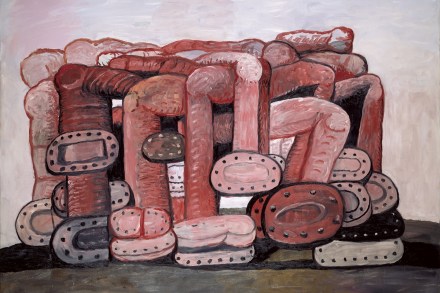
Philip Guston’s later work is — and I say this with love — nails-down-a-blackboard weird. The vapid pinks and flat reds lend a nightmare cheerfulness. The menacing American figure wearing Mickey Mouse gloves is rendered in cartoonish style. The clock shows it is time to panic, challenging you to call out the hood for the Ku Klux Klan symbol it appears to be. By the time he started making these paintings, in 1968, Guston was pretty much post-everything: post-realism, post-abstract expressionism, post-criticism (he and his wife Musa sailed to Italy the day after the show’s opening night, and when a review found him in Venice, poste restante, he dropped it in a canal).

How Algernon Newton made great art out of empty streets and dingy canals

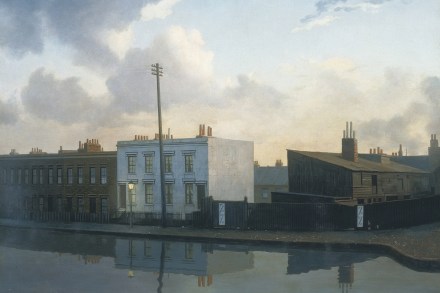
Quite late in life Walter Sickert paid his first visit to Peckham Rye. He was excited, apparently, because he had often heard about it but never actually been there. Evidently Sickert had a sense of London as an unknown city, full of potential. And he was far from being the only artist fascinated by the hidden recesses of this vast urban labyrinth. Algernon Newton, another case in point, was equally fascinated by unfashionable byways of the metropolis. For Sickert it was music halls and dingy bedrooms in Camden that seemed full of visual possibilities; for Newton it was terraced streets and urban water courses, their banks empty of people. Not for nothing was he dubbed ‘the Regent Canaletto’.

Why is the smoky, febrile art of Marcelle Hanselaar so little known?

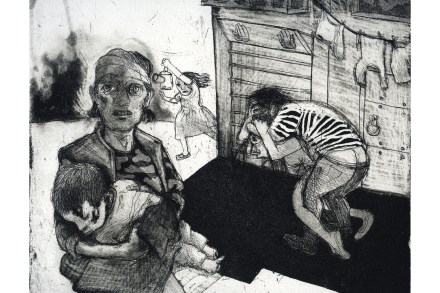
I first became aware of the work of Marcelle Hanselaar in a mixed exhibition at the Millinery Works in Islington. All I remember now about the show, and my review, is that I said she could teach Paula Rego to suck eggs. From the mischievous energy packed into her small figurative paintings I assumed she was young enough to be Rego’s granddaughter. That was in 2003; she was pushing 60. Born in Rotterdam in 1945, Hanselaar is essentially self-taught. She dropped out of art school in The Hague — it was the 1960s — and ran away to Amsterdam; what she learned about painting she picked up from the artists she lived with.

Francis Bacon: king of the self-made myth

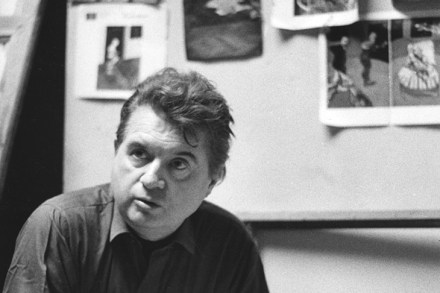
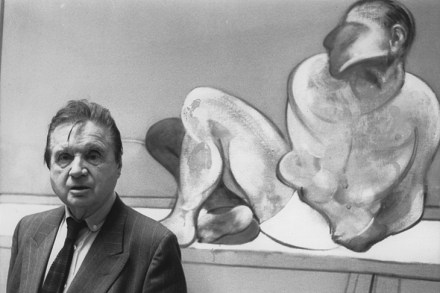
In 1953, Francis Bacon’s friends Lucian Freud and Caroline Blackwood were concerned about the painter’s health. His liver was in bad shape, he drank inordinately, his lover had recently thrown him out of a first-floor window in the course of a drunken row, he was taking too many amphetamines and his heart was ‘in tatters’, ‘not a ventricle working’. His doctor had warned if he took one more drink, he informed them over dinner at Wheeler’s restaurant in Soho, he might drop dead on the spot. Then, in ‘an ebullient mood’, the artist ordered champagne. Of course, Bacon (1909-92) didn’t expire on the spot. Instead, he lived, painted, drank and argued for another four decades.

The rise of bad figurative painting

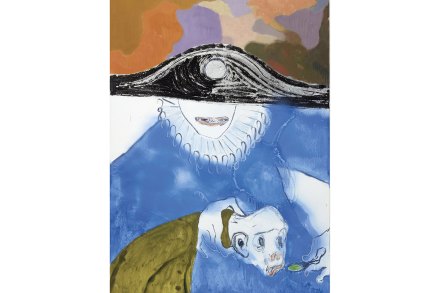
Bad figurative painting is today’s hottest trend. Last autumn Artnet listed the top ten ‘ultra-contemporary’ artists (meaning those born after 1974) with the highest total auction sales so far that year. Counting down: Lucas Arruda, Jia Aili, Ayako Rokkaku, Dana Schutz, Amoako Boafo, Nicolas Party, Matthew Wong, Jonas Wood, Eddie Martinez, Adrian Ghenie. None are household names. All are figurative painters, though some play with bad abstraction as well. None are particularly exciting. Many, many others are climbing after them. Since the list was published, Dana Schutz’s ‘Elevator’ (2017) sold for nearly £4.8 million at Christie’s Hong Kong, a new record price for the artist. The work is a poor impression of cubism.

Paint in the bloodstream: The Death of Francis Bacon, by Max Porter, reviewed

Francis Bacon once told the art critic Richard Cork: ‘I certainly hope I’ll go on till I drop dead.’ Max Porter’s The Death of Francis Bacon is a book about painting to the end. It is about art, rags and the restless artist’s eye. Porter, the author of Grief Is the Thing With Feathers and Lanny, has called it ‘my attempt to write as painting, not about it’. In this he brilliantly succeeds. The writing is matted and clotted and thickly impastoed. Each page has the ridge and texture of paint; the paper is like scabby canvas, the words are like drying oil. There is a sticky, tacky quality, as if the author has only just stopped and stood back to look at his work. The book feels unfinished and that seems right.

On the trail of one of the first artists to paint ordinary things

There are many marvellous things to be seen in the Musée des Beaux-Arts at Dijon. But when I paid a visit a couple of years ago (in those days you could just step on a train and do such things), it was a little picture of the Nativity that particularly caught my eye. Its date, artist and original owner are all uncertain, but its beauty and originality were clear at a glance. Here, for almost the first time in European art, the appearance of ordinary things and people were the subject of close, rapt observation. Not of course that there was anything ordinary about the Nativity itself, which was a miraculous, world-changing event — signalled in the painting by the bright golden sun rising over distant jagged hills.

Antony Gormley: why sculpture is far superior to painting

Antony Gormley: In the beginning was the thing! The reason I chose sculpture as a vocation was to escape words, to communicate in a physical way. It was a means of confronting the way things were, of getting to know them in material terms. The origins of making physical objects go back to before the advent of Homo sapiens, earlier even than the appearance of our Neanderthal cousins. Sculpture emerges from material culture. At the beginning there was an urge to make objects and you could argue that making them was the catalyst for the emergence of the modern mind.

Entertaining – but there’s one abomination: National Gallery’s Sin reviewed

Obviously, we’re living through an era of censorious puritanism. Granted, the contemporary creeds are different from those of the 16th century. But the imperious self--righteousness is much the same — which gives the entertaining little exhibition at the National Gallery entitled Sin an unexpectedly contemporary edge. Personally, I’ve always thought that the doctrine of original sin has a great deal of explanatory power (it explains why history can’t ‘end’ and plenty of things will always go wrong — because that’s the way people are). Arguably, the medieval list of deadly failings — anger, pride, sloth, etc — provides a better summary of human nature than many later attempts.

A high-end car-boot sale of the unconscious: Colnaghi’s Dreamsongs reviewed

In 1772 the 15-year-old Mozart wrote a one-act opera set, like The Magic Flute, in a dream world. Il sogno di Scipione was based on an account in Cicero’s Republic of a dream experienced by the Roman general Scipio Aemilianus while serving in North Africa in 148 BC. In the dream the younger Scipio is visited by his adoptive grandfather Scipio Africanus, who foretells his destruction of Carthage, dishes out advice on dealing with populist politics and shows him ‘the stars such as we have never seen them from this earth’. Scipio’s is a recurring dream: it inspired Dante’s vision of Heaven and Hell and it returns to haunt us in Colnaghi’s latest exhibition Dreamsongs.

Still painting after all these years

From our US edition

On March 14, 1847, Eugène Delacroix made a trip to the studio of his colleague and countryman Camille Corot. Later that day, Delacroix recorded in his journal a feeling of newfound appreciation for the painter’s landscapes: ‘Corot is a true artist. One has to see a painter in his own place to get an idea of his worth.’ The Corot paintings that Delacroix had recently viewed at the Paris Salon seemed to hold new meaning after his seeing the site of their creation. As to exactly what had changed, or what he saw that changed it, Delacroix does not — perhaps could not — tell us. Few modern painters can claim as close a kinship to the spirit of Corot as Paul Resika.

resika

The mediums who pioneered abstract art

In the 1850s Britain was hit by an epidemic likened by The Illustrated London News to a ‘grippe or the cholera morbus’. It came from America rather than China and afflicted the mind rather than the body. The craze for table-turning was sparked in Hydesville, New York, in 1848 after two young sisters, Maggie and Kate Fox, claimed to hear mysterious rappings in the floor of the family home and attributed them to a spirit called Mr Splitfoot. Epidemics are by nature democratic, respecting neither education nor class. Eminent naturalists, scientists, novelists and social reformers were gripped by the grippe. When unseen forces such as electromagnetic waves were being discovered, who was to say they might not include channels for communication with the dead?

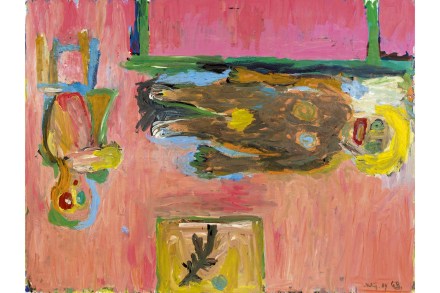
The beautiful upside-down world of Georg Baselitz

The hand is one of the first images to appear in art. There are handprints on the walls of caves in southern France, Indonesia and Argentina, made up to 50,000 years ago, which, although no doubt an illusion, seem to be waving at us across a vast gulf of time. The gigantic paintings of golden hands by Georg Baselitz at White Cube Mason’s Yard don’t quite do that, but the effect is still solemn and primeval. They dangle in front of you, fingers extended downwards, cut off at the wrist, each one the size of a whole body and glittering on a background of brownish black. There are also some drawings and sculptures of hands on view, but the star turns are the big canvases. They look like altarpieces dedicated to a cult of the hand and what it can do.

Liberty and death: Jacob Lawrence’s struggle for freedom

From our US edition

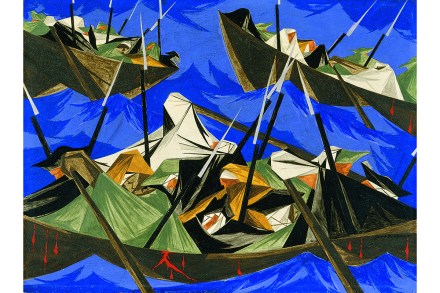
Few artworks could be more responsive to the current upheaval than Jacob Lawrence’s 1954-56 series ‘Struggle...From the History of the American People’. Painted during the dawn of the Civil Rights movement, the cycle of 30 panels tells a history of the American Founding through punchy modernist vignettes, engaging with timely and timeless topics such as brutality, race, memory, justice and our shared national heritage. At the Metropolitan Museum of Art, 24 of the original panels have been reunited for the most complete exhibition of the series since its original showing more than six decades ago. The exhibition will travel to Birmingham, Seattle and Washington, DC from New York.

jacob lawrence

Imagine being married to Stanley Spencer

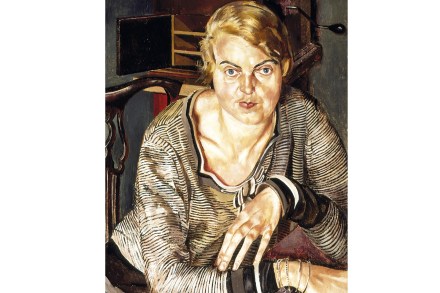
It sometimes rains in Cookham. It rained all day when I visited the Stanley Spencer Gallery to see the exhibition Love, Art, Loss: The Wives of Stanley Spencer. But it rarely rained for Spencer, or at least never in his pictures of his hallowed birthplace, where even when skies are grey the red brick of the houses is warmed by the eternal summer sun of childhood. Not in the winter of 1937, though. That winter saw the 46-year-old artist rattling around his seven-bed family home, divorced from first wife Hilda Carline and separated from second wife Patricia Preece, painting pictures of grotesquely ill-matched couples who seemed unaccountably happier than him.

Figurative painting is back – but how good is any of it?

An oxymoron is a clever gambit in an exhibition title. The Whitechapel Gallery’s Radical Figures: Painting in the New Millennium is designed to trigger the reaction: ‘Radical? Figures?’ before revealing quite how radical the figure can be. But like all good marketing, it is deceptive. Figurative art may have been consigned to history by Clement Greenberg 80 years ago, but history since — neo-romanticism, school of London, neo-expressionism — has repeatedly proved him wrong. The ten painters in this exhibition aren’t a school: the only thing their work has in common is its statement-making scale.

I didn’t expect to be so moved – galleries reopen

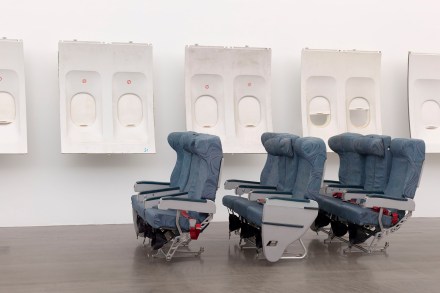
I’m in Mayfair and I’m boarding an airplane. Or rather, I’m boarding an approximation of an airplane. In the centre of Hauser & Wirth, there are airplane seats, organised into a formation that resembles a section of economy, and dislocated windows, hung on the walls where paintings might normally be. The seatbacks are stuffed, and a spring/summer 2012 edition of Sky Shop magazine is splayed across one of the seats. We are frozen in time and space. Like most of us in recent months, this plane — an installation by German artist Isa Genzken — isn’t going anywhere. It remains perpetually rooted. Its windows open on to white walls.

From Hogarth to Mardi Gras: the best art podcasts

If you study History of Art, people generally assume you’re a nice, conscientious, plummy-voiced girl. Sometimes, people are right. It is the only subject I can think of that requires a student to describe what is already printed on the exam sheet. ‘In the foreground of the picture is a tree — in full leaf! — and on the horizon, a tower.’ It feels a little basic. But with art history podcasts description is everything. And to do it well is a real art in itself. The presenters of the Art Newspaper’s The Week in Art podcast were superb last week in their exploration of a portrait by William Hogarth.

How John Constable got masterpiece after masterpiece out of a tiny corner of rural Suffolk

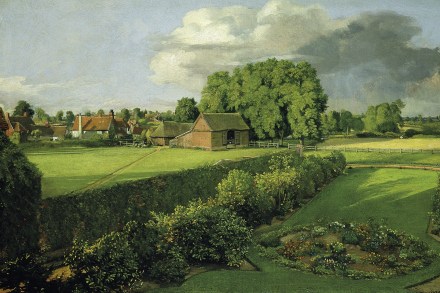
Before his marriage John Constable returned regularly in early summer to his native village of East Bergholt. When he wrote from there to his wife-to-be, Maria Bicknell, he almost always exclaimed that Suffolk was ‘in great beauty’. His enthusiasm was never more eloquent than on 22 June 1812, when he declared: ‘Nothing can exceed the beautiful appearance of the country at this time, its freshness, its amenity — the very breeze that passes the window is delightful, it has the voice of Nature.’ I often think about Constable (1776–1837) as I pace across the water meadows on my daily constitutional — partly because this too is an East Anglian landscape not unlike the one he was writing about: flat, leafy, watery, abounding in willows.