Painting

The ex factor | 22 November 2018

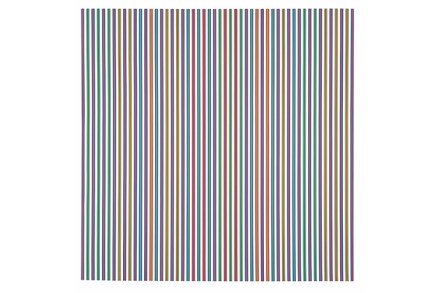
It is easy to assume that the contours of art history are unchanging, its major landmarks fixed for ever. Actually, like all histories it is a matter of shifting perspectives. As we move through time, the view backwards constantly alters. The rising and falling critical estimations of the painter Richard Smith are a case in point. Had you asked an art-world insider in 1963 who the brightest rising star of British art was there is a strong chance — though other names such as David Hockney might have been mentioned — that the answer would have been Smith (1931–2016). Appropriately, 1963 is the end date of an excellent little show

All about his mother

Fin-de-siècle Paris was not just the art capital of the world, it was also the fashion capital. In 1901, 300,000 Parisians were employed in the rag trade, and one of them was Édouard Vuillard’s mother. Stout, sensible and self-sufficient, Mme Marie Vuillard was no Mimi out of La Bohème, embroidering flowers in a draughty garret. She was the independent patronne of a dressmaking atelier — more of a couture flat, admittedly, than a couture house, operating out of rented apartments in the garment district. Before being left a widow with three children, she had prudently invested in a small business producing dresses and made-to-measure corsets for a fashion-conscious petit bourgeois

The big sleep | 8 November 2018

‘I want big things to do and vast spaces,’ Edward Burne-Jones wrote to his wife Georgiana in the 1870s. ‘And for common people to see them and say, “Oh! — only Oh!”’ That, however, was only the first part of my own reaction to the exhibition at Tate Britain of Burne-Jones’s works. Perhaps I’ve got a blind spot when it comes to B-J, but time and again I found myself thinking, ‘Oh no!’ Nonetheless, this comprehensive display and the accompanying catalogue give plenty of clues as to where he went wrong. Sir Edward Coley Burne-Jones (1833–98) followed an extremely unusual career path. He was the son of a struggling framer

All together now | 18 October 2018

‘About suffering’, W.H. Auden memorably argued in his poem ‘Musée des Beaux Arts’, the old masters ‘were never wrong’. Great and terrible events — martyrdoms and nativities — took place amid everyday life, while other people were eating, opening a window or ‘just walking dully along’. As an example, Auden took ‘The Fall of Icarus’ by Pieter Bruegel the Elder. As it happens, Auden himself was wrong there, because the work he cited is no long thought to be by the painter after all. This picture is not, therefore, included in the exhibition Bruegel at the Kunsthistorisches Museum, Vienna. However, the fact that Icarus has now been consigned to the

The stirrer and the monk

Sometimes Andrea Mantegna was just showing off. For the Palazzo Ducale in Mantua, he painted a false ceiling above the Camera degli Sposi. Around a great trompe l’oeil oculus, apparently open to the sky, assorted gawpers and cherubs lean nosily over the parapet: ‘What’s going on down there, then?’ Only the Duke and Duchess of Gonzaga entertaining their friends from Ferrara. A terracotta pot is half off the edge, supported only by a thin rod. One nudge from a misbehaving putto and — whoops! — just missed the Duchess. Some of the putti stick their heads through the trellis. Another stands on a ledge, flashing us his bare, plump, crinkly

Shock and gore

Last year my wife and I were wandering around the backstreets of Salamanca when we were confronted by a minor miracle. The iron gates of the convent of the Agustinas Descalzas — generally chained and padlocked — were ajar. Quickly we slipped through before they closed again. Inside was a vast 17th-century church, slightly dusty and completely deserted. On the high altar and the walls of the transepts were paintings by Jusepe de Ribera, a great master who is today half-forgotten. His art has seemed perhaps too gory, too dark — in short, too Catholic — to appeal to British tastes. But that may be about to change: next week,

Horror show

‘It is disastrous to name ourselves!’ So Willem de Kooning responded when some of his New York painter buddies elected to call themselves ‘abstract expressionists’. He had a point. Labels for movements — such as pop art, impressionism and baroque — are almost always misleading and seldom invented by the artists themselves. That was certainly the case with the idiom examined in a little exhibition at Tate Modern, Magic Realism: Art in Weimar Germany 1919-33. Actually, this rather heterogeneous assortment of painters has two tags. In 1925, a critic named Franz Roh came up with a nice phrase, magischer Realismus, which was later borrowed to refer to various writers, including

The play’s the thing | 9 August 2018

Nothing was so interesting to Yves Klein as the void. In 1960 he leapt into it for a photograph — back arched, chin raised, spread-eagled. The same year, he took out a patent for International Klein Blue (IKB), a colour inspired by the limitlessness of the sky itself. He even went so far as to stage an exhibition of white walls and an empty cabinet. If there is a less appropriate place to exhibit his work than the lavishly adorned Blenheim Palace, I can’t think of it. Klein was born in Nice in 1928 and learned judo as well as art. In his late teens he visited the Scrovegni Chapel

Low life | 9 August 2018

Me in a black polo-neck jumper looking sour; Oscar wearing a floppy hat; her youngest daughter nude and stooping to dry her feet with a towel; a mountain profile at dusk; a labourer’s stone hut in a vineyard; a copy of Augustus John’s ‘Robin’. Strangely inspired by John’s ‘Robin’, Catriona first picked up a paintbrush 18 months ago, and these pictures, collected and hung on the wall of the local bar, comprised her first public exhibition. They will hang there for the month of August and she held a vernissage to celebrate the occasion. About 50 people turned up from six o’clock onwards and mingled with about an equal number

Outsider art

The complexities of Schleswig-Holstein run deep. Here’s Emil Nolde, an artist born south of the German-Danish border and steeped in the marshy mysteries and primal romanticism of that landscape. In 1920, he sees his region, and himself, become Danish following a post-Versailles plebiscite. An already well-established German nationalist bent — pronounced despite, or perhaps because of, his shifting national identity and shaky grasp of the German language — is inflamed. He moves back across the new border before eventually joining the local branch of the Nazi party and writing a volume of autobiography entitled, Jahre der Kämpfe in which he rails against the Jewish dominance of the art world. National

Out of this world | 5 July 2018

In G.F. Watts’s former sculpture studio in the Surrey village of Compton, a monstrous presence has interposed itself between the dusty plaster models of ‘Alfred, Lord Tennyson’ and ‘Physical Energy’. Standing 14ft tall, the brightly painted soldier with fez and sabre is a replica of a colossal puppet made by James Henry Pullen (1835–1916) while an inmate of the Royal Earlswood Asylum for Idiots in Redhill. So terrifying was Pullen’s ‘Giant’ to the local children that it was confined to quarters after causing a rout at a Guy Fawkes procession. Its maker was inside, operating a system of pulleys and levers that batted the eyelids, waggled the ears, rattled the

Roll out the barrels

It’s not a wrap. This is the first thing to note about the huge trapezoid thing that has appeared, apparently floating, on the Serpentine Lake. Many of the projects by the artists who conceived it, Christo and his late wife and collaborator Jeanne-Claude, have involved bundling something up in a temporary mantle. The items thus packaged over the years include a naked woman (in Düsseldorf, 1964), the Pont Neuf (1985) and, famously, in 1995, the Reichstag. This London work, however, is the product of an equally long-running obsession with the barrels in which oil is stored and transported. At first, and second, glance, these objects lack charm. Nonetheless, the youthful

A self examined

In 2004 Mexican art historians made a sensational discovery in Frida Kahlo’s bathroom. Inside this space, sealed since the 1950s, was an enormous archive of documents, photographs and personal possessions. This hoard forms the basis of Frida Kahlo: Making Herself Up, an exhibition at the V&A. Oscar Wilde once remarked that ‘one should either be a work of art or wear a work of art’. Kahlo opted for both, and she didn’t stop there. Though she was a Marxist who numbered Trotsky among her many lovers, she also channelled the role of saint and martyr. She was neater than Francis Bacon, whose studio-floor detritus has also been subjected to zealous

The good, the bad and the ugly | 21 June 2018

Some disasters could not occur in this age of instant communication. The first world war is a case in point: 9.7 million soldiers died, 19,240 British on 1 July, 1916, the first day of the Battle of the Somme, alone. If all that had been seen on social mediaand rolling news threads, public opinion would have shifted immediately. A hundred years ago, however, the sheer awfulness of what was happening took more time to sink in. Aftermath, an exhibition at Tate Britain, deals not so much with the art of the war itself as with the shocked and grieving era that followed the cataclysmic conflict: post-war art. The horrors of

Minor key

‘When I’m on good form,’ Edward Bawden told me, ‘I get to some point in the design and I laugh and talk — and if I’m laughing, it probably means the work is rather good.’ You can see his exuberance everywhere in the exhibition of his work at Dulwich Picture Gallery. It is a thoroughly jolly affair, but it also raises a delicate question: was Bawden (1903–89) really a serious artist? He was certainly a tricky one to pigeon-hole. Bawden is, deservedly, one of the most popular of 20th-century Britishartists. But when one thinks of him, it is hard to bring a major work to mind — much harder than

Out of order

Patrick Heron’s paintings of the 1950s melt like ice creams. You want to run your tongue along the canvas and catch the drips. They capture a sense of summer holiday sea-and-scampi freedom. When Heron (1920–99) was five, his father, a blouse and silk-scarf manufacturer, moved from Leeds to St Ives in Cornwall. Heron played with the children of the potter Bernard Leach, and with Peter Lanyon, a friend from Sunnycroft primary school and a future painter, founded the Golden Harp Club, a society for the preservation of culture in England. After the Slade School of Fine Art in London, Heron returned to St Ives in 1944 on an ‘approved placement’

Buried treasure | 17 May 2018

Imagine a French museum that’s second only to the Louvre when it comes to paintings, with an eye-watering collection of manuscripts. Add to that a grand château with a turbulent history going back to the 16th century. Plus period kitchens (one tragic chef committed suicide when it seemed that the delivery of fish for the court’s Friday dinner would not arrive in time. It did arrive but only after he’d thrown himself on his kitchen knife). Imagine, too, that it’s in splendid grounds, with formal gardens and naturalistic landscape beyond. Then throw in the biggest, grandest stables in Europe, housing a museum all about horses — from their history to

Women and children first

A lady licking an envelope. An intimate thing. It might be only the bill from the coal-man she’s paying, but it has the feel of something else: an assignation, a confession, an apology, a breaking-off. Would this woman in her deep-blue day dress and jacket be so unguarded if the artist had been a man? Mary Cassatt (1844–1926) was a femme sérieuse who painted women of quick wits and tender instincts. No grubby models, no ballet rats, no laundresses, no absinthe. Her sitters, you feel, would write a thank-you note, send flowers, recommend a dressmaker. Mary Cassatt: An American Impressionist in Paris, at the Musée Jacquemart-André, is the first French

A whiff of wine and garlic

I have occasionally mused that there is plenty of scope for a Tate East Anglia — a pendant on the other side of the country to Tate St Ives. If ever that fantasy came to pass, the collection would include — in addition to Grayson Perry, Edward Bawden, Eric Ravilious, and John Wonnacott, contemporary master of the Thames Estuary — a section on Sir Cedric Lockwood Morris. The more one delves into the history of modern art in Britain — indeed, into art history in general — the more one discovers that many reputations are still free-floating. Morris’s is certainly one of these: there is no consensus as to how

The evanescence of everything

Think of the work of Claude Monet and water lilies come to mind, so do reflections in rippling rivers, and sparkling seas — but not buildings. He was scarcely a topographical artist — an impressionist Canaletto, even if Venice was among his themes. Nonetheless, Monet & Architecture at the National Gallery is an intriguing experience. Before I saw it, the suspicion crossed my mind that this was the solution to a conundrum that must puzzle many galleries. Namely, how to put together another Monet exhibition without it being the same as all the others? An institution such as the National Gallery could not just borrow a lorry-load of Monets and